How to Find a Reliable Magnetic Window Cleaner Factory in Taizhou
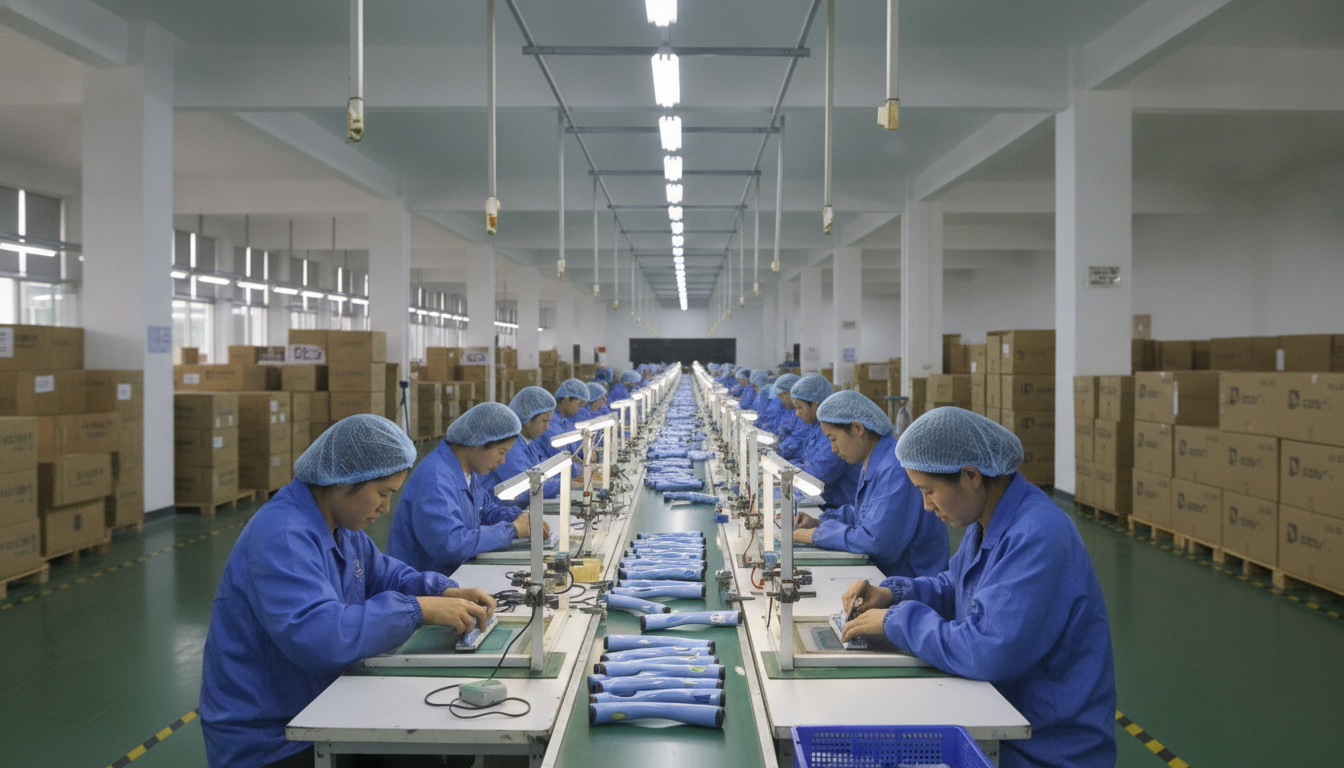
To find a reliable magnetic window cleaner factory in Taizhou, verify ISO9001 certification, check CE and RoHS compliance, confirm production capacity through facility size and workforce count, request samples to test magnet strength against your glass thickness, and audit export readiness by reviewing past shipment records to your target market. Taizhou hosts numerous cleaning-tool manufacturers, but only a fraction maintain the certifications and export infrastructure required for professional B2B supply chains.
📋 Table of Contents
Executive Summary
- Certification baseline: ISO9001, CE, and RoHS are the minimum quality and regulatory credentials for factories supplying European and North American markets.
- Production scale: Reliable Taizhou factories operate facilities of 10,000 m² or larger with workforces exceeding 300 skilled workers to ensure consistent output and spare capacity for bulk orders.
- Glass-thickness compatibility: Magnetic window cleaners must match your specific glazing profile; adjustable-force models cover 3-45mm across four SKUs, preventing the grip failures common when catalog claims overstate magnet strength.
- Export infrastructure: Factories with established Ningbo port shipping routes, export documentation workflows, and past shipment records to your target country reduce customs delays and freight complications.
- Factory vs trading company: Many Taizhou suppliers are resellers without production lines; verifying facility ownership and requesting on-site production photos filters out intermediaries who add cost and obscure quality control.
Why Taizhou for Magnetic Window Cleaners?
Taizhou, located in Zhejiang province, is a concentrated hub for household and commercial cleaning-tool manufacturing. The city benefits from proximity to Ningbo port, reducing inland freight costs and simplifying export logistics for overseas buyers. Zhejiang’s manufacturing ecosystem supports specialized suppliers of neodymium magnets, microfiber cloth, and injection-molded plastic components, enabling vertically integrated production under one roof.
Buyers sourcing from Taizhou access a competitive supplier base where price transparency and production lead times favor bulk orders. However, the concentration of manufacturers also means a mix of certified factories and smaller workshops operate side by side, making due diligence critical before committing to a supplier.
Taizhou’s Manufacturing Density
The city hosts hundreds of cleaning-equipment producers, but only a subset maintain the certifications, export documentation, and production scale required for professional B2B supply chains. Facility size, workforce count, and third-party audit records separate established factories from small-scale operations that struggle with order consistency and regulatory compliance.
Proximity to Ningbo Port
Ningbo, one of China’s largest container ports, sits approximately 150 kilometers from Taizhou. Factories shipping through Ningbo benefit from frequent sailings to Europe, North America, and Australia, with transit times of 25-35 days to major Western ports. Inland transport from Taizhou to Ningbo typically adds 2-3 days to the overall lead time, a minor delay compared to sourcing from inland provinces that require longer trucking routes to coastal terminals.
Verify Certifications and Compliance
ISO9001, CE, and RoHS certifications form the baseline for factories supplying regulated markets. ISO9001 confirms a documented quality-management system covering raw-material inspection, in-process checks, and final product testing. CE marking is mandatory for cleaning equipment sold in the European Union, signaling conformity with health, safety, and environmental protection standards. RoHS restricts hazardous substances to below 0.1% by weight, a requirement for electronic components in magnetic window cleaners sold in the EU and many other markets.
Request certificate copies with validity dates and issuing body details. Genuine certificates list the factory’s legal name, address, and scope of certification. Cross-check the issuing body against recognized accreditation organizations; certificates from unknown or unaccredited auditors carry no regulatory weight.
ISO9001 Quality Management
ISO9001 certification requires factories to implement documented procedures for supplier evaluation, production control, and corrective action. Certified facilities conduct regular internal audits and undergo annual surveillance audits by third-party bodies. Ask for the most recent audit report summary to confirm the certificate remains active and covers the product categories you intend to purchase.
CE and RoHS for Export Markets
CE marking applies to magnetic window cleaners sold in the EU, EEA, and increasingly in markets that recognize EU standards. RoHS compliance restricts lead, mercury, cadmium, hexavalent chromium, and certain flame retardants in electrical and electronic components. Factories supplying magnetic window cleaner product range to European distributors must provide a Declaration of Conformity and technical file demonstrating compliance with relevant directives.
For North American buyers, CE and RoHS are not legal requirements but signal a factory’s familiarity with international regulatory frameworks. Suppliers with these certifications typically maintain better documentation practices and quality-control systems than uncertified workshops.
Confirm Production Capacity and Infrastructure
Production capacity determines whether a factory can handle your order volume and maintain consistent output during peak seasons. Facility size, workforce count, and daily production rates are concrete indicators of scale. Reliable Taizhou factories operate facilities of 10,000 m² or larger, employ 300+ skilled workers, and ship 30,000+ units per day across multiple product lines.
Request facility photos showing production floors, assembly lines, and finished-goods warehouses. Genuine factories provide images of injection-molding machines, magnet-assembly stations, and quality-testing equipment. Suppliers unable or unwilling to share facility photos may be trading companies reselling products from third-party manufacturers, a common pattern that complicates quality control and increases lead times.
Facility Size and Layout
A large factory with dedicated zones for raw-material storage, component fabrication, assembly, quality inspection, and finished-goods warehousing indicates an established operation. Smaller facilities under 5,000 m² often lack the space to buffer inventory, leading to longer lead times when raw materials are delayed or when orders exceed immediate production capacity.
Workforce and Shift Patterns
Factories employing 400+ workers across two or three shifts maintain production continuity and absorb seasonal demand spikes without extending lead times. Ask about workforce size, shift patterns, and whether the factory operates year-round or closes for extended periods during Chinese New Year. Extended shutdowns of 3-4 weeks can delay orders placed in the weeks before the holiday.
Daily Production Rates
A factory producing 50,000+ units per day across its full product range has the throughput to handle bulk orders without disrupting existing commitments. Suppliers with lower daily rates may prioritize larger orders, pushing smaller buyers to the back of the production queue. Confirm whether the quoted lead time assumes dedicated production lines or shared capacity with other clients.
Test Product Specifications with Samples
Catalog specifications often overstate magnet strength, leading to grip failures when cleaners are used on glass thicker than the rated range. Sample testing with your actual glass thickness is the only reliable way to verify compatibility. Order samples of the specific SKU you intend to purchase, not a generic model the supplier selects.
Magnetic window cleaners are rated by glass thickness range, such as 3-30mm, 5-35mm, 8-40mm, or 10-45mm. Each range corresponds to a specific magnet configuration and housing design. A unit rated for 5-35mm may grip adequately on 30mm double glazing but lose contact on 38mm insulated glass, creating a drop hazard for the exterior unit.
Glass thickness range: 3-45mm across four adjustable SKUs. Magnet material: NdFeB for most SKUs; Ferrite for the FN-Classic 3-8mm model.
Match SKU to Glass Thickness
Measure your glass thickness with calipers before ordering samples. Single-pane glass typically ranges from 3-8mm. Double-glazed units span 15-30mm, with insulated variants reaching 35-40mm. Triple-glazed windows often exceed 40mm; Fonoran does not offer a triple-pane model, so measure the installed thickness and confirm it with us before ordering. Adjustable-force models with six magnetic-strength settings accommodate thickness variation within a single SKU, reducing the need to stock multiple models for different window types.
In practice: A German buyer with 36mm insulated glass requested samples of the 10-45mm SKU to confirm grip strength before placing a bulk order, because the next-smaller SKU topped out at 35mm and left no safety margin.
Test Magnet Strength on Site
Apply the sample to your actual glass and verify the exterior unit does not slide or detach during vertical movement. Test on the thickest glass in your facility or client portfolio, not the thinnest. A cleaner that grips 25mm double glazing may fail on 35mm insulated glass if the magnet strength sits at the lower end of the rated range. Repeat the test at different points on the window to check for consistency; uneven magnet strength indicates poor quality control during production.
Inspect Build Quality and Materials
Examine the housing for sharp edges, uneven seams, or poorly bonded components. Check that the cleaning pads attach securely and that the safety rope is anchored with metal hardware, not plastic clips that can crack under load. NdFeB magnets should be enclosed in protective housings to prevent chipping; exposed magnets are a sign of cost-cutting that compromises durability.
Audit Export Readiness and Logistics
Export readiness determines whether a factory can deliver on time, provide accurate documentation, and navigate customs requirements for your target market. Request past shipment records to your country or region, including bill-of-lading copies, commercial invoices, and packing lists. Factories with established export workflows to Europe, North America, or Australia are less likely to encounter documentation errors that delay customs clearance.
Ask about shipping terms and confirm whether the factory offers FOB, CIF, or EXW pricing. FOB (Free On Board) pricing includes inland transport to Ningbo port and loading onto the vessel, with the buyer responsible for ocean freight and destination charges. CIF (Cost, Insurance, Freight) pricing covers ocean freight and marine insurance to the destination port, simplifying logistics for buyers without established freight forwarders. EXW (Ex Works) pricing requires the buyer to arrange all transport from the factory gate, a cost-effective option for buyers with their own logistics networks but a risk for first-time importers unfamiliar with Chinese export procedures.
Shipping from Ningbo Port
Ningbo port offers direct sailings to major European, North American, and Australian ports with transit times of 25-35 days. Factories located in Taizhou benefit from short inland transport to Ningbo, typically 2-3 days by truck. Confirm whether the factory has a regular shipping schedule or consolidates orders to fill containers, which can add 1-2 weeks to the lead time if your order arrives between scheduled shipments.
Documentation and Compliance
Factories exporting to regulated markets must provide a commercial invoice, packing list, bill of lading, certificate of origin, and any required compliance certificates (CE Declaration of Conformity, RoHS test reports). Incomplete or inaccurate documentation triggers customs holds, adding days or weeks to the delivery timeline. Request sample documentation from a recent shipment to verify the factory’s attention to detail and familiarity with your market’s import requirements.
Lead Time and Production Scheduling
Lead time includes raw-material procurement, production, quality inspection, and inland transport to the port. Typical lead times for magnetic window cleaners range from 20-35 days after order confirmation, depending on order size and factory workload. Factories with in-house raw-material inventory can shorten lead times by 5-10 days, but this advantage only applies to standard SKUs. Custom or OEM orders require longer lead times to source specialized components and set up production tooling.
Distinguish Factories from Trading Companies
Many Taizhou suppliers listed on B2B platforms are trading companies or resellers, not manufacturers. Trading companies source products from third-party factories, adding a markup and an extra layer of communication that slows down quality issues and customization requests. Distinguishing a factory from a trading company requires verifying facility ownership, production equipment, and direct control over quality management.
Request facility photos showing production floors, injection-molding machines, and assembly lines. Genuine factories provide images of workers operating equipment, raw materials staged for production, and finished goods awaiting shipment. Trading companies offer generic stock photos or images downloaded from manufacturer websites, often with inconsistent branding or watermarks from multiple sources.
Verify Factory Ownership
Ask for the factory’s business license and confirm the legal entity name matches the company name on certificates, quotations, and correspondence. Trading companies often register as commercial entities rather than manufacturing enterprises, a distinction visible on the business license. Cross-check the registered address against the facility address provided; discrepancies indicate the supplier does not own or operate the production site.
Request Production Process Details
Factories can describe their production process in detail, including raw-material suppliers, molding cycle times, assembly-line layout, and quality-inspection protocols. Trading companies provide vague or generic answers, often deflecting to ‘our partner factory’ without naming the facility or providing contact details. Ask specific questions about magnet sourcing, housing-material specifications, and testing procedures; evasive answers signal a lack of direct production control.
Check Alibaba Verified Supplier Status
Alibaba’s Gold Supplier and Verified Manufacturer badges indicate the platform has conducted on-site inspections and verified the supplier’s legal status and production capability. These badges reduce but do not eliminate risk; some trading companies obtain verification by partnering with factories they do not own. Use platform badges as a starting point, not a substitute for independent due diligence.
Key Takeaways
- ISO9001, CE, and RoHS certifications are the baseline credentials for factories supplying European and North American markets, confirming quality management and regulatory compliance.
- Reliable Taizhou factories operate facilities of 10,000 m² or larger with workforces exceeding 300 skilled workers, ensuring consistent output and capacity for bulk orders.
- Sample testing with your actual glass thickness is the only reliable way to verify magnet strength, preventing grip failures that catalog specifications often overstate.
- Factories with established Ningbo port shipping routes and past export records to your target market reduce customs delays and documentation errors.
- Many Taizhou suppliers are trading companies, not manufacturers; verifying facility ownership and requesting production-floor photos filters out intermediaries who add cost and obscure quality control.
- Adjustable-force magnetic window cleaners cover 3-45mm glass thickness across four SKUs, accommodating single-pane, double-glazed, and thick insulated windows with six magnetic-strength settings.
FAQ
What is the minimum order quantity for magnetic window cleaners from Taizhou factories?
Minimum order quantities start from 100 units for standard SKUs at established Taizhou factories. OEM and private-label orders may require higher MOQs, typically 500-1,000 units, to justify custom tooling and packaging setup costs. Suppliers quoting MOQs below 50 units are often trading companies reselling stock from third-party manufacturers, not factories with direct production control. Confirm MOQ, lead time, and payment terms during the quotation stage, as these vary by factory workload and order complexity.
How do I verify a Taizhou factory’s production capacity before placing a bulk order?
Request facility photos showing production floors, injection-molding machines, assembly lines, and finished-goods warehouses. Ask for workforce size, shift patterns, and daily production rates across all product lines. Factories producing 30,000+ units per day with 300+ employees have the capacity to handle bulk orders without extending lead times. Cross-check the facility address on the business license against the address provided in correspondence. Third-party audit reports from Alibaba, SGS, or Bureau Veritas provide independent verification of production scale and quality-management systems.
What shipping options are available from Taizhou factories to Europe and North America?
Taizhou factories ship through Ningbo port, approximately 150 kilometers away, with transit times of 25-35 days to major European and North American ports. FOB pricing includes inland transport to Ningbo and loading onto the vessel, with the buyer arranging ocean freight. CIF pricing covers ocean freight and marine insurance to the destination port, simplifying logistics for buyers without established freight forwarders. EXW pricing requires the buyer to arrange all transport from the factory gate, suitable for buyers with their own logistics networks. Confirm Incoterms, lead time, and documentation requirements during the quotation stage.
Finding a reliable magnetic window cleaner factory in Taizhou requires verifying certifications, testing samples against your glass thickness, and auditing export readiness through past shipment records. Factories with ISO9001, CE, and RoHS credentials, production facilities exceeding 10,000 m², and established Ningbo port shipping routes deliver the consistency and regulatory compliance professional B2B supply chains demand. Contact our team for factory audit checklists, sample requests, and quotations tailored to your glass thickness and order volume.
Ready to verify a Taizhou factory’s credentials and request samples?
Request Factory Audit Checklist →
Written by the Fonoran Export Team.