Magnetic Window Cleaner Safety Rope High Rise Apartment OEM (2026 Guide)
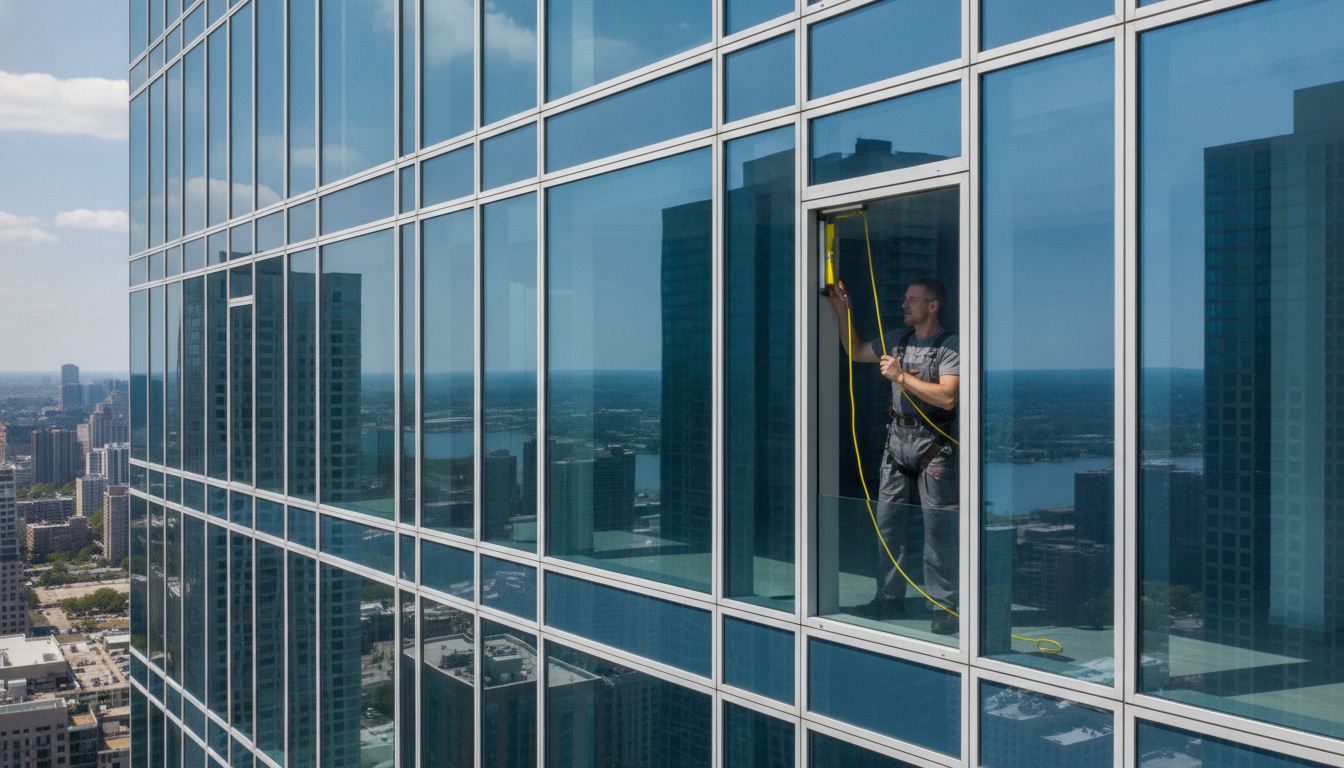
Most OEM suppliers offer magnetic window cleaner safety rope high rise apartment oem configurations as standard equipment on models rated for double glazing, though rope material, breaking load and attachment method vary significantly. Fonoran includes a nylon safety tether on every adjustable-force unit covering 3-45mm glass thickness, connecting the inner and outer modules with a rated breaking load sufficient for high-rise use. Rope length ranges from 2.5 to 3 metres across the four SKU families, and every tether is tested during final QC before shipment.
Executive Summary
- Safety rope inclusion: Adjustable-force OEM units typically include a tethered safety rope as standard, while fixed-magnet economy models may list it as an optional accessory.
- Rope material: Nylon and braided polyester are the most common materials; breaking-load documentation and attachment-point reinforcement are the clearest indicators of genuine high-rise suitability.
- Glass thickness match: High-rise apartments often use insulated double glazing in the 20-40mm range, requiring adjustable magnetic force rather than a fixed-strength unit.
- Compliance verification: CE certification for the complete assembly, including the rope and attachment points, is required for EU import; ask the OEM for the test report covering mechanical strength.
- OEM customisation: Private-label buyers can specify rope colour, length, attachment style and breaking-load rating from 500 units, though tooling for reinforced anchor points may add to the first-order cost.
Why Safety Ropes Matter for High-Rise Apartment Use
A safety rope prevents the outer cleaning module from falling when magnetic force is lost. Buyers report that the exterior unit can fall when the magnets do not hold or when the product is difficult to adjust for the actual glass thickness, creating liability risk for facility managers and window-cleaning contractors working above ground level.
Drop Risk in High-Rise Environments
Magnetic window cleaners rely on opposing magnetic fields to hold the outer unit against the glass. When the gap exceeds the rated thickness range, magnetic force drops sharply. A unit rated for 5-15mm glass loses grip on a 28mm insulated double-glazed pane, and the outer module falls unless a tether arrests it. High-rise apartments in Australia and Europe commonly use 20-30mm double glazing for thermal and acoustic insulation, placing them at the upper edge of many fixed-magnet models.
Liability and Compliance
Facility-management firms and professional window-cleaning contractors face direct liability when equipment falls from height. A tethered safety rope shifts the failure mode from a falling hazard to a controlled stop, keeping the outer unit suspended until the operator can retrieve it. CE certification for the EU market requires mechanical-strength testing of the complete assembly, including the rope and its attachment points, under the Low Voltage Directive and General Product Safety Regulation.
Which OEM Suppliers Include Safety Ropes as Standard
Adjustable-force OEM factories typically bundle a safety rope with every unit, while fixed-magnet economy suppliers list it as an optional add-on. The clearest indicator is whether the product page or specification sheet states a rope material, breaking load and attachment method without requiring a separate SKU.
Fonoran Factory-Direct OEM
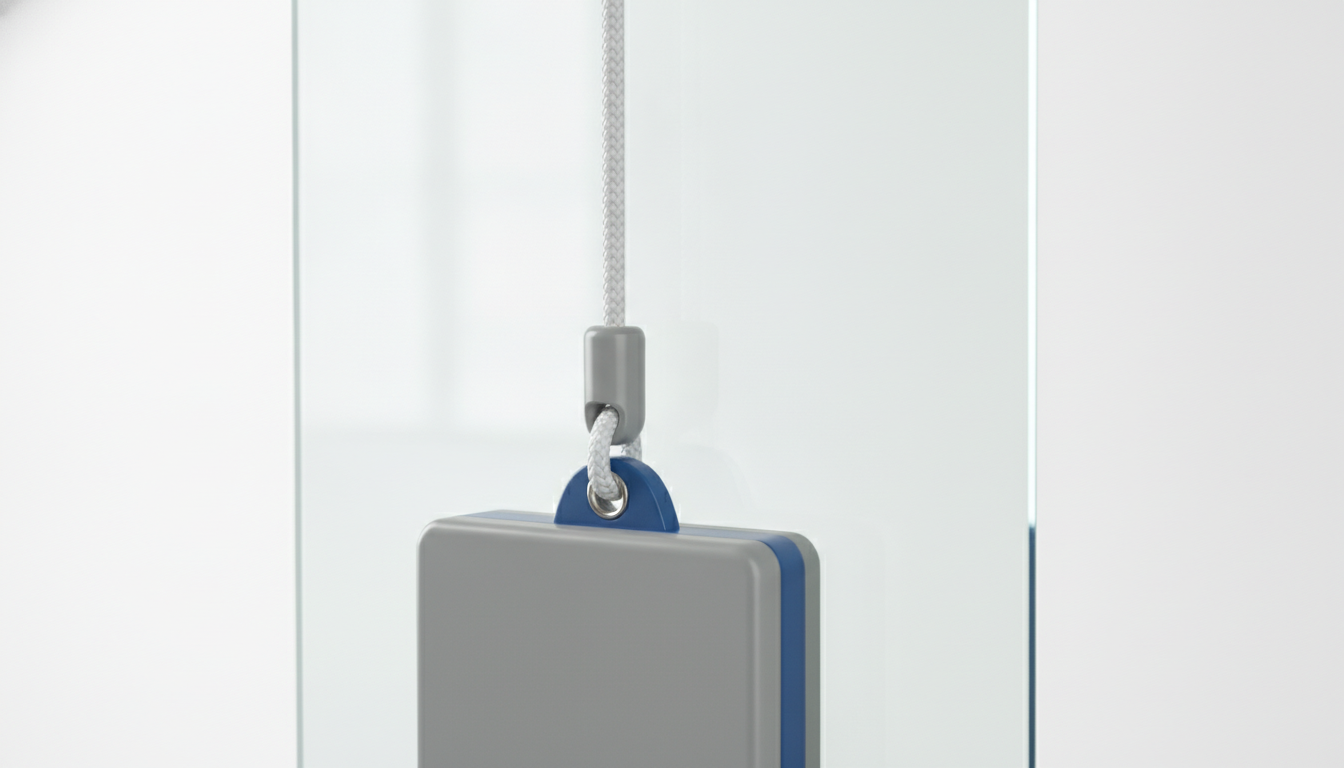
Our magnetic window cleaner product range includes a nylon safety tether on every adjustable-force unit across the 3-30mm, 5-35mm, 8-40mm and 10-45mm SKU families. The tether connects the inner and outer modules with reinforced stitching at both attachment points, and every rope is pull-tested during final QC. Private-label buyers can specify rope colour, length tolerance and breaking-load rating from 500 units, with sample units available from 2 pieces for pre-order evaluation.
Identifying Rope Inclusion Before Ordering
Request the product specification sheet and confirm three details: rope material and diameter, rated breaking load in kilograms or newtons, and attachment-point construction. A supplier listing only "safety rope included" without material or load data may be using a decorative tether rather than a load-bearing component. Ask for photographic evidence of the attachment point on both the inner and outer modules, and verify that the rope is sewn or crimped into a reinforced anchor rather than tied through a hole.
Safety Rope Specifications for High-Rise Use
Breaking load, rope material and attachment method determine whether a safety tether will arrest a fall or snap under load. Facility managers and window-cleaning contractors should verify these specifications before placing bulk orders.
Breaking Load and Test Documentation
A safety rope for high-rise use should carry a rated breaking load of at least 50 kilograms, sufficient to arrest the outer module plus any water or cleaning solution inside the reservoir. OEM suppliers offering CE-certified units must provide mechanical-strength test reports showing the rope-and-attachment assembly was tested to failure. Request the test certificate and confirm the breaking load exceeds the maximum loaded weight of the outer module by a safety factor of at least three.
Rope Material and UV Resistance
Nylon and braided polyester are the most common materials. Nylon offers higher breaking strength per diameter but degrades under prolonged UV exposure, making it better suited to intermittent use or indoor-facing windows. Braided polyester resists UV degradation and maintains tensile strength in outdoor high-rise applications, though it costs slightly more per metre. Ask the OEM whether the rope is UV-stabilised and request accelerated-aging test data if the cleaner will be used on sun-facing facades.
Attachment Point Construction
The attachment point is the most common failure mode. Buyers report that the outside section fell and the magnet came out, after which the assembly would not remain properly secured. A reinforced attachment point uses a metal eyelet or a double-stitched loop sewn into the housing, distributing load across a larger surface area. Avoid units where the rope is simply tied through a drilled hole, as the knot can slip or the hole edge can cut the fibres under shock load.
Matching Glass Thickness to Magnetic Force
High-rise apartments use thicker insulated glass than single-storey homes. Magnetic force must match the actual glass thickness, or the outer unit will fall despite the safety rope.
Common Glass Configurations in High-Rise Buildings
Single-pane glass in high-rise apartments is rare; most installations use double glazing with an insulating air gap, creating a total thickness of 20-40mm. Laminated safety glass adds another 0.76-1.52mm PVB interlayer per pane, pushing some assemblies above 40mm. A magnetic window cleaner rated for 5-15mm glass will not hold on these installations, and the safety rope becomes the primary retention mechanism rather than a backup.
Adjustable Magnetic Force
Adjustable-force units allow the operator to match magnetic strength to the measured glass thickness. Fonoran's six-stage adjustable magnetic force system covers 3-45mm across four SKU families, the widest range in the industry. The operator measures the glass with a calliper or thickness gauge, selects the corresponding force setting, and confirms the outer unit holds securely before releasing it. This eliminates the guesswork that causes falls with fixed-magnet models.
In practice: A home user in Germany with 36mm insulated glass needed an adjustable magnetic window cleaner; 36mm sits inside the FN-Ultra 10-45mm SKU with room to spare, and the inquiry is now at the quoting stage.
Verifying Magnetic Strength Before High-Rise Deployment
Test the unit on a ground-floor window of the same glass type before deploying it at height. Load the outer module with water, set the magnetic force to the measured thickness, and attempt to slide the unit horizontally and vertically. If the outer module slips or the gap between the two halves increases, increase the force setting by one stage and retest. A properly matched unit should resist sliding under moderate hand pressure while still allowing controlled movement for cleaning.
OEM Customisation and Private-Label Options
Private-label buyers can specify rope colour, length and breaking-load rating to match their brand positioning and target market. Customisation options and minimum order quantities vary by supplier.
Rope Colour and Branding
Standard rope colours are black, grey and high-visibility yellow. High-visibility colours improve operator awareness and reduce the chance of the rope becoming tangled during use. Private-label buyers ordering 500 units or more can specify a custom rope colour to match their packaging or brand identity, though non-standard colours may add a dye-lot setup charge to the first order.
Rope Length Tolerance
Standard rope lengths range from 2.5 to 3 metres, sufficient for most residential and commercial high-rise windows when the operator works from inside the building. Buyers targeting extra-deep balconies or setback facades can request extended-length ropes up to 5 metres, though longer ropes increase the risk of tangling and require reinforced attachment points to handle the additional weight. Confirm the breaking load remains adequate when specifying a non-standard length.
Breaking-Load Certification for Specific Markets
Australian and European buyers may require third-party certification of the rope's breaking load to satisfy workplace health and safety regulations. OEM suppliers offering CE certification can provide mechanical-strength test reports from accredited laboratories, showing the rope-and-attachment assembly was tested to failure and met the declared breaking load. Request the test certificate before placing a bulk order, and verify the certificate covers the complete assembly rather than the rope material alone.
Compliance Verification and Supplier Screening
Verifying a supplier's compliance claims before ordering protects buyers from receiving non-compliant stock that cannot be legally imported or sold. CE certification, factory audit reports and mechanical-strength test data are the three primary verification tools.
CE Certification Scope
CE certification for magnetic window cleaners falls under the Low Voltage Directive and General Product Safety Regulation. The certificate must cover the complete assembly, including the magnet modules, cleaning pads, handle, reservoir and safety rope with its attachment points. A certificate covering only the electrical components or the magnet assembly is incomplete. Request the full test report and confirm the scope statement lists all components, including the rope.
Factory Audit and Production Capacity
A factory audit verifies the supplier has the production capacity and quality-control systems to deliver consistent output. Alibaba Gold Verified Supplier status confirms the supplier's legal registration and basic export credentials, but does not verify production capacity or product quality. Request photographs of the production floor showing rope-attachment workstations, pull-testing equipment and finished-goods inventory. Fonoran's 6,500m² facility in Taizhou employs 60+ skilled workers and ships from Ningbo port, with production lines capable of 50,000+ magnetic window cleaners per day.
Sample Evaluation Before Bulk Orders
Order sample units and conduct a drop test before committing to a bulk order. Suspend the outer module by the safety rope from a height of 2 metres, load it with water to simulate field conditions, and release it. The rope should arrest the fall without snapping, slipping through the attachment point, or tearing the anchor free from the housing. Customers describe streaking, difficult maneuvering, ineffective cleaning and instability, including reports that the tool repeatedly falls off, so hands-on testing is the only reliable way to confirm the unit will perform as claimed.
Total-Cost Analysis and Landed Price
The unit price is only one component of the total landed cost. Buyers should account for samples, tooling, packaging, spare parts, warranty and freight when comparing OEM suppliers.
Sample Costs and Tooling Charges
Most OEM suppliers charge full retail price for samples, refundable against the first bulk order if the buyer commits to a minimum quantity. Private-label orders requiring custom packaging, rope colour or reinforced attachment points may incur a one-time tooling charge covering mold setup, dye-lot preparation and pull-testing jigs. Confirm whether the tooling charge is a separate line item or amortised across the first production run, and verify the tooling becomes the buyer's property for future reorders.
Packaging and Spare-Parts Inventory
Retail-ready packaging with product photography, multilingual safety instructions and barcode labels adds to the per-unit cost but reduces the buyer's repacking labour. Buyers serving facility-management firms or window-cleaning contractors should maintain a spare-parts inventory covering replacement ropes, cleaning pads and magnet modules, as field wear accelerates in commercial high-rise use. Ask the OEM whether spare parts are available separately and confirm the per-piece price and minimum order quantity.
Warranty and After-Sales Support
A warranty covering manufacturing defects for 12 months is standard, though coverage of wear items like ropes and cleaning pads varies by supplier. Confirm whether the warranty includes replacement-part shipment or requires the buyer to return defective units to the factory, as return freight from Australia or Europe can exceed the unit value. Buyers ordering 500 units or more should negotiate an on-site spares allocation and a dedicated technical-support contact for field troubleshooting.
Field Performance in High-Rise Applications
Professional window-cleaning contractors and facility managers report specific performance challenges when deploying magnetic window cleaners on apartment towers. Addressing these challenges during supplier selection reduces field failures and callback rates.
Wind Load and Facade Vibration
High-rise facades experience wind loads that can displace the outer module or cause it to vibrate against the glass. A safety rope under constant tension reduces vibration-induced wear on the cleaning pads and magnet surfaces, extending service life. Buyers targeting buildings above 10 storeys should specify a rope with minimal stretch, as elastic ropes allow the outer unit to oscillate in high wind.
Operator Fatigue and Ergonomics
A reviewer says the magnet was excessively strong and trapped a finger, creating an injury risk during handling. Adjustable-force units allow the operator to reduce magnetic strength when repositioning the cleaner or detaching it from the glass, reducing the hand force required and minimising finger-trap risk. This is particularly important for facility-management staff cleaning multiple units per shift, where cumulative hand strain can lead to repetitive-stress injuries.
Streak-Free Performance on Insulated Glass
Customers describe streaking, difficult maneuvering and ineffective cleaning on double-glazed windows, often caused by cleaning-pad material that does not match the glass coating. Low-emissivity coatings and self-cleaning glass require microfibre pads rather than sponge or felt, as the latter leave residue that bonds to the coating. Ask the OEM whether replacement pads in different materials are available, and confirm the pad attachment method allows field swapping without tools.
Key Takeaways
- Adjustable-force OEM factories typically include a safety rope as standard equipment on units rated for double glazing, while fixed-magnet economy models may list it as an optional accessory.
- Breaking load, rope material and attachment-point construction determine whether a safety tether will arrest a fall; request mechanical-strength test reports and confirm the breaking load exceeds the maximum loaded weight by a safety factor of at least three.
- High-rise apartments commonly use insulated double glazing in the 20-40mm range, requiring adjustable magnetic force rather than a fixed-strength unit to prevent the outer module from falling.
- CE certification for the EU market must cover the complete assembly, including the rope and attachment points, under the Low Voltage Directive and General Product Safety Regulation; verify the test report scope before ordering.
- Private-label buyers can specify rope colour, length and breaking-load rating from 500 units, though non-standard colours or extended lengths may incur tooling charges and require reinforced attachment points.
- Sample evaluation should include a drop test from 2 metres with the outer module loaded with water, confirming the rope arrests the fall without snapping or tearing the anchor free from the housing.
Frequently Asked Questions
Do all magnetic window cleaners include a safety rope for high-rise use?
No, only adjustable-force OEM units and some premium fixed-magnet models include a safety rope as standard equipment. Economy models and marketplace listings often list the rope as an optional accessory or do not include one at all. Buyers targeting high-rise apartments should confirm rope inclusion, material and breaking load in the product specification sheet before ordering, and request photographic evidence of the attachment-point construction on both the inner and outer modules.
What breaking load should a safety rope have for high-rise apartment windows?
A safety rope for high-rise use should carry a rated breaking load of at least 50 kilograms, sufficient to arrest the outer module plus any water or cleaning solution inside the reservoir. The breaking load should exceed the maximum loaded weight by a safety factor of at least three to account for shock load when the rope arrests a fall. OEM suppliers offering CE certification must provide mechanical-strength test reports showing the rope-and-attachment assembly was tested to failure; request the test certificate and verify the declared breaking load matches the test result.
Can I order magnetic window cleaners with custom rope colours for private-label branding?
Yes, private-label buyers ordering 500 units or more can specify custom rope colours to match their packaging or brand identity. Standard colours are black, grey and high-visibility yellow; non-standard colours may incur a dye-lot setup charge on the first order. Buyers should confirm the custom colour does not affect UV resistance or breaking load, and request a pre-production sample showing the final rope colour and attachment-point construction before approving the bulk production run.
Ready to source magnetic window cleaners with factory-certified safety ropes for your high-rise projects?
Request Specs & MOQ →
Written by the Fonoran Export Team.