OEM vs ODM vs Private Label Magnetic Window Cleaners: Which Route Fits Your Brand?
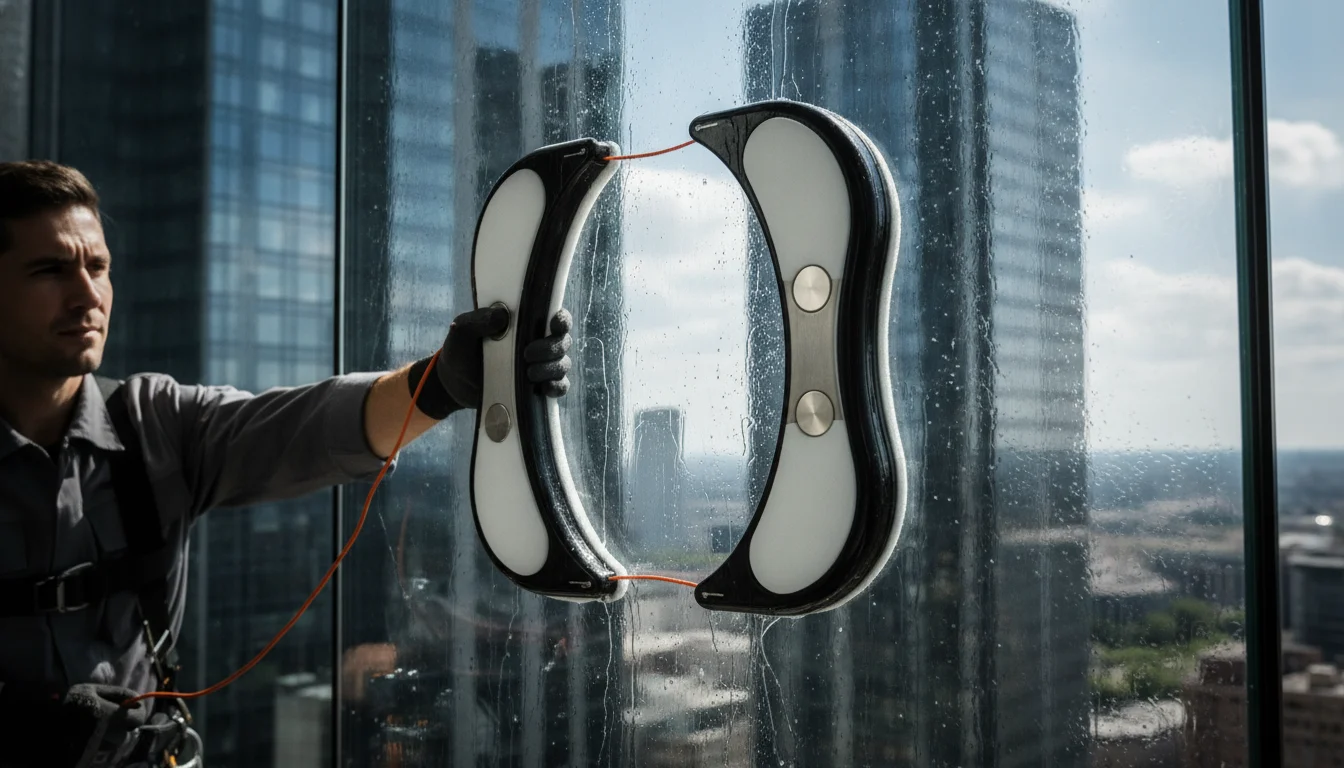
OEM means the product is built to your specification; ODM means you take a design the factory already makes and change what is changeable; private label is ODM where the change is mostly your brand and your packaging. For magnetic window cleaners the three routes differ in four things that matter to an importer: who owns the design, how long the first order takes, what the minimum order looks like, and whose name is on the compliance documents.
This guide is written for distributors, retailers and brand founders who are about to ask a factory for a quote and want to ask for the right thing. The questions in it are the ones buyers actually send us — from a founder building a new home-cleaning brand in Latin America, to an online seller planning a range for bol.com, to a business-development team that wants to develop its own double-sided concept.
OEM vs ODM vs private label: what is the difference?
| Private label | ODM | OEM | |
|---|---|---|---|
| Starting point | An existing catalogue model | An existing catalogue model | Your drawing, sample or concept |
| What you change | Logo, colour, packaging, inserts | Plus functional details within the platform: magnet force range, handle, accessories, safety cord | Anything: housing, magnetic circuit, glass range, mechanism |
| New mould | No | Usually no; sometimes a minor insert change | Usually yes |
| Design ownership | Factory keeps the design; your brand is yours | Factory keeps the base design; agreed modifications can be made exclusive by contract | You own what you paid to develop, if the contract says so |
| Time to first shipment | Shortest | Short to medium | Longest: design, mould, samples, then production |
| Minimum order | Lowest | Low to medium | Set by the mould and the parts you specify |
In practice most buyers who say “OEM” in their first email mean private label or light ODM: they want their own brand on a proven product without paying for a mould. That is a perfectly good route, and it is the fastest way to test a market.
Which route should you choose?
Choose private label if you are testing a market or a channel
If the question is “will this sell on my marketplace, in my stores, or on my TV-shopping slot”, you do not need a new product; you need a proven one with your name on it and packaging that works in your channel. At Fonoran, OEM and private-label orders start from 500 units per model, which is low enough to run a real test instead of a guess.
Choose ODM if your market needs something the catalogue does not quite do
The most common ODM request we see is not about looks. It is about glass: a buyer in a market where most homes have double glazing needs a model whose force range covers their windows, not the average window. Because the adjustable Fonoran models already cover 3–45 mm across four thickness SKUs (3–30, 5–35, 8–40 and 10–45 mm), most of these requests are solved by choosing the right SKU and packaging rather than by new tooling.
Choose OEM if the product itself is your advantage
If you have a concept that does not exist yet, or you need a product nobody else can sell, OEM is the route. Expect a longer first cycle and budget for a mould and several rounds of samples. Put ownership of the drawings and the mould in writing before development starts.
What buyers ask before they decide
Can I use my own brand, colours and packaging?
Yes, on all three routes. Tell the factory early whether you need a retail-ready unit (colour box, hang tab, barcode) or bulk packing, how many units per outer carton your warehouse accepts, and whether your channel has its own labelling rules. These details change the quote more than the logo does.
Will the model work on the glass in my market?
Ask for the thickness range of each SKU in millimetres and match it to the windows you sell into. Single glazing, standard double glazing and thicker insulated units need different force ranges. See our guide to single pane vs double pane magnetic window cleaners and how to measure glass thickness.
Which magnet is inside?
Fonoran uses NdFeB (neodymium) across the range, with ferrite on the FN-Classic 3–8 mm entry SKU, where thin single glazing makes it the right material. The difference is explained in neodymium vs ferrite in a magnetic window cleaner.
Whose name is on the certificates?
Fonoran’s products are CE certified. If your retailer requires documents in your brand name, or requires additional reports for your market, raise it before the order so testing can be planned; do not assume a factory certificate transfers automatically to your brand.
How are prices quoted?
Quotes depend on the model, the thickness SKU, packaging and quantity, so we quote per project rather than publishing a price list. Tell us whether you want FOB Ningbo or another term, and in which currency, and the quote will be comparable with others you receive.
A short brief that gets you an accurate quote
- Route: private label, ODM with named changes, or OEM with a drawing or sample.
- Glass: the thickness range your customers have, in mm.
- Channel: retail shelf, marketplace, TV shopping, or professional cleaning trade.
- Packaging: retail unit or bulk, units per carton, labelling requirements.
- Quantity: first order and expected reorder.
- Documents: which certificates and test reports your buyer will ask for.
Fonoran is the export brand of Taizhou Mingyou Intelligent Technology Co., Ltd., a factory-direct manufacturer of magnetic window cleaners in Taizhou, China, founded in 2007: a 6,500 m² plant, 60+ workers, CE compliant, exporting to 60+ countries and shipping from Ningbo. See the private-label programme, custom OEM development or the full product range.
Planning your own magnetic window cleaner line?
Send us your brief →