Tools for Cleaning High Windows: Magnetic vs Pole Systems (2026)
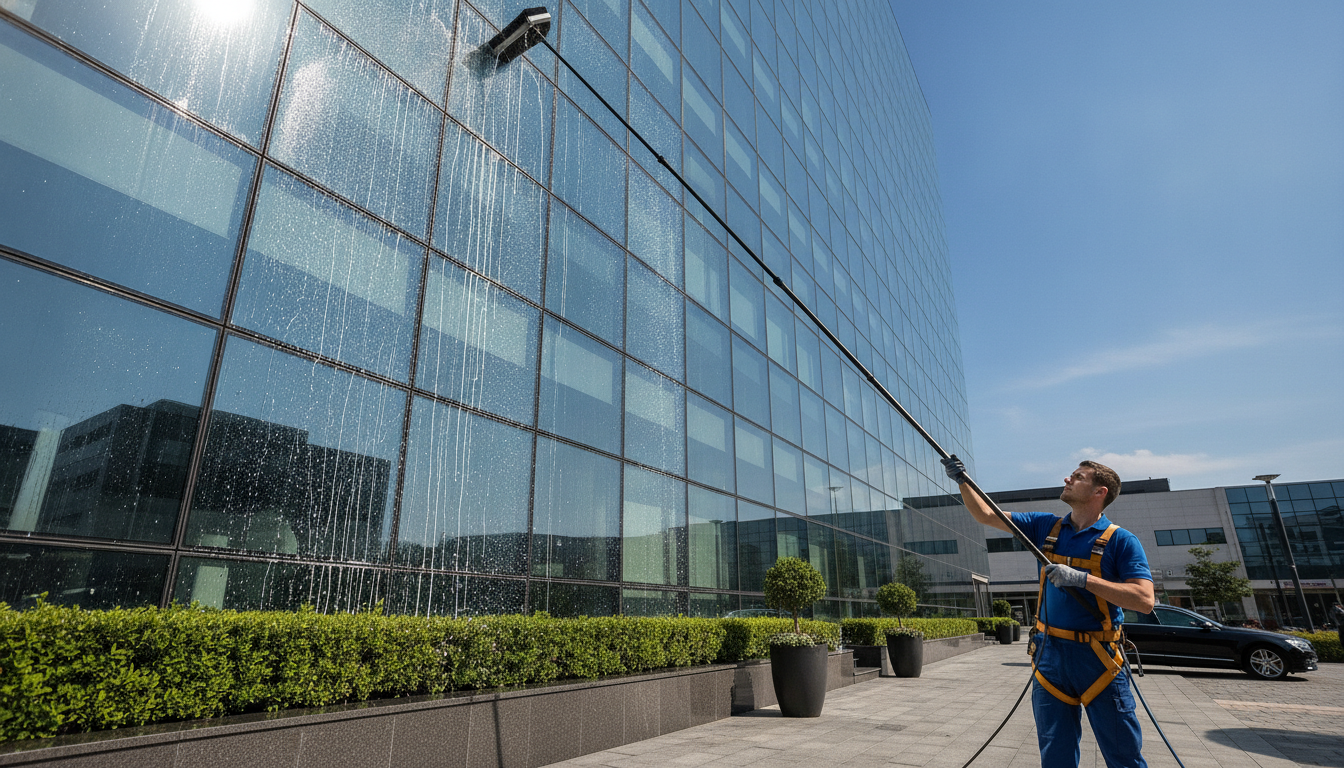
The most effective tools for cleaning high windows depend on glass accessibility and thickness: magnetic window cleaners work through double-glazed insulated units up to 45mm without ladders or scaffolding, water-fed poles with pure-water systems reach ground-to-roof on accessible facades, and traditional squeegee extension poles suit single-story exterior work where you can reach the top edge. For inaccessible double-glazed high-rise windows, magnetic systems eliminate fall risk entirely.
📋 Table of Contents
Executive Summary
- Magnetic cleaners: eliminate ladder and scaffolding costs for inaccessible double-glazed windows; adjustable magnetic force rated for glass from 3mm single-pane to 45mm insulated units.
- Water-fed poles: deliver streak-free results on accessible facades using deionized pure water; typical reach is 12-30 feet from ground level.
- Extension squeegees: lowest upfront cost for single-story exterior work; limited to heights where the operator can reach the top edge of the glass.
- Rope access and lifts: required for high-rise commercial facades; demand certified operators, insurance, and site-specific safety planning.
- Glass thickness: the primary specification when sourcing magnetic systems; mismatched magnetic force causes either grip failure on thick glass or glass cracking on thin panes.
Magnetic Window Cleaners for Double-Glazed Units
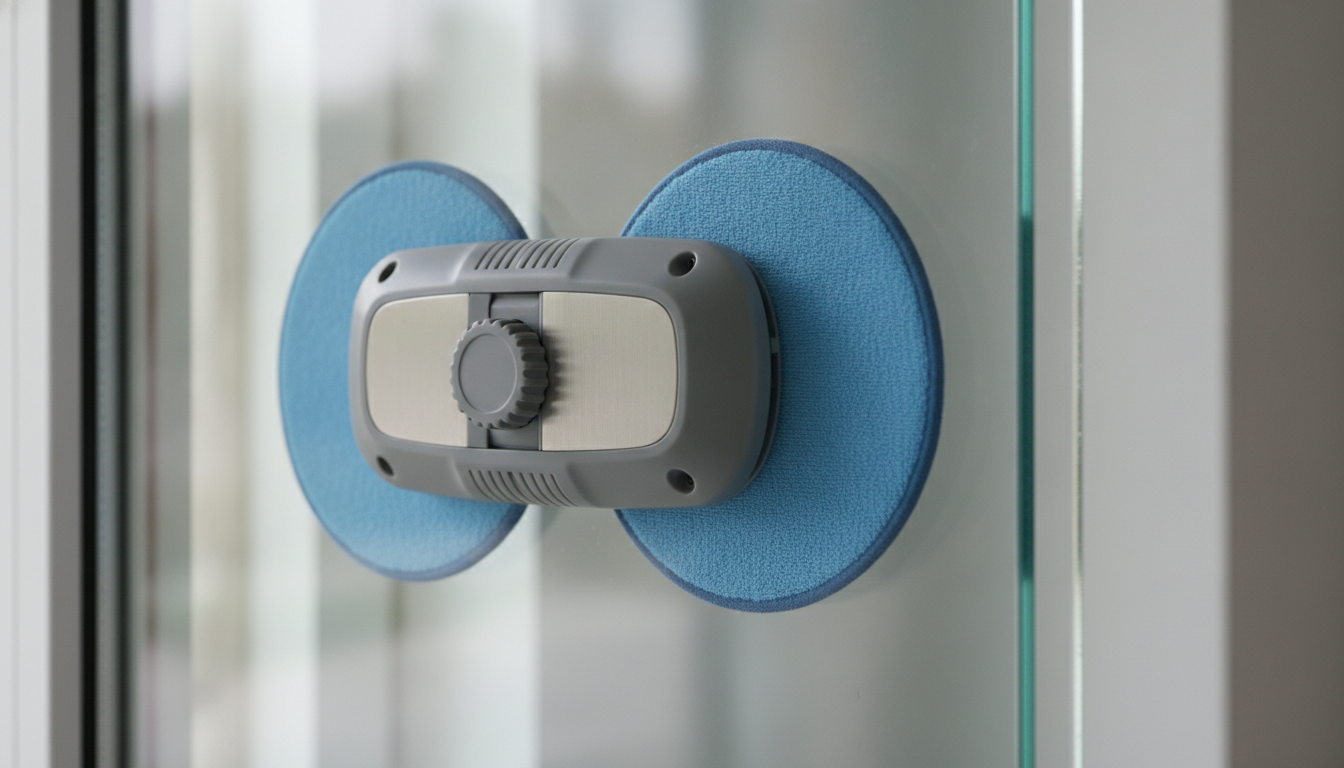
Magnetic window cleaners clamp onto both sides of a sealed glass unit using opposing magnets. One unit stays outside, the other inside. The operator moves the inner handle, and magnetic attraction drags the outer unit in sync. This design eliminates exterior access entirely, making it the safest option for high-rise residential and commercial windows that open inward or tilt.
How Adjustable Magnetic Force Works
Magnetic strength must match glass thickness. Too weak, and the outer unit drops. Too strong on thin glass, and the clamping pressure can crack the pane. Fonoran magnetic window cleaners use a 6-stage adjustable mechanism: rotating a dial increases or decreases the gap between the magnet and the glass surface, changing effective magnetic force without swapping hardware.
Our factory produces four SKUs covering the full residential and light-commercial range:
- 3-30mm SKU: single-pane and standard double-glazed units in older buildings.
- 5-35mm SKU: modern double glazing with wider air gaps or low-emissivity coatings.
- 8-40mm SKU: insulated glass units (IGUs) common in energy-efficient construction.
- 10-45mm SKU: thick commercial double glazing and laminated security glass.
In practice: A home user in Germany with 36mm insulated glass needed an adjustable magnetic window cleaner; 36mm sits inside the 10-45mm SKU with room to spare.
Material and Magnet Type
Every Fonoran SKU uses NdFeB (neodymium-iron-boron) magnets except the entry FN-Classic 3-8mm model, which is Ferrite. NdFeB delivers higher pull force per unit weight, critical when the glass is thick or when the operator needs to move the unit vertically without it sliding down. Ferrite magnets cost less and suit thin single-pane glass where high force is unnecessary.
Safety Strap and Drop Prevention
Buyers report that the outer unit can drop instantly when moved vertically if magnetic force is mismatched or if the operator lifts the inner handle away from the glass. Every magnetic cleaner ships with a tethered safety strap that loops around the window frame or a fixed anchor point. The strap catches the outer unit before it falls to the ground, preventing property damage and injury to pedestrians below.
Water-Fed Poles and Pure-Water Systems
Water-fed poles pump deionized or reverse-osmosis-treated pure water through a telescopic pole to a brush head at the top. Pure water contains no dissolved minerals, so it dries streak-free without squeegee contact. The operator scrubs from ground level and rinses, leaving the glass to air-dry.
Reach and Pole Construction
Poles extend from 12 feet to over 60 feet depending on construction. Carbon-fiber poles weigh less and reduce operator fatigue, but cost more than aluminum or fiberglass. Most window-cleaning contractors stock 20-foot and 30-foot poles for two- and three-story buildings, and rent or subcontract longer poles for taller structures.
Pure-Water System Components
A complete system includes:
- Water purification unit: deionization resin cartridges or reverse-osmosis membrane to remove calcium, magnesium, and silica.
- TDS meter: measures total dissolved solids; readings below 10 ppm ensure streak-free drying.
- Pump and hose reel: delivers water at 40-60 psi through the pole.
- Brush head: soft bristles agitate dirt without scratching glass or frames.
When Water-Fed Poles Are Not Suitable
Water-fed systems require exterior access at ground level. They cannot reach windows blocked by landscaping, awnings, or adjacent buildings. They also perform poorly on windows with heavy mineral staining or paint overspray, which need solvent or blade scraping. For inaccessible or obstructed glass, magnetic cleaners or rope access remain the only options.
Extension Squeegee Poles and T-Bars
Extension poles pair a telescopic or fixed-length pole with a T-bar squeegee head. The operator wets the glass with a washer sleeve or sponge, then pulls the squeegee down in overlapping strokes to remove water and dirt. This method has been the industry standard for decades and remains the lowest-cost option.
Pole Length and Material
Aluminum poles dominate the market due to low cost and corrosion resistance. Fiberglass poles insulate against electrical contact, critical when working near power lines. Carbon-fiber poles reduce weight but cost three to five times more than aluminum. Most contractors stock 6-foot, 8-foot, and 12-foot poles and connect them with threaded couplers to reach second-story windows.
Swivel and Fixed Heads
Fixed-angle squeegee heads work well on flat vertical glass. Swivel or articulating heads allow the operator to adjust the blade angle for angled skylights, sloped glass, or tight corners. The swivel joint adds weight and complexity, and some models develop play over time, reducing blade contact pressure and leaving streaks.
Limitations
Extension squeegees require the operator to reach the top edge of the glass to pull the blade down. Beyond 12-15 feet, this becomes impractical without a ladder, which reintroduces fall risk. For windows above the second story, water-fed poles or magnetic systems are safer and faster.
Rope Access and Aerial Lifts
High-rise commercial buildings with fully sealed facades require rope-access technicians or boom lifts. Rope-access teams rappel from the roof using industrial climbing harnesses, ropes, and descenders. Boom lifts position a platform alongside the glass, allowing the operator to clean from a stable surface.
Certification and Insurance
Rope-access work demands IRATA or SPRAT certification in most jurisdictions. Technicians train in rescue procedures, anchor-point inspection, and fall-arrest systems. Liability insurance premiums for rope-access window cleaning are higher than ground-based methods due to the elevated risk profile.
Cost Structure
Rope-access and lift services bill by the hour or by the building, with minimum charges that make them uneconomical for small jobs. A single residential high-rise can justify the cost; a standalone office tower with 200 windows may not. For mixed-use buildings where some windows are accessible and others are not, facility managers often combine methods: ground-based tools for accessible glass, and rope access for sealed curtain walls.
Matching Tool to Glass Thickness and Building Height
Glass thickness and building height together determine which tools are practical. The table below maps common scenarios to recommended methods.
Measuring Glass Thickness
Buyers often guess glass thickness incorrectly. A digital caliper or glass thickness gauge reads the total thickness of a sealed unit, including both panes and the spacer. Holding a ruler against the edge of an open window gives an approximate measurement, but sealed units require measurement from outside or access to the building specification documents.
Adjustable vs Fixed-Force Magnetic Cleaners
Fixed-force magnetic cleaners are rated for a narrow thickness range, typically 5-12mm or 15-24mm. Buyers must stock multiple models to cover the range of glass in a building, or risk grip failure or glass damage. Adjustable-force models like Fonoran’s adjustable-force range eliminates this inventory problem across glass from 3mm to 45mm, and facility managers dial the force up or down as they move between single-pane and double-glazed windows.
B2B Procurement Considerations
Distributors, wholesalers, and facility-management buyers evaluate tools for cleaning high windows on criteria beyond unit performance. Total cost of ownership, regulatory compliance, and supply-chain reliability determine whether a product line succeeds in a market.
MOQ and Private Labeling
Factory-direct magnetic window cleaner orders start at 2 units for stock models, allowing distributors to test a market without committing to container quantities. Private-label programs require 500 units minimum and include custom packaging, logo placement, and product inserts. New-mold OEM projects carry higher minimums, quoted per design.
CE Certification and Market Access
Buyers selling in the European Union should confirm which directives apply to their specific model; Fonoran holds third-party CE certification available for review. Fonoran holds third-party CE certification (certificate WUX202105142249ENC issued by Shenzhen Wuxiang Testing), covering mechanical safety and materials compliance. Importers should request a copy of the certificate and verify the notified-body number before placing orders, as counterfeit CE marks are common in the cleaning-tools category.
Replacement Pads and Spare Parts
Microfiber cleaning pads wear out after 50-100 cleaning cycles depending on surface abrasiveness. Distributors must confirm pad availability and lead time before committing to a supplier. Magnetic units with proprietary pad attachment systems lock buyers into a single source for consumables, increasing lifetime cost. Velcro-attached pads allow buyers to source generic replacements from multiple suppliers.
Shipping and Lead Time
Our 6,500m² Taizhou factory ships from Ningbo port. Lead time and payment terms are confirmed at quotation and vary by order size, customization requirements, and shipping method. Express courier delivery suits sample orders and urgent restocks; LCL and FCL ocean freight reduce per-unit cost for container volumes.
Warranty and After-Sales Support
Warranty terms differ between consumer-grade and commercial-grade magnetic cleaners. Consumer models typically carry 90-day to 1-year coverage against manufacturing defects. Commercial models used by facility-management teams and window-cleaning contractors see heavier use and benefit from extended warranty periods and dedicated technical support. Buyers should clarify warranty duration, what constitutes a defect versus wear-and-tear, and whether the supplier covers return shipping for warranty claims.
Key Takeaways
- Magnetic window cleaners eliminate ladder and scaffolding costs for inaccessible double-glazed windows, covering glass thickness from 3mm single-pane to 45mm insulated units across four adjustable SKUs.
- Water-fed poles with pure-water systems deliver streak-free results on accessible facades and typically reach 12-30 feet from ground level, but require exterior access and perform poorly on heavily stained glass.
- Extension squeegee poles remain the lowest-cost option for single-story exterior work, but become impractical above 12-15 feet without ladders or scaffolding.
- Rope-access and aerial-lift methods are required for high-rise sealed curtain walls, demand certified operators and insurance, and carry higher hourly costs than ground-based tools.
- Glass thickness is the primary specification when sourcing magnetic systems; mismatched magnetic force causes grip failure on thick glass or cracking on thin panes, and adjustable-force models reduce inventory complexity for distributors.
- Factory-direct procurement starts at 2 units for stock models and 500 units for private-label programs; buyers should confirm which directives apply to their specific model for EU market access, and shipping originates from Ningbo port.
Frequently Asked Questions
Do magnetic window cleaners work on double-glazed windows?
Magnetic window cleaners work on double-glazed windows when the magnetic force matches the total glass thickness. Standard double-glazed units measure 15-24mm; insulated glass units (IGUs) with low-emissivity coatings and wider air gaps range from 20mm to 45mm. Adjustable-force models like Fonoran’s 6-stage range allow the operator to dial magnetic strength up or down, covering single-pane and double-glazed glass with one unit. Fixed-force models rated for 5-12mm will not grip through double glazing, and models rated for thick glass can crack thin single-pane windows if the force is too high.
What is the best telescopic window cleaning pole for high windows?
The best telescopic pole depends on reach requirement and operator strength. Carbon-fiber poles weigh less and reduce fatigue during extended use, making them suitable for 20-30 foot reaches, but cost three to five times more than aluminum. Aluminum poles dominate the market for budget-conscious contractors and suit 12-20 foot applications. Fiberglass poles insulate against electrical contact and are required when working near power lines. Water-fed poles with integrated pure-water brush heads deliver streak-free results without squeegee contact, while traditional squeegee poles require the operator to reach the top edge of the glass to pull the blade down, limiting practical height to 12-15 feet without a ladder.
How do you clean high windows without a ladder?
Three methods eliminate ladders for high-window cleaning: magnetic window cleaners for inaccessible double-glazed units, water-fed poles with pure-water systems for accessible exterior facades, and rope-access or boom-lift services for high-rise sealed curtain walls. Magnetic cleaners clamp onto both sides of the glass using opposing magnets, allowing the operator to clean from inside without exterior access. Water-fed poles extend 12-30 feet and scrub glass from ground level using deionized water that dries streak-free. Rope-access technicians rappel from the roof using industrial climbing harnesses, and boom lifts position a platform alongside the glass. Each method suits different building heights, glass types, and accessibility constraints.
Selecting the right tools for cleaning high windows depends on glass thickness, building height, and whether the glass is accessible from outside. Magnetic systems eliminate fall risk for inaccessible double-glazed units, water-fed poles suit accessible facades, and traditional squeegees remain cost-effective for single-story work. Distributors and facility managers should verify glass thickness, confirm CE certification for EU markets, and request sample units before committing to bulk orders.
Ready to source factory-direct magnetic window cleaners for your market?
Request a Quote →
Written by the Fonoran Export Team.