What Questions to Ask an OEM Window Cleaner Manufacturer Before Ordering (2026 Guide)
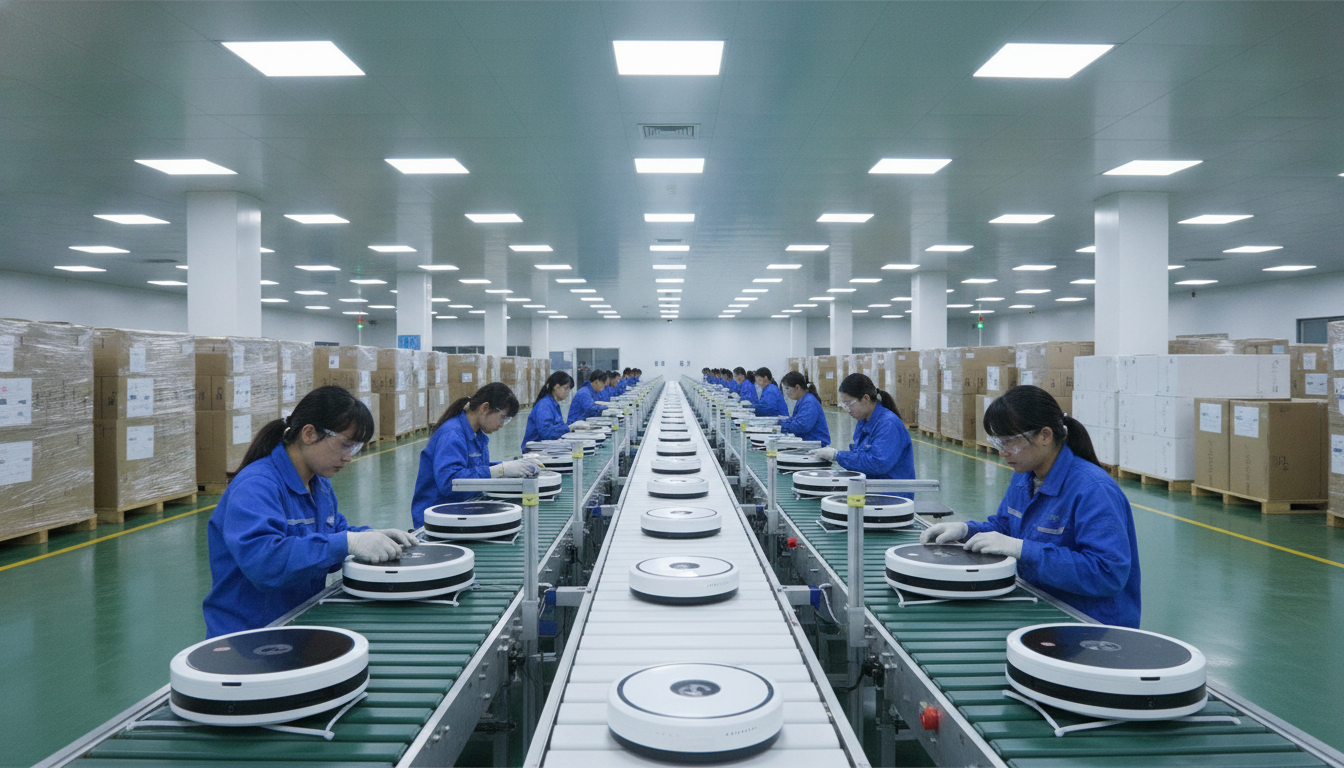
When placing your first order with an OEM window cleaner manufacturer, ask about glass thickness compatibility across their SKU range, certifications (CE, RoHS, ISO9001), minimum order quantity, production lead time, quality control stages, packaging options, payment terms, and after-sales support for defects and spare parts. These questions protect you from magnetic-strength mismatches, compliance gaps, and hidden costs that surface after the deposit clears. For magnetic window cleaners specifically, verify the manufacturer can document which SKU fits your target glass thickness and whether the magnetic force is adjustable for both single and double-pane applications.
Executive Summary
- Glass thickness verification: Confirm the manufacturer offers adjustable SKUs that cover your target market’s glazing range, and ask for the specific thickness limits of each model to avoid magnetic-strength failures in the field.
- Certification documentation: Request copies of ISO9001, CE, and RoHS certificates with current validity dates, and verify the certificate holder name matches the factory legal entity on the quotation.
- MOQ and commercial terms: Clarify the minimum order quantity for standard models versus customized branding, packaging, or color variants, and confirm whether lead time, payment schedule, and container quantities are locked or negotiable.
- Quality control transparency: Ask which inspection stages are documented with photos or reports, whether you can appoint a third-party inspector, and how defects discovered after shipment are handled (replacement policy, spare-parts availability, warranty duration).
- Export logistics detail: Verify the manufacturer can provide HS code, carton dimensions, palletization spec, and Incoterms options, and confirm whether they handle freight or you need your own forwarder.
How Do You Verify Glass Thickness Compatibility Across the SKU Range?
Magnetic window cleaners fail when magnetic force does not match glass thickness, a complaint buyers raise frequently when distributors stock a single model and attempt to serve both residential and commercial accounts. Ask the manufacturer to list every SKU with its exact thickness range in millimeters, and request a written recommendation for your target market’s most common glazing types.
Single-Pane Residential vs Double-Pane Commercial
Residential single-pane windows in older housing stock typically measure 3-8mm, while modern double-glazed insulated units range from 20mm to over 40mm depending on the air gap and pane count. A distributor serving both segments needs at least two SKUs. Ask whether the manufacturer’s thinnest SKU can handle tempered glass (which is denser than annealed) and whether the thickest SKU includes a safety tether rated for the magnet’s pull force at maximum separation.
Adjustable Magnetic Force
Fixed-strength magnets lock buyers into narrow thickness bands. Ask whether the SKU offers adjustable magnetic force and how many stages of adjustment it provides. Fonoran’s adjustable magnetic window cleaners feature six-stage force adjustment across four SKU ranges (3-30mm, 5-35mm, 8-40mm, 10-45mm), allowing a single unit to serve both thin and thick panes within its bracket. Request a demonstration video showing the adjustment mechanism in action, and confirm whether the adjustment is tool-free or requires a screwdriver.
Material Specification for Magnets
Magnetic strength depends on material composition. Ask whether the manufacturer uses neodymium (NdFeB) or ferrite magnets. NdFeB delivers higher pull force in a smaller housing, critical for thick double-glazed units. Ferrite is adequate for thin single-pane applications and costs less. Verify the material choice matches the SKU’s rated thickness range, and ask for a written spec sheet listing magnet material per model. Never accept a generic answer; request the material name in writing.
In practice: A home user in Germany with 36mm insulated glass needed an adjustable magnetic window cleaner; the 10-45mm SKU provided room to spare, and the six-stage force adjustment let the buyer dial in the exact grip needed without over-tightening.
.
What Certifications Should the Manufacturer Provide, and How Do You Verify Them?
Certifications prove the product meets safety and material-restriction standards in your target market. Ask for ISO9001 (quality management), CE (European safety), and RoHS (hazardous-substance limits) certificates, and verify the certificate holder name matches the factory legal entity on the quotation. Mismatched names signal a trading company reselling another factory’s certified product, which complicates liability if a defect triggers a recall.
ISO9001 Quality Management
ISO9001 certifies the manufacturer operates a documented quality-management system covering supplier control, production procedures, inspection records, and corrective-action processes. Request a copy of the current certificate with the issuing body’s name, certificate number, and expiry date. Cross-check the certificate holder’s legal name against the quotation header and the factory business license. A mismatch means the seller does not own the certification.
CE Marking for EU Market Access
CE marking is mandatory for cleaning equipment sold in the EU, covering mechanical safety, electromagnetic compatibility, and material restrictions. Ask the manufacturer for the Declaration of Conformity (DoC) document listing the harmonized standards the product meets, and verify the DoC is signed by an authorized representative with a traceable address in the EU. Generic CE logos printed on packaging without a DoC are red flags. Fonoran holds CE compliance and can supply DoC documentation on request.
RoHS Material Restrictions
RoHS restricts lead, mercury, cadmium, hexavalent chromium, and brominated flame retardants to below 0.1% by weight in electrical and electronic equipment. Magnetic window cleaners with LED indicators or battery-powered components fall under RoHS scope. Ask for a RoHS test report from an accredited lab (SGS, TÜV, Intertek) listing results for each restricted substance, and confirm the report date is within the past 12 months. Outdated reports may not reflect current production batches.
Market-Specific Requirements
Beyond CE and RoHS, ask whether the manufacturer can supply documentation for your specific import market. Australia requires compliance with AS/NZS safety standards for consumer goods; Canada enforces SOR/2011-17 (Canada Consumer Product Safety Act); the United States applies CPSC guidelines for mechanical hazards. Confirm the manufacturer understands these requirements and can provide test reports or declarations tailored to your destination country.
What Are the MOQ, Lead Time, and Payment Terms for Standard vs Customized Orders?
Minimum order quantity, production lead time, and payment schedules vary between stock models and customized branding or packaging. Ask the manufacturer to separate standard-model MOQ from the incremental MOQ triggered by logo printing, color changes, accessory bundles, or tooling for new molds. Confirm whether the quoted lead time includes inspection, packaging, and port drayage, or only factory-gate handover.
Standard Model MOQ
Stock models that the factory produces continuously carry lower MOQ than custom variants. Fonoran’s standard magnetic window cleaners start from 100 units per SKU, allowing distributors to test a market without committing to container volumes. Ask whether the 100-unit MOQ applies per color, per thickness SKU, or across the entire order, and confirm whether mixed SKUs within one shipment are permitted. Some factories enforce single-SKU minimums that force buyers into overstock.
Customization Incremental MOQ
Logo printing, custom packaging, and non-standard colors typically add 200-500 units to the base MOQ because they require dedicated production runs or tooling setup. Ask the manufacturer to itemize the MOQ for each customization layer: logo silkscreen, carton artwork, accessory kits (extra pads, tethers, microfiber cloths), and color matching. Request a written breakdown showing base MOQ, customization increments, and total minimum commitment before design approval.
Lead Time Components
Production lead time is not the same as total delivery time. Ask the manufacturer to break down the timeline into material procurement, production, quality inspection, packaging, and port drayage. A quoted 15-day lead time may mean 15 days to factory gate, with another 7 days to load the container and clear customs at the origin port. Confirm whether the lead time assumes materials in stock or includes supplier lead time for magnets, housing molds, and microfiber fabric.
Payment Terms and Milestones
Deposit and balance splits vary by order size and buyer credit history. Ask whether the manufacturer requires full payment before production, a deposit-on-order and balance-before-shipment structure, or offers net terms for established accounts. Confirm the payment trigger for the balance: is it tied to production completion, pre-shipment inspection approval, or bill-of-lading issuance? Clarify the currency (USD, EUR, CNY) and whether the manufacturer absorbs or passes through foreign-exchange fluctuation risk.
Which Quality Control Stages Are Documented, and Can You Appoint a Third-Party Inspector?
Quality control determines whether the delivered product matches the approved sample. Ask the manufacturer to describe each inspection stage, who performs it, what gets documented, and whether you can appoint an independent third-party inspector to witness production or pre-shipment checks. Factories that resist third-party inspection often hide material substitutions or workmanship shortcuts.
Pre-Production Sample Approval
Before mass production starts, request a pre-production sample that uses the exact materials, magnets, housing molds, and microfiber pads planned for the bulk order. Inspect the sample for magnetic pull force at the rated thickness limits, housing-fit tolerance, pad attachment method, and safety-tether anchor strength. Approve the sample in writing with photos, and stipulate that the production batch must match the approved sample in every material and dimension. Any deviation requires your written consent.
During-Production Inspection
During-production inspection (DUPRO) occurs when 20-40% of the order is complete, allowing you to catch defects early enough to correct the remaining batch. Ask whether the manufacturer offers DUPRO as standard or charges extra, and confirm whether you can send your own QC staff or hire a third-party agency (SGS, Bureau Veritas, Intertek). DUPRO reports should include random-sample testing of magnetic force, housing-seal integrity, and pad adhesion, with photographic evidence of the production line and finished-goods staging area.
Pre-Shipment Inspection (PSI)
Pre-shipment inspection verifies the completed order against the purchase-order specification and approved sample before the goods leave the factory. Ask whether PSI is included in the quoted price or billed separately, and confirm the inspection scope: does it cover only visual defects and carton counts, or does it include functional testing of magnetic force, drop tests for housing durability, and measurement of glass-thickness compatibility? Request a detailed PSI report with pass/fail criteria, defect photos, and an AQL (Acceptable Quality Limit) sampling plan.
Factory Audit and Capacity Verification
Beyond product inspection, ask whether you can audit the factory to verify production capacity, worker training, and material-traceability systems. A factory claiming 50,000 units per day should show multiple production lines, adequate raw-material inventory, and documented shift schedules. Request photos of the production floor, magnet-assembly stations, and finished-goods warehouse. Cross-check the factory address on the business license against the address you visit or the address visible in factory photos.
What Packaging Options Are Available, and What Are the Customization Limits?
Packaging affects both product protection during transit and shelf appeal in retail or e-commerce channels. Ask the manufacturer to describe standard packaging (inner box, outer carton, protective inserts), customization options (logo printing, color boxes, retail-ready hang tags), and the incremental cost or MOQ for each tier. Confirm carton dimensions and weight to calculate container loading efficiency and landed cost per unit.
Standard Packaging Specification
Standard packaging typically includes a color-printed inner box with product photos and basic instructions, an outer brown-kraft carton holding multiple units, and foam or cardboard inserts to prevent magnet collision during shipping. Ask for the exact carton dimensions (length, width, height in centimeters), gross weight per carton, and units per carton. Calculate the carton’s cubic volume and compare it to standard container capacities (20-foot, 40-foot, 40-foot high-cube) to estimate how many units fit per shipment.
Custom Logo and Artwork
Logo printing on the product housing, inner box, and outer carton requires artwork files in vector format (AI, EPS, PDF) and color matching (Pantone codes). Ask the manufacturer which surfaces accept printing (housing top, handle, box panels), the maximum print area per surface, and whether they charge a one-time plate fee or per-unit printing cost. Confirm the artwork approval process: how many rounds of digital mockups are included, and what is the lead time for physical samples with printed branding?
Retail-Ready and E-Commerce Packaging
Retail-ready packaging includes hang holes, barcode placement, and multilingual safety warnings that meet the destination country’s labeling laws. E-commerce packaging prioritizes drop-test durability and unboxing experience. Ask whether the manufacturer can design packaging that passes ISTA (International Safe Transit Association) drop and vibration tests, and confirm whether they provide Amazon FNSKU labeling or other marketplace-specific prep services. Fonoran offers OEM and ODM packaging customization with artwork support and carton-optimization guidance.
Carton Optimization for Freight Cost
Freight cost per unit drops when cartons stack efficiently on pallets and fill container volume without wasted space. Ask the manufacturer to provide the outer carton’s exact dimensions and confirm how many cartons fit on a standard 1200mm × 1000mm pallet without overhang. Request a container-loading plan showing carton count per 20-foot and 40-foot container, and verify whether the plan accounts for pallet height limits (typically 1.8 meters for safe stacking). Optimized carton dimensions can increase container utilization and reduce your per-unit landed cost.
How Are Defects, Warranty Claims, and Spare Parts Handled After Shipment?
After-sales support determines whether a defect becomes a minor inconvenience or a total loss. Ask the manufacturer to document their warranty policy, defect-replacement procedure, spare-parts availability, and response time for post-shipment issues. Buyers worry the product becomes disposable after a defect, a concern raised on multiple review platforms, so clarity here protects your brand reputation and customer retention.
Warranty Duration and Scope
Ask for the warranty period in months from shipment date or from end-customer purchase date, and confirm what the warranty covers: manufacturing defects only, or also wear-and-tear components like microfiber pads and safety tethers? Clarify exclusions (misuse, unauthorized disassembly, use beyond rated thickness) and the process for filing a claim. Does the buyer need to return the defective unit, or can they submit photos and a written description? Confirm whether warranty replacements ship at the manufacturer’s expense or the buyer’s expense.
Defect Replacement Policy
Defects discovered after delivery fall into two categories: isolated units (handled as warranty claims) and batch defects (requiring partial or full replacement). Ask the manufacturer to define the defect-rate threshold that triggers a batch replacement (commonly 2-5% AQL), and confirm whether they will airfreight replacement units to meet your customer commitments or only offer credit toward the next order. Request a written policy stating response time (24 hours, 48 hours) and resolution timeline.
Spare Parts Availability
Magnetic window cleaners have consumable components: microfiber cleaning pads wear out, safety tethers fray, and housing clips break. Ask whether the manufacturer stocks spare parts separately, what the MOQ is for spare-parts orders, and how long parts remain available after a model is discontinued. Confirm part numbers for pads, tethers, and housing components, and request unit pricing for common spares. Distributors who can offer replacement pads extend product life and build customer loyalty.
Technical Support and User Instructions
Clear user instructions reduce misuse-related defects and liability exposure. Ask the manufacturer to provide multilingual instruction manuals (English, German, French, Spanish) with step-by-step setup photos, glass-thickness compatibility charts, and safety warnings. Confirm whether instructions are printed inside the box or available as downloadable PDFs, and verify that safety warnings meet the legal requirements of your target market (EU General Product Safety Regulation, US CPSC guidelines, Australian Consumer Law).
What Export Documentation and Incoterms Does the Manufacturer Support?
Export logistics detail determines whether your shipment clears customs smoothly or incurs demurrage fees at the destination port. Ask the manufacturer to confirm the HS code for magnetic window cleaners, the documents they provide (commercial invoice, packing list, certificate of origin, bill of lading), and which Incoterms they accept (EXW, FOB, CIF, DDP). Verify whether they handle freight booking or you need your own forwarder.
HS Code and Duty Rate
The Harmonized System (HS) code determines the import duty rate and whether the product requires special permits. Magnetic window cleaners typically fall under HS 8205.51 (household tools) or 8205.59 (other hand tools), but classification varies by customs authority. Ask the manufacturer to provide the HS code they use for export declarations, and cross-check it with your destination country’s tariff database. Confirm whether the manufacturer has experience exporting to your target market and whether they can supply a certificate of origin (Form A, non-preferential, or free-trade-agreement origin) to reduce duty rates.
Incoterms and Cost Responsibility
Incoterms define where cost and risk transfer from seller to buyer. EXW (Ex Works) means you arrange pickup from the factory and bear all costs; FOB (Free On Board) means the manufacturer delivers to the origin port and you pay ocean freight and destination charges; DDP (Delivered Duty Paid) means the manufacturer handles everything to your warehouse door. Ask which Incoterms the manufacturer accepts, and confirm whether the quoted price is FOB (most common for B2B) or another term. Verify the loading port (Ningbo, Shanghai, Shenzhen) and whether the manufacturer can consolidate your order with other shipments to reduce freight cost.
Export Documentation Package
A complete export documentation package includes the commercial invoice (with HS code, unit price, total value), packing list (carton count, gross/net weight, dimensions), certificate of origin, and bill of lading or air waybill. Ask the manufacturer to provide sample documents before shipment so you can review them for accuracy and share them with your customs broker. Confirm whether the manufacturer can issue a Form E (ASEAN-China FTA), EUR.1 (EU preferential origin), or USMCA certificate if your destination qualifies for reduced duties under a trade agreement.
Freight Forwarder Coordination
Ask whether the manufacturer works with a freight forwarder they recommend or whether you should appoint your own. If you use your own forwarder, confirm the factory’s location (street address, not just city) and the nearest container yard or port for pickup. Request the factory’s contact person for logistics coordination, including their phone number and WeChat or WhatsApp ID for real-time shipment updates. Verify whether the manufacturer can provide cargo-ready dates in advance so your forwarder can book space and avoid peak-season delays.
How Do You Verify the Manufacturer’s Legal Identity and Production Capability?
Supplier verification protects you from shell companies, trading-company middlemen posing as factories, and facilities that lack the capacity to fulfill your order. Ask for the manufacturer’s business license, export license, factory-audit reports, and client references, and cross-check the legal entity name against the quotation, certifications, and bank-account holder for payment.
Business License and Export Registration
Request a copy of the manufacturer’s business license (营业执照 in China) showing the legal company name, registration number, registered address, and business scope. Verify that the scope includes manufacturing or production, not just trading or consulting. Ask for the export registration certificate or customs code, which proves the company is authorized to export goods directly. Cross-check the registered address against the factory address you plan to visit or audit, and confirm the legal entity name matches the name on the quotation and the bank account for payment.
Third-Party Factory Audit
Third-party audits (BSCI, Sedex, ISO9001 surveillance) provide independent verification of working conditions, production capacity, and quality systems. Ask whether the manufacturer has recent audit reports you can review, and confirm the audit scope (social compliance, quality management, environmental). If no recent audit exists, consider hiring an audit firm (SGS, Bureau Veritas, Intertek) to conduct a pre-order factory assessment covering production lines, raw-material inventory, worker count, and finished-goods storage capacity.
Client References and Order History
Ask the manufacturer for client references in your region or industry, and contact those references to verify order volume, lead-time accuracy, defect rates, and responsiveness to issues. Request export data or shipment records (with customer names redacted for confidentiality) showing consistent monthly or quarterly shipments, which indicate stable production rather than sporadic project-based work. Be cautious if the manufacturer cannot provide any verifiable references or if all references are recent (suggesting a new or unstable operation).
Online Verification Platforms
B2B platforms like Alibaba display supplier verification badges (Gold Supplier, Verified Manufacturer, Trade Assurance) that indicate the platform has conducted on-site checks and financial vetting. Cross-check the manufacturer’s profile on multiple platforms, and verify that the company name, address, and contact details are consistent. Search the company name and registration number in national business registries (China’s National Enterprise Credit Information Publicity System, European business registers) to confirm legal status and check for litigation or bankruptcy filings.
Key Takeaways
- Glass thickness compatibility is the first question to ask an OEM window cleaner manufacturer before ordering, because magnetic-strength mismatches cause field failures and customer complaints; verify the SKU range covers your target market’s glazing types and request written thickness limits for each model.
- Certification verification prevents compliance gaps that block market entry; request ISO9001, CE, and RoHS certificates with current validity dates, cross-check the certificate holder name against the quotation, and ask for Declaration of Conformity documents listing harmonized standards.
- MOQ clarity separates standard-model minimums from customization increments; confirm whether the quoted MOQ applies per SKU, per color, or across the entire order, and ask for a written breakdown of incremental MOQ for logo printing, packaging, and tooling.
- Quality control transparency determines whether the delivered product matches the approved sample; ask which inspection stages are documented, whether you can appoint third-party inspectors, and how defects discovered after shipment are handled.
- Export logistics detail affects landed cost and customs clearance; verify the HS code, request a complete documentation package (invoice, packing list, certificate of origin, bill of lading), and confirm which Incoterms the manufacturer accepts.
- Supplier verification protects you from shell companies and capacity misrepresentation; request the business license, export registration, factory-audit reports, and client references, and cross-check the legal entity name across all documents.
FAQ
Can I request samples before placing a bulk order, and what is the sample cost?
Most OEM manufacturers offer samples for a fee that covers production cost and express shipping, typically refunded or credited against your first bulk order. Ask whether the sample uses the exact materials and magnets planned for mass production, and confirm the sample lead time (usually 3-7 days for stock models, longer for customized variants). Request multiple SKUs if you are evaluating thickness ranges, and verify that the sample approval process is documented in writing so the bulk order matches the approved unit.
What happens if the magnetic force is too weak or too strong for my target glass thickness?
Magnetic force that is too weak causes the outer unit to slide or drop, while excessive force makes the cleaner difficult to move and risks glass scratching. Ask the manufacturer whether the SKU offers adjustable magnetic force and how many adjustment stages it provides, and request a demonstration video showing the adjustment mechanism. Verify the rated thickness range in writing, and test the sample on glass panes at the minimum, midpoint, and maximum thickness to confirm grip strength and maneuverability across the full range.
How do I confirm the manufacturer can meet my delivery deadline for a seasonal or promotional launch?
Confirm the manufacturer’s current production backlog and ask for a guaranteed production slot with a penalty clause if they miss the deadline. Request a detailed timeline breaking down material procurement, production, inspection, and port drayage, and verify whether the lead time assumes materials in stock or includes supplier delays. Build buffer time into your launch schedule (at least 2-3 weeks for ocean freight, 1 week for air freight) to account for customs clearance and inland delivery, and consider air-freighting a partial shipment if ocean freight risks missing your launch window.
Placing your first order with an OEM window cleaner manufacturer requires asking the right questions to protect your investment and your brand reputation. Focus on glass thickness compatibility, certification verification, MOQ clarity, quality control transparency, export logistics detail, and supplier verification. Each question uncovers risks that surface after the deposit clears, when correction costs multiply. Distributors and wholesalers who ask these questions upfront build supplier relationships based on documented expectations, not assumptions, and avoid the magnetic-strength mismatches, compliance gaps, and hidden costs that derail product launches.
Ready to source magnetic window cleaners with verified glass thickness compatibility, ISO9001 and CE certification, and MOQ from 100 units? Request a detailed quotation from our export team and receive SKU recommendations, certification documents, and a container-loading plan tailored to your target market.
Written by the Fonoran Export Team