Custom Branding Options OEM Magnetic Window Cleaner (2026 Guide)
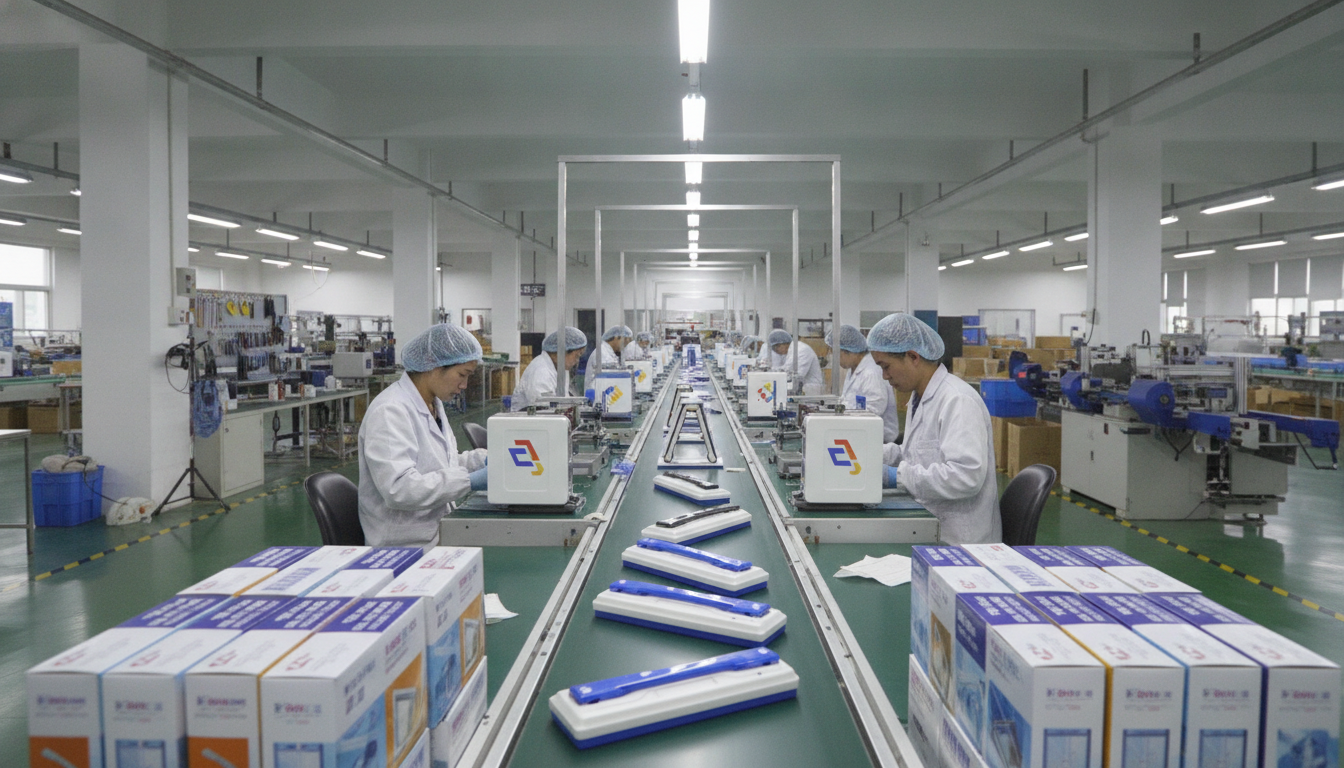
Custom branding options OEM magnetic window cleaner programs typically include logo application on product housings (pad printing, laser engraving, molded embossing), custom retail packaging with brand artwork and barcodes, product color matching to brand Pantone specifications, and localized instruction manuals. MOQ for private-label branding starts at 500 units; new-mold OEM projects requiring functional modifications are quoted per project with higher thresholds and tooling budgets.
Executive Summary
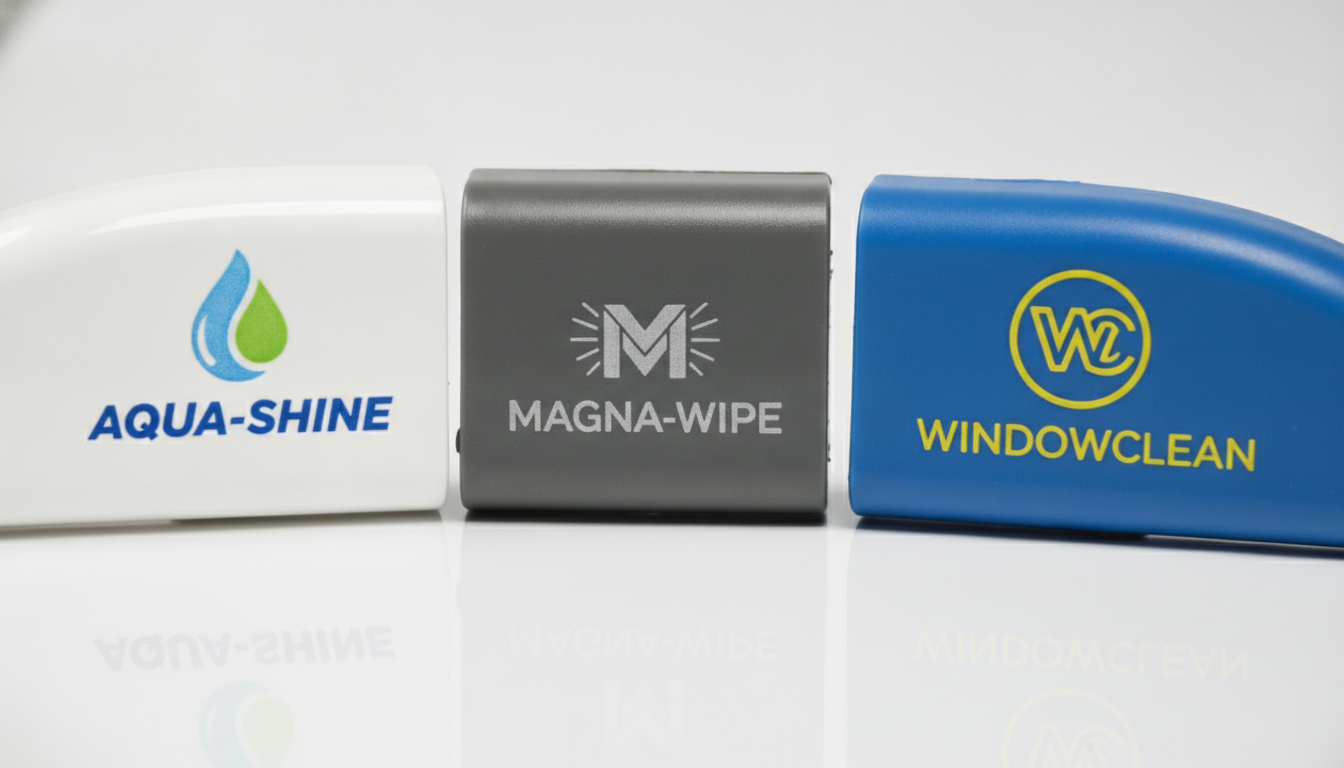
- Logo application methods: Pad printing, laser engraving, and molded embossing each suit different brand aesthetics and durability requirements, with pad printing offering full-color flexibility and laser engraving delivering permanent mark quality.
- Packaging customization: Retail cartons, inner trays, product sleeves, instruction manuals, and outer export cartons can all carry brand artwork, compliance labels, and market-specific barcodes.
- Color matching: Housing and handle colors can be matched to brand Pantone codes, though tooling and MOQ thresholds rise with custom-color requests.
- MOQ structure: Private-label programs with logo and packaging start at 500 units; new-mold OEM work requiring design or functional changes is quoted per project.
- Lead time and tooling: Sample production, packaging plate creation, and first-production runs are confirmed at quotation stage and depend on customization depth.
What Logo Application Methods Are Available?
Logo placement on magnetic window cleaner housings uses three primary methods, each with distinct durability, cost, and aesthetic trade-offs. Distributors choose based on brand positioning, target retail environment, and expected product lifespan.
Pad Printing
Pad printing transfers ink from an etched silicone pad onto the product surface, accommodating full-color logos, gradients, and fine text. This method suits curved or irregular surfaces and delivers sharp detail on both ABS and polypropylene housings. Abrasion resistance is moderate; logos on high-contact areas may fade after prolonged use. Setup requires a printing plate per color, with plate costs amortized across the production run. Minimum order quantities for pad printing typically align with private-label thresholds of 500 units.
Laser Engraving
Laser engraving removes material to create a permanent, recessed mark that cannot wear off. This method produces monochrome logos with excellent durability, ideal for premium positioning or industrial applications where the product sees heavy handling. Engraving works best on darker housings where the contrast between engraved and original surface is visible. No consumable plates are required, making it cost-effective for smaller batches once the laser setup is complete. The process is slower than pad printing, which can extend lead times on large orders.
Molded Embossing
Molded embossing integrates the logo directly into the injection-mold tool, so every unit emerges from the mold with a raised or recessed brand mark. This method offers the highest durability and a premium tactile feel, but requires a dedicated mold or mold insert, raising tooling costs and MOQ thresholds significantly. Embossing is most economical for high-volume programs where the brand expects multi-year reorders. Color-fill can be added post-molding to enhance visibility.
How Does Custom Packaging Work?
Packaging customization transforms a factory-standard product into a brand-owned SKU, covering everything the end buyer sees from shelf to first use. Distributors specify artwork, compliance labels, and language localization to match target-market requirements.
Retail Carton Design
The retail carton is the primary brand touchpoint. Custom designs include full-color printing with brand logos, product photography, feature callouts, usage instructions, and regulatory marks (CE logo, importer details, safety warnings). Carton dimensions and material weight can be adjusted to meet retailer shelf standards or e-commerce shipping constraints. Artwork is supplied as print-ready PDF files with bleed and dieline specifications; the factory produces digital proofs before committing to plate creation. Plate costs are one-time expenses tied to the carton size and color count.
Instruction Manuals and Inserts
Multilingual instruction manuals are critical for compliance in the EU, where products must carry documentation in the language of the destination country. Manuals include assembly steps, glass-thickness selection guidance, safety warnings, and maintenance instructions. Distributors supply translated text; the factory formats and prints on coated or uncoated paper stock. Insert cards for warranty registration, QR codes linking to video tutorials, or promotional offers can also be included. Some buyers request manuals printed on recycled paper to support sustainability claims.
Inner Trays and Protective Sleeves
Inner trays secure the product inside the carton and can be molded from pulp, vacuum-formed from PET, or die-cut from corrugated board. Custom trays add cost but reduce in-transit damage and enhance unboxing experience, which matters for premium retail channels. Protective sleeves, printed polybags or shrink-wrap with brand artwork, add another layer of shelf appeal and tamper evidence.
Outer Export Cartons
Export cartons carry brand logos, SKU codes, barcodes, and handling marks (fragile, this-way-up). Distributors specify carton counts (e.g., 10 or 20 units per master carton) to match their warehouse and retail replenishment workflows. Carton printing is typically one or two colors to control cost, though full-color outer cartons are available for direct-to-consumer fulfillment programs.
Can Product Colors Be Matched to Brand Standards?
Housing and handle colors can be customized to align with brand identity, though color matching introduces tooling and MOQ considerations. Standard factory colors, typically white, blue, green, and gray, are available at base MOQ. Custom Pantone matching requires color trials, masterbatch formulation, and minimum production runs to justify the setup.
Pantone Matching Process
Distributors supply a Pantone code (e.g., Pantone 2945C) and a physical color swatch. The factory compounds a masterbatch, a concentrated pigment mixed into the base resin, and produces sample parts for approval. Color accuracy depends on base material (ABS holds color differently than polypropylene) and surface finish (matte vs. gloss). Lighting conditions also affect perceived color, so samples are evaluated under standard D65 daylight conditions. Once approved, the masterbatch is batched for production. Color tolerances are agreed upfront; slight variation between production runs is normal due to resin lot differences.
MOQ and Tooling for Custom Colors
Custom-color orders typically require higher MOQs than standard colors because the factory must dedicate production time to purging previous colors from the injection-molding machines and running the new masterbatch. Minimum runs for custom colors often start at 1,000 to 2,000 units, depending on part complexity. If the custom color becomes a recurring SKU, the MOQ can decrease on subsequent orders as the masterbatch remains on file.
What Are the MOQ and Commercial Thresholds?
MOQ structures vary by customization depth. Understanding these tiers helps distributors plan initial orders, cash-flow requirements, and inventory risk.
Stock Models with No Customization
Stock magnetic window cleaners in standard colors and factory packaging are available from 2 units. This low threshold suits sample orders, trade-show demos, or small-scale testing before committing to private-label volumes. Fonoran’s magnetic window cleaner product range includes four adjustable SKUs covering 3-45mm glass thickness, the widest range in the industry, with 6-stage adjustable magnetic force for single and double-pane glass.
Private Label: Logo and Packaging
Private-label programs start at 500 units. This tier includes logo application (pad printing or laser engraving), custom retail cartons with brand artwork, localized instruction manuals, and branded outer cartons. Plate costs for packaging are one-time expenses; subsequent reorders at the same 500-unit MOQ do not incur additional plate fees unless artwork changes. Lead time and payment terms are confirmed at quotation.
New-Mold OEM: Functional or Design Changes
Projects requiring mold modifications, such as changing handle shape, adding a proprietary locking mechanism, or altering housing geometry, are quoted per project. These OEM engagements involve tooling investment, prototype rounds, and higher MOQs to amortize the mold cost. Tooling ownership, intellectual property terms, and exclusivity clauses are negotiated case by case. Distributors planning new-mold OEM should budget for engineering collaboration, sample iterations, and longer lead times.
What Compliance and Labeling Requirements Apply?
Market-specific compliance labels and documentation must be integrated into packaging and manuals. Distributors are responsible for ensuring their branded products meet destination-country regulations.
European Union: CE Marking and Importer Details
Products sold in the EU must carry CE marking and identify the importer by name and address on the packaging and in the manual. The importer, not the factory, is the legal entity responsible for compliance. Fonoran holds CE certification (certificate no. WUX202105142249ENC, issued by Shenzhen Wuxiang Testing), and the factory can supply the test report for distributor records. Distributors must also ensure packaging includes waste-disposal symbols (crossed-out wheelie bin) and language-specific safety warnings.
United Kingdom: UKCA Marking
Post-Brexit, the UK requires UKCA marking for products placed on the Great Britain market. CE marking remains accepted during a transition period, but distributors planning long-term UK sales should prepare UKCA-compliant packaging. The responsible person in the UK must be named on the packaging.
North America: UPC Barcodes and Voluntary Standards
Retailers in the USA and Canada require UPC-A barcodes on retail packaging. Distributors purchase barcode licenses from GS1 and supply the codes to the factory for printing on cartons. While magnetic window cleaners are not subject to mandatory federal safety standards in North America, some buyers request compliance with voluntary guidelines or conduct their own drop tests and material assessments.
Australia: Product Safety and Labeling
Australia enforces general product-safety obligations under the Australian Consumer Law. Distributors should ensure packaging carries the importer’s Australian business name and contact details. Some retailers request additional safety warnings or usage instructions tailored to Australian building codes, which typically feature thicker insulated glazing in newer constructions.
What Print Production Specifications Matter?
High-quality packaging requires attention to print production details that affect color accuracy, durability, and regulatory compliance. Distributors who understand these specifications avoid costly reprints and delays.
Color Matching and Tolerances
Packaging artwork is typically supplied in CMYK or Pantone spot colors. Pantone spot colors deliver tighter color consistency across print runs, while CMYK offers lower plate costs. The factory produces digital proofs (PDF) and physical press proofs (printed samples) for approval before full production. Color tolerances are expressed as Delta E values; a Delta E of 2 or less is considered a close match under controlled lighting. Distributors should specify acceptable tolerances upfront and approve proofs in writing.
Logo Durability and Abrasion Resistance
Logos on product housings are exposed to handling, cleaning chemicals, and UV light. Pad-printed logos should use UV-cured inks for better abrasion resistance. Laser-engraved logos are inherently durable but may require color-fill to enhance visibility. Distributors concerned about logo longevity should request abrasion testing (e.g., a rub test simulating repeated handling) during the sample stage.
Bleed, Dieline, and Safe Zones
Packaging artwork must include bleed (typically 3mm beyond the trim line) to prevent white edges after cutting. Dielines define fold and cut paths; critical text and logos should stay within the safe zone (typically 5mm inside the trim line) to avoid being cut off. The factory supplies dieline templates in Adobe Illustrator or PDF format. Distributors who supply print-ready files that respect these specifications avoid revision rounds and expedite production.
How Should Distributors Model Total Landed Cost?
Custom branding options OEM magnetic window cleaner programs involve multiple cost components beyond the per-unit product price. Distributors who model total landed cost accurately set realistic retail prices and margin targets.
Tooling and Setup Costs
One-time costs include packaging plates (typically one plate per color per carton face), logo printing plates or laser setup fees, and mold modifications for new-mold OEM projects. These costs are quoted separately and amortized across the initial order and subsequent reorders. Distributors should clarify whether tooling is owned by the buyer or the factory, and whether reorder pricing includes or excludes plate fees.
Sample Costs and Freight
Pre-production samples with custom branding are charged at cost plus a setup fee. Sample freight is typically via express courier (DHL, FedEx, UPS), with delivery in 5-7 days. Distributors should budget for multiple sample rounds if artwork or color revisions are anticipated.
In practice: An importer in Brazil paid for samples and collected them by express courier, and is planning container volumes through its own freight forwarder.
Freight, Duties, and Certifications
Freight costs depend on Incoterms (FOB, CIF, DDP), container type (20ft, 40ft, 40ft high-cube), and destination port. Duties and taxes vary by HS code and destination country; magnetic window cleaners typically fall under HS code 3924.90 (household articles of plastics). Distributors importing into the EU should account for VAT and, where applicable, CBAM (Carbon Border Adjustment Mechanism) fees. Certification costs, such as third-party lab testing for market-specific standards, are borne by the importer unless the factory already holds the relevant certificates.
Warranty Reserves and After-Sales Support
Branded products carry the distributor’s reputation, so warranty and after-sales obligations shift from the factory to the importer. Distributors should negotiate warranty terms (e.g., 12-month defect coverage), clarify the process for handling returns, and budget for replacement units or spare parts. Some buyers request a warranty reserve (e.g., 2-3% of order value held in credit) to cover potential claims without cash-flow disruption.
How Do Distributors Set Retail Pricing and Margins?
Margin structure depends on sales channel, brand positioning, and competitive landscape. Distributors selling to retail chains face different economics than those selling direct to consumers online.
Wholesale to Retail Channel
Distributors supplying brick-and-mortar retailers typically work on a 40-50% wholesale margin, meaning the retailer buys at 50-60% of the suggested retail price. The retailer then applies its own margin (keystone or higher). This two-tier structure means the distributor’s landed cost must be low enough to support both margins while keeping the retail price competitive. Private-label programs with custom branding allow distributors to differentiate on brand rather than compete solely on price.
Direct-to-Consumer E-Commerce
Distributors selling on Amazon, eBay, or their own Shopify stores capture the full retail margin but bear the cost of marketing, fulfillment, and customer service. Margins of 60-70% are common, but advertising costs (Amazon PPC, Google Ads) can consume 15-25% of revenue. Custom branding and unique packaging help products stand out in search results and reduce reliance on price competition.
Reorder Thresholds and Inventory Planning
Distributors should model reorder points based on lead time, sales velocity, and cash-flow constraints. A 500-unit MOQ with a 45-day lead time means committing to 2-3 months of inventory at typical sell-through rates. Distributors with limited warehouse space or capital may start with a stock-model trial order (MOQ from 2 units) to validate demand before committing to private-label volumes.
Who Owns After-Sales Support for Branded Products?
When a distributor places its brand on a product, it assumes after-sales responsibility in the eyes of the end customer and the regulator. Clarifying these obligations upfront prevents disputes and protects brand reputation.
Warranty Handling
The distributor defines warranty terms (e.g., 12 months from purchase date, covering manufacturing defects but not misuse). End customers contact the distributor, not the factory. The distributor assesses claims, authorizes replacements or refunds, and, if the defect is factory-related, requests credit or replacement units from the factory under the agreed B2B warranty terms. Some distributors outsource warranty administration to third-party service providers to reduce internal workload.
Spare Parts and Replacement Magnets
Magnetic window cleaners have consumable components: microfiber pads wear out, safety ropes fray, and magnets can crack if dropped. Distributors should negotiate access to spare parts at the time of the initial order, including pricing, MOQs, and lead times. Offering spare parts as a separate SKU creates a recurring revenue stream and improves customer satisfaction.
Multilingual Technical Support
Distributors selling into multiple countries must provide technical support in local languages. Common questions include glass-thickness measurement, magnet-strength adjustment, and troubleshooting weak grip. Some distributors create video tutorials and host them on YouTube or their website, reducing inbound support volume. QR codes printed on packaging or instruction manuals can link directly to these resources.
Key Takeaways
- Logo application methods include pad printing for full-color flexibility, laser engraving for permanent durability, and molded embossing for premium tactile branding, each with distinct cost and MOQ implications.
- Custom packaging covers retail cartons, instruction manuals, inner trays, and outer export cartons, with artwork supplied as print-ready files and plate costs amortized across production runs.
- Product color matching to brand Pantone codes requires masterbatch formulation, sample approval, and higher MOQs to justify production setup and machine purging.
- MOQ structure starts at 2 units for stock models, 500 units for private-label programs with logo and packaging, and project-specific quotes for new-mold OEM requiring design or functional changes.
- Compliance labeling varies by market: CE marking and importer details for the EU, UKCA marking for the UK, UPC barcodes for North America, and importer contact details for Australia.
- Total landed cost modeling must include tooling, samples, freight, duties, certifications, and warranty reserves to set realistic retail pricing and margin targets.
Frequently Asked Questions
What is the difference between private label and OEM for magnetic window cleaners?
Private label applies your brand to an existing product design through logo placement and custom packaging, with MOQs starting at 500 units. OEM (original equipment manufacturer) involves design or functional modifications requiring new tooling, engineering collaboration, and higher project-specific MOQs. Private label is faster and lower-risk for distributors testing a new market, while OEM delivers proprietary differentiation for established brands willing to invest in tooling and longer development cycles.
Can the factory handle different packaging for the same product going to multiple countries?
Yes, the factory can produce the same product with country-specific packaging variants, each carrying localized instruction manuals, compliance labels, and language-specific safety warnings. This requires separate packaging plates and SKU management to prevent cross-shipment errors. Distributors should clearly mark purchase orders with destination country and packaging variant codes, and the factory will segregate inventory and label export cartons accordingly to ensure correct matching at the container-loading stage.
How long does custom branding add to the production lead time?
Custom branding adds time for artwork approval, plate creation, and sample production before the main production run begins. Packaging plate creation typically takes one to two weeks once print-ready artwork is approved. Sample production with custom logos and packaging adds another week for assembly and quality checks. Overall, distributors should expect custom-branded orders to take two to three weeks longer than stock-model orders, with exact timelines confirmed at quotation based on current production schedules and customization complexity.
Ready to explore custom branding options OEM magnetic window cleaner for your distribution program? Fonoran operates a 6,500m² factory in Taizhou, Zhejiang, with 60+ skilled workers producing 50,000+ magnetic window cleaners per day and shipping from Ningbo port to 60+ countries. Our adjustable SKUs cover 3-45mm glass thickness with 6-stage magnetic force, and we hold CE certification (certificate no. WUX202105142249ENC). Private-label MOQ starts at 500 units; new-mold OEM is quoted per project. Contact our export team with your brand specifications, target market, and volume forecast for a detailed quotation including tooling, samples, packaging plates, and lead time.
Written by the Fonoran Export Team.