What Safety Certifications Needed for Magnetic Window Cleaner High Rise Use
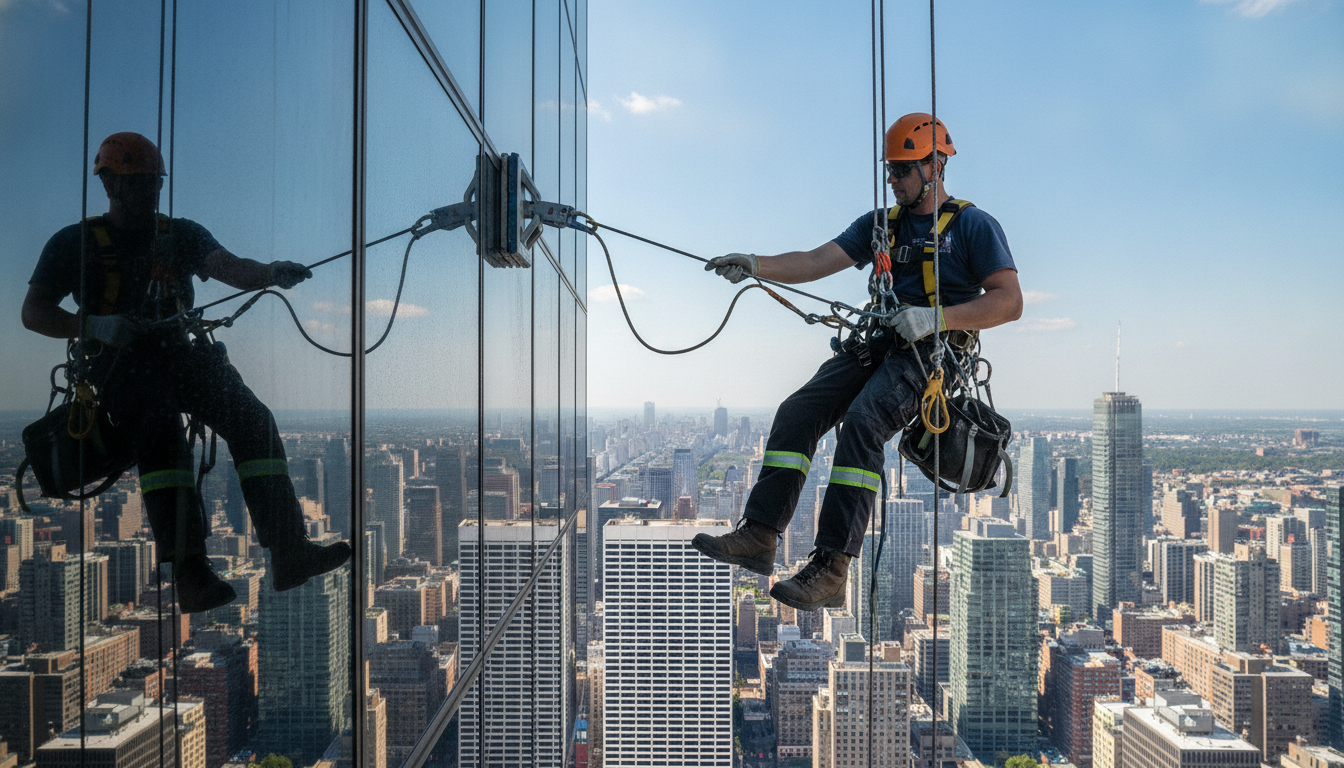
What safety certifications needed for magnetic window cleaner high rise buildings depends on two separate frameworks: product conformity for the tool itself (CE marking in the EU, UKCA in the UK, voluntary CPSC compliance in the US) and worker safety for the high-rise operation (IRATA or SPRAT rope-access qualifications, OSHA fall-protection compliance in the US, national work-at-height regulations in each jurisdiction). A magnetic window cleaner certificate does not authorize high-rise rope-access work; facility managers and contractors must verify both product documentation and operator credentials before any high-altitude deployment.
📋 Table of Contents
- Executive Summary
- Product Conformity vs Worker Safety: Two Separate Certification Paths
- Product Certifications by Market: EU, UK, US, Canada, Australia
- Worker Safety Certifications for High-Rise Window Cleaning
- Engineering Acceptance Criteria: Safety Cords, Drop Zones, and Failure Testing
- Independent Verification Checklist for Distributors and Facility Managers
- Key Takeaways
- Frequently Asked Questions
Executive Summary
- Dual certification requirement: High-rise magnetic window cleaner deployment requires product conformity marks (CE for EU, UKCA for UK post-Brexit, voluntary CPSC alignment in the US) and separate worker safety credentials (IRATA or SPRAT rope-access certification, OSHA fall-protection training in the US).
- Product conformity scope: CE marking covers the magnetic cleaner as a product under the General Product Safety Directive, not the high-rise work method; the Declaration of Conformity must match the exact model number and glass thickness range you are importing.
- Worker safety dominates high-rise risk: Rope-access qualifications, anchor-point capacity testing, and fall-protection plans are legally required in most jurisdictions and carry far heavier enforcement than product marks.
- Certificate verification gaps: Budget imports often arrive with generic or expired CE certificates that do not match the shipped model, leaving distributors liable for non-conforming inventory.
- Market-specific labeling: Australia requires English-language instructions and local importer details; Canada requires bilingual French-English labeling; Middle East markets may demand GCC or SASO marks depending on the destination country.
Product Conformity vs Worker Safety: Two Separate Certification Paths
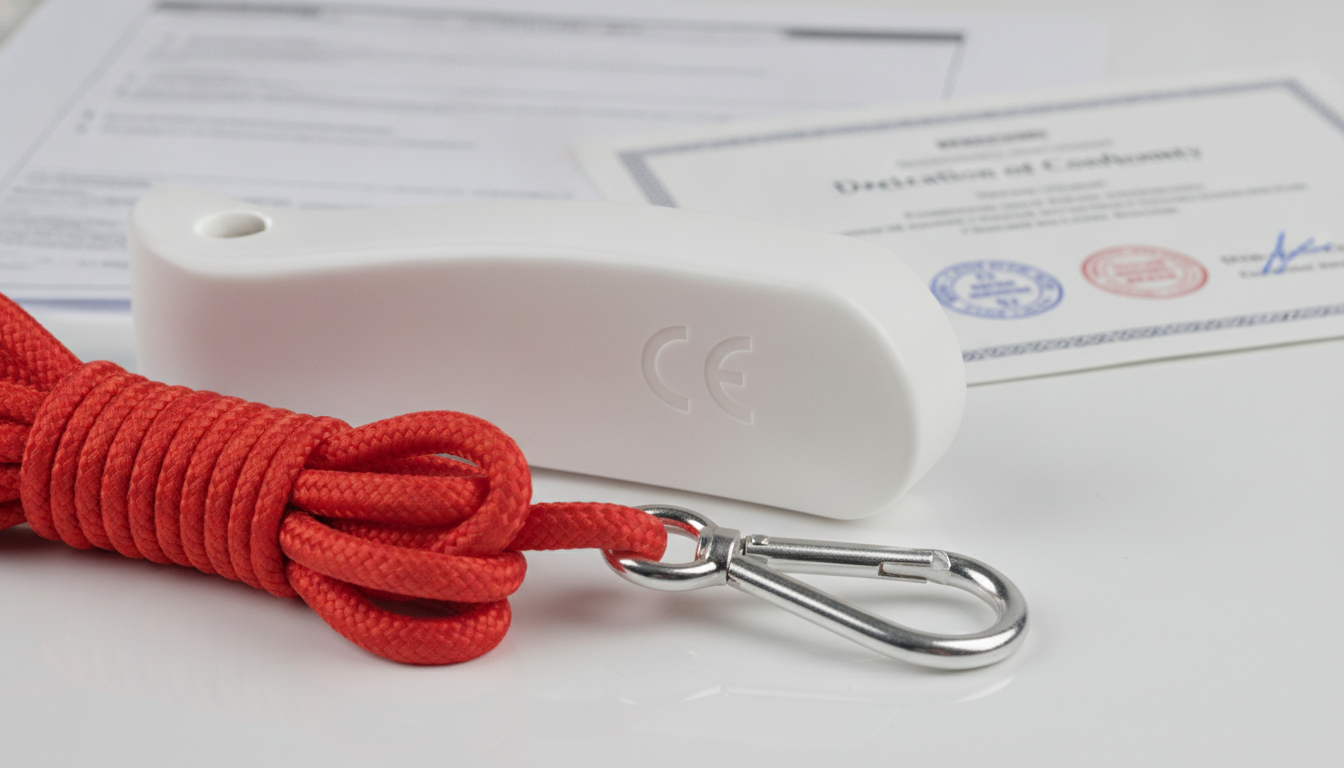
Understanding what safety certifications needed for magnetic window cleaner high rise operations requires separating product conformity from worker safety. Product conformity certifications (CE, UKCA, CPSC alignment) confirm the magnetic window cleaner meets design and material safety standards. Worker safety certifications (IRATA, SPRAT, OSHA fall protection) confirm the operator is qualified to work at height. A magnetic cleaner with a valid CE mark does not authorize untrained personnel to access a high-rise facade.
Product Conformity: What the Certification Covers
Product conformity marks apply to the magnetic window cleaner as a manufactured item. In the EU, the General Product Safety Directive requires a CE mark and Declaration of Conformity (DoC) for consumer and professional cleaning tools. The DoC must state the product name, model number, glass thickness range, magnet type, and applicable harmonized standards. CE certified magnetic window cleaners from our 6,500m² Taizhou facility include third-party test reports (certificate no. WUX202105142249ENC by Shenzhen Wuxiang Testing) covering the exact SKU shipped.
Product certification does NOT cover:
- Rope-access methods: The certificate applies to the tool, not the work-at-height system used to deploy it.
- Anchor-point capacity: Facade anchors, safety lines, and fall-arrest equipment require separate structural engineering certification.
- Operator competence: A CE-marked tool may be used by an unqualified operator, creating liability for the facility manager or contractor.
Worker Safety: What the Certification Covers
Worker safety certifications apply to the person performing high-rise window cleaning. IRATA (Industrial Rope Access Trade Association) and SPRAT (Society of Professional Rope Access Technicians) issue three-tier qualifications (Level 1, 2, 3) based on supervised work hours, rescue competence, and annual revalidation. In the United States, OSHA mandates fall-protection training, competent-person designation, and anchor-point inspection for any work above 1.8 meters (6 feet). These certifications are independent of the cleaning tool used.
Compliance gap: A distributor selling a CE-marked magnetic window cleaner to a facility-management company does not transfer liability for high-rise work safety. The end user must still employ certified rope-access technicians and maintain anchor-point inspection records.
Product Certifications by Market: EU, UK, US, Canada, Australia
What safety certifications needed for magnetic window cleaner high rise deployment varies by destination market. Below is a jurisdiction-by-jurisdiction breakdown of mandatory and voluntary product conformity requirements.
European Union: CE Marking and Declaration of Conformity
The General Product Safety Directive requires a CE mark and Declaration of Conformity for magnetic window cleaners sold in the EU. The DoC must identify the manufacturer, the exact model (including glass thickness range), applicable directives, and the accredited test laboratory. Distributors should verify that the certificate model number matches the shipped SKU; a certificate for a 5-35mm model does not cover a 10-45mm SKU.
In practice: A distributor importing 5-35mm magnetic window cleaners into Germany verified that the CE certificate glass thickness range matched the product marking before customs clearance, avoiding a shipment hold.
United Kingdom: UKCA Post-Brexit Transition
Post-Brexit, the UK requires a UKCA mark for products placed on the Great Britain market. However, CE marks remain accepted for an indefinite transition period. Distributors should request both CE and UKCA documentation to future-proof inventory. The UK Declaration of Conformity must name a UK-based responsible person, not an EU entity.
United States: Voluntary CPSC Alignment
The US has no mandatory product certification for magnetic window cleaners. The Consumer Product Safety Commission (CPSC) enforces general product safety obligations, but no pre-market approval or mark is required. Distributors often request CPSC-aligned test reports (drop testing, magnet-strength verification, material safety) to manage liability. OSHA regulations govern the high-rise work method, not the tool itself.
Canada: Bilingual Labeling and Importer Responsibility
Canada requires bilingual French-English labeling on consumer and professional products. Product safety obligations fall on the importer, who must maintain safety records and provide contact details on packaging. Many Canadian distributors accept EU CE documentation as evidence of conformity, though it is not legally required.
Australia: Local Importer Details and AS/NZS Voluntary Alignment
Australian product safety law requires the importer’s name and Australian address on packaging. No mandatory certification mark exists, but distributors often request alignment with AS/NZS standards or EU CE to demonstrate due diligence. English-language instructions are mandatory.
Worker Safety Certifications for High-Rise Window Cleaning
What safety certifications needed for magnetic window cleaner high rise operations extends beyond the product to the operator. High-rise window cleaning is classified as work at height, requiring rope-access or aerial-lift qualifications in most jurisdictions.
IRATA and SPRAT Rope-Access Certification
IRATA (Industrial Rope Access Trade Association) and SPRAT (Society of Professional Rope Access Technicians) issue three-tier certifications (Level 1, 2, 3) based on supervised work hours, rescue competence, and annual revalidation. Level 1 technicians work under supervision; Level 3 technicians supervise work sites and approve anchor points. Facility managers hiring window-cleaning contractors should verify current certification cards and logbook entries.
- Level 1: Minimum 40 supervised work hours, basic rope skills, annual revalidation.
- Level 2: Minimum 1,000 logged work hours, intermediate rescue, can supervise Level 1 technicians.
- Level 3: Minimum 1,000 hours as Level 2, advanced rescue, can approve work plans and anchor points.
OSHA Fall-Protection Requirements (United States)
OSHA mandates fall-protection systems for any work above 1.8 meters (6 feet). Employers must designate a competent person to inspect anchor points, approve fall-arrest equipment, and train workers. Anchor points must withstand 2,268 kilograms (5,000 pounds) per attached worker, verified by a qualified engineer. Magnetic window cleaners used from rope-access systems must include a rated safety tether to prevent the external unit from falling.
National Work-at-Height Regulations (EU, UK, Australia)
EU member states enforce the Work at Height Directive, requiring risk assessments, fall-prevention plans, and competent-person oversight. The UK Health and Safety Executive (HSE) enforces similar rules under the Work at Height Regulations 2005. Australia enforces work-at-height obligations under state-level workplace health and safety acts, requiring fall-protection plans and anchor-point certification.
Enforcement priority: Worker safety violations (missing fall protection, uncertified anchor points, unqualified operators) attract immediate stop-work orders and substantial fines in most jurisdictions, while product conformity violations (missing CE mark, incorrect labeling) typically result in delayed customs clearance or market-surveillance warnings.
Engineering Acceptance Criteria: Safety Cords, Drop Zones, and Failure Testing
Beyond certification marks, facility managers and contractors evaluating what safety certifications needed for magnetic window cleaner high rise deployment should apply engineering acceptance criteria to the tool itself.
Safety Cord Specification and Attachment
A rated safety tether prevents the external magnetic unit from falling if magnet grip fails. The tether must be rated for the unit’s weight plus a safety factor (typically 3:1 or 5:1), attached to a structural anchor point independent of the magnet, and long enough to reach the working height. Budget imports often ship without a tether or with an unrated cord, leaving distributors to source and verify a compliant replacement.
- Tether material: Nylon or polyester webbing, rated breaking strength stated on label.
- Attachment method: Sewn loop or carabiner connection to a structural anchor, not the window frame.
- Length: Must exceed the maximum working height; a 5-meter tether is inadequate for a 10-story building.
Drop-Zone Controls and Exclusion Perimeters
Even with a safety tether, facility managers must establish drop-zone exclusion perimeters below the work area. Pedestrian and vehicle access should be restricted, and warning signage posted. Some jurisdictions require a drop-zone width equal to the building height plus 6 meters.
Magnet-Strength Testing and Glass Compatibility
Magnet strength must match glass thickness and type. Single-pane glass requires less magnetic force than double-glazed insulated units. Coated or low-emissivity glass may reduce magnetic grip. Our adjustable magnetic window cleaner range covers 3-45mm across four SKUs (3-30mm, 5-35mm, 8-40mm, 10-45mm) with six-stage adjustable magnetic force, allowing field adjustment to match installed glazing.
Distributors should request magnet pull-force test data from the factory, measured in kilograms or newtons, and verify compatibility with the thickest glass the end user will encounter. A unit rated for 5-35mm will lose grip on a 40mm insulated pane.
Temperature and Wind Limitations
Magnetic grip weakens in cold temperatures and high wind. Manufacturers should state minimum operating temperature and maximum wind speed. Facility managers should suspend high-rise magnetic window cleaning in conditions exceeding these limits and revert to rope-access with squeegee tools or water-fed poles.
Independent Verification Checklist for Distributors and Facility Managers
Distributors and facility managers should independently verify what safety certifications needed for magnetic window cleaner high rise use before purchase or deployment. Generic or expired certificates are common in budget imports.
Product Certification Verification Steps
- Certificate model match: The certificate model number and glass thickness range must exactly match the product marking and shipping documentation.
- Accredited laboratory: The test laboratory must be accredited by a national body (UKAS in the UK, DAkkS in Germany, A2LA in the US). Generic ‘Test Report’ headers without accreditation seals are not verifiable.
- Certificate expiry: Some certificates carry a validity period; expired certificates do not confirm current conformity.
- Manufacturer identity: The certificate must name the actual manufacturer, not a trading company or agent. Cross-check the manufacturer name against business registration databases.
Safety Tether Verification Steps
- Tether inclusion: Verify the tether is included in the shipment and is not a separately quoted accessory.
- Breaking-strength rating: The tether label must state a breaking strength in kilograms or newtons, not a vague ‘heavy-duty’ claim.
- Length adequacy: Measure the tether length and confirm it exceeds the maximum working height.
Worker Certification Verification Steps
- Current certification card: IRATA and SPRAT issue photo ID cards with expiry dates; verify the card is current and matches the worker’s identity.
- Logbook entries: Level 2 and Level 3 certifications require logged work hours; request logbook evidence.
- Competent-person designation: For OSHA-regulated work, verify the employer has designated a competent person in writing and provided fall-protection training records.
Tender Documentation for Facility-Management Procurement
Facility managers issuing tenders for high-rise window cleaning should require:
- Technical file: Declaration of Conformity, test reports, user instructions, and maintenance schedule for the magnetic window cleaner.
- Risk assessment: Site-specific risk assessment covering anchor points, drop zones, weather limits, and emergency rescue.
- Insurance certificate: Public liability and employer’s liability insurance covering high-rise work.
- Warranty and spare parts: Warranty period, spare-part availability, and recall procedure.
- Local-language labeling: Instructions and safety warnings in the local language, even where English is legally acceptable.
Our Taizhou facility maintains third-party CE certification (certificate no. WUX202105142249ENC) and provides full technical files for distributor and facility-management tenders. Wholesale magnetic window cleaner orders ship with Declaration of Conformity, test reports, and English-language instructions; MOQ from 2 units for stock models.
Key Takeaways
- What safety certifications needed for magnetic window cleaner high rise deployment divides into product conformity (CE, UKCA, voluntary CPSC alignment) and worker safety (IRATA, SPRAT, OSHA fall protection); a product certificate does not authorize high-rise work.
- CE marking is mandatory for EU sales and requires a Declaration of Conformity naming the exact model, glass thickness range, and accredited test laboratory; distributors should verify the certificate matches the shipped SKU.
- Worker safety certifications (IRATA Level 1-3, SPRAT, OSHA competent person) are legally required in most jurisdictions and carry heavier enforcement than product marks.
- Safety tethers must be rated for the unit’s weight, attached to a structural anchor independent of the magnet, and long enough to reach the working height; budget imports often ship without rated tethers.
- Market-specific labeling requirements include bilingual French-English in Canada, local importer details in Australia, and English-language instructions in the US and UK.
- Independent verification steps include checking certificate model match, accredited laboratory seals, tether breaking-strength ratings, and current worker certification cards before purchase or deployment.
Frequently Asked Questions
Do I need separate certifications for the magnetic window cleaner and the rope-access system?
Yes. Product conformity certifications (CE, UKCA) apply to the magnetic window cleaner as a manufactured item and confirm it meets design and material safety standards. Worker safety certifications (IRATA, SPRAT, OSHA fall protection) apply to the rope-access system and the operator, confirming competence to work at height. A CE-marked magnetic cleaner does not authorize untrained personnel to access a high-rise facade, and a rope-access certification does not confirm the tool meets product safety standards. Facility managers must verify both before deployment.
What happens if the magnetic window cleaner certificate does not match the shipped model?
A certificate mismatch leaves the distributor holding non-conforming inventory. Customs authorities in the EU and UK may delay or reject shipments where the Declaration of Conformity model number does not match the product marking. Market-surveillance authorities can issue withdrawal orders, and the distributor becomes liable for any safety incidents. Distributors should verify the certificate model number, glass thickness range, and manufacturer name against the shipping documentation before customs clearance. Generic certificates covering multiple unrelated products are not valid evidence of conformity.
Can I use a magnetic window cleaner for high-rise work without a safety tether?
No. A rated safety tether is required to prevent the external magnetic unit from falling if magnet grip fails due to glass coating, cold temperature, or excessive thickness. The tether must be rated for the unit’s weight plus a safety factor, attached to a structural anchor point independent of the magnet, and long enough to reach the working height. Budget imports often ship without a tether or with an unrated cord. Distributors should verify tether inclusion and breaking-strength rating before sale, and facility managers should inspect the tether attachment method and length before deployment.
Ready to source certified magnetic window cleaners with full technical documentation for your high-rise projects?
Request compliance documentation →
Written by the Fonoran Export Team.