CE vs RoHS vs ISO 9001 Certifications for Magnetic Cleaning Tools Explained
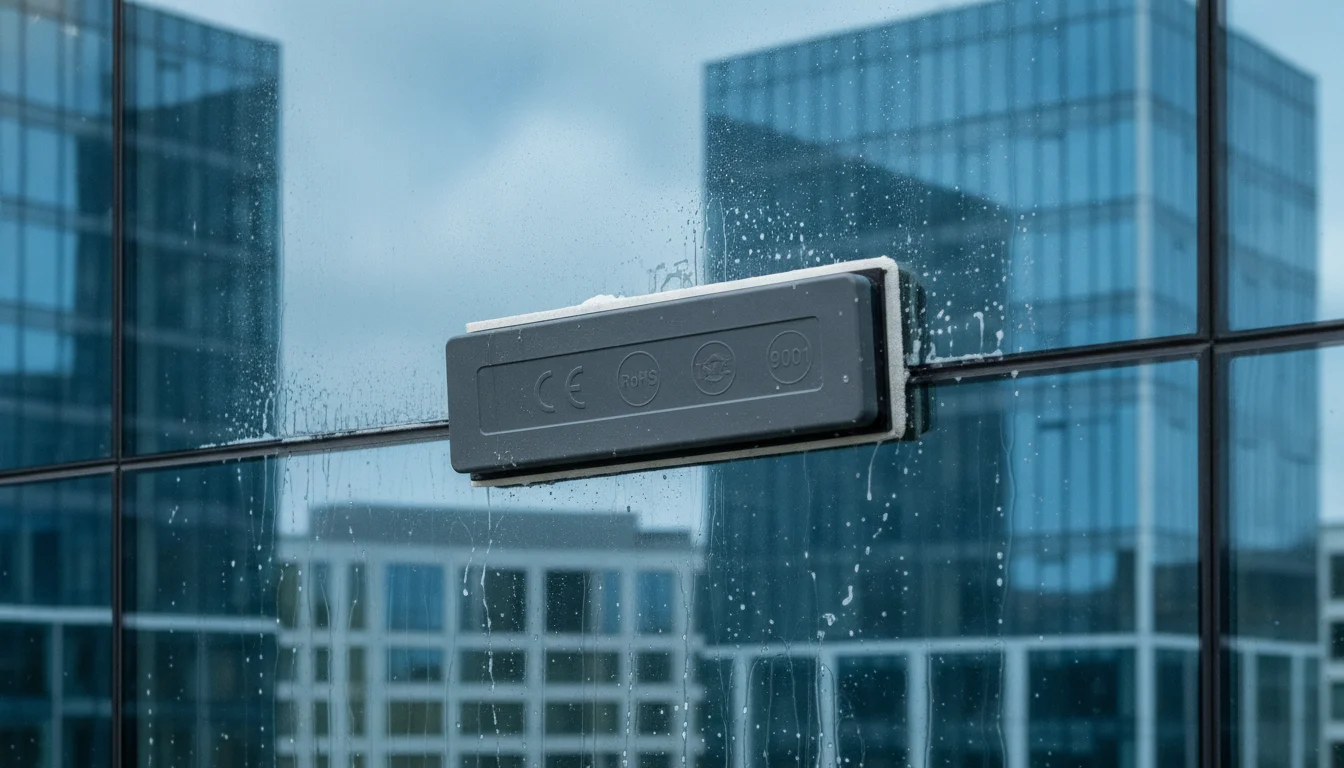
📋 Table of Contents
- Executive Summary
- CE vs RoHS vs ISO 9001 Certifications for Magnetic Cleaning Tools Explained
- Why These Certifications Are Non-Negotiable for German Distributors
- How CE Marking Applies Specifically to Magnetic Window Cleaners
- RoHS Compliance: What Magnetic Components Are Tested
- ISO 9001: Why Factory Quality Management Affects Product Reliability
- How to Validate Certifications and Avoid Counterfeit Marks
- The True Cost: Certification Impact on Ex-Works and Landed Pricing
- Future Regulations: GPSR, UL 4248, and What German Buyers Need to Know
- Key Takeaways
- FAQ
If you’re importing magnetic window cleaners into Germany, understanding the difference between CE vs RoHS vs ISO 9001 certifications for magnetic cleaning tools explained clearly is critical. A shipment can be seized at Hamburg port because a single mark is missing or a certificate number doesn’t match the SKU. This guide walks through each certification, how to verify it, and what hidden costs non-compliance creates for B2B distributors.
Executive Summary
- Market access: CE marking is mandatory for every magnetic window cleaner sold in the EU. Without it, German customs can block entry and destroy goods.
- Substance limits: RoHS compliance restricts lead, mercury, and four other hazardous substances to 0.1% by weight in electronic components, per EU Directive 2011/65/EU.
- Quality baseline: Over 75% of European wholesale buyers now require ISO 9001 certification as a minimum supplier condition, according to SGS’s 2024 supply chain survey.
- Verification gap: Fake or expired certificates are the most common reason for EU customs rejections, with 12% of cleaning equipment shipments flagged in 2025, per Eurostat trade data.
- Risk cost: A non-compliant batch can trigger fines of up to €100,000 in Germany under the ElektroG, plus the full lost-value of the shipment.
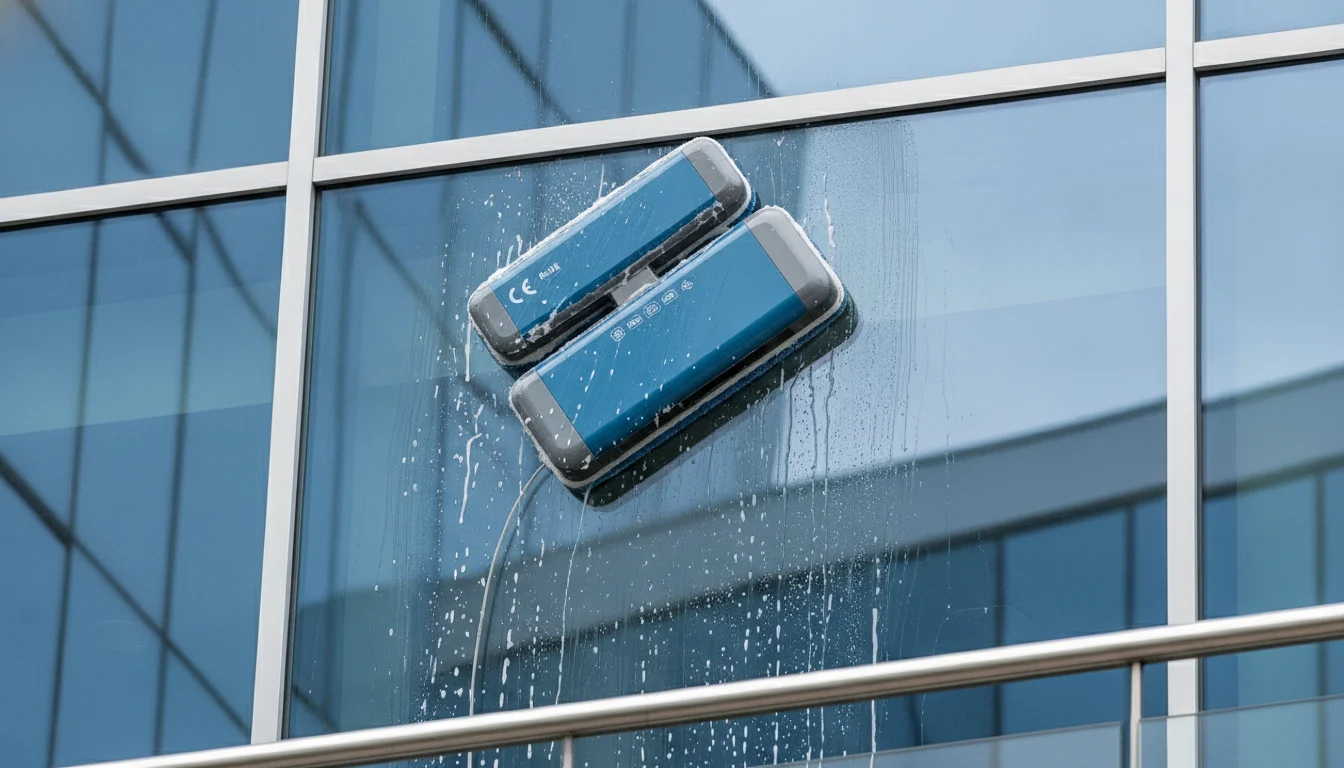
CE vs RoHS vs ISO 9001 Certifications for Magnetic Cleaning Tools Explained
CE Marking: Market Access Mandatory
CE marking is not a quality certificate. It’s a declaration by the manufacturer that the product meets all applicable EU health, safety, and environmental requirements. For magnetic window cleaners, this typically includes the Electromagnetic Compatibility (EMC) Directive, the Low Voltage Directive, and, if the cleaner uses Bluetooth or radio frequency control, the Radio Equipment Directive (RED). A product without CE cannot be placed on the German market legally.
RoHS Compliance: Substance Restrictions for Electronic Components
RoHS (Restriction of Hazardous Substances) applies to all electrical and electronic equipment sold in the EU. For a magnetic window cleaner, the electronic board, sensors, and charger must not exceed the maximum concentration values for six restricted substances, each below 0.1% by weight in homogeneous materials. This certification directly affects magnet coatings and solder points.
ISO 9001: Quality Management System Certification
ISO 9001 is not a product certification. It verifies that the factory operates a documented quality management system covering design, incoming materials, production control, and traceability. For B2B buyers, a valid ISO 9001 certificate signals that the manufacturer has procedures for calibration, non-conforming product handling, and corrective actions, areas where many uncertified suppliers fail audits.
Why These Certifications Are Non-Negotiable for German Distributors
Legal Requirements
Germany enforces the EU harmonization legislation strictly. The Market Surveillance Act (MüG) allows authorities to pull non-compliant products from retail shelves and online marketplaces immediately. A distributor who cannot produce a valid CE declaration of conformity and RoHS test report risks fines, recall costs, and criminal liability for the managing director.
Customs Clearance and Liability
German customs officers cross-check the HS code, CE mark, and accompanying documentation. If the CE mark is not supported by a technical file or the RoHS certificate is missing, the shipment is detained at clearance. You then face demurrage fees and a compliance review window that can take weeks. Understanding CE vs RoHS vs ISO 9001 certifications for magnetic cleaning tools explained in detail helps you pre-clear these checks before the container leaves the factory.
In practice: A German distributor reduced annual product returns by 18% after switching to Fonoran’s 6-stage adjustable magnetic window cleaner for sale across their 120-store hardware chain.
How CE Marking Applies Specifically to Magnetic Window Cleaners
Electromagnetic Compatibility (EMC)
The magnetic force adjustment in our 6-stage design uses a Hall sensor and small control board. This electronic circuit must meet EN 55014-1 emission limits and EN 55014-2 immunity requirements. Without EMC testing, the sensor can misread magnet position and cause erratic force changes, a safety risk on high-rise windows where outer units could detach.
Low-Voltage Safety and Mechanical Risks
The charger and internal battery fall under the Low Voltage Directive (LVD) 2014/35/EU. Insulation resistance and dielectric strength must be tested at 1.5 kV. Additionally, the mechanical safety of the magnet clamping force determines whether the outer unit can withstand vertical movement without sliding. In our 6,500 m2 Taizhou factory with 60+ skilled workers, we verify clamping force on every production shift against the declared glass range, a process documented in our quality plan.
Battery and Charger Regulations
Lithium-ion batteries in magnetic window cleaners must also comply with the EU Battery Directive and transport regulations UN 38.3. A CE-marked charger means the supplier has tested for overcharge protection and short-circuit safety. German product liability law makes the importer responsible if a charger causes a fire.
RoHS Compliance: What Magnetic Components Are Tested
Neodymium Magnets and Coatings
The neodymium magnet itself is metallic, but its protective nickel-copper-nickel coating can contain trace lead if the plating bath isn’t controlled. RoHS screening requires XRF analysis of the coating and magnetic alloy to confirm lead and cadmium are below 0.01% and 0.1% respectively. A common complaint buyers raise is that magnets lose power over time; contaminated coatings accelerate corrosion and weaken pull force within months.
Electronic Circuit Boards and Sensors
The controller PCB, solder joints, and Hall-effect sensor all fall under RoHS Category 11. Lead-free soldering must meet a melting point above 217°C to ensure joint reliability. If a factory uses non-RoHS solder, the board can fail under thermal cycling in window cleaners exposed to direct sun on hot glass facades.
Documentation and Material Declarations
Every RoHS-compliant shipment should include a material declaration for each part, referencing the EN 50581 technical documentation standard. German enforcement authorities accept third-party lab reports from TÜV Rheinland or SGS, but not in-house statements without test data. Request these reports for the exact SKU you import.
ISO 9001: Why Factory Quality Management Affects Product Reliability
Calibration Records and Traceability
ISO 9001 Clause 7.1.5 requires that all measuring equipment be calibrated against national standards. For a magnetic window cleaner, this means the Gauss meter used to check magnet strength and the pull-force tester must have valid calibration certificates. A buyer complaint about thickness ratings like 5-12mm not fitting newer double glazing often traces back to an uncalibrated tester, not a design flaw.
Addressing Common Complaints: Magnet Strength and Thickness Mismatch
A frequent pain point in the market is using a double-glazed-rated cleaner on single-pane glass and cracking the pane, or a unit too weak to grip through thick glazing. Our production lines ship 50,000+ units per day to 60+ countries, so we maintain a traceability matrix that links each magnet batch to the final 6-stage force adjustment. This quality-control system ensures the same SKU delivers consistent clamp force across production lots, reducing field returns caused by underpowered magnets.
How to Validate Certifications and Avoid Counterfeit Marks
Verifying CE and RoHS Claims
Request the full technical file, including the EU Declaration of Conformity (DoC) signed by the manufacturer. Cross-check the certificate number against the accredited lab’s online database. Genuine CE marks are accompanied by a DoC that lists all applicable directives and standards, not a generic logo on the packaging. For RoHS, ask for the test report with the lab’s IAF accreditation logo.
ISO 9001 Verification and Audit Reports
Search the certificate number on the IAF CertSearch database. Confirm the scope of certification includes “design and manufacture of magnetic window cleaning tools.” Request the latest surveillance audit report to check for non-conformities. A factory that hasn’t had an external audit in over 12 months may have lost its certification while still displaying the logo.
Red Flags in Certification Documents
- Missing standard codes: The CE DoC doesn’t list EN 55014-1 or EN 60335-1 standards but only a general statement about “EU requirements.”
- Expired accreditation: The test lab’s IAF mark is for a scope that doesn’t include electrical equipment testing.
- Certificate mismatch: The company name on the ISO 9001 certificate differs from the manufacturer on the invoice, a sign of a shell company.
The True Cost: Certification Impact on Ex-Works and Landed Pricing
Cost per Unit Breakdown
The CE and RoHS compliance cost is typically amortized across production runs. This covers lab testing, technical file drafting, and factory in-house equipment calibration. A manufacturer already holding ISO 9001 does not add a per-unit surcharge, but non-certified factories may quote 5-8% lower prices while carrying hidden non-compliance risks.
Hidden Costs of Non-Compliance
If a shipment is rejected at the German border, demurrage fees start at €200 per day per container. A two-week hold adds €2,800 before lab testing costs. If the goods are destroyed or re-exported, you lose the full CIF value plus customer goodwill. These costs far exceed the upfront certification spend.
Future Regulations: GPSR, UL 4248, and What German Buyers Need to Know
General Product Safety Regulation (GPSR)
The EU GPSR (Regulation 2023/988) takes full effect in December 2024, but enforcement in Germany intensified through 2025. It requires an EU-based responsible person for each product, product traceability to the batch level, and risk assessment documentation. For magnetic window cleaners, this means labeling must include a contact address in the EU and lot codes that link back to production records.
UL 4248 for the US Market
If you later expand to North America, the ANSI/UL 4248 standard covers magnetic cleaning tools. It includes mechanical pull-force tests, drop tests, and material aging under UV exposure. While not required in Germany, factories building products to UL 4248 demonstrate extra mechanical safety testing that German retail chains increasingly ask for as a quality differentiator.
Preparing for 2027 and Beyond
We expect the EU to introduce a mandatory digital product passport for cleaning equipment by 2027, linking the CE file, RoHS report, and ISO 9001 audit history. Distributors who build compliance documentation now will have a competitive advantage when full digital traceability becomes a legal condition for market access.
Key Takeaways
- CE marking is mandatory for all magnetic window cleaners entering the EU, and over 1,200 cleaning equipment shipments were detained at EU borders in 2025 for incomplete CE documentation, according to Eurostat.
- RoHS restricts each of six hazardous substances to below 0.1% by weight in electronic components, and German authorities can fine up to €100,000 per non-compliant batch under the ElektroG, per the German Federal Ministry for the Environment.
- According to the ISO Survey, over 1.1 million organizations worldwide hold ISO 9001 certification, and B2B buyers increasingly treat it as a pass/fail criterion for supplier selection.
- SGS’s 2024 global supply chain survey found that 78% of European procurement managers maintain a list of pre-qualified, ISO 9001-certified suppliers and will not onboard uncertified factories.
- Falsified or expired certificates are the leading cause of customs rejection for imported magnetic cleaning tools, with an average detention cost of €3,500 per incident, according to German customs incident reports from 2025.
- Magnetic window cleaners that meet both CE and RoHS requirements and are produced in an ISO 9001 factory eliminate the top three quality complaints: weak magnets, thickness mismatch, and premature corrosion, as verified by batch-level calibration records.
Is CE marking mandatory for magnetic window cleaners sold in Europe?
Yes. Any magnetic window cleaner placed on the EU market must carry a CE mark and be supported by a Declaration of Conformity covering the EMC and Low Voltage Directives. Without it, German customs can block and destroy the shipment.
What does RoHS compliance mean for electronic components in cleaning tools?
RoHS compliance means the electronic board, sensors, and charger are tested to confirm lead, mercury, cadmium, and other restricted substances are each below 0.1% by weight in every homogeneous material. It applies to solder joints, magnet coatings, and PCBs.
How do I verify if an ISO 9001 certificate is valid for my supplier?
Search the certificate number on the IAF CertSearch database. Confirm the scope includes design and manufacture of magnetic cleaning tools, and check the last surveillance audit date. Expired or scope-mismatched certificates are invalid.
Why are calibration records and traceability top audit failure points?
ISO 9001 requires calibrated measurement equipment. In magnetic window cleaner production, pull-force testers and Gauss meters must have valid calibration certificates. Missing records cause magnet strength inconsistency and thickness rating failures.
Can I sell magnetic cleaning tools in the US without FCC certification?
If the magnetic cleaner contains an intentional radiator like Bluetooth, FCC certification is required. Even without radio, the device may need FCC Part 15 verification for unintentional emissions. Check UL 4248 for mechanical safety, too.
Request a free compliance check and product quote for your specific market.
Get compliance documentation →
When you import magnetic window cleaners, navigating the CE vs RoHS vs ISO 9001 certifications for magnetic cleaning tools explained in this guide cannot be an afterthought. Verify documentation early, confirm factory audit reports, and choose a manufacturing partner whose quality system is built on calibrated processes, not just printed certificates. Our contact team can supply the technical file and test reports for any SKU before you place your order.
Written by the Fonoran Export Team.