How to Check CE and RoHS Documents from a Magnetic Window Cleaner Supplier (2026 Guide)

To verify CE and RoHS documents from a magnetic window cleaner supplier are genuine, request the complete test report and EU Declaration of Conformity with certificate numbers, issuing laboratory details, and dates, then independently contact the testing body through publicly listed contact details, not the supplier-provided email or QR code, to confirm the report exists and matches the product model you are purchasing. Check that the document covers your exact SKU, thickness range, magnet assembly, cleaning pads, plastics, coatings, and any electrical accessories, because a certificate issued for one variant does not automatically cover another.
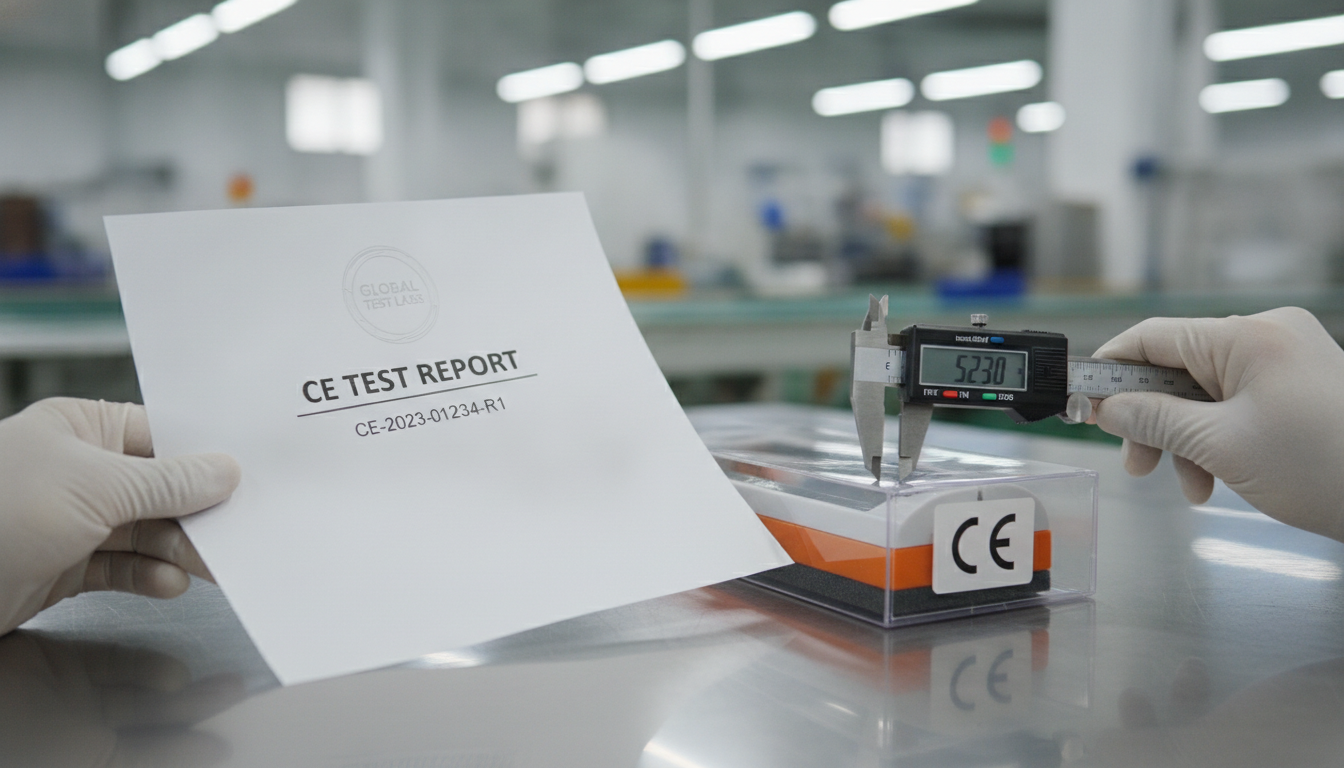
Executive Summary
- Independent laboratory verification: Contact the testing body through publicly sourced details, never through supplier-provided channels, to confirm the report exists and matches your order.
- Product-scope mapping: Verify that CE and RoHS documentation covers magnet assemblies, cleaning pads, plastics, coatings, strings, packaging, and any battery-powered or electrical accessories in your specific SKU.
- Document consistency check: Certificate numbers, report numbers, issuing laboratories, dates, signatures, and manufacturer addresses must align across the Declaration of Conformity, test reports, and supplier registration.
- Red-flag escalation: Altered PDFs, expired reports, mismatched manufacturer addresses, recycled model numbers, and unverifiable laboratories warrant pre-shipment factory audits or third-party laboratory testing before deposit payment.
- Importer obligations for Germany: CE marking alone satisfies EU market access, but importers must retain technical documentation and the Declaration of Conformity for ten years and ensure the manufacturer or authorized representative is traceable within the EU.
Request Complete Test Reports, Not Certificates
A one-page certificate with a logo and signature is not sufficient evidence of compliance. Genuine CE conformity for a magnetic window cleaner requires a full test report from an accredited laboratory covering the Low Voltage Directive (2014/35/EU) if the product includes electrical components, the Machinery Directive (2006/42/EC) for mechanical safety, and the General Product Safety Directive (2001/95/EC) for consumer protection, plus an EU Declaration of Conformity signed by the manufacturer or authorized representative.
What a Complete CE Test Report Must Include
The test report should list the applicant company name and address, the product name and model number exactly as it appears on your purchase order, the testing standards applied (such as EN 60335-1 for electrical safety if the cleaner has a motor or battery, or EN 71-1 for mechanical and physical properties if marketed for household use), the laboratory name and accreditation number, the report issue date, and the signature of the authorized signatory. Each tested parameter, such as insulation resistance, earth continuity, or impact strength, must show the measured value, the pass/fail criterion, and the test result.
RoHS Documentation Requirements
RoHS compliance (Directive 2011/65/EU, as amended by Directive 2015/863/EU) restricts ten substances in electrical and electronic equipment: lead, mercury, cadmium, hexavalent chromium, polybrominated biphenyls (PBB), polybrominated diphenyl ethers (PBDE), bis(2-ethylhexyl) phthalate (DEHP), butyl benzyl phthalate (BBP), dibutyl phthalate (DBP), and diisobutyl phthalate (DIBP). A valid RoHS declaration includes a material declaration listing every homogeneous material in the product, the concentration of each restricted substance in parts per million (ppm), and supporting evidence such as supplier declarations or analytical test reports from an accredited laboratory using methods like ICP-OES for metals or GC-MS for phthalates. The declaration must cover all product components: magnet assemblies (NdFeB or Ferrite), cleaning pads (microfiber or sponge), plastic housings (ABS, PP, or PC), coatings, safety ropes, and any electronic accessories such as battery compartments or indicator lights.
Verify the Declaration of Conformity
The EU Declaration of Conformity is a legally binding document in which the manufacturer declares that the product meets all applicable directives. It must state the manufacturer’s name and full address, the product identification (model number, SKU, and any variant or revision), the directives and harmonized standards the product complies with, the name and address of the authorized representative within the EU if the manufacturer is outside the EU, the place and date of issue, and the name and signature of the person authorized to bind the manufacturer. A missing or incomplete Declaration of Conformity is a red flag that the supplier has not completed the conformity assessment.
How to Check CE and RoHS Documents from a Magnetic Window Cleaner Supplier Independently
Suppliers who provide fraudulent certificates often include a contact email, phone number, or QR code that routes to a collaborator who confirms the fake document. Independent verification bypasses this risk by using publicly available contact details for the testing body.
Locate the Laboratory Through Public Channels
Search for the laboratory name on the website of the national accreditation body, such as DAkkS (Deutsche Akkreditierungsstelle) for Germany, UKAS (United Kingdom Accreditation Service) for the UK, or CNAS (China National Accreditation Service) for China, and note the laboratory’s accreditation number, scope of accreditation, and official contact details. Do not use the email address, phone number, or website URL printed on the certificate itself, because these can be spoofed. Instead, visit the accreditation body’s online directory, find the laboratory’s entry, and use the contact information listed there.
Submit a Verification Request
Email or call the laboratory’s customer service or certification department, provide the report number, issue date, and applicant company name, and ask them to confirm whether the report exists in their system, whether it was issued for the product model and variant you are purchasing, and whether the report remains valid (not expired or withdrawn). Request a digital copy of the report directly from the laboratory if possible, and compare it against the version the supplier provided to check for alterations.
Cross-Check Certificate Numbers and Dates
Compare the certificate number, report number, issue date, and expiry date (if applicable) across the test report, the Declaration of Conformity, and any accompanying certificates such as CB scheme certificates or factory inspection reports. Inconsistencies, such as a Declaration of Conformity dated before the test report was issued, or a certificate number that does not follow the laboratory’s numbering format, indicate that the documents may have been assembled from multiple sources or fabricated.
Verify the Manufacturer’s Identity
Confirm that the manufacturer name and address on the test report, the Declaration of Conformity, and the supplier’s business registration match exactly. A mismatch suggests that the supplier is presenting another company’s certification documents as their own, a common tactic among trading companies and shell entities. If the supplier is a trading company rather than the manufacturer, ask for the manufacturer’s name, factory address, and contact details, and verify that the manufacturer has authorized the trading company to represent their products in writing.
Product-Scope Verification for Magnetic Window Cleaners
A certificate issued for a 5-35mm adjustable magnetic window cleaner does not automatically cover a 10-45mm model, because the magnet strength, housing dimensions, and materials may differ. Every SKU and thickness variant requires its own conformity assessment unless the supplier can demonstrate that the variants are covered under a single type-examination certificate.
Map Components to Documentation
List every component in the magnetic window cleaner: the magnet assembly (NdFeB or Ferrite), the inner and outer housings (typically ABS or PP plastic), the cleaning pads (microfiber, sponge, or felt), the safety rope or tether, any coatings or adhesives, and the packaging materials. Then check that the test report and material declaration cover each component. For example, if the product includes a battery-powered water spray attachment, the test report must include electrical safety testing under EN 60335-1, and the RoHS declaration must cover the battery, circuit board, and wiring.
Thickness Range and Magnetic Force
Magnetic window cleaners are designed for specific glass thickness ranges, such as 3-30mm, 5-35mm, 8-40mm, or 10-45mm. The test report should state the thickness range tested, because the magnetic force required to hold the cleaner securely on a 10mm single-pane window is different from the force required for a 40mm insulated double-glazed unit. If the supplier claims a single model covers multiple thickness ranges through adjustable magnetic force, ask for test results demonstrating that the cleaner maintains secure contact and does not fall across the full claimed range.
Verify Exemptions for RoHS
Some components in magnetic window cleaners may qualify for RoHS exemptions. For example, certain magnet alloys may contain lead or cadmium under exemption 6(c) (copper alloy containing up to 4% lead by weight) or exemption 7(c)-I (mechanical spare parts for EEE placed on the market before specific dates). The RoHS declaration should explicitly state any exemptions claimed, the exemption number, and the expiry date of the exemption if applicable. An undeclared exemption or a claim that the product is RoHS-compliant without supporting evidence for exempted materials is a red flag.
Country-Specific Importer Obligations
CE marking grants access to the European Economic Area, but importers in Germany, France, the UK, the United States, Canada, Australia, the Middle East, and Southeast Asia face additional documentation and labeling requirements that suppliers often overlook.
Germany and the European Union
Importers into Germany must ensure that the manufacturer or an authorized representative established within the EU has issued the Declaration of Conformity and affixed the CE marking. The importer must retain the Declaration of Conformity and technical documentation for ten years after the product is placed on the market, verify that the product bears the required type, batch, or serial number and the manufacturer’s name and address, and ensure that the product is accompanied by instructions and safety information in German. If the importer’s name or trademark appears on the product, the importer assumes the same liability as the manufacturer. Germany’s Product Safety Act (Produktsicherheitsgesetz, ProdSG) requires importers to notify the market surveillance authority (Bundesanstalt für Arbeitsschutz und Arbeitsmedizin, BAuA) if a product presents a risk, and failure to retain conformity documentation can result in fines and product recalls.
United Kingdom Post-Brexit
Since January 1, 2021, products placed on the market in Great Britain (England, Scotland, Wales) require UKCA marking instead of CE marking, although CE marking remains accepted until a future date to be announced. The UKCA marking must be affixed by the manufacturer or UK-based responsible person, and the Declaration of Conformity must reference UK regulations rather than EU directives. Northern Ireland continues to accept CE marking under the Northern Ireland Protocol. Importers should confirm whether the supplier has prepared separate UKCA documentation or whether the product will enter the UK market under the CE marking grace period.
United States
The United States does not recognize CE marking. Magnetic window cleaners sold in the US are subject to the Consumer Product Safety Improvement Act (CPSIA) if marketed for consumer use, which requires testing for lead content, phthalates, and mechanical hazards, and compliance with ASTM F963 (toy safety standard) if the product is intended for or marketed to children. Importers must issue a General Certificate of Conformity (GCC) based on testing by a CPSC-accepted laboratory. If the magnetic cleaner includes electrical components, it may also require FCC certification for electromagnetic interference (EMI) and UL certification for electrical safety, neither of which is covered by CE marking.
Canada
Canada requires compliance with the Canada Consumer Product Safety Act (CCPSA) and the Hazardous Products Act. Magnetic window cleaners must meet mechanical and physical safety requirements under the Toys Regulations (SOR/2011-17) if marketed for children, and the Surface Coating Materials Regulations (SOR/2016-193) if they include coatings containing lead or other restricted substances. Importers must maintain records of testing and certification for six years and report incidents or defects to Health Canada within two business days.
Australia
Australia does not mandate CE or RoHS compliance, but the Australian Competition and Consumer Commission (ACCC) enforces product safety under the Australian Consumer Law (ACL). Magnetic window cleaners must not present an unreasonable risk of injury, and suppliers must issue a recall if a safety defect is identified. Importers should request test reports demonstrating compliance with AS/NZS ISO 8124 (toy safety) if the product is marketed for household use, and AS/NZS 60335.1 (electrical safety) if the product includes electrical components.
Red-Flag and Escalation Framework
Certain document anomalies indicate a high probability of fraud and warrant escalation to pre-shipment inspection, third-party laboratory testing, or factory audit before deposit payment.
- Altered PDFs: Open the PDF in a text editor or PDF analysis tool and check the metadata for multiple authors, recent modification dates, or embedded fonts that do not match the laboratory’s standard template. A certificate created or modified after the stated issue date is likely fraudulent.
- Expired reports: Test reports for product safety typically remain valid for five years from the issue date, but changes to the product design, materials, or manufacturing process invalidate the report. If the report is more than three years old, ask the supplier whether the product has changed since the report was issued and request updated testing if necessary.
- Mismatched manufacturer addresses: Compare the manufacturer address on the test report against the supplier’s business registration, export license, and factory audit reports. A mismatch indicates that the supplier is reselling another manufacturer’s product under their own name, or that the certificate was issued for a different legal entity.
- Recycled model numbers: Some suppliers reuse the same model number across multiple product variants to avoid the cost of separate testing. Ask for photographs of the tested sample, the test report’s product description, and the bill of materials, and compare them against the product you are purchasing. If the magnet type, housing material, or thickness range differs, the certificate does not cover your order.
- Unverifiable laboratories: If the laboratory name does not appear in the accreditation body’s directory, or if the accreditation number on the certificate does not match the laboratory’s current accreditation, the certificate is likely fabricated. Request testing by a laboratory you select and verify independently, such as TÜV Rheinland, SGS, Intertek, or Bureau Veritas.
- Missing technical files: The EU Declaration of Conformity must be backed by a technical file containing the product description, design drawings, risk assessment, test reports, and manufacturing quality-control procedures. If the supplier cannot provide the technical file or refuses to share it under a non-disclosure agreement, they may not have completed the conformity assessment.
Pre-Shipment Laboratory Testing
If the supplier’s documentation raises red flags, arrange for an independent laboratory to test a sample before you place the bulk order. Ship a sample to a CPSC-accepted laboratory in the US, a UKAS-accredited laboratory in the UK, or a DAkkS-accredited laboratory in Germany, and request testing for the specific directives and standards applicable to your market. The cost of independent testing, typically $800 to $3,000 per product depending on the scope, is a small fraction of the cost of a rejected shipment or a product recall.
Factory Audit
A factory audit by a third-party inspection company such as SGS, Bureau Veritas, or Intertek verifies that the supplier operates the manufacturing facility they claim, that the production process matches the technical file, and that quality-control procedures are in place. The audit report should include photographs of the factory floor, production equipment, and finished goods, interviews with quality-control staff, and a review of calibration records for testing equipment. An audit costs $300 to $800 per day depending on the location and scope, and provides evidence that the supplier is not a shell company or trading intermediary.
Self-Declared vs Third-Party vs Notified-Body Certification
Many buyers assume that all CE certificates are issued by independent testing bodies, but the CE marking system allows manufacturers to self-declare conformity for certain product categories without third-party involvement. Understanding the difference helps you assess the reliability of the documentation.
Self-Declared Conformity
For products that fall under Annex II (internal production control) of the Low Voltage Directive or the General Product Safety Directive, the manufacturer may issue the Declaration of Conformity based on internal testing and risk assessment without submitting the product to an external laboratory. Self-declared conformity is legal and valid, but it places the burden of proof entirely on the manufacturer. If the product later fails market surveillance testing or causes an injury, the manufacturer is liable. Buyers should ask whether the supplier conducted internal testing, whether they have the equipment and expertise to perform the required tests, and whether they will share the test data.
Third-Party Testing
Third-party testing involves sending the product to an accredited laboratory that performs the required tests and issues a test report. The laboratory does not issue a CE certificate, only the manufacturer can affix the CE marking, but the test report provides independent evidence that the product meets the relevant standards. Third-party testing is more reliable than self-declaration because the laboratory has no financial interest in the outcome and follows standardized test methods. Our factory uses third-party testing by Shenzhen Wuxiang Testing (certificate number WUX202105142249ENC) for our magnetic window cleaner product range, covering mechanical safety, material compliance, and labeling requirements.
Notified-Body Involvement
Certain high-risk product categories, such as machinery with specific hazards or medical devices, require conformity assessment by a notified body, an independent organization designated by an EU member state to assess conformity. The notified body issues an EU-type examination certificate, and the manufacturer must include the notified body’s identification number next to the CE marking. Magnetic window cleaners typically do not require notified-body involvement unless they include powered mechanisms or are marketed as safety equipment, but buyers should check the applicable directives for their specific product variant.
Practical Authentication Workflow
This step-by-step workflow integrates the verification checks into your supplier screening and pre-shipment quality-control process.
Stage 1: Initial Supplier Inquiry
When you first contact a supplier, request the EU Declaration of Conformity, the full test report (not a summary or certificate), the RoHS material declaration with supporting evidence, and the name and contact details of the testing laboratory. State in your inquiry that you will independently verify the documents with the laboratory before placing an order. Suppliers who have genuine documentation will provide it without hesitation; those who stall, offer excuses, or provide only a one-page certificate are likely unable to support their compliance claims.
Stage 2: Document Review
Review the documents for completeness and consistency. Check that the manufacturer name and address match across all documents, that the product model and variant match your inquiry, that the test report lists specific test methods and results rather than generic statements, that the RoHS declaration covers all product components and lists concentration values in ppm, and that the Declaration of Conformity references the correct directives and standards. Create a checklist of discrepancies or missing information and send it to the supplier with a request for clarification.
Stage 3: Independent Laboratory Verification
Look up the testing laboratory on the national accreditation body’s website, note the official contact details, and send a verification email or make a phone call asking the laboratory to confirm the report number, issue date, applicant name, product description, and validity status. If the laboratory cannot locate the report or if the details do not match, inform the supplier that you cannot proceed without valid documentation and request new testing at the supplier’s expense.
Stage 4: Pre-Shipment Inspection
Include documentation verification in your pre-shipment inspection agreement. Instruct the inspection company to photograph the product labels, packaging, and user manual, verify that the CE marking and manufacturer information are present and legible, and confirm that the batch or serial number on the finished goods matches the number referenced in the Declaration of Conformity. If the inspection reveals labeling discrepancies or missing documentation, withhold final payment until the supplier corrects the issue.
Stage 5: Retain Records
After the shipment clears customs, file the Declaration of Conformity, test reports, RoHS declarations, and verification correspondence in a secure location. EU and UK regulations require importers to retain these records for ten years, and US and Canadian regulations require six years. If a market surveillance authority or customs agency requests proof of compliance, you must be able to produce the documentation within a reasonable timeframe or face penalties.
In practice: A facility-management buyer in Germany needed to confirm that the adjustable magnetic cleaner they were sourcing for 36mm insulated office windows had valid CE documentation, so they requested the full test report and contacted the laboratory listed on the certificate through the DAkkS directory to verify the report number and product description before approving the purchase order.
Key Takeaways
- Request the complete CE test report and EU Declaration of Conformity with certificate numbers, issuing laboratory details, and dates, not a one-page certificate with a logo.
- Independently verify the report by contacting the testing laboratory through publicly listed contact details from the national accreditation body’s website, never through supplier-provided emails or QR codes.
- Check that the documentation covers your exact product SKU, thickness range, magnet assembly, cleaning pads, plastics, coatings, and any electrical accessories, because a certificate for one variant does not cover another.
- Compare certificate numbers, report numbers, issuing laboratories, dates, signatures, and manufacturer addresses across the Declaration of Conformity, test reports, and supplier registration to detect inconsistencies.
- Map every product component to the RoHS material declaration and verify that restricted-substance concentrations are listed in ppm with supporting analytical test reports or supplier declarations.
- Importers into Germany must retain the Declaration of Conformity and technical documentation for ten years and ensure the manufacturer or authorized representative is traceable within the EU.
Frequently Asked Questions
What is the difference between a CE certificate and a Declaration of Conformity?
A CE certificate is not a legal document in the EU conformity system. The legally required document is the EU Declaration of Conformity, which the manufacturer issues to declare that the product meets all applicable directives. Third-party laboratories issue test reports as evidence of compliance, but only the manufacturer can affix the CE marking and issue the Declaration of Conformity. Some laboratories issue voluntary certificates summarizing test results, but these certificates do not replace the Declaration of Conformity and are not recognized by customs or market surveillance authorities.
Can I accept a supplier’s Declaration of Conformity without independent verification?
Accepting a Declaration of Conformity without verification exposes you to the risk that the supplier has self-declared conformity without conducting the required testing or risk assessment, or that the declaration references fraudulent test reports. Independent verification by contacting the testing laboratory and reviewing the technical file reduces this risk. If the supplier refuses to provide the technical file or testing laboratory contact details, consider this a red flag and request third-party testing by a laboratory you select before placing the order.
How long does independent laboratory verification take?
Verification by email typically takes one to three business days, depending on the laboratory’s workload and response time. Some laboratories charge a verification fee, while others provide confirmation free of charge. If you need faster verification, call the laboratory’s customer service department and provide the report number and applicant name. Keep records of all verification correspondence, including the name of the laboratory representative you spoke with and the date and time of the call, in case you need to demonstrate due diligence to customs or market surveillance authorities.
What should I do if the supplier cannot provide RoHS documentation?
If the supplier cannot provide a RoHS material declaration or supporting test reports, and the product falls within the scope of the RoHS Directive (electrical and electronic equipment), do not place the order until the supplier completes RoHS testing. Arrange for the supplier to send a sample to an accredited laboratory for RoHS screening by X-ray fluorescence (XRF) and confirmatory testing by ICP-OES or GC-MS. The cost of RoHS testing ranges from $150 to $600 per material depending on the number of components and the testing method. Importing non-compliant products into the EU can result in customs seizure, fines, and mandatory product recalls.
Verifying CE and RoHS documents from a magnetic window cleaner supplier protects your business from counterfeit certificates, non-compliant products, and the legal and financial consequences of importing goods that fail market surveillance testing. Independent laboratory verification, product-scope mapping, and document consistency checks are the foundation of a reliable supplier screening process. Our 6,500m² Taizhou factory ships CE-certified magnetic window cleaners with third-party test reports covering mechanical safety, material compliance, and labeling requirements, and we provide the complete Declaration of Conformity and technical file with every order.
Ready to source magnetic window cleaners with verified CE documentation and transparent compliance records?
Request Your Compliance Package →
Written by the Fonoran Export Team.