Amazon FBA Packaging Requirements for Magnetic Window Cleaners
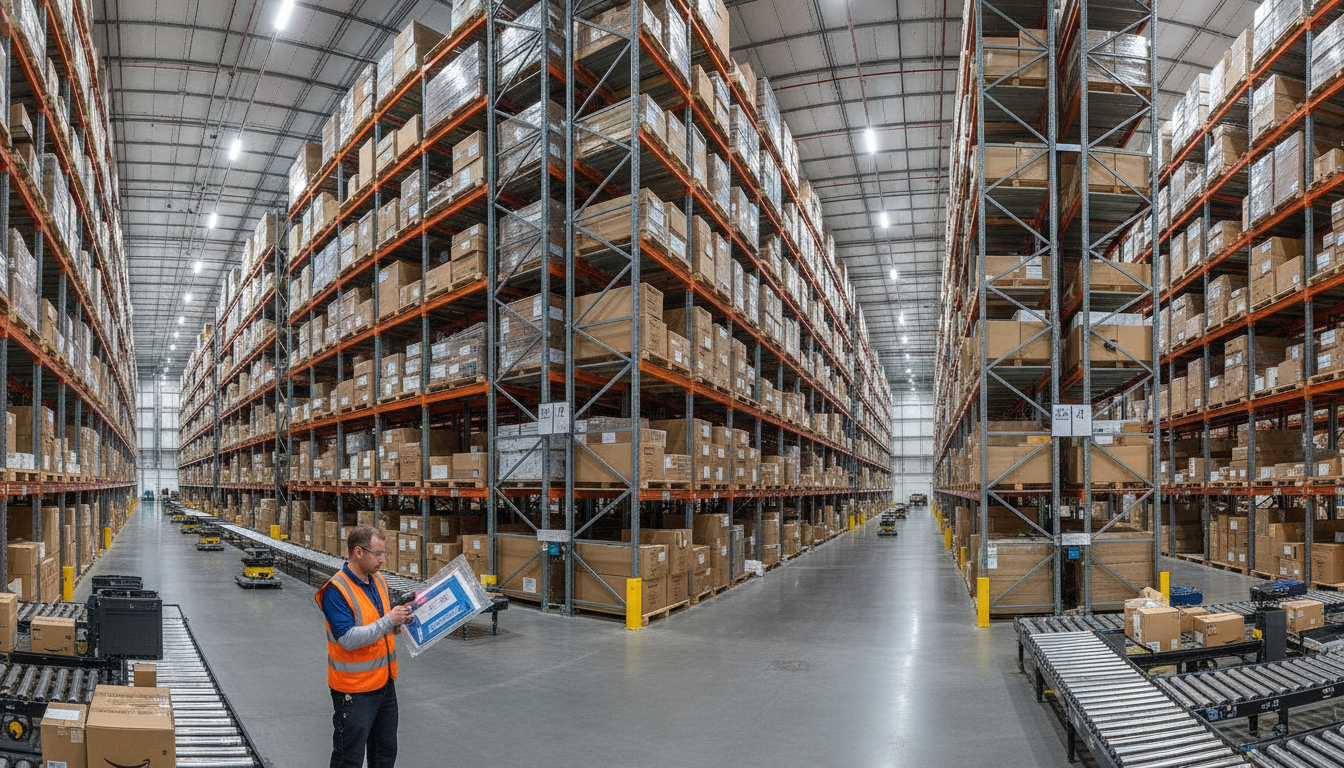
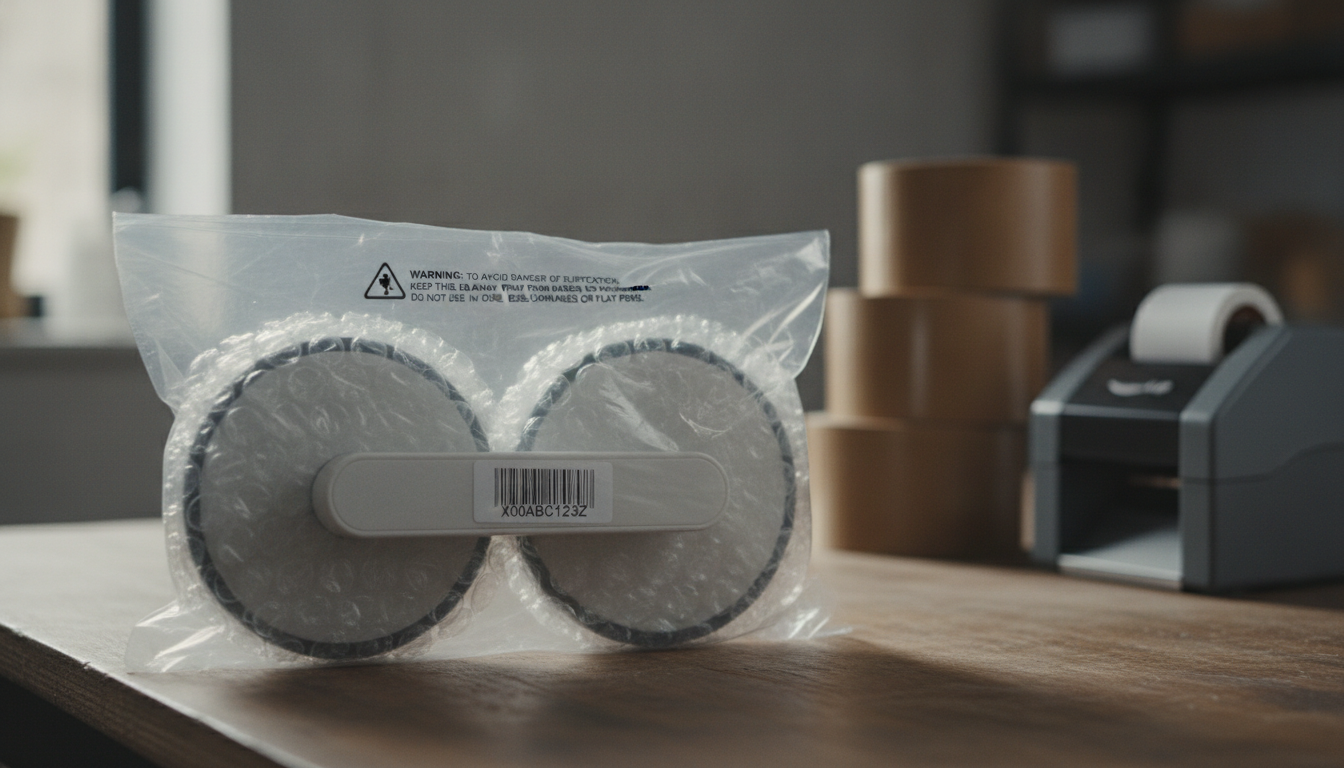
Amazon FBA packaging requirements for magnetic window cleaners mandate that sellers deliver inventory ready to ship to end customers: each unit must arrive in a sealed, scannable polybag or retail box with a visible FNSKU label, protective padding around magnets and glass-contact surfaces, and suffocation warnings on bags over 5 inches. Cartons cannot exceed 50 pounds or 25 inches on any side without prior approval, and every box must carry a scannable shipment label. Sellers are responsible for all preparation before the product reaches the fulfillment center, because Amazon does not add bubble wrap or protective materials during outbound fulfillment.
Key Takeaways
- Amazon requires sellers to prep and label every unit before delivery to fulfillment centers, with no additional protective packaging added during outbound shipment.
- Each magnetic window cleaner must be individually wrapped in a sealed polybag or retail-ready box, with a scannable FNSKU barcode visible and any conflicting manufacturer codes covered.
- Polybags exceeding 5 inches on any side must carry a printed suffocation warning, and fragile components such as magnets, handles, and microfiber pads need bubble wrap or foam inserts to survive drop and compression tests.
- Cartons shipped to FBA centers are limited to 50 pounds and 25 inches per side unless the seller obtains advance approval for oversize loads, and every carton requires a unique Amazon shipment label.
- Products containing neodymium magnets face additional scrutiny during intake inspection, so sellers should document magnet enclosure, test drop resistance from 30 inches, and confirm that paired inner and outer units remain secure during transit.
Unit-Level Preparation: Polybags, Sealing, and Suffocation Warnings
Every magnetic window cleaner entering an Amazon fulfillment center must be individually packaged in a way that protects the product and allows immediate shipment to a customer. Amazon does not rewrap or add protective materials during order fulfillment, so the unit-level packaging you provide is the same packaging the buyer receives.
Polybag Specifications
If you ship units in polybags rather than retail boxes, the bag must be transparent or translucent, fully sealed with permanent adhesive or heat seal, and thick enough to prevent tearing during handling. Any polybag with an opening of 5 inches or more on any side must display a suffocation warning in a readable font, typically printed directly on the bag or applied as a permanent label. Resealable zip-lock bags do not meet Amazon’s sealing requirement unless you tape or heat-seal the closure.
Protecting Magnets and Moving Parts
Magnetic window cleaners contain paired neodymium or ferrite magnets, articulated handles, and replaceable microfiber pads. The outer magnetic unit can separate from the inner unit during rough handling, and exposed magnets attract metal debris or pinch fingers. Wrap each unit in bubble wrap with at least two layers over the magnet housing, or use die-cut foam inserts that isolate the magnet from the bag wall. Secure any loose components such as safety ropes, replacement pads, or instruction booklets with twist ties or small zip bags, so they do not shift and puncture the polybag.
Barcode and Label Placement
Amazon scans the FNSKU barcode at intake and again during picking, so the label must be visible through a transparent polybag or affixed to the outside of an opaque retail box. If the manufacturer barcode (UPC or EAN) is also visible, cover it with a blank sticker or the FNSKU label itself, because conflicting codes trigger intake rejection. Place the FNSKU on a flat surface away from seams, folds, or areas that will be gripped during handling.
Retail-Ready Packaging and Ships in Product Packaging
Amazon offers two packaging pathways: standard FBA prep, where you bag and label each unit, and Ships in Product Packaging (SIPP), where the manufacturer box doubles as the shipping container. SIPP saves the polybag step but imposes stricter design and testing requirements.
SIPP Eligibility Criteria
To qualify for Ships in Product Packaging, the retail box must be made entirely of corrugated cardboard or recyclable paperboard, with no plastic clamshells, wire ties, or excessive tape. The box must open without tools, and all internal components must survive a 30-inch drop test onto concrete without damage. Amazon expects the outer box to show minimal branding and no promotional messages, so buyers perceive it as a plain shipping carton rather than a gift-wrapped retail package.
Frustration-Free Packaging Standards
Frustration-Free Packaging (FFP) is Amazon’s broader initiative to eliminate hard plastic shells and excessive packaging materials. Magnetic window cleaners packaged under FFP guidelines use molded pulp trays or folded cardboard inserts to secure the magnets, handles, and microfiber pads, with no plastic bags inside the box. The outer carton must pass a compression test simulating stacked pallets in a warehouse, and all printed materials must be recyclable or compostable. FFP certification requires lab testing through an Amazon-approved facility, and the process can take 8-12 weeks, so sellers planning private-label or OEM runs should budget lead time accordingly.
When to Use Standard Polybag Prep Instead
If your magnetic window cleaner ships in a colorful retail box with a plastic window, glossy finish, or attached accessories, standard polybag prep is faster and more cost-effective. Bag the entire retail box, affix the FNSKU to the polybag, and add bubble wrap if the box corners are prone to crushing. This approach works well for distributors who source stock models and want to start selling quickly without redesigning packaging.
Carton Packing and Shipment Labels
Once individual units are prepped, you pack them into master cartons for delivery to Amazon’s fulfillment network. Carton dimensions, weight limits, and labeling rules determine whether your shipment passes intake inspection or gets refused at the dock.
Weight and Dimension Limits
Standard cartons must not exceed 50 pounds in total weight or 25 inches on any single side. Cartons that violate either limit require advance approval through Seller Central and may incur additional handling fees. If you pack 10 magnetic window cleaners per carton and each unit weighs 3 pounds with packaging, the total carton weight is 30 pounds before adding dunnage, which keeps you comfortably under the 50-pound threshold. Measure the longest dimension of your carton after sealing and taping; a box that is 26 inches long triggers an oversize flag even if it weighs only 20 pounds.
Carton Labeling and FNSKU Visibility
Every master carton needs a unique Amazon shipment label generated through your inbound shipping plan. Print the label on standard adhesive paper and apply it to the top or side of the carton, avoiding seams and areas that will be covered by pallet wrap. Do not reuse old shipment labels or write tracking numbers by hand. If you pack mixed SKUs in a single carton, Amazon requires you to list the contents in the shipping plan and may charge a mixed-SKU fee, so most sellers find it simpler to pack one SKU per carton.
Dunnage and Void Fill
Fill empty space inside the carton with crumpled kraft paper, air pillows, or biodegradable packing peanuts. Cartons that rattle during handling are more likely to suffer damage, and loose units can shift and puncture each other’s polybags. Avoid foam peanuts that generate static, because they cling to microfiber pads and create a mess during intake inspection.
Magnet-Specific Protection and Drop Testing
Magnetic window cleaners face unique risks during transit because the paired inner and outer units can separate, magnets can crack on impact, and metal components attract ferrous debris. Buyers report that the outer magnetic unit can fall off or fail to follow the inner unit even when the stated glass-thickness range appears suitable, so packaging must prevent magnet misalignment and housing damage before the product reaches the customer.
Enclosing Magnets to Prevent Attraction
Neodymium magnets are strong enough to pull tools, staples, and metal shavings through a polybag wall. Wrap each magnet housing in two layers of bubble wrap, or use a foam sleeve that covers the entire magnetic face. If you ship paired units together in one polybag, separate them with a cardboard divider so they do not snap together and pinch the bag. Some sellers place each unit in its own small polybag, then pack both bags into a larger outer bag with the FNSKU label.
Drop and Vibration Resistance
Amazon’s intake process includes random drop tests from 30 inches onto a concrete floor. The magnet housing, handle pivot, and microfiber pad attachment must survive without cracking, bending, or detaching. Before sending your first shipment, conduct your own drop test: seal a unit in its final packaging, drop it from waist height onto a hard surface, and inspect for damage. If the handle loosens or the magnet shifts, add more foam or switch to a thicker polybag.
Moisture and Cleaning-Fluid Residue
Magnetic window cleaners often ship with residual water or cleaning solution from factory quality checks. Dry each unit thoroughly before bagging, because trapped moisture promotes mold growth and corrodes metal components. If you include a spray bottle or liquid cleaner as a bundle, pack it in a separate leak-proof bag and label the carton as containing liquids, so Amazon can route it to a facility equipped for hazmat intake.
Inbound Shipment Preparation and Seller Responsibility
Amazon’s fulfillment model places all prep responsibility on the seller. The fulfillment center receives your inventory, scans it, and places it on shelves, but does not open units, add padding, or correct labeling errors.
Creating the Inbound Shipping Plan
Log into Seller Central, navigate to Inventory > Send to Amazon, and create a new shipping plan. Enter the FNSKU, quantity, and prep category for each SKU. Amazon will assign your shipment to one or more fulfillment centers based on demand forecasting and warehouse capacity. If the system splits your shipment across three locations, you must pack and label separate cartons for each destination, which increases prep labor and freight cost.
Prep Services and Third-Party Fulfillment Centers
Sellers who lack the time or space to prep inventory can hire a third-party prep center near an Amazon fulfillment hub. The prep center receives your bulk shipment from the factory, applies FNSKU labels, bags and bubble-wraps each unit, packs cartons, and delivers directly to Amazon. Prep fees typically range from one to three dollars per unit depending on complexity, and turnaround is 2-5 business days. This option works well for importers who ship container loads from overseas and want to avoid warehousing inventory before it enters FBA.
Intake Rejection and Reshipment Costs
If Amazon’s intake team finds units without FNSKU labels, cartons over the weight limit, or damaged products, the entire shipment may be refused and returned to your address of record. Reshipment fees, storage charges, and lost sales add up quickly, so it pays to follow the packaging requirements exactly. Some sellers send a small test shipment of 10-20 units first, wait for intake confirmation, and then scale up once they know their prep process passes inspection.
International Export and Multi-Market Compliance
Distributors sourcing magnetic window cleaners for resale in Europe, North America, or Australia must navigate country-specific labeling, recycling marks, and safety certifications in addition to Amazon FBA packaging requirements. A unit that meets US FBA standards may still face customs holds or retailer rejection if it lacks CE marking for the EU, bilingual labels for Canada, or RCM compliance for Australia.
CE Marking and EU Packaging Directives
Magnetic window cleaners sold in the European Union must carry CE marking on the product or packaging, indicating compliance with the Low Voltage Directive and the Restriction of Hazardous Substances Directive where applicable. Although magnetic cleaners are not electrical products, the magnets and plastic housings must meet material safety standards, and the packaging must display recycling symbols for plastics and cardboard under the EU Packaging and Packaging Waste Directive. Distributors should request a copy of the manufacturer’s Declaration of Conformity and third-party test reports before placing a bulk order.
Extended Producer Responsibility and Recycling Fees
Germany, France, and several other EU member states impose Extended Producer Responsibility (EPR) obligations on importers and online sellers. You must register with a national packaging compliance scheme, report the weight of packaging materials you place on the market, and pay recycling fees. Failure to register can result in fines and suspension of your seller account. EPR registration typically costs a few hundred euros per year, and the per-kilogram fees are low, but the administrative burden is significant for small importers.
Multilingual Instructions and Safety Warnings
Canada requires bilingual English and French labels on consumer products, and Australia mandates that safety warnings be printed in English with a minimum font size. If your magnetic window cleaner includes a safety rope or drop-prevention lanyard, the instructions must explain how to attach it, and the warning label must state the maximum glass thickness for safe use. Printing multilingual inserts adds cost, so many distributors request that the factory include a QR code linking to downloadable PDFs in multiple languages, reducing the need for thick printed booklets.
Distributor-Ready Packaging Models: Retail, Master Cartons, and Palletization
Distributors and wholesalers purchasing magnetic window cleaners for resale face a different set of packaging decisions than individual Amazon sellers. Retail packaging must attract consumers on a shelf, master cartons must protect products during regional distribution, and palletized loads must survive cross-border trucking and container shipping.
Retail Packaging for Brick-and-Mortar and E-Commerce
A retail-ready magnetic window cleaner box includes full-color printing, product photography, feature callouts, and a barcode scannable at checkout. The box should have a window or die-cut opening so customers can see the product, and the back panel should list glass-thickness compatibility, cleaning instructions, and safety warnings. Retail packaging for a single unit typically costs 50 cents to two dollars depending on printing complexity and order volume, and most factories require a minimum order of 500 units for custom-printed retail boxes.
Master Cartons for Wholesale Distribution
Master cartons for wholesale shipments are plain brown corrugated boxes with minimal branding, designed to stack on pallets and survive rough handling. A typical master carton holds 10-20 magnetic window cleaners, each in its own retail box, with cardboard dividers or molded pulp trays preventing shifting. The outer carton should display the SKU, unit count, gross weight, and country of origin, but no consumer-facing marketing. Wholesalers often request that the factory print handling symbols such as “Fragile” and “This Side Up” directly on the carton rather than using stickers, which can peel off during transit.
Palletization and Container Loading
A standard 40-foot high-cube container holds approximately 24-26 pallets, each stacked to a height of 2 meters. Master cartons are arranged in interlocking layers, wrapped in stretch film, and secured with corner boards and strapping. The factory should provide a packing list showing the number of cartons per pallet, the total unit count, and the gross weight, so the distributor can plan warehouse receiving and customs clearance. Magnetic window cleaners are relatively lightweight, so cube-out limits (volume) tend to constrain container loading before weight-out limits (mass).
Mixed-SKU Wholesale Shipments
Distributors who stock multiple glass-thickness SKUs often request mixed-SKU pallets, with 3-30mm, 5-35mm, 8-40mm, and 10-45mm models packed together. This approach reduces the number of containers needed and allows the distributor to test market demand for each SKU before committing to full-pallet quantities. However, mixed-SKU shipments increase the risk of picking errors and require careful labeling, so the factory should assign a unique carton label to each SKU and provide a detailed packing list.
In practice: A Hong Kong trading company specified an outer carton of at most 10 pieces for its window cleaner order, balancing cube-out efficiency with the need for manageable carton weights during last-mile delivery.
Compliance Implications: Magnets, Plastics, Recycling Marks, and Multilingual Instructions
Magnetic window cleaners contain materials and components that trigger regulatory scrutiny in multiple jurisdictions. Neodymium magnets, ABS or polypropylene housings, and microfiber textiles each carry their own compliance requirements, and packaging must communicate these attributes to customs officials, safety inspectors, and end users.
Magnet Material Disclosure and Safety Data
Neodymium magnets are classified as articles rather than substances under most chemical regulations, so they do not require Safety Data Sheets for shipping. However, strong magnets can interfere with pacemakers and other medical devices, so many countries recommend or require a warning label. The packaging should state the magnet type (neodymium or ferrite) and the maximum pull force, so professional buyers can assess whether the product is suitable for use near sensitive equipment or in environments with strict safety protocols.
Plastic Resin Identification and Recycling Marks
The plastic housing of a magnetic window cleaner must carry a resin identification code (the number inside the recycling triangle) so consumers and waste processors can sort it correctly. ABS is typically marked with a “7” (other plastics), while polypropylene carries a “5”. The EU and several US states require that packaging materials over a certain weight threshold display recycling symbols and material abbreviations, and failure to comply can result in fines or import holds.
Microfiber Pad Composition and Washing Instructions
Microfiber cleaning pads are made from polyester and polyamide fibers, which shed microplastics during washing. Some jurisdictions require that textile products include care labels with washing temperature, drying instructions, and a note that the item should be washed in a laundry bag to capture loose fibers. If your magnetic window cleaner includes replaceable pads, the packaging should list the fiber content by percentage and provide a care label in the language of the destination market.
Country-Specific Labeling: Germany, UK, France, North America, Australia
Packaging Validation: Drop, Vibration, Compression, and Moisture Testing
Professional distributors and large-volume Amazon sellers often require lab-tested packaging validation before committing to a purchase order. Testing confirms that the packaging protects the product through the entire supply chain, from factory floor to customer doorstep, and reduces the risk of damage claims and negative reviews.
Drop Testing for Impact Resistance
A drop test simulates the product falling from a conveyor belt, forklift, or delivery truck. The packaged unit is dropped from a specified height (typically 30 inches for products under 50 pounds) onto a concrete floor, with impacts on each face, edge, and corner. The product is then inspected for cracks, loose components, and functional damage. Magnetic window cleaners are particularly vulnerable to handle breakage and magnet dislodgement, so the packaging must include enough cushioning to absorb the shock without adding excessive bulk or weight.
Vibration Testing for Transit Simulation
Vibration testing places the packaged product on a shake table that replicates the motion of a truck traveling over rough roads. The test runs for several hours at varying frequencies, and the product is inspected afterward for loosened screws, detached pads, and packaging tears. Magnetic window cleaners with articulated handles or snap-fit components may develop rattles or misalignments during vibration, so the packaging should immobilize moving parts with foam inserts or cable ties.
Compression Testing for Stacked Pallets
Compression testing stacks weight on top of a carton to simulate the load it will bear at the bottom of a pallet. The test applies a specified force (often equivalent to four cartons stacked on top) for a set duration, and the carton is measured for crushing, bulging, or seam failure. Cartons that fail compression testing collapse during warehousing, damaging the products inside and creating safety hazards for workers. Use double-wall corrugated board for cartons that will be stacked more than four high, and avoid over-packing cartons to the point where the walls bow outward.
Moisture and Humidity Resistance
Magnetic window cleaners shipped by ocean freight spend weeks in containers that experience temperature swings and condensation. Moisture testing places the packaged product in a humidity chamber at controlled temperature and relative humidity, then inspects for mold, corrosion, and packaging degradation. Polybags should be made from virgin polyethylene with a thickness of at least 1.5 mils, and any cardboard inserts should be coated or laminated to resist moisture absorption. If the product includes metal springs, hinges, or fasteners, apply a light coating of corrosion inhibitor before bagging.
Cost Optimization: Balancing Protection, Compliance, and Freight Efficiency
Packaging decisions directly impact landed cost, freight efficiency, and customer satisfaction. Over-packaging wastes money and cube space, while under-packaging leads to damage claims and returns. Distributors must find the balance that minimizes total cost while meeting Amazon FBA packaging requirements for magnetic window cleaners and destination-market compliance rules.
Material Cost per Unit
A basic polybag with bubble wrap costs 10-20 cents per unit, while a custom-printed retail box with foam inserts costs one to two dollars. FNSKU labels printed on thermal paper cost less than a penny each, but pre-printed barcode labels on glossy stock with color logos cost 5-10 cents. Multiply these per-unit costs by your order volume to see where the bulk of your packaging spend goes, and negotiate with suppliers for volume discounts on bags, boxes, and labels.
Freight Efficiency and Dimensional Weight
Carriers charge for shipping based on the greater of actual weight or dimensional weight (length × width × height divided by a dimensional factor). A magnetic window cleaner that weighs 2 pounds but ships in a bulky box may be charged as if it weighs 5 pounds, erasing your margin. Minimize void space by using custom-sized boxes or collapsible packaging, and avoid excessive bubble wrap that adds bulk without adding meaningful protection.
Damage Rate and Return Cost
A packaging upgrade that costs 20 cents per unit but reduces your damage rate from 3% to 1% saves far more in return shipping, replacement units, and negative reviews than it costs in materials. Track your FBA return reasons in Seller Central, and if you see a pattern of “item damaged” or “defective,” invest in better padding or stronger cartons. Some sellers run split tests, sending half their inventory in standard packaging and half in reinforced packaging, then comparing damage rates after 30 days.
Private-Label and OEM Packaging Investment
Distributors launching a private-label magnetic window cleaner must budget for custom packaging design, printing plates, and minimum order quantities. A full-color retail box with custom die-cut inserts typically requires a 500-unit minimum, and the factory may charge a one-time tooling fee of a few hundred dollars for the printing plates. Amortize this upfront cost over your first-year sales forecast to determine whether private-label packaging is financially viable, or start with generic packaging and upgrade once you prove market demand.
Recommended Next Step: Pre-Shipment Packaging Audit
Before placing a bulk order, request a pre-production sample packed exactly as the factory intends to ship it. Inspect the polybag thickness, FNSKU label placement, bubble wrap coverage, and carton strength. Conduct your own drop test, weigh the carton, and measure all three dimensions to confirm compliance with Amazon FBA packaging requirements for magnetic window cleaners. If the sample fails any test, work with the factory to revise the packaging before production begins, because fixing packaging errors after 5,000 units are already manufactured is expensive and time-consuming.
Distributors who source from Fonoran’s 6,500 m² Taizhou facility receive packaging guidance as part of the quotation process, including carton specs, label templates, and documentation for CE compliance. Our export team works with buyers in 60+ countries to match packaging to destination-market requirements, and we offer both stock models with MOQ from 2 units and private-label runs from 500 units. Request a product sample and packaging specification through our contact page, and our team will confirm lead time, freight options, and any additional prep needed for your target market.
Written by the Fonoran Export Team.