DDP Shipping Magnetic Window Cleaner USA Cost Breakdown (2026)
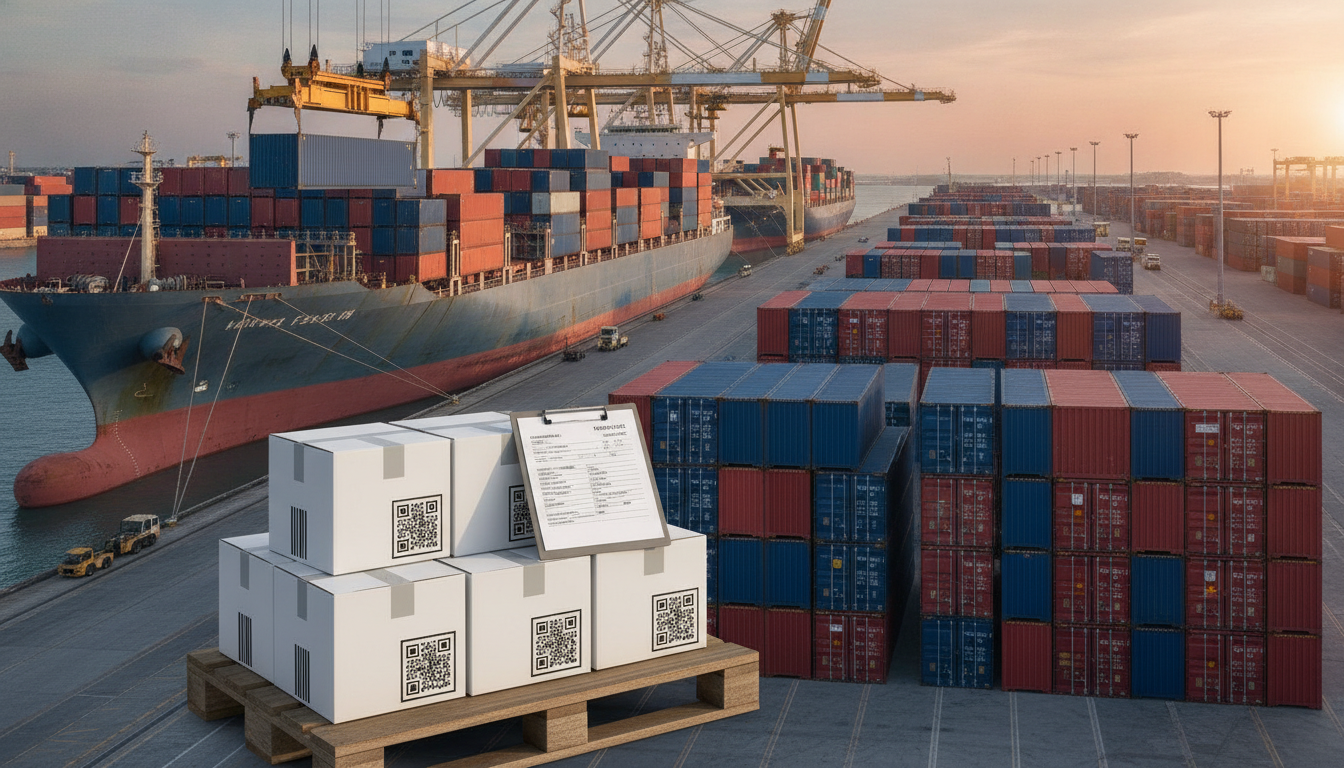
A complete DDP shipping magnetic window cleaner USA cost breakdown includes product cost (request quote), ocean or air freight ($150 to $850 per CBM depending on mode and origin port), U.S. import duty (typically 6.5% under HTS 8205.51.30 for hand tools), customs broker fee ($75 to $150 flat or 0.5 to 1.0% of shipment value), destination drayage and terminal handling ($200 to $450 per container or $50 to $120 per pallet), and marine insurance (0.3 to 0.6% of cargo value). For a 100-unit pallet of adjustable magnetic window cleaners (0.8 CBM, 120 kg gross) shipped DDP air express from Ningbo to a Los Angeles warehouse, total landed cost typically runs $1,200 to $1,800 all-in, while the same pallet by ocean LCL costs $800 to $1,100 and a 20-foot container (680 units, 5.5 CBM) lands at $3,200 to $4,500 DDP.
📋 Table of Contents
- Executive Summary
- What DDP Shipping Actually Includes for Magnetic Window Cleaners
- Product Cost Component: Factory-Direct vs Markup
- Freight Cost: Air, Ocean LCL, and FCL Compared
- U.S. Import Duty and Tariff Classification
- Customs Broker and Clearance Fees
- Destination Drayage, Terminal Handling, and Last-Mile Delivery
- Insurance and Documentation Costs
- Worked Examples: Sample, Pallet, and Container Orders
- Regional Cost Variations Within the USA
- How to Verify a True DDP Quote
- Key Takeaways
- Frequently Asked Questions
Executive Summary
- True DDP means zero hidden charges: The supplier pays product cost, international freight, U.S. customs duty, broker clearance, terminal handling, drayage, and final delivery to your specified ZIP code.
- Freight mode drives total cost: Express courier suits samples (2 to 10 units), ocean LCL works for pallets (100 to 500 units), and full containers (680+ units) offer the lowest per-unit landed cost.
- Magnetic window cleaners typically classify under HTS 8205.51.30: Hand tools of base metal attract a 6.5% duty rate, though the exact classification should be confirmed with your customs broker before the first shipment.
- Destination charges vary by port and final ZIP: West Coast ports (Los Angeles, Long Beach, Oakland) incur lower drayage than East Coast or inland destinations; terminal handling and chassis fees add $200 to $450 per container.
- Request a line-item DDP quote: A transparent breakdown separating product, freight, duty, broker, drayage, and insurance lets you verify every charge and compare suppliers on equal terms.
What DDP Shipping Actually Includes for Magnetic Window Cleaners
DDP (Delivered Duty Paid) places maximum responsibility on the supplier. Under genuine DDP terms, the factory or exporter covers every cost and risk from the production line in Taizhou to your warehouse door in the United States. That includes product manufacturing, export packing, inland trucking in China to Ningbo port, ocean or air freight, marine insurance, U.S. customs duty, customs broker clearance, terminal handling at the U.S. port, drayage to your final ZIP code, and last-mile delivery. You receive an invoice for one all-in price and pay nothing extra on arrival.
Buyers may receive a nominal DDP label but later face separate drayage, destination handling, or customs-related invoices; the shipping guidance identifies this as DAP-like treatment rather than true DDP. To confirm genuine DDP, verify that the supplier’s quotation explicitly states the U.S. delivery ZIP code and lists every charge component. A quote that omits drayage or terminal handling is not DDP, even if the supplier uses the term.
Product-Specific Packaging and Dimensional Weight
Magnetic window cleaners ship in compact cartons. A typical 10-unit master carton measures 52 × 38 × 22 cm (0.043 CBM) and weighs 12 kg gross. Express couriers and air freight apply dimensional weight pricing when volume exceeds actual weight; for magnetic cleaners the actual weight usually governs because neodymium magnets are dense. Ocean freight charges by CBM, so tight packing reduces cost. Our 6,500 m² Taizhou factory ships from Ningbo port and can palletize orders to maximize container utilization.
Magnetic Components and Customs Documentation
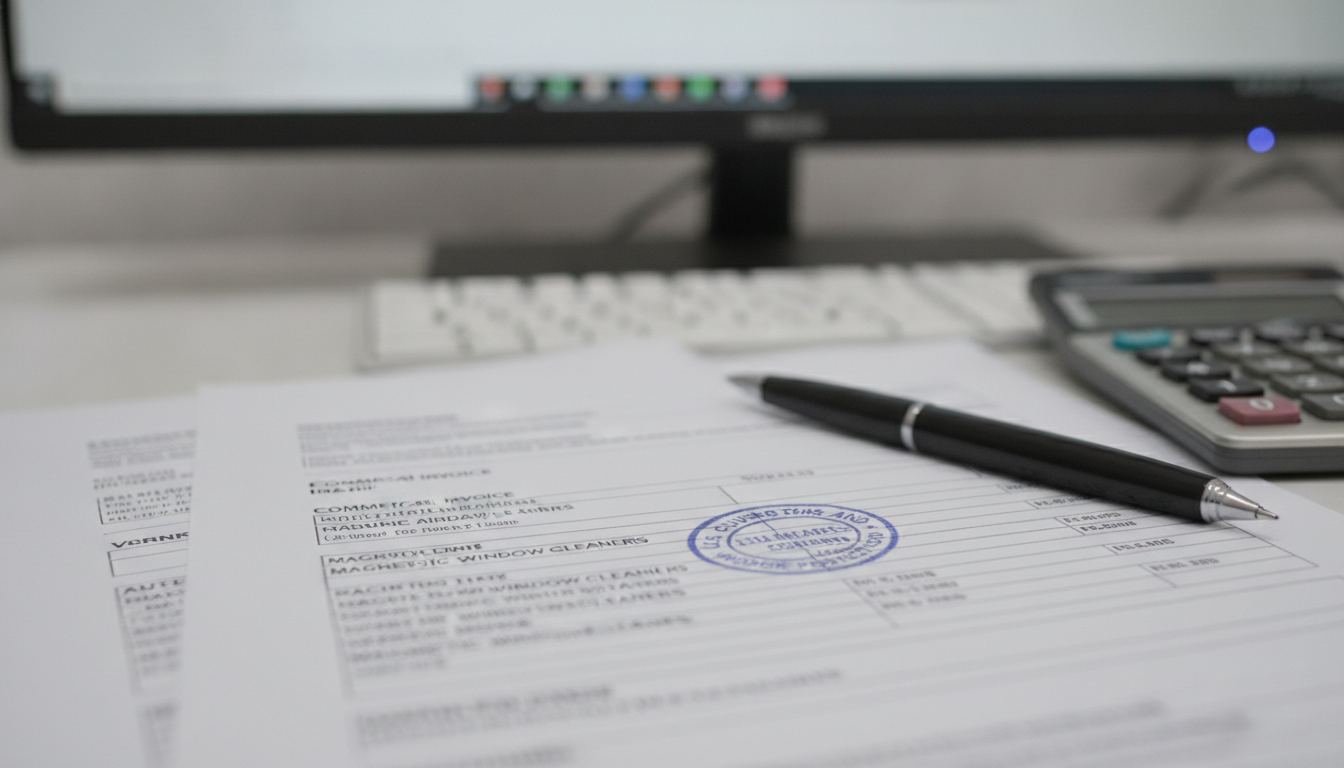
Neodymium magnets (NdFeB) require correct classification and country-of-origin documentation. U.S. Customs and Border Protection may request a commercial invoice showing the HS code, a packing list with net and gross weights, and a certificate of origin. Some shipments also require product safety documentation confirming that the magnets meet CPSC guidelines for consumer products, particularly when the end use includes residential window cleaning. The supplier should provide all documents under DDP; any missing paperwork can trigger port delays and examination fees.
Product Cost Component: Factory-Direct vs Markup
Product cost is the largest single component of a DDP shipping magnetic window cleaner USA cost breakdown. Factory-direct pricing eliminates trading-company and middleman margins, but the DDP quote still bundles product and logistics into one figure. Buyers selling into the retail or e-commerce channel reported that a product costing about $17 on Alibaba was around $53 DDP on AliExpress, highlighting the large gap between unit price and delivered price. That gap reflects freight, duty, broker fees, and platform or supplier margin.
To isolate product cost, request a separate FOB Ningbo quotation alongside the DDP quote. The difference reveals the true logistics and duty burden. Fonoran is a factory-direct B2B manufacturer; we quote both FOB and DDP terms and provide a line-item breakdown on request so distributors and facility-management buyers can verify each charge and compare suppliers on equal footing.
MOQ and Pricing Tiers
Minimum order quantity affects unit price. Our MOQ starts from 2 units for stock models, making sample evaluation economical, and private-label orders start at 500 units. Larger orders spread tooling, setup, and per-carton packing costs across more units, lowering the factory price. When calculating DDP cost per unit, remember that freight and duty also benefit from scale: a full container’s per-unit freight cost is a fraction of a single-pallet LCL shipment.
Freight Cost: Air, Ocean LCL, and FCL Compared
Freight is the second-largest cost element. Mode selection depends on order volume, urgency, and working capital. Express courier (DHL, FedEx, UPS) suits samples and small replenishment orders, air freight works for urgent pallets, ocean LCL handles mid-volume shipments, and full-container load (FCL) delivers the lowest per-unit cost for distributor and wholesale volumes.
Express Courier
Express courier charges by chargeable weight (greater of actual or dimensional). A 2-unit sample (0.02 CBM, 2.4 kg) from Ningbo to a U.S. address costs $80 to $140 DDP, door to door in 4 to 7 days. A 10-unit carton (0.08 CBM, 12 kg) runs $180 to $280. Courier DDP includes customs clearance and delivery but offers limited transparency; the single rate conceals the split between freight, duty, and broker fee. For procurement teams evaluating multiple suppliers, courier quotes are hard to compare because each provider bundles costs differently.
Air Freight
Air freight quotes by kilogram or CBM, whichever yields higher revenue for the carrier. A 100-unit pallet (0.8 CBM, 120 kg) typically costs $6 to $9 per kg from Ningbo to Los Angeles or New York, totaling $720 to $1,080 for freight alone. Add fuel surcharge (10 to 20%), security fee ($30 to $50), and airline terminal handling ($50 to $80), and the air freight component reaches $900 to $1,300. Transit time is 5 to 10 days port to port, plus 2 to 4 days for customs clearance and drayage.
Ocean LCL (Less than Container Load)
LCL charges per CBM. Rates from Ningbo to U.S. West Coast ports (Los Angeles, Long Beach, Oakland) run $150 to $250 per CBM; East Coast (New York, Savannah) and Gulf ports (Houston) cost $200 to $300 per CBM. A 100-unit pallet (0.8 CBM) incurs $120 to $240 ocean freight, plus destination charges (terminal handling $50 to $80, drayage $100 to $200), for a total freight-and-destination cost of $270 to $520. Transit time is 18 to 25 days West Coast, 28 to 35 days East Coast.
Ocean FCL (Full Container Load)
A 20-foot container holds approximately 680 magnetic window cleaner units (5.5 CBM, 816 kg gross) when palletized. All-in ocean freight from Ningbo to Los Angeles runs $1,800 to $2,500 per 20-foot container, including bunker adjustment factor, chassis, and terminal handling. Customs clearance adds $75 to $150, and drayage to an inland warehouse adds $200 to $450, for a total landed cost of $2,075 to $3,100 before duty. A 40-foot container (1,360 units, 11 CBM) costs $2,800 to $3,800 freight plus the same clearance and drayage fees. FCL transit matches LCL (18 to 35 days), but per-unit freight cost drops to $3 to $5 compared to $8 to $12 for LCL.
U.S. Import Duty and Tariff Classification
U.S. Customs assesses duty based on Harmonized Tariff Schedule (HTS) classification. Magnetic window cleaners are hand tools of base metal and typically fall under HTS 8205.51.30 (household hand tools), which carries a 6.5% Most Favored Nation duty rate when imported from China. The duty base is the FOB invoice value (product cost plus inland freight and export packing in China), not the CIF or DDP total. For a $2,000 FOB shipment, duty is $130.
Classification can vary. If the cleaner includes a plastic handle and the plastic component predominates by weight or value, Customs may classify it under Chapter 39 (plastics) with a different rate. If the product is marketed as a safety tool for high-rise window cleaning, it might fall under a more specific subheading. The importer of record (under DDP, the supplier or their agent) is responsible for correct classification. Misclassification triggers penalties, duty adjustments, and potential shipment holds. Request that your supplier confirm the HTS code in writing and provide a rationale; cross-check with a licensed customs broker before the first order.
Section 301 Tariffs and Trade-War Surcharges
Additional tariffs under Section 301 (List 1 through List 4A) applied to many Chinese goods from 2018 onward. As of late 2025, household hand tools under 8205.51.30 were not subject to Section 301 duties, but tariff lists change. Verify current applicability with your broker or by consulting the U.S. International Trade Commission’s tariff database. Any additional duty percentage adds directly to the landed cost and must be included in a true DDP quote.
Customs Broker and Clearance Fees
Customs brokers file entry paperwork, pay duty on the importer’s behalf, and coordinate release with CBP. Broker fees are either flat ($75 to $150 per shipment) or ad valorem (0.5 to 1.0% of shipment value), whichever is greater. For a $3,000 shipment, expect $75 to $150 flat or $15 to $30 ad valorem; the flat fee applies. For a $50,000 container, 0.5% yields $250, which exceeds the flat minimum.
Additional broker services include Automated Commercial Environment (ACE) filing ($25 to $40), Importer Security Filing (ISF, also called 10+2, $25 to $50), and pier-pass or pre-pull fees at congested ports ($50 to $100). Some brokers bundle these into the base fee; others itemize them. Under DDP, the supplier pays the broker directly or reimburses their freight forwarder. Verify that the DDP quote lists broker and filing fees separately so you can confirm they are reasonable and not inflated to pad margin.
Destination Drayage, Terminal Handling, and Last-Mile Delivery
Destination charges are where nominal DDP quotes often fail. True DDP covers terminal handling (unloading the container at the port, chassis rental, gate fees), drayage (trucking from the port to your warehouse), and final delivery. Buyers may receive a nominal DDP label but later face separate drayage, destination handling, or customs-related invoices; this is DAP-like treatment, not genuine DDP.
Terminal Handling
U.S. ports charge terminal handling fees (THC) of $200 to $350 per 20-foot container and $300 to $450 per 40-foot container. Congested ports (Los Angeles, Long Beach) add pier-pass fees ($80 to $120) for off-peak gate access. LCL shipments incur per-CBM or per-pallet handling ($30 to $60 per pallet). These fees are non-negotiable and appear on the terminal invoice; the supplier or their forwarder must pay them before the container is released.
Drayage
Drayage cost depends on distance from port to final ZIP code. A delivery within 50 miles of Los Angeles port costs $200 to $350 for a 20-foot container; 100 to 200 miles (Inland Empire, Central Valley) runs $400 to $650; cross-country drayage to the East Coast costs $2,500 to $4,000, at which point rail intermodal becomes more economical. LCL drayage charges per pallet or per 100 kg; a single pallet to a Los Angeles warehouse costs $100 to $180.
Last-Mile Delivery
If your facility lacks a loading dock or forklift, the drayage carrier may charge liftgate service ($75 to $150) and inside delivery ($50 to $100 per hour). Residential or limited-access addresses incur surcharges ($50 to $200). Confirm these details when providing your delivery ZIP code; a supplier quoting DDP to a commercial dock cannot be held to the same price for a residential garage.
Insurance and Documentation Costs
Marine cargo insurance covers loss or damage in transit. Standard coverage is 0.3 to 0.6% of cargo value (CIF or declared value). For a $10,000 shipment, insurance costs $30 to $60. All-risk policies cover broader perils than named-perils; the incremental cost is 0.1 to 0.2 percentage points. Under DDP, the supplier should carry insurance and provide a certificate naming the buyer as loss payee or additional insured. Self-insuring (no policy) saves the premium but exposes both parties to total loss if the container is lost at sea or damaged in port.
Documentation fees cover commercial invoice preparation, packing list, certificate of origin (if required for duty preference), and any product-specific certificates (CE for safety, test reports for magnets). Most suppliers include these in the DDP quote, but some itemize $50 to $100 for document preparation. Verify that CE certification and any required test reports are provided at no extra charge; Fonoran holds third-party CE certification (certificate WUX202105142249ENC by Shenzhen Wuxiang Testing) and supplies the certificate and test report with every commercial shipment.
Worked Examples: Sample, Pallet, and Container Orders
Concrete examples clarify how DDP shipping magnetic window cleaner USA cost breakdown components combine. All figures are illustrative ranges based on Ningbo origin and Los Angeles destination; actual quotes vary by season, fuel surcharge, and port congestion.
Example 1: Two-Unit Sample, Express Courier
- Product cost: Request quote (factory-direct pricing)
- Packaging: 0.02 CBM, 2.4 kg gross
- Express freight (DHL/FedEx): $60 to $100
- Customs duty (6.5% of FOB): Included in courier DDP rate
- Broker and clearance: Included in courier DDP rate
- Delivery to door: Included
- Total DDP (freight and duty only, product cost separate): $80 to $140
- Transit time: 4 to 7 days
Example 2: 100-Unit Pallet, Ocean LCL
- Product cost: Request quote
- Packaging: 0.8 CBM, 120 kg gross, one pallet
- Ocean freight (Ningbo to LA): $150 to $250 per CBM = $120 to $200
- Customs duty (6.5% of FOB): Assume $1,500 FOB = $98 duty
- Broker and clearance: $75 to $100
- Terminal handling: $50 to $80
- Drayage (port to warehouse, 30 miles): $100 to $150
- Insurance (0.4% of $1,500): $6
- Total DDP (logistics and duty, product cost separate): $449 to $634
- Transit time: 20 to 25 days
Example 3: 680-Unit Container (20′), Ocean FCL
- Product cost: Request quote
- Packaging: 5.5 CBM, 816 kg gross, palletized
- Ocean freight (Ningbo to LA, 20′ container): $1,800 to $2,500
- Customs duty (6.5% of FOB): Assume $10,000 FOB = $650 duty
- Broker and clearance: $100 to $150
- Terminal handling: $250 to $350
- Drayage (port to warehouse, 50 miles): $250 to $400
- Insurance (0.4% of $10,000): $40
- Total DDP (logistics and duty, product cost separate): $3,090 to $4,090
- Per-unit logistics and duty cost: $4.54 to $6.01
- Transit time: 20 to 25 days
In practice: An equipment buyer in France sourced one 5-35mm magnetic glass cleaner for a machine operator-cabin window and had it quoted for courier delivery, illustrating how single-unit DDP pricing works for specialized industrial applications.
Regional Cost Variations Within the USA
DDP cost to Los Angeles differs from DDP cost to Miami or Chicago. The primary variables are ocean freight (West Coast ports are closer to Asia), drayage distance, and port efficiency.
West Coast (Los Angeles, Long Beach, Oakland)
Shortest ocean transit (16 to 20 days) and lowest base freight rates. Terminal handling and drayage are competitive due to high container volumes and established trucking networks. A 20-foot container DDP to a warehouse within 50 miles of the port costs $3,200 to $4,200 all-in.
East Coast (New York, Savannah, Norfolk)
Ocean transit adds 10 to 12 days and $400 to $800 per container compared to West Coast. Drayage within the Northeast corridor (New York, New Jersey, Pennsylvania) is dense and efficient, but labor and fuel costs are higher. A 20-foot container DDP to a New Jersey warehouse runs $4,000 to $5,200.
Gulf Coast (Houston, New Orleans)
Mid-range ocean freight and transit time. Gulf ports handle heavy industrial cargo and offer rail connections to the Midwest. A 20-foot container DDP to a Texas warehouse costs $3,800 to $4,800.
Inland (Chicago, Dallas, Atlanta)
Rail intermodal from West Coast ports is often more economical than all-water service to East or Gulf ports. A container arrives at Los Angeles, transfers to rail, and reaches Chicago in 5 to 7 additional days. Total DDP cost to Chicago is $4,200 to $5,400, competitive with all-water to the East Coast and faster.
How to Verify a True DDP Quote
DDP pricing can conceal inflated freight or supplier margin because the quote combines freight, duties, customs handling, and delivery into one amount without showing the underlying cost components. Use this checklist to verify that a DDP quote is transparent and complete.
Request a Line-Item Breakdown
Ask the supplier to separate product cost, freight, duty, broker fee, terminal handling, drayage, insurance, and any documentation fees. A supplier unwilling to provide this breakdown may be inflating one component to increase margin. Compare each line item to independent freight quotes from forwarders and to published duty rates.
Confirm the Delivery ZIP Code
A DDP quote is only valid for the specific destination address. A quote to Los Angeles port is not DDP; a quote to your Los Angeles warehouse ZIP code is. Verify that the supplier has your full address, including any special delivery requirements (liftgate, inside delivery, limited-access surcharge).
Verify Duty Rate and HTS Code
Ask the supplier to state the HTS code and duty rate they used to calculate the DDP price. Cross-check with the U.S. International Trade Commission’s Harmonized Tariff Schedule database or consult a customs broker. Misclassification or an outdated rate can leave you with an unexpected bill after clearance.
Confirm Incoterm and Responsibility
DDP means the supplier is the importer of record and assumes all liability until delivery. Some suppliers quote a hybrid term (DDP but buyer provides tax ID for clearance, or DDP but buyer arranges final drayage). These are not true DDP. Confirm in writing that the supplier will handle customs clearance, pay all duties and fees, and deliver to your door with zero additional charges.
Check for Hidden Fees
Pier-pass, chassis split, pre-pull, demurrage, and detention are real port charges but can be inflated or double-billed. Ask the supplier or forwarder to provide terminal invoices and drayage receipts after shipment. Transparent suppliers share these documents; opaque suppliers refuse.
Key Takeaways
- A complete DDP shipping magnetic window cleaner USA cost breakdown separates product cost, freight, duty, broker clearance, terminal handling, drayage, insurance, and documentation into verifiable line items.
- Freight mode selection drives total cost and speed: express courier suits samples (4 to 7 days), air freight works for urgent pallets (7 to 14 days), ocean LCL handles mid-volume shipments (20 to 30 days), and full containers deliver the lowest per-unit landed cost (20 to 35 days).
- Magnetic window cleaners typically classify under HTS 8205.51.30 with a 6.5% duty rate, but classification should be confirmed with a licensed customs broker before the first shipment to avoid penalties and delays.
- Destination charges vary significantly by U.S. region: West Coast ports incur $200 to $400 drayage for nearby warehouses, while East Coast and inland destinations add $400 to $1,000 or more depending on distance and port efficiency.
- True DDP means zero surprise charges at delivery; verify that the supplier’s quote explicitly includes terminal handling, drayage to your ZIP code, and all customs and broker fees, and request a line-item breakdown to confirm transparency.
- Buyers sourcing wholesale magnetic window cleaners should request both FOB and DDP quotations to isolate logistics cost, compare suppliers on equal terms, and verify that the DDP premium reflects actual freight and duty rather than inflated margin.
Frequently Asked Questions
Does DDP shipping include all U.S. taxes and fees?
DDP includes customs duty, merchandise processing fee, harbor maintenance fee, and broker clearance charges. It does not include state or local sales tax, which the buyer pays when reselling the goods or using them in a taxable jurisdiction. Some states require importers to pay use tax on goods imported for business use; consult your accountant or state revenue department to determine your obligation. The supplier has no visibility into your state tax status and cannot include it in the DDP quote.
Can I use my own customs broker under DDP terms?
Under strict DDP, the supplier is the importer of record and selects the customs broker. If you want to use your own broker, you are effectively requesting DAP (Delivered at Place) or DDP with a carve-out. Many suppliers accommodate this by quoting DDP but allowing you to nominate the broker and provide your Importer of Record number; the supplier still pays the broker’s invoice and includes that cost in the DDP price. Clarify this arrangement in writing before the shipment to avoid confusion at the port.
How do I verify that a supplier’s DDP quote is not inflated?
Request a parallel FOB quote and an itemized DDP breakdown showing freight, duty, broker, drayage, and insurance separately. Obtain an independent freight quote from a forwarder for the same origin, destination, and volume. Calculate duty yourself using the HTS code and your FOB invoice value. Compare the supplier’s DDP breakdown to your independent figures; any line item more than 20 to 30 percent higher warrants a question. Transparent suppliers welcome this scrutiny because it builds trust; opaque suppliers resist because they rely on bundled pricing to obscure margin.
Ready to compare factory-direct DDP pricing with a transparent line-item breakdown? Our export team provides separate FOB and DDP quotations for every inquiry, showing product cost, freight mode options, duty calculation, and destination charges for your specific U.S. ZIP code. Request your detailed quote and verify every cost component before you commit.
Written by the Fonoran Export Team.