Lead Time Custom Packaging Magnetic Window Cleaner: 2026 Timeline
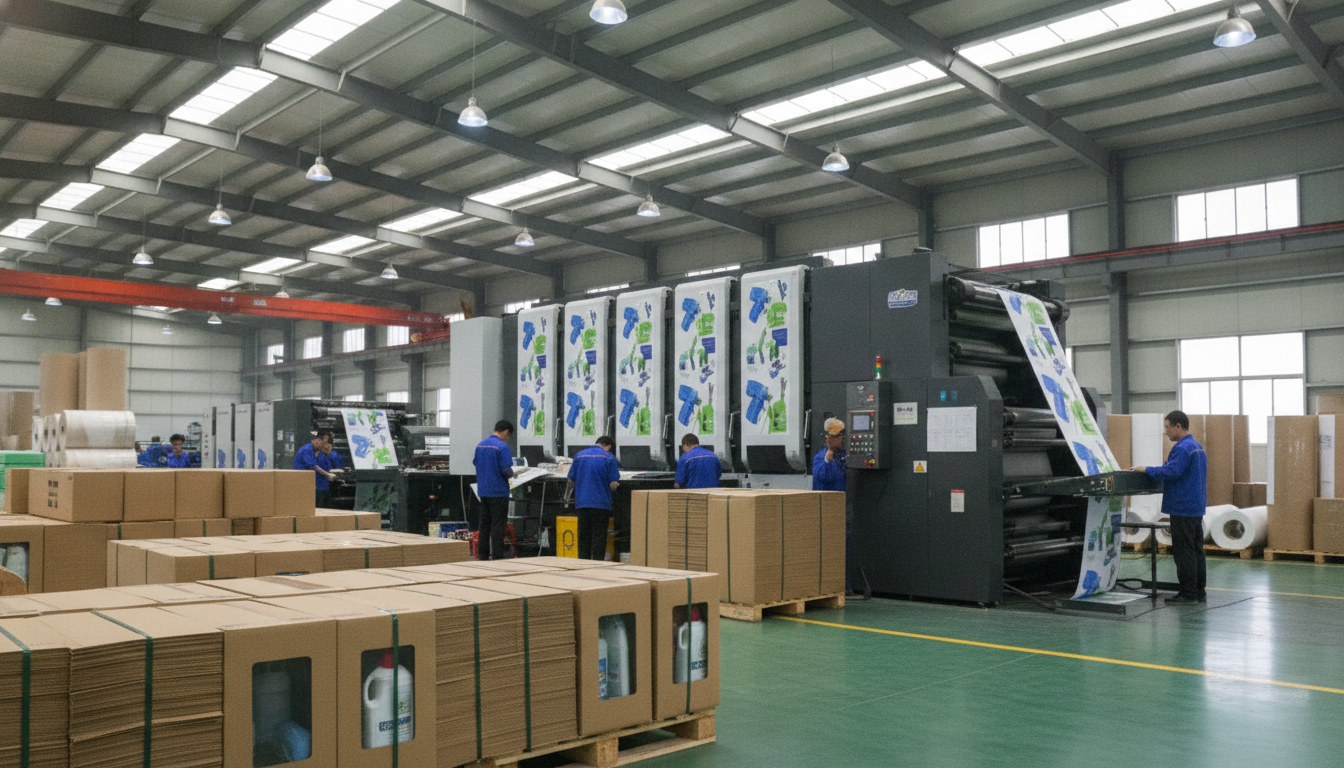
The lead time custom packaging magnetic window cleaner orders typically spans 22-49 days from artwork approval to factory gate, split between packaging production (15-35 days depending on format and print complexity) and product assembly (7-14 days for manual magnetic cleaners). Packaging MOQ starts at 500 units for printed cartons; tooling or print-plate preparation adds 5-10 days to first orders, and buyers should add 10-30 days for ocean freight and customs clearance to calculate landed delivery dates.
Executive Summary
- Packaging lead time: Custom-printed boxes require 15-35 days after artwork approval, with tooling or plate setup adding 5-10 days on first orders.
- Product assembly: Manual magnetic window cleaners take 7-14 days to manufacture once packaging materials arrive at the factory.
- Minimum order quantity: Private-label packaging starts at 500 units; stock models with logo-only branding ship from 2 units with faster turnaround.
- End-to-end timeline: Budget 22-49 days factory lead time plus 10-30 days ocean transit and customs, depending on destination port and Incoterms.
- Critical path items: Artwork approval, packaging format choice, and factory capacity during peak export seasons directly affect delivery dates.
What Drives Packaging Lead Time for Custom Magnetic Window Cleaners?
Packaging lead time separates into three phases: artwork and print-plate preparation, material sourcing and printing, and final assembly at the cleaning-tool factory. Each phase runs sequentially, and delays in artwork approval push every downstream milestone. Buyers ordering custom packaging for the first time face longer timelines because tooling or printing plates must be fabricated before the first production run.
Artwork Approval and Print-Plate Preparation
Once a buyer submits logo files, product photography, compliance symbols, and multilingual instructions, the packaging supplier prepares print-ready artwork and sends a digital proof. Buyers typically need 2-5 business days to review and approve the proof, though complex regulatory text or multi-country labeling can extend this to 7-10 days. After approval, the packaging printer fabricates printing plates or prepares digital UV tooling, which takes 5-10 days for offset printing and 3-5 days for digital printing. Reorders using existing plates skip this step entirely, reducing lead time by up to 10 days.
Material Sourcing and Printing
Corrugated cardboard, coated paperboard, and blister-card substrates are sourced from regional mills in Zhejiang and Jiangsu provinces, with delivery to the packaging printer taking 3-7 days. Printing itself requires 7-14 days for offset lithography (common for orders above 1,000 units) and 5-10 days for digital UV printing (used for smaller runs or full-color photographic designs). Specialty finishes, spot UV, embossing, metallic foil, add 3-5 days. Packaging materials are then die-cut, folded, and shipped to the magnetic window cleaner factory, a process taking 2-4 days within Taizhou or 5-7 days if the printer is located in Guangdong or Shanghai.
Final Assembly at the Cleaning-Tool Factory
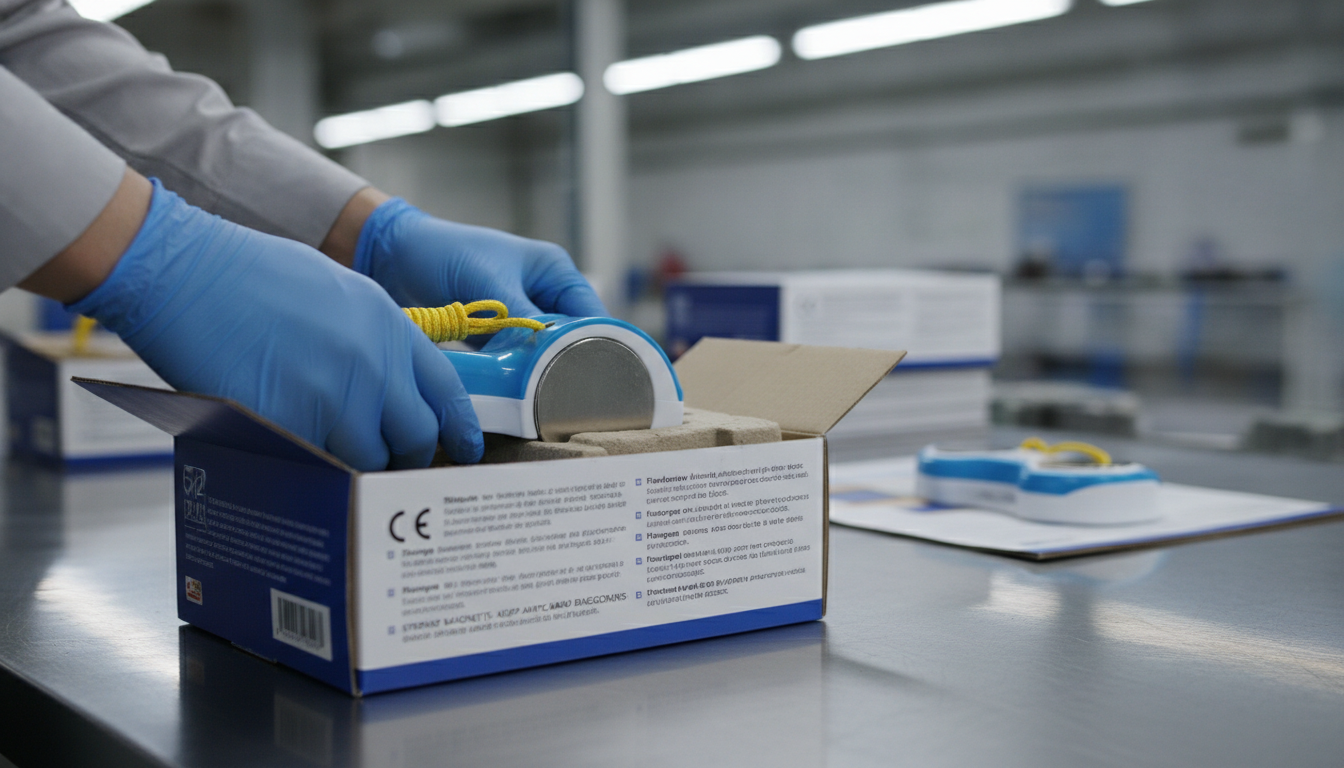
Once custom packaging arrives at the magnetic window cleaner product range facility, workers assemble the cleaning heads, attach safety ropes, insert multilingual instruction sheets, and pack finished units into the printed cartons. Manual magnetic window cleaners require 7-14 days for this final assembly phase, depending on order size and whether the factory is running multiple SKUs simultaneously. Electric or robotic models, which are not part of the core Fonoran line, would extend this phase to 20-30 days due to motor testing and battery-pack integration.
How Does Packaging Format Affect Lead Time?
Lead time custom packaging magnetic window cleaner orders varies by format. Stock cartons with logo-only printing ship faster than fully customized retail-ready boxes, and blister packaging requires mold fabrication that adds weeks to first orders. The table below compares four common packaging formats and their typical production timelines.
Buyers launching a new brand or entering a retail channel with strict packaging standards should budget for the longest timeline in their chosen format. Reorders using existing tooling cut lead time by 5-20 days, making the second and subsequent shipments significantly faster.
Does Order Quantity Change the Lead Time for Custom Packaging?
Order quantity affects lead time in two ways: larger orders require more press time at the packaging printer, and factories prioritize multi-container orders in their production schedule. A 500-unit private-label order typically completes within the standard 15-25 day packaging window, while a 5,000-unit order may extend printing by 3-5 days due to the volume of sheets that must pass through the press. However, the factory assembly phase does not scale linearly, our 6,500 m² Taizhou facility with 60+ workers can produce 50,000+ magnetic window cleaners per day, so even large orders rarely extend the 7-14 day assembly timeline.
Single-Container vs Multi-Container Orders
A 20-foot container holds approximately 8,000-12,000 magnetic window cleaners depending on SKU and packaging bulk, while a 40-foot high-cube container accommodates 18,000-24,000 units. Single-container orders move through the factory in one production batch, keeping lead time within the standard range. Multi-container orders may be split across two production runs if the factory is handling concurrent projects for other buyers, which can add 5-7 days to the overall timeline. Buyers ordering multiple containers should confirm the production schedule at the time of order placement rather than assuming a fixed lead time.
Rush Orders and Express Production
Factories can expedite production for urgent orders, but this typically requires the buyer to accept a premium on unit cost and confirm that packaging materials are already in stock or can be sourced locally within 3-5 days. Rush orders bypass the normal production queue, and the factory dedicates a full production line to the project. Even with expedited handling, the lead time custom packaging magnetic window cleaner rush orders rarely drops below 15 days end-to-end, because packaging printing and die-cutting cannot be compressed beyond a certain point without sacrificing print registration and color consistency.
How Do Seasonal Factory Capacity and Export Peaks Affect Delivery Dates?
Factory capacity fluctuates throughout the year due to Chinese national holidays, pre-holiday export surges, and workforce availability. Buyers placing orders in the weeks leading up to Chinese New Year (late January or early February) face extended lead times because factories close for 7-15 days and packaging suppliers shut down simultaneously. Orders confirmed in November and early December also encounter delays, as factories prioritize shipments that must clear customs before the Western holiday season.
Chinese New Year and Golden Week
Chinese New Year is the longest factory closure of the year, and no production or packaging work occurs during this period. Buyers who need delivery in February or early March must place orders by mid-December to ensure the goods ship before the holiday. Similarly, Golden Week in early October sees reduced staffing and slower response times from both factories and freight forwarders. Planning around these two holidays prevents unexpected delays and ensures packaging materials are printed and assembled on schedule.
Summer Export Surge
June through August represents a secondary peak period for household cleaning tool exports, driven by back-to-school promotions and autumn product launches in Europe and North America. Packaging printers and cleaning-tool factories operate at or near full capacity during these months, and lead times can extend by 5-10 days compared to off-peak periods. Buyers ordering custom packaging for summer delivery should confirm production slots in April or early May to avoid being pushed into a later batch.
What Compliance Documentation and Artwork Requirements Add Time?
Custom packaging for magnetic window cleaners sold in regulated markets must display safety warnings, material composition statements, importer contact information, and country-specific compliance marks. Preparing this regulatory text and obtaining approval from the buyer’s legal or compliance team often takes longer than the graphic design itself. Buyers entering the EU, UK, Australia, or North America for the first time should budget an extra 7-14 days for this documentation phase.
CE Marking and EU Importer Details
Magnetic window cleaners shipped to the EU require CE certification and must display the name and address of the EU importer on the packaging. The factory holds a third-party CE certificate (Shenzhen Wuxiang Testing, certificate no. WUX202105142249ENC) that covers the product itself, but the buyer must provide the importer details and ensure the packaging artwork includes the CE mark in the correct size and format. Preparing this text and coordinating with the EU importer adds 3-7 days to the artwork approval phase.
Multilingual Instructions and Safety Warnings
Retail packaging for hardware distributors and cleaning contractors often requires instruction sheets in two or more languages. Translating the user manual, safety warnings, and glass-thickness compatibility chart into German, French, Spanish, or Dutch takes 5-10 days if the buyer does not have pre-approved translations on file. The packaging printer then typesets the multilingual text and prepares a proof, which the buyer must review for accuracy. Errors discovered after printing has started cannot be corrected without scrapping the entire print run and restarting, so buyers should allocate sufficient time for translation review.
UKCA, RCM, and Other Market-Specific Marks
The UK requires UKCA marking for certain product categories, Australia mandates RCM for electrical goods, and Canada enforces bilingual English-French labeling. Manual magnetic window cleaners are not electrical devices and do not require RCM or electrical safety testing, but buyers should confirm which marks apply to their specific import channel. Adding a new compliance mark to packaging artwork after the print plate has been fabricated requires a new plate, which resets the lead time by 5-10 days.
How Do Shipping Terms and Incoterms Affect the Total Delivery Timeline?
The lead time custom packaging magnetic window cleaner figure quoted by the factory covers production only and stops at the factory gate or the port of export. Buyers must add ocean freight transit, customs clearance, and inland delivery to calculate the landed date at their warehouse. The choice of Incoterms, EXW, FOB, CIF, or DDP, determines which party arranges freight and bears the risk during transit, but it also affects how quickly the goods move through the logistics chain.
FOB Ningbo and Ocean Freight Transit
Most wholesale magnetic window cleaner orders ship FOB Ningbo, meaning the factory delivers the goods to Ningbo port and the buyer arranges the ocean freight. Transit time from Ningbo to major destination ports ranges from 10 days (Southeast Asia), 18-25 days (US West Coast and Australia), 25-35 days (US East Coast and Europe), to 30-40 days (Middle East and South America). Buyers using their own freight forwarder can sometimes negotiate faster vessel schedules or consolidated shipments that reduce transit time by 3-5 days.
Customs Clearance and Inland Delivery
Customs clearance adds 2-7 days in most markets, depending on whether the shipment is flagged for inspection and whether the buyer has pre-registered the import with customs authorities. The EU and UK require an EORI number for the importer, and delays in obtaining this registration can hold goods at the port for weeks. Once cleared, inland trucking or rail delivery to the buyer’s warehouse takes 1-5 days depending on distance from the port. Buyers should add a 5-10 day buffer to the landed timeline to account for unforeseen customs queries or documentation corrections.
DDP and Door-to-Door Service
Under DDP Incoterms, the factory arranges ocean freight, customs clearance, and inland delivery, and the goods arrive at the buyer’s warehouse ready to unload. This simplifies logistics for the buyer but extends the quoted lead time by 15-30 days compared to FOB, because the factory must coordinate with its freight forwarder and customs broker. DDP pricing also includes freight and duty, which can make direct cost comparison with FOB quotes difficult. Buyers ordering DDP should confirm the exact delivery address and any access restrictions (loading dock hours, truck size limits) at the time of quotation to avoid delays at the final delivery stage.
How Does Sample Approval Affect the Start of Production?
Most buyers ordering custom packaging request a pre-production sample before authorizing the full production run. The sample phase adds 10-20 days to the overall timeline, but it prevents costly errors in packaging fit, print color, or instruction-sheet content. Buyers who skip sampling to save time risk receiving a full shipment with packaging defects that cannot be corrected without reordering, which ultimately delays market launch by months.
Sample Production and Shipping
The factory produces 1-3 sample units using the custom packaging materials and ships them by express courier (DHL, FedEx, UPS) to the buyer’s office. Sample production takes 5-7 days, and express courier delivery adds 3-5 days, for a total sample lead time of 8-12 days. Buyers should inspect the sample for packaging fit, print quality, instruction-sheet legibility, and compliance-mark placement, then provide written approval or request corrections. Each round of sample revision adds another 8-12 days, so buyers should provide detailed feedback in the first review to minimize iterations.
Artwork Revisions After Sample Approval
If the buyer requests changes to the packaging artwork after approving the sample, such as updating a phone number, correcting a translation, or adding a new compliance mark, the packaging printer must revise the print plate and produce a new proof. This revision cycle takes 5-10 days and delays the start of bulk production. Buyers should finalize all artwork content, including regulatory text and contact information, before approving the sample to avoid this delay.
In practice: A Hong Kong trading company specified an outer carton of at most 10 pieces for its window cleaner order, requiring the packaging supplier to adjust the carton dimensions and recalculate the pallet configuration before printing could begin.
Stock vs Custom Packaging: Planning Table for Buyers
Buyers deciding between stock packaging with logo stickers and fully custom packaging should weigh lead time, MOQ, and brand presentation. The table below summarizes the trade-offs for four common packaging scenarios, helping procurement teams plan order timing and budget allocation.
Buyers launching a new product line should start with a small stock-packaging order to test market demand, then transition to custom packaging once sales volume justifies the 500-unit MOQ and the longer lead time.
How Can Buyers Reduce Lead Time on Repeat Orders?
Repeat orders using existing packaging tooling and artwork cut lead time by 5-20 days compared to first orders. The packaging printer skips the print-plate fabrication step, and the factory already has the buyer’s specifications and quality standards on file, eliminating the back-and-forth clarification that often extends first-order timelines. Buyers who maintain a consistent order schedule, such as quarterly container shipments, can negotiate reserved production slots that guarantee delivery within a fixed window.
Pre-Approved Artwork and Print Plates on File
Once a buyer approves the packaging artwork and the print plate is fabricated, the packaging printer stores the plate for future orders. Reorders require only a purchase order and a deposit payment to restart production, cutting the pre-production phase from 10-15 days to 1-3 days. Buyers should confirm that the print plate remains on file and has not been discarded due to inactivity, especially if the last order was placed more than 12 months earlier.
Forecasting and Blanket Purchase Orders
Buyers who can forecast demand three to six months in advance can issue a blanket purchase order covering multiple shipments. The factory allocates production capacity for these future orders, and the buyer confirms the exact delivery date for each shipment 30-45 days in advance. This approach smooths factory scheduling and ensures the buyer receives goods within a predictable window, which is critical for distributors managing just-in-time inventory or seasonal product launches.
Key Takeaways
- Custom packaging for magnetic window cleaners requires 15-35 days for printing and 7-14 days for product assembly, with first orders adding 5-10 days for tooling or print-plate preparation.
- Minimum order quantity for private-label packaging is 500 units; stock models with logo-only branding ship from 2 units with faster turnaround.
- Ocean freight and customs clearance add 10-30 days to the factory lead time, depending on destination port and whether the buyer arranges freight under FOB or accepts DDP delivery.
- Seasonal factory closures for Chinese New Year and Golden Week can extend lead times by 7-15 days, so buyers should plan orders around these holidays.
- Pre-production samples take 8-12 days to produce and ship, and each round of artwork revision adds another 8-12 days, making early finalization of regulatory text and compliance marks critical.
- Repeat orders using existing print plates cut lead time by 5-20 days, and buyers who issue blanket purchase orders can secure reserved production slots for predictable delivery windows.
Frequently Asked Questions
Can I order custom packaging for fewer than 500 units?
Custom printed cartons require a minimum order of 500 units due to the fixed cost of print-plate fabrication and press setup. Buyers needing smaller quantities can choose stock packaging with a logo sticker applied at the factory, which has no minimum beyond the standard 2-unit stock MOQ. This option ships faster and costs less per unit for small trial orders, but it does not offer the full brand presentation of a custom-printed carton.
What happens if I need to change the packaging artwork after production starts?
Once the packaging printer begins the production run, changes to the artwork require stopping the press, fabricating a new print plate, and restarting production. This adds 5-10 days to the lead time and may incur additional tooling charges. Buyers should finalize all artwork content, including regulatory text, compliance marks, and contact information, during the sample-approval phase to avoid delays. If a change is unavoidable, the factory can sometimes apply a corrective sticker over the affected area, but this is only suitable for minor text corrections and does not work for full design changes.
How does glass thickness range affect packaging lead time?
Glass thickness range does not directly affect packaging lead time, but it does influence which SKU the buyer orders and whether the factory must produce multiple SKUs to fill the order. Buyers ordering a single SKU, such as the 5-35mm adjustable model, complete production faster than buyers ordering a mixed pallet with three or four different thickness ranges. The factory must switch production lines between SKUs, which adds 1-2 days per changeover. Buyers should consolidate orders around one or two SKUs whenever possible to minimize production time and simplify logistics.
Ready to plan your custom packaging timeline? Our export team will map your artwork approval, packaging production, and ocean freight schedule into a single delivery date, and confirm MOQ, tooling costs, and Incoterms for your specific market. Request your detailed lead-time breakdown and packaging quote today.
Written by the Fonoran Export Team.