How to Choose Magnetic Window Cleaner Adjustable Strength

To choose a magnetic window cleaner with the right adjustable strength, measure your glass thickness first using a digital caliper or ruler, then match it to a cleaner whose adjustable range fully covers that measurement, units with 6-stage adjustable magnetic force let you dial in the exact holding power for single-pane, double-pane, and insulated glass from 3mm to 45mm.
📋 Table of Contents
Executive Summary
- Glass thickness drives magnet selection: Single-pane glass typically measures 3-8mm, while double-glazed units range from 15mm to 36mm or more; adjustable cleaners with 6-stage force control cover 3-45mm across four SKUs.
- Adjustable force prevents drops and drag: Too little magnetic force causes the outer unit to fall; too much makes the tool jerky and difficult to slide smoothly across the pane.
- Measurement accuracy matters: Buyers report that inaccurate thickness scales or guessing the glazing type leads to selecting the wrong setting, resulting in detachment or poor tracking.
- Safety rope and wet glass are non-negotiable: Even with correct adjustment, cold glass and certain coatings can reduce grip, so a tethered safety line and keeping the surface wet are essential for high-rise work.
- Factory-direct SKU range: Fonoran’s magnetic window cleaner product range spans 3-30mm, 5-35mm, 8-40mm, and 10-45mm SKUs, each with 6-stage adjustable force to suit single and double-pane glass in Europe, North America, and Australia.
Measure Glass Thickness Accurately
Correct adjustment starts with an exact measurement. Use a digital caliper or a ruler with millimeter markings to measure the glass from one surface to the other, including any air gaps or laminate layers in double-glazed units.
Single-Pane Glass
Single-pane windows typically measure 3mm to 8mm. Older residential windows, shopfronts, and interior partitions often fall into this range. Measure at the edge of the pane where the glass meets the frame, or use a small gap if accessible.
Double-Glazed Units
Double-glazed windows consist of two panes separated by an air or gas-filled cavity. Total thickness ranges from 15mm to 36mm or more, depending on the spacer width and individual pane thickness. Measure the entire assembly, not just one pane.
Insulated and Low-E Glass
Insulated glass units with Low-E coatings or laminated layers add complexity. The coating itself does not change the physical thickness, but laminated constructions can push total thickness beyond 30mm. Always measure the complete cross-section to avoid underestimating the required magnetic force.
Measurement tip: If the glass is already installed and you cannot access the edge, consult the building specification sheet or window manufacturer’s documentation for the exact glazing type and thickness.
Match Thickness to the Right SKU Range
Once you know the glass thickness, select a cleaner whose advertised range fully encompasses that measurement with headroom on both sides. Choosing a unit rated exactly at the upper limit of its range leaves no safety margin for manufacturing tolerances or coating variations.
Our 6,500m² Taizhou factory produces four adjustable SKUs covering 3-45mm, the widest range in the industry. Each SKU uses NdFeB magnets for maximum holding power across its specified thickness band.
In practice: A home user in Germany with 36mm insulated glass needed an adjustable magnetic window cleaner; 36mm sits inside the 10-45mm SKU with room to spare, ensuring safe operation even if the actual thickness varies slightly from the measurement.
Understand 6-Stage Adjustable Magnetic Force
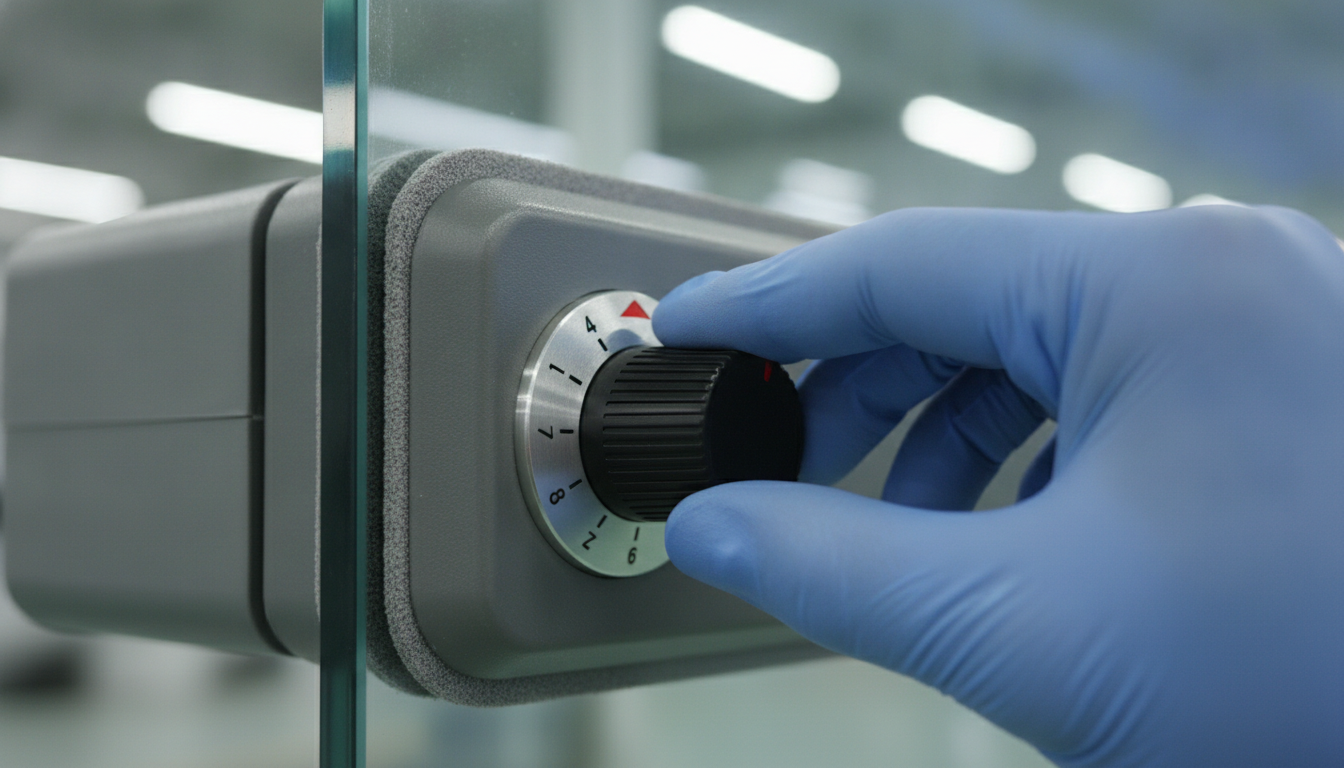
Adjustable force lets you tune the magnetic attraction to match the exact glass thickness within the SKU range. Six discrete stages provide fine control, preventing both under-grip and over-grip.
Why Adjustability Matters
A fixed-strength magnet optimized for 20mm glass will either slip on 30mm glass or drag excessively on 10mm glass. Adjustable force solves this by letting the operator dial in the precise holding power needed for the specific pane being cleaned.
How to Set the Adjustment
Most adjustable cleaners feature a rotating knob or slider that moves an internal spacer, changing the effective magnetic gap. Start at the middle setting for your measured thickness, then test on a low window. If the outer unit lags behind the inner unit or feels loose, increase one stage. If it drags or snaps abruptly, decrease one stage.
- Stage 1-2: Minimum force for thin single-pane glass (3-8mm); the outer unit glides easily with light pressure.
- Stage 3-4: Medium force for standard double glazing (15-25mm); balanced sliding resistance and secure tracking.
- Stage 5-6: Maximum force for thick insulated units (30-45mm); firm grip to prevent detachment on high-rise facades.
Magnet Material and Performance
Every Fonoran SKU except the FN-Classic 3-8mm model uses NdFeB magnets, which deliver higher holding force per unit volume than Ferrite. The FN-Classic 3-8mm SKU uses Ferrite, suitable for light residential single-pane applications where maximum force is not required.
Test Safely Before Full Deployment
Never deploy a magnetic window cleaner on a high-rise facade without ground-level testing. Testing confirms that the selected SKU, adjustment stage, and glass type combination will hold securely under working conditions.
Ground-Level Test Protocol
Place the cleaner on a vertical window at waist height. Wet the glass thoroughly with cleaning solution. Move the inner unit in all directions, horizontal, vertical, diagonal, and observe whether the outer unit follows smoothly without lagging or detaching. If it slips, increase the adjustment stage and retest.
Safety Rope Attachment
Every magnetic window cleaner should include a safety rope or tether. Thread the rope through the designated attachment point on the outer unit and secure it to a stable anchor inside the building. This prevents the outer unit from falling to the ground if magnetic grip is lost due to cold glass, coating interference, or operator error.
Wet-Glass Requirement
Magnetic cleaners rely on a thin film of water or cleaning solution to reduce friction between the cleaning pad and the glass. Dry glass increases drag, making the outer unit harder to move and more likely to detach. Keep the surface wet throughout the cleaning process, reapplying solution as needed.
Avoid Common Holding-Force Failures
Buyers report several recurring failure modes when adjustable strength is not correctly matched to the glass. Understanding these helps you specify the right unit and settings from the start.
Outer Unit Falls Off
The most common complaint is that the outer unit detaches mid-cleaning, even when the buyer measured the glass within the advertised range. This typically occurs when the adjustment is set too low, when the glass is colder than room temperature (reducing magnetic flux), or when the pane has a Low-E coating that slightly increases the effective magnetic gap.
Inconsistent Tracking
Some buyers find that the outer unit does not follow the inner unit consistently, lagging behind or drifting to one side. This happens when the magnetic force is insufficient to overcome friction, when the cleaning pads are worn or dirty, or when the glass is not wet enough. Increasing the adjustment stage or replacing the pads usually resolves the issue.
Excessive Drag and Jerky Movement
Conversely, setting the adjustment too high for the glass thickness causes the outer unit to snap tightly against the pane, making smooth movement difficult. The cleaner feels jerky, and the operator must apply excessive force to slide it. This increases fatigue and can damage the cleaning pads. Reduce the adjustment stage by one or two steps to restore smooth gliding.
Edge and Corner Gaps
Magnetic cleaners can miss the edges and corners of the pane unless moved in specific directions. This is a geometry issue, not a force issue, but it becomes more pronounced when the magnetic force is too low and the outer unit cannot maintain contact near the frame. Ensure the adjustment is high enough to keep the outer unit firmly seated, then use deliberate edge-to-edge strokes to cover the entire surface.
Cold Glass and Coating Interference
Buyers cleaning exterior windows in cold weather report that magnetic grip weakens as the glass temperature drops. Some coatings and insulated units with metallic films also interfere with magnetic flux. If you serve cold-climate markets or buildings with advanced glazing, test the cleaner on representative glass under actual temperature conditions before committing to a large order.
Key Takeaways
- Measure glass thickness with a digital caliper or ruler, including air gaps and laminate layers in double-glazed units, to ensure the selected SKU range fully covers the actual pane thickness.
- Select a cleaner whose advertised range provides headroom above and below your measured thickness; choosing a unit rated exactly at the upper limit leaves no margin for manufacturing tolerances or coating variations.
- Use 6-stage adjustable magnetic force to dial in the precise holding power: start at the middle setting for your measured thickness, then test on a low window and adjust up if the outer unit slips or down if it drags.
- Always attach the safety rope to a stable indoor anchor and keep the glass wet with cleaning solution throughout the process, because cold glass and certain coatings can reduce magnetic grip even when the adjustment is correct.
- Buyers report that inaccurate thickness scales, insufficient magnetic force for the measured range, and failure to test on representative glass under working conditions are the leading causes of outer-unit detachment and poor tracking.
- Fonoran’s four adjustable SKUs (3-30mm, 5-35mm, 8-40mm, 10-45mm) cover single-pane and double-pane glass across residential, commercial, and high-rise applications, with NdFeB magnets in every SKU except the FN-Classic 3-8mm Ferrite model.
Frequently Asked Questions
Can I use one adjustable cleaner for both single-pane and double-glazed windows?
Yes, if the SKU range covers both thicknesses. For example, the 3-30mm SKU handles single-pane glass (3-8mm) and thin double glazing (15-24mm) by adjusting the magnetic force stage. Measure each window type and set the adjustment accordingly before cleaning. Do not assume one setting works for all panes.
What happens if I set the adjustment too high for my glass thickness?
The outer unit will snap tightly against the pane, making smooth movement difficult. You will feel excessive drag, and the cleaner may move in jerky increments rather than gliding. This increases operator fatigue, wears out the cleaning pads faster, and can leave streaks. Reduce the adjustment stage by one or two steps until the unit slides smoothly with moderate hand pressure.
Do Low-E coatings affect magnetic holding force?
Low-E coatings are thin metallic films applied to glass surfaces to improve energy efficiency. They do not significantly change the physical thickness, but some buyers report slightly reduced magnetic grip on coated glass, likely due to the coating creating a small additional magnetic gap. If you clean Low-E windows, test the cleaner on a representative pane at the working temperature and increase the adjustment stage by one step if needed.
Selecting how to choose magnetic window cleaner adjustable strength comes down to accurate measurement, matching the thickness to the right SKU range, and fine-tuning the 6-stage adjustment to balance secure grip with smooth movement. Buyers who measure carefully, test on representative glass, and use the safety rope avoid the most common failure modes: outer-unit detachment, inconsistent tracking, and excessive drag.
Ready to specify the right adjustable-force magnetic window cleaner for your glass types and market?
Request a Product Quote & SKU Chart →
Written by the Fonoran Export Team.