Sampling Policy Magnetic Window Cleaner OEM Factory (2026)
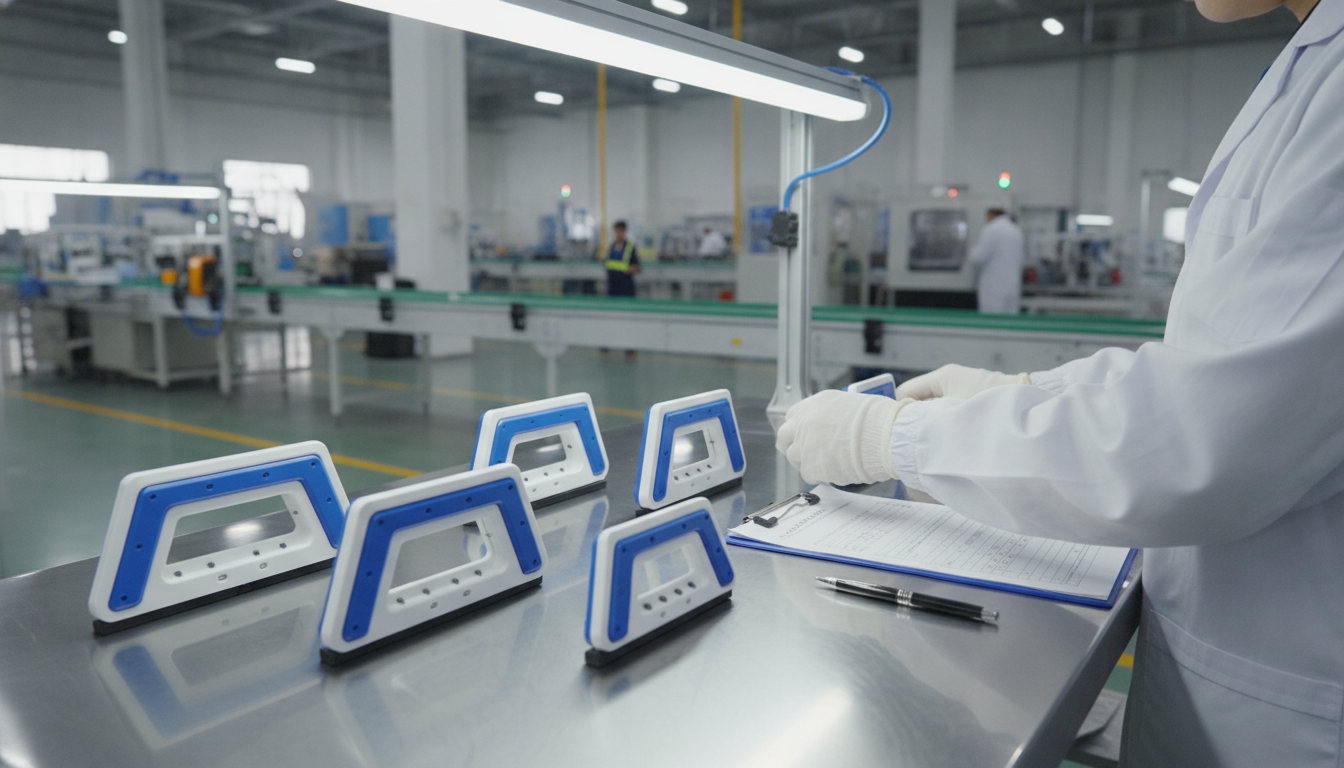
The standard sampling policy magnetic window cleaner OEM factory includes paid samples with fees typically credited against bulk orders, courier shipping arranged by the buyer, and a technical approval workflow covering magnet strength, glass-thickness compatibility, and packaging before mass production. Sample fees and production lead times are confirmed at quotation depending on model complexity and customization requirements.
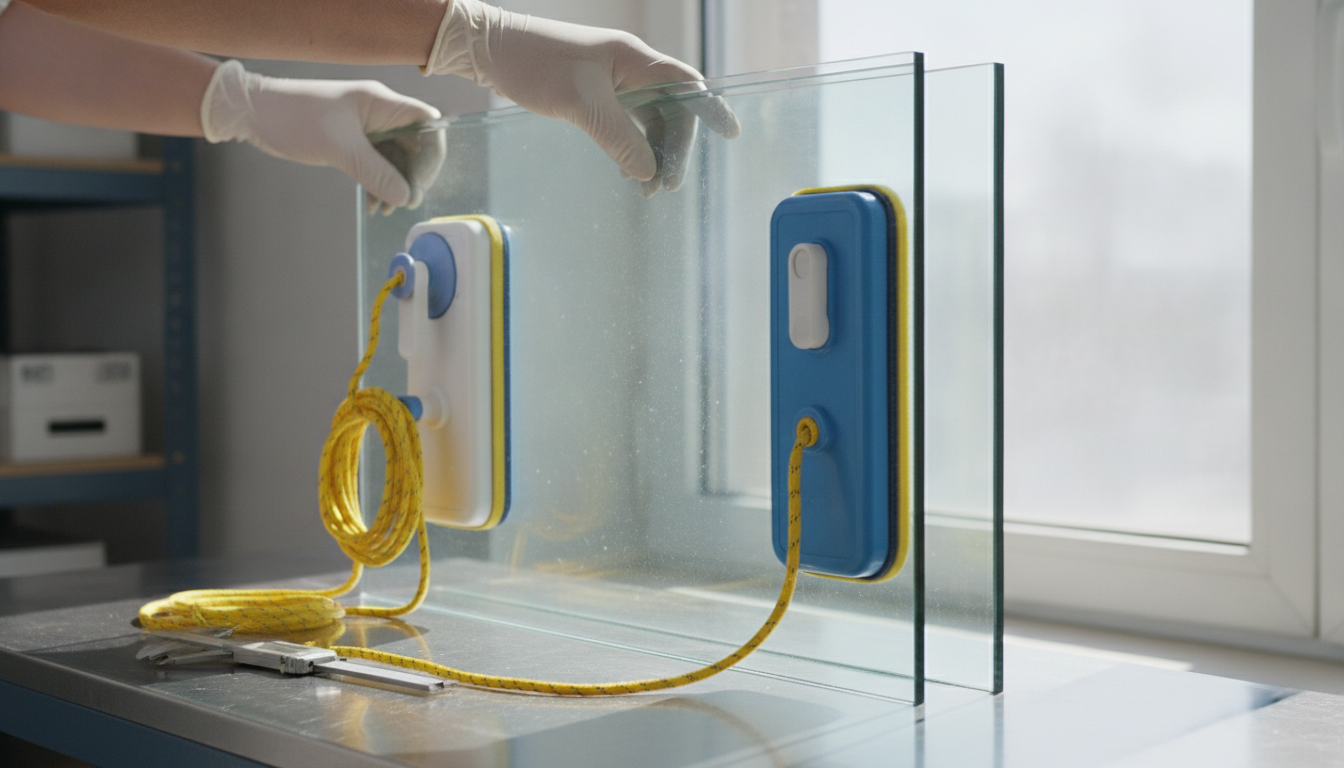
Executive Summary
- Sample fees: Most OEM factories charge for pre-production samples rather than offering them free, with fees often refundable or credited when the buyer places a qualifying bulk order.
- Lead time: Sample production lead time and international courier transit duration are confirmed at quotation.
- Approval checklist: Buyers should test magnet force across the rated glass-thickness range, verify fall-safety features, inspect pad material for streak-free performance, and confirm packaging meets import-market requirements.
- Production conformity: The approved sample serves as the quality reference for mass production, and any deviation triggers corrective action, replacement, or contract remedy depending on tolerance limits agreed in the purchase order.
- Export documentation: Sample shipments require commercial invoice, packing list, and courier waybill; buyers in the EU and Australia should confirm HS code and duty rate before ordering to calculate landed cost accurately.
Why do OEM factories charge for samples?
OEM factories charge sample fees to cover material cost, labor, and the administrative expense of single-unit production runs that interrupt bulk manufacturing schedules. A magnetic window cleaner sample involves the same NdFeB magnets, microfiber pads, ABS housing, and assembly labor as a production unit, but without the economy of scale that bulk orders provide.
Material and labor cost recovery
Each sample uses production-grade components: NdFeB magnets for models rated above 8mm glass thickness, microfiber cleaning pads, injection-molded housings, and safety rope assemblies. Factories cannot absorb these costs when buyers request multiple samples across different thickness SKUs or request customized packaging mockups for private-label evaluation.
Administrative and setup expense
Single-unit production requires machine setup, quality-control inspection, individual packaging, export documentation preparation, and courier coordination. These fixed costs remain the same whether the factory ships one sample or 1,000 units, making sample orders disproportionately expensive per piece.
Buyer commitment signal
Paid samples filter serious buyers from casual inquiries. Distributors and facility-management firms willing to invest in samples demonstrate genuine purchase intent, allowing factories to allocate engineering and sales resources more efficiently.
What is the standard sample fee structure?
Sample fee structures vary by factory tier, product complexity, and whether the buyer requests stock models or customized prototypes. Understanding these tiers helps buyers budget accurately and negotiate refund terms upfront.
Stock model samples
Stock models are existing SKUs the factory produces regularly for other buyers. Sample fees for these units reflect material and labor cost without customization markup. Buyers testing fit for standard glass thicknesses typically request stock samples first to validate performance before committing to private-label or OEM development.
Private-label and custom-packaging samples
Private-label samples include the buyer’s branding on packaging, instruction inserts, and sometimes product housing. Factories charge higher fees to cover graphic design, printing-plate setup, and small-batch packaging production. These fees are usually credited when the buyer places an order meeting the private-label MOQ, which at Fonoran starts from 500 units.
OEM prototype with new tooling
Buyers requesting unique housing shapes, proprietary magnet configurations, or specialized pad materials require new injection molds and tooling. Sample fees for these projects are quoted per project and include engineering consultation, CAD rendering, and prototype iteration. Mold costs are typically amortized over the production run rather than refunded outright.
How long does the sample workflow take?
The complete sampling policy magnetic window cleaner OEM factory workflow spans inquiry, quotation, payment, production, courier transit, testing, feedback, and approval. Each stage has distinct timelines that buyers should factor into product-launch schedules.
Inquiry to quotation
Factories typically respond to sample inquiries within 24-48 hours with a quotation covering sample fee, courier options, lead time, and refund terms. Buyers should specify the glass-thickness range they need to test, target markets for compliance requirements, and whether they need stock models or customized samples.
Payment to production completion
p>After payment confirmation, stock-model sample production lead time is confirmed at quotation. Private-label samples requiring custom packaging or branding typically require 15-20 days. OEM prototypes with new tooling lead times are confirmed at quotation depending on mold complexity and iteration requirements cycles.
Courier transit and customs clearance
International courier services (DHL, FedEx, UPS) deliver samples from China to Europe in 3-5 working days, to North America in 4-6 days, and to Australia in 4-7 days. Buyers should confirm the HS code (typically 8205.51.00 for household hand tools) and duty rate with their customs broker to calculate landed cost. Samples declared above the de minimis threshold trigger VAT and duty collection at import.
Testing and approval
Buyers should allocate 5-10 days for hands-on testing across multiple glass types, user scenarios, and environmental conditions. The approval decision feeds directly into the purchase-order specification, making thorough testing critical to avoiding production disputes later.
What should buyers test during sample approval?
A rigorous sample-approval checklist prevents costly production errors and ensures the magnetic window cleaner meets end-user expectations in the target market. Buyers should document test results and share findings with the factory before approving mass production.
- Magnet force across glass-thickness range: Test the unit on the minimum, mid-range, and maximum glass thickness the SKU claims to cover, verifying that magnetic grip remains secure during vertical movement without cracking thin glass or losing contact on thick panes.
- Fall-safety features: Confirm the safety rope length, attachment-point strength, and whether the inner unit remains controllable if the outer unit detaches unexpectedly during cleaning.
- Pad material and streak performance: Clean windows with tap water and observe whether the microfiber pads leave streaks, lint, or water spots, and whether pad edges fray after repeated use.
- Housing durability: Inspect ABS plastic for sharp edges, check corner-bumper resilience, and test whether the housing withstands drops from waist height without cracking.
- Packaging integrity: Verify that the retail box protects the product during shipping, includes clear instructions in the target-market language, and displays compliance marks appropriate to the target market (buyers should confirm which directives apply to their specific model).
- Adjustable-force mechanism: For models with multi-stage magnetic adjustment, test each force setting to confirm it locks securely and that users can switch settings without tools.
In practice: A home user in Germany with 36mm insulated glass needed an adjustable magnetic window cleaner; 36mm sits inside the FN-Ultra 10-45mm SKU with room to spare, demonstrating how the widest thickness range in the industry addresses thick double-glazed installations that narrower models cannot grip.
When are sample fees refunded or credited?
Refund and credit terms vary by factory, but most follow a threshold-based model where sample fees are returned or credited once the buyer places a bulk order meeting a minimum quantity or value. Clarifying these terms before payment prevents disputes and aligns buyer expectations with factory policy.
Credit against first bulk order
Many factories credit sample fees against the buyer’s first production order when that order meets or exceeds the agreed MOQ. For stock models, this threshold might be as low as 100-200 units; for private-label orders, it aligns with the private-label MOQ. The credit typically appears as a line-item deduction on the proforma invoice.
Full refund upon container order
Some factories refund sample fees entirely when the buyer places a full-container order, recognizing that container volumes represent committed, long-term partnerships. Buyers should confirm whether partial-container LCL orders qualify for refunds or only full FCL shipments.
Non-refundable scenarios
Sample fees are typically non-refundable if the buyer does not proceed to a bulk order, if the buyer requests samples for competitive-bidding purposes only, or if the buyer orders below the refund-qualifying threshold. Courier charges are almost always non-refundable regardless of order size.
How do factories ensure production matches the approved sample?
The approved sample becomes the quality reference for mass production, and factories implement inspection checkpoints to ensure conformity. Buyers should specify acceptable tolerance limits in the purchase order and define remedies for deviations.
Pre-production sample approval
Before starting mass production, factories produce a small batch (typically 3-5 units) from production tooling and materials for final buyer approval. This pre-production sample confirms that any sample-stage adjustments have been correctly implemented and that production materials match the original sample.
During-production inspection
Buyers can arrange third-party inspection at 30%, 50%, or 80% production completion to verify that magnet strength, pad quality, housing finish, and packaging remain consistent with the approved sample. Inspection reports document defect rates, dimensional accuracy, and functional performance.
Tolerance limits and corrective action
Purchase orders should define acceptable tolerance ranges for critical parameters: magnet-force deviation (typically ±5%), glass-thickness-range accuracy (±1mm), and cosmetic defects (AQL 2.5 for major defects, AQL 4.0 for minor). When production units fall outside these tolerances, the factory must implement corrective action, replace defective units, or offer a price adjustment depending on the severity and the contract terms.
What export documents do sample shipments require?
Even single-unit sample shipments require proper export documentation to clear customs in the destination country. Missing or incorrect paperwork delays delivery and can trigger inspection holds or return-to-sender actions.
- Commercial invoice: States the sample value (often declared at cost or a nominal amount for customs), HS code 8205.51.00, and marks the shipment as “sample for quality evaluation, no commercial value” where applicable.
- Packing list: Details the number of pieces, gross and net weight, carton dimensions, and product description.
- Courier waybill: The tracking number and consignee details; buyers should provide a commercial address rather than a residential one to avoid courier surcharges.
- Certificate of Origin (optional): Required for preferential tariff treatment under free-trade agreements; most sample shipments do not qualify, but buyers planning large orders should confirm whether their market has an FTA with China.
- CE certificate (for EU buyers): Buyers importing samples into the EU should request a copy of the factory’s CE certificate to verify compliance before placing bulk orders.
At Fonoran, our 6,500m² Taizhou factory ships samples from Ningbo port with complete export documentation, and our export team coordinates courier pickup to ensure buyers in 60+ countries receive samples within the quoted lead time.
How can buyers negotiate better sample terms?
Buyers with clear purchase intent and realistic order projections can often negotiate more favorable sampling policy magnetic window cleaner OEM factory terms. Transparency about order volume, timeline, and market potential strengthens the buyer’s negotiating position.
Commit to a minimum order value
Buyers willing to commit to a specific order value or container quantity upfront can request free samples or immediate fee refunds. Factories view these commitments as low-risk and are more likely to absorb sample costs to secure the partnership.
Request multiple SKUs in one shipment
Testing multiple glass-thickness SKUs in a single sample shipment spreads the courier cost across several units, reducing per-unit landed cost. Buyers evaluating product fit for diverse glazing types should request a sample set covering the full range rather than ordering iteratively.
Provide detailed feedback and approval timeline
Factories appreciate buyers who test samples promptly and provide detailed feedback. A buyer who approves or rejects samples within two weeks and explains the decision criteria builds trust and may receive priority service and better terms on future orders.
What mistakes do buyers make during the sample stage?
Sample-stage errors delay product launches, inflate costs, and sometimes result in production orders that fail to meet market expectations. Recognizing these pitfalls helps buyers navigate the sampling workflow more effectively.
Testing only on one glass type
Buyers who test a magnetic window cleaner only on single-pane glass miss potential grip failures on thick double glazing, and those who test only on double glazing may not discover that the magnet force cracks thin single-pane windows. Comprehensive testing across the full rated thickness range prevents these surprises.
Ignoring packaging and labeling compliance
Buyers focused solely on product performance sometimes overlook that packaging should display compliance marks, safety warnings, and recycling symbols appropriate to their target market; buyers should confirm which directives apply to their specific model. Correcting packaging errors after production adds cost and delays market entry.
Skipping pre-production sample approval
Buyers eager to meet launch deadlines sometimes waive pre-production sample approval and proceed directly to mass production. This shortcut eliminates the final checkpoint that catches material substitutions, color shifts, or assembly errors before thousands of units are produced.
Failing to document approval criteria
Verbal approvals without written documentation create disputes when production units differ from samples. Buyers should email the factory a formal approval notice listing the specific attributes tested, the test results, and any conditional requirements for mass production.
Key decision criteria for sample approval
Approving a magnetic window cleaner sample is a go/no-go decision that determines whether the buyer proceeds to a bulk order or continues searching for a better-fit supplier. These criteria help buyers make that decision systematically.
- Glass-thickness compatibility: Does the unit maintain secure magnetic grip across the full rated range without cracking thin glass or detaching from thick panes?
- Streak-free cleaning performance: Do the microfiber pads remove dirt and water without leaving streaks, lint, or residue?
- Durability and build quality: Does the housing withstand normal handling and minor drops without cracking, and do the magnets retain strength after repeated use?
- Safety and risk mitigation: Is the safety rope long enough and strong enough to prevent the outer unit from falling if magnetic contact is lost?
- Packaging and compliance: Does the packaging protect the product during international shipping, and does it display all required marks and warnings for the target market?
- Factory responsiveness: Did the factory respond to sample inquiries promptly, provide clear quotations, and accommodate reasonable customization requests?
Buyers who systematically evaluate samples against these criteria make more confident bulk-order decisions and reduce the risk of costly production errors.
Frequently Asked Questions
Can sample fees be waived for large-volume buyers?
Factories sometimes waive sample fees for buyers who provide a signed letter of intent committing to a specific container quantity or annual purchase volume. This arrangement requires the buyer to demonstrate credible purchase intent through company registration documents, business licenses, or a track record of importing similar products. Buyers should propose the waiver during initial negotiations and be prepared to share order projections and market-entry timelines to justify the request.
What happens if the production units differ from the approved sample?
When production units deviate from the approved sample, the buyer should immediately notify the factory with photographic evidence and specific descriptions of the differences. The factory must then propose corrective action, which may include reworking defective units, replacing the entire batch, offering a price discount, or halting production until the issue is resolved. The purchase order should define acceptable tolerance limits and remedies for deviations to streamline dispute resolution. Buyers who arranged third-party inspection can use the inspection report as objective evidence to support their claim.
Do all OEM factories require buyers to arrange courier shipping?
Most factories offer two courier options: the buyer arranges pickup using their own DHL, FedEx, or UPS account, or the factory arranges courier shipping and invoices the buyer for the actual freight cost plus a small handling fee. Buyers with corporate courier accounts often prefer the first option to consolidate shipping invoices and benefit from volume discounts. Buyers without courier accounts should request a freight quotation from the factory and confirm whether duties, taxes, and remote-area surcharges are included or charged separately upon delivery.
Key Takeaways
- Most OEM factories charge sample fees to recover material, labor, and administrative costs, with fees often credited against the first bulk order when the buyer meets the agreed MOQ.
- Stock-model sample lead times are confirmed at quotation, while private-label samples typically require 15-20 days and OEM prototype lead times are confirmed at quotation depending on customization complexity.
- Buyers should test samples across the full rated glass-thickness range, verify fall-safety features, inspect pad material for streak-free performance, and confirm packaging meets target-market compliance requirements.
- The approved sample serves as the quality reference for mass production, and purchase orders should define acceptable tolerance limits and remedies for deviations to prevent disputes.
- Sample shipments require a commercial invoice, packing list, and courier waybill; buyers in the EU and Australia should confirm the HS code and duty rate to calculate landed cost accurately.
- Buyers can negotiate better sample terms by committing to a minimum order value, requesting multiple SKUs in one shipment, and providing detailed feedback and approval timelines that demonstrate serious purchase intent.
Ready to request samples and evaluate our adjustable magnetic window cleaner range for your market?
Request Your Sample Quote →
Written by the Fonoran Export Team.