How to Check Magnetic Window Cleaner Manufacturer Production Capacity
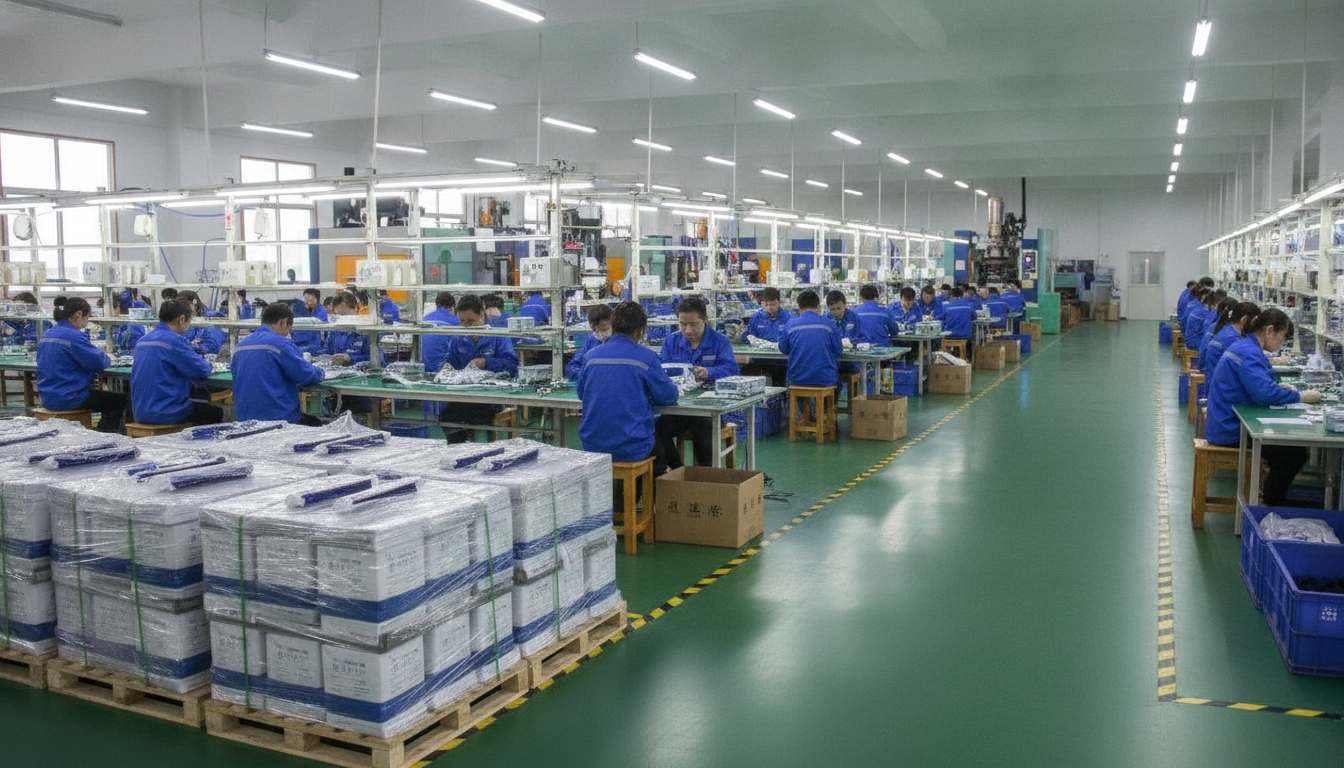
To check a magnetic window cleaner manufacturer’s production capacity, request daily output figures, verify machinery and assembly-line counts, confirm staffing across shifts, inspect time-stamped factory photos, and cross-check historical shipment records or export declarations. A facility producing 50,000+ units per day will operate multiple parallel lines with dedicated molding, assembly, quality-control, and packaging stations, and maintain finished-goods warehouse space scaled to that throughput.
📋 Table of Contents
- Executive Summary
- Request Daily and Monthly Output Figures
- Verify Machinery and Assembly Lines
- Confirm Staffing, Shifts, and Facility Size
- Inspect Time-Stamped Production Evidence
- Cross-Check Historical Shipment Records
- Calculate Realistic Output from Cycle Time
- Conduct Independent Verification
- Key Takeaways
- Frequently Asked Questions
Executive Summary
- Claimed capacity must align with physical resources: A factory stating 50,000+ units per day should show multiple parallel assembly lines, dedicated molding equipment, adequate staffing across shifts, and warehouse space to hold finished goods.
- Time-stamped evidence beats static claims: Request dated factory photos, production-run videos, or real-time video walkthroughs to confirm equipment is operational and not borrowed for a photoshoot.
- Historical shipment records provide proof: Export declarations, bills of lading, or redacted customer purchase orders show actual volumes shipped, not just theoretical capacity.
- Cycle-time calculations expose inflated claims: Divide daily output by machine count, shift hours, and worker productivity to see whether the numbers are realistic or exaggerated.
- Independent audits remove supplier bias: Third-party inspection services, live video tours, or on-site visits verify capacity without relying solely on supplier-provided data.

Request Daily and Monthly Output Figures
Start by asking the supplier for specific daily and monthly production numbers. A credible manufacturer will state output per shift and total daily capacity across all shifts. Vague answers signal a lack of transparency.
Daily Output per Shift
Ask how many units one shift produces in an eight-hour period. Multiply that figure by the number of shifts the factory runs. A facility operating two shifts with 25,000 units per shift reaches 50,000 units daily. If the supplier cannot break down capacity by shift, the figure may be inflated.
Monthly Capacity and Peak-Season Backlog
Request monthly output and ask how capacity changes during peak seasons. Factories serving European and North American markets often face higher demand in spring and autumn. A supplier with genuine capacity will explain how they allocate lines between stock replenishment and new orders during busy periods.
Capacity by SKU and Glass Thickness
Production speed varies by model. Adjustable magnetic window cleaners covering 3-45mm glass thickness require more assembly steps than fixed-force units designed for a single thickness range. Ask the supplier to break down capacity by SKU. A factory claiming uniform output across all models may be oversimplifying.
In practice: Magnet strength has to match glass thickness, because a unit tuned for thin single glazing loses its grip across a thick double-glazed pane.
Verify Machinery and Assembly Lines
Capacity claims collapse without the machinery to support them. Request a list of equipment, including injection-molding machines, assembly stations, and packaging lines.
Injection-Molding Equipment
Magnetic window cleaners require molded plastic housings. Each molding machine produces a set number of parts per cycle. Ask for machine model numbers, tonnage ratings, and cycle times. A factory with three molding machines running 24-hour shifts will produce fewer housings than one with ten machines.
Assembly-Line Configuration
Walk through the assembly process with the supplier. How many workers staff each line? How many assembly stations does each line have? A line with eight stations and two workers per station handles higher throughput than a line with four stations and one worker each. Request photos or videos showing workers at their stations during a production run.
Quality-Control and Packaging Stations
Every unit must pass quality control before packaging. Ask how many QC stations the factory operates and what percentage of output they inspect. A factory with one QC station for 50,000 units per day cannot perform thorough checks. Packaging lines must also scale with output. Request evidence of automated or semi-automated packaging equipment.
Confirm Staffing, Shifts, and Facility Size
Production capacity depends on people and space. Verify how many workers the factory employs, how many shifts they run, and whether the facility size matches claimed output.
Worker Count and Shift Schedule
A factory producing 50,000 units per day with 60+ workers runs multiple shifts. Ask for a breakdown: how many workers per shift, and how many shifts per day? A single-shift operation with 30 workers cannot sustain high daily output unless automation is extensive.
Facility Size and Layout
Square meterage matters. Our 6,500m² facility in Taizhou houses molding, assembly, quality control, and finished-goods storage under one roof. A supplier claiming comparable output from a 2,000m² space should explain how they compress operations. Request a floor plan or a video walkthrough showing each production zone.
Finished-Goods Warehouse Capacity
High daily output requires warehouse space to hold finished inventory. A factory shipping 50,000 units per day must store at least several days’ worth of production to buffer against logistics delays. Ask how many units the warehouse can hold and how quickly stock turns over.
Inspect Time-Stamped Production Evidence
Static photos can be staged. Time-stamped evidence proves the factory operates as claimed.
Dated Factory Photos
Request photos taken within the past week, with visible date stamps or newspapers in the frame. Photos should show molding machines in operation, workers assembling units, and finished goods stacked in the warehouse. A supplier who delays or provides undated images may be hiding outdated equipment or borrowing another factory’s photos.
Production-Run Videos
Video is harder to fake than photos. Ask the supplier to record a short clip of a production line in action, showing workers at their stations, units moving down the line, and QC inspections. The video should include a visible timestamp or a sign with your company name and the current date.
Live Video Walkthrough
Schedule a video call and ask the supplier to walk through the factory in real time. This method eliminates the possibility of pre-recorded or borrowed footage. You can ask the guide to show specific areas, zoom in on equipment model plates, and confirm that workers are present and active.
Cross-Check Historical Shipment Records
Claimed capacity means nothing without proof of actual shipments. Historical records show whether the factory has delivered the volumes it advertises.
Export Declarations and Bills of Lading
Export declarations filed with customs authorities list shipment quantities, destinations, and dates. Ask the supplier for redacted copies of recent export documents. Bills of lading from freight forwarders provide similar proof. A factory that cannot produce these records may be a trading company posing as a manufacturer.
Redacted Customer Purchase Orders
Request anonymized purchase orders from recent customers. The orders should show order quantities, delivery dates, and product descriptions. Consistent high-volume orders over several months indicate reliable capacity. Sporadic small orders suggest limited throughput.
Customer References
Ask for contact details of two or three current customers willing to share their experience. Speak with them directly about lead times, order fulfillment, and whether the supplier met promised delivery schedules. A supplier with genuine capacity will have satisfied customers who can vouch for consistent performance.
Calculate Realistic Output from Cycle Time
You can verify claimed capacity by working backwards from machine cycle time, line takt time, and worker productivity. This method exposes inflated numbers.
Machine Cycle Time
Injection-molding machines produce housings in cycles measured in seconds. If one machine completes a cycle every 60 seconds and produces two housings per cycle, it outputs 120 housings per hour. Multiply by the number of machines and the hours they run per day. A factory with five machines running 16 hours per day produces 9,600 housings daily. If the supplier claims 50,000 units per day, they need additional machines or faster cycle times.
Assembly Line Takt Time
Takt time is the rate at which one unit completes assembly. If a line produces one unit every two minutes, it outputs 30 units per hour or 240 units per eight-hour shift. Multiply by the number of lines and shifts. A factory with four lines running two shifts produces 1,920 units per day. To reach 50,000 units, the factory needs more lines, faster takt times, or longer shifts.
Downtime, Yield, and Utilization
No factory runs at 100 percent efficiency. Equipment breaks down, workers take breaks, and some units fail quality checks. Ask the supplier what downtime percentage they assume and what their yield rate is. A factory claiming 95 percent uptime and 98 percent yield is optimistic. Industry norms sit closer to 85 percent uptime and 95 percent yield. Adjust claimed capacity by these factors to get a realistic figure.
Conduct Independent Verification
Relying solely on supplier-provided data introduces bias. Independent verification removes that risk.
Third-Party Inspection Services
Hire an inspection company to visit the factory and assess capacity. Services like SGS, Bureau Veritas, and Intertek offer factory audits that include machinery counts, worker interviews, and facility measurements. The inspector produces a report you can trust because they have no financial interest in overstating capacity.
On-Site Audit Before Placing an Order
If the order size justifies the expense, visit the factory yourself. Walk the production floor, count machines and workers, measure the facility, and observe a full production run. On-site visits reveal details that photos and videos cannot capture, such as whether equipment is well-maintained or whether workers follow documented procedures.
Production-Record Sampling
Ask the supplier to share production logs for a randomly selected week. Logs should record daily output by SKU, downtime incidents, and yield rates. Compare logged output to claimed capacity. Consistent discrepancies indicate the supplier is overstating their numbers.
Capacity Allocation and Peak-Season Readiness
Ask how the factory allocates capacity between existing customers and new orders. A supplier running at 90 percent capacity year-round has little room for additional volume. Request a breakdown of current order backlog and how quickly they can scale up for a large order. Factories with genuine capacity will explain their contingency plans for peak seasons, such as adding overtime shifts or activating backup production lines.
Country-Specific Export-Readiness Checks
Capacity verification should include export readiness. A factory producing 50,000 units per day but lacking CE certification cannot legally ship to the European Union. Confirm the supplier holds the certifications required for your target markets. Our facility in Taizhou holds CE certification (third-party certificate) and ships from Ningbo port to 60+ countries, including Germany, the USA, the UK, and Australia. Ask for copies of certificates and verify them with the issuing body.
Key Takeaways
- Request daily and monthly output figures broken down by shift, SKU, and glass thickness range to assess whether claimed capacity is realistic.
- Verify machinery counts, assembly-line configurations, and quality-control stations through equipment model numbers, cycle times, and time-stamped production evidence.
- Confirm staffing levels, shift schedules, and facility size to ensure physical resources align with claimed output.
- Inspect time-stamped factory photos, production-run videos, or live video walkthroughs to eliminate the risk of staged or borrowed images.
- Cross-check historical shipment records such as export declarations, bills of lading, or redacted customer purchase orders to verify actual volumes shipped.
- Calculate realistic output from machine cycle time, line takt time, downtime, yield, and utilization to expose inflated capacity claims.
- Conduct independent verification through third-party inspection services, on-site audits, or production-record sampling to remove supplier bias.
Frequently Asked Questions
How do I tell whether a supplier is a real factory or a trading company?
Ask for time-stamped factory photos, equipment ownership documents, and a live video walkthrough. Real factories can show you molding machines, assembly lines, and finished-goods warehouses in real time. Trading companies will delay, provide generic photos, or refuse video calls. Check business registration records to confirm the company lists manufacturing as a primary activity. Request export declarations or bills of lading showing shipments from the factory’s address, not a third-party warehouse.
What is a realistic production lead time for bulk magnetic window cleaners?
Lead time depends on order size, SKU complexity, and current factory backlog. Stock models with confirmed MOQ from 2 units ship faster than custom private-label orders requiring new molds or packaging. A factory with genuine capacity will quote lead times at the time of inquiry and explain how peak seasons or material-sourcing delays might extend them. Be wary of suppliers promising unrealistically short lead times for large orders, as this often signals they plan to outsource production or cannot meet the deadline.
What documents should I request from a magnetic window cleaner supplier?
Request CE certification (third-party certificate) for European markets, business registration documents, export declarations or bills of lading from recent shipments, redacted customer purchase orders, and time-stamped factory photos or videos. Ask for equipment ownership records or lease agreements to confirm the supplier controls the production facility. If the supplier claims ISO 9001 or other quality certifications, request copies and verify them with the issuing body. A credible manufacturer will provide these documents promptly.
Verifying a magnetic window cleaner manufacturer’s production capacity protects your supply chain from delays, quality issues, and unfulfilled orders. Request detailed output figures, inspect machinery and staffing, demand time-stamped evidence, cross-check shipment records, and conduct independent audits. Our 6,500m² facility in Taizhou operates with 60+ skilled workers and ships 50,000+ units per day to distributors and wholesalers in 60+ countries. Explore our magnetic window cleaner product range covering 3-45mm glass thickness across four adjustable SKUs, or contact our team to discuss your capacity requirements and request a factory audit checklist.
Written by the Fonoran Export Team.