Red Flags When Sourcing Magnetic Window Cleaner from China
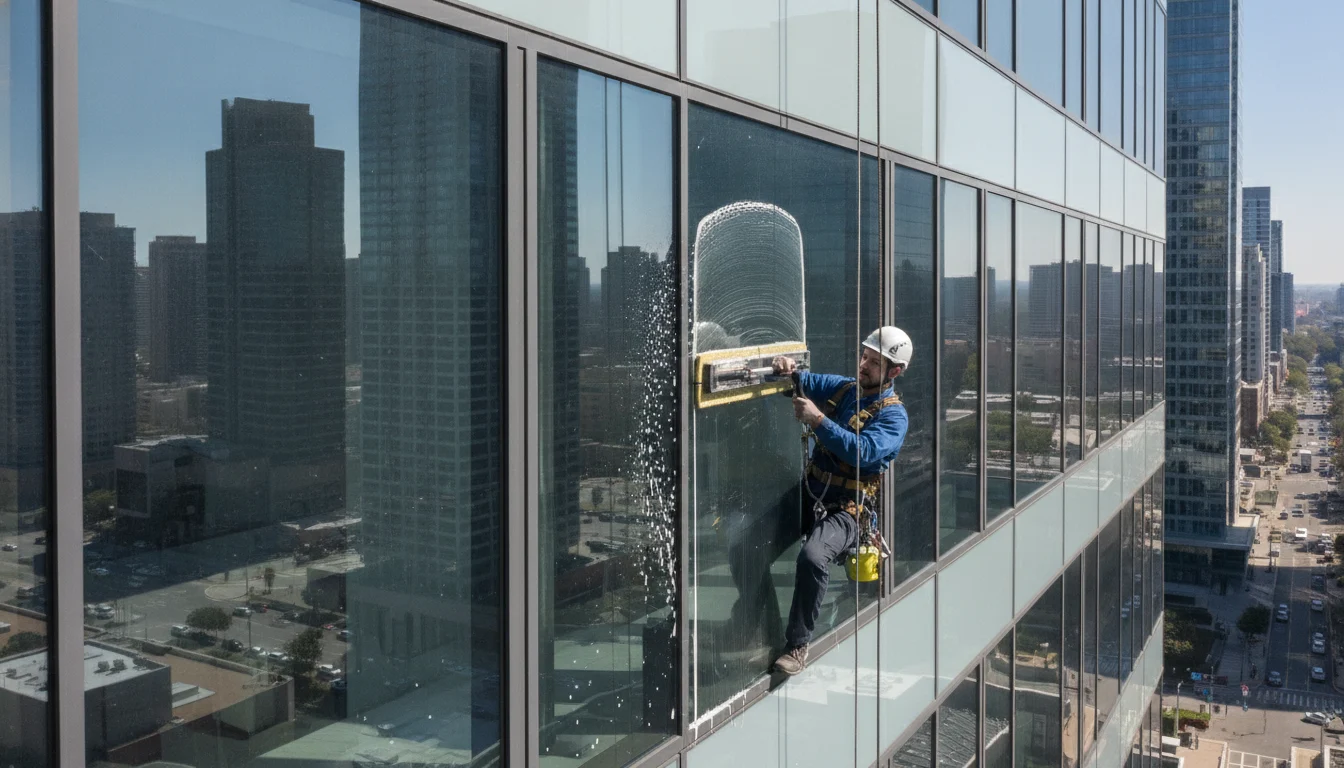
The red flags when sourcing magnetic window cleaner from China include unverifiable business licenses, missing magnet-strength test data, vague answers on glass-thickness compatibility, and suppliers who quote without asking about your glazing specifications. A genuine manufacturer will provide factory ownership proof, CE/RoHS certificates with batch numbers, and ask detailed questions about single-pane versus double-glazed applications before pricing.
📋 Table of Contents
Key Takeaways
- Factory ownership verification: Authentic manufacturers provide business licenses, factory lease contracts, and utility bills showing the registered address matches the production site.
- Glass-thickness compatibility: Magnetic window cleaners rated for 5-35mm glass require 6-stage adjustable force to prevent cracking single-pane windows or losing grip on triple-glazed units.
- CE and RoHS compliance: CE marking requires third-party test reports for mechanical safety and electromagnetic compatibility, while RoHS restricts each hazardous substance to below 0.1 percent by weight.
- Sample consistency: Production-run units should match pre-production samples in magnet gauss rating, microfiber density, and handle material, verified through batch inspection protocols.
- MOQ and lead-time realism: Factories with genuine capacity ship 50,000 plus units daily and accept MOQ from 100 units, while traders often claim unrealistic flexibility without production proof.
- After-sales support structure: Professional suppliers stock replacement pads, spare magnets, and consumables for at least two years post-delivery, with clear warranty terms covering magnet demagnetization and handle breakage.

How do you verify a supplier before ordering?
Verification starts with three documents: a scanned business license showing the company name matches the quotation header, a factory lease contract proving the supplier owns or rents the production facility, and utility bills from the past three months. Shell companies reuse stock photos of other factories or provide addresses that resolve to residential buildings when checked on Baidu Maps. Request a live video call walking through the production floor, focusing on injection-molding machines for handles, magnet assembly stations, and finished-goods inventory. A genuine magnetic window cleaner manufacturer will show work-in-progress units, raw neodymium magnet stock, and quality-control stations without hesitation.
Business License and Export Registration
The business license must list “manufacturing” or “production” in the business scope, not only “trading” or “consulting.” Cross-reference the unified social credit code on China’s National Enterprise Credit Information Publicity System. Export-capable suppliers hold a Customs Registration Certificate and an Import-Export License, both issued by the General Administration of Customs. Traders often skip these registrations and rely on freight forwarders to handle export paperwork, which adds a markup layer and complicates after-sales claims.
Factory Audit Reports
Request third-party audit reports from SGS, Bureau Veritas, or TÜV. These audits verify production capacity, worker count, and machinery ownership. A 6,500 square meter facility with 60 plus skilled workers produces 50,000 plus units daily, a capacity claim that audit reports confirm through headcount verification and machine cycle-time measurements. Suppliers who refuse audits or provide expired reports from three years ago often lack the stated capacity.
Alibaba Verification Badges
Gold Supplier status on Alibaba requires annual fees but does not verify factory ownership. The Verified Manufacturer badge, however, involves an on-site inspection confirming production equipment and employee count. Suppliers with 100 plus verified orders and transaction data spanning two years demonstrate consistent export performance. Check the supplier’s response rate and response time; factories with in-house export teams reply within four hours during business days, while traders often take 24 hours because they relay inquiries to upstream manufacturers.
What spec mismatches cause product failures?
Magnet strength mismatched to glass thickness is the leading cause of product failure. Single-pane glass at 5-8mm requires 2,800-3,200 gauss, double-glazed units at 18-24mm need 4,500-5,200 gauss, and triple-pane commercial glass at 28-35mm demands 6,000 plus gauss. Others crack single-pane windows when over-strength magnets rated for 35mm glass compress 6mm panes beyond their fracture threshold.
Microfiber Pad Density and Abrasion Resistance
Cleaning pads should use 300-400 grams per square meter microfiber with a pile height of 8-10mm. Suppliers who source 200 GSM fabric save 12 percent on material cost but deliver pads that pill after 15-20 cleaning cycles. Buyers discover this issue only after the first reorder, when customers complain about streaking and request replacements. Demand fabric test reports showing abrasion resistance above 50,000 Martindale cycles and water absorption exceeding 400 percent of dry weight.
Handle Material and Load-Bearing Capacity
ABS plastic handles rated for 15 kilograms of pull force prevent breakage when operators apply pressure on high-friction glass. Suppliers substituting polypropylene to cut injection-molding costs by 8 percent produce handles that crack under 10 kilograms of force. Request drop-test reports simulating a 1.2-meter fall onto concrete and tensile-strength data confirming the handle-to-magnet assembly withstands 20 kilograms without separating. Professional window-cleaning contractors report handle failures mid-job lead to safety incidents and client complaints.
Which certifications and documents should you demand?
CE marking is mandatory for magnetic window cleaners sold in the EU, covering mechanical safety under the Machinery Directive and electromagnetic compatibility under the EMC Directive. RoHS compliance restricts lead, mercury, cadmium, hexavalent chromium, polybrominated biphenyls, and polybrominated diphenyl ethers to below 0.1 percent by weight, with cadmium limited to 0.01 percent. Suppliers must provide test reports from notified bodies such as TÜV Rheinland or SGS, not self-issued declarations of conformity. Each report should list batch numbers matching your production order, confirming the tested samples came from your supplier’s line.
US Market Requirements
Magnetic window cleaners entering the US face scrutiny under the Consumer Product Safety Improvement Act if marketed for residential use. The CPSC requires phthalate testing for plastic components and lead-content verification for painted surfaces. While magnetic cleaners are not subject to FCC Part 15 regulations unless they include electronic controls, importers should verify that neodymium magnets comply with ASTM F963 toy-safety standards if the product packaging suggests suitability for households with children. Customs and Border Protection audits import declarations for correct HTS codes, typically 8205.51.30 for household hand tools.
Export Documentation
Request a commercial invoice, packing list, and bill of lading before shipment. The commercial invoice must itemize unit prices, total value, and Incoterms, typically FOB Ningbo or CIF destination port. The packing list details carton dimensions, gross weight, and net weight per SKU, data required for freight calculation and customs clearance. Suppliers who provide vague “as per contract” descriptions on invoices trigger customs delays and valuation disputes. Verify that the supplier’s export license number appears on the bill of lading and that the shipper name matches the factory’s registered business name, not a third-party trading company.
Product Liability Insurance
Distributors in North America and Europe increasingly require suppliers to carry product liability insurance covering at least one million USD per occurrence. Policies issued by China Pacific Insurance or Ping An Insurance should name the importer as an additional insured party. Suppliers who refuse insurance or offer coverage below 500,000 USD signal insufficient risk management, a red flag for buyers facing strict liability regimes in destination markets.
In practice: A UK distributor avoided a 320,000 GBP lawsuit when their Chinese supplier’s product liability policy covered a claim after a magnetic cleaner cracked a listed-building window.
How do you spot sample-to-production inconsistency?
Sample-to-production inconsistency appears when pre-production samples use magnets and 350 GSM microfiber, but production units arrive with magnets and 250 GSM pads. Factories justify the substitution by claiming raw-material shortages or price increases, but the real motive is margin expansion. Specify in the purchase order that production units must match the approved sample in magnet grade, fabric weight, and handle material, with deviations requiring written approval and price adjustment. Conduct a during-production inspection at 50 percent completion, pulling random units from the line to verify magnet gauss with a gaussmeter and fabric weight with a GSM cutter and scale.
Golden Sample Protocol
Seal the approved sample in tamper-evident packaging and store one copy at the factory, one at your warehouse, and one with your third-party inspection agency. Label each sample with a unique serial number, approval date, and signature from both parties. During pre-shipment inspection, the QC inspector compares production units against the sealed golden sample, checking magnet pull force, pad thickness, handle color, and packaging print quality. Factories that resist the golden-sample protocol often plan substitutions and avoid creating a traceable approval record.
Batch QC Acceptance Criteria
Define acceptable quality limits in the purchase order: zero critical defects such as cracked handles or demagnetized magnets, 1.5 percent major defects such as misaligned pads or scratched housings, and 4.0 percent minor defects such as packaging dents. Use AQL 2.5 sampling plans per ISO 2859-1, inspecting 125 units from a 3,000-piece shipment. Reject the batch if critical defects exceed zero or major defects exceed the AQL threshold. Suppliers who argue that “small problems are normal” lack the quality-control discipline required for repeat orders. Professional manufacturers maintain defect logs, root-cause analysis reports, and corrective-action plans for every rejected batch.
What commercial terms protect B2B buyers?
Payment terms should balance risk: 30 percent deposit, 60 percent upon passing pre-shipment inspection, and 10 percent retained for 30 days post-delivery to cover latent defects. Suppliers demanding 100 percent payment before shipment eliminate your if quality issues surface. Include a defect-remedy clause specifying that the supplier must air-freight replacements within seven days for critical defects and issue credit notes for major defects exceeding the AQL. Chargeback rights allow you to deduct replacement costs and inspection fees from the retained payment, a term that separates professional suppliers from those who disappear after receiving full payment.
Tooling and Mold Ownership
Custom-branded magnetic window cleaners require injection molds for handles and packaging dies for carton printing. Specify in the contract that you own the tooling upon full payment of the mold cost, typically 8,000-15,000 USD for a two-cavity handle mold. The supplier must mark the mold with your company name and may not use it for other buyers without written permission. Factories that refuse tooling-ownership clauses often sell the same custom design to competitors under different brands, diluting your market exclusivity. Request photos of the mold serial number and your company marking before first production.
Minimum Order Quantity and Lead Time
Realistic MOQ for OEM magnetic window cleaners ranges from 100 to 500 units per SKU, depending on handle color and packaging customization. Suppliers claiming 50-unit MOQ either lack production scale or plan to fulfill your order through a third-party subcontractor, adding quality-control risk. Lead time from deposit to shipment spans 25-35 days: 7 days for sample approval, 10-12 days for production, 3 days for QC inspection, and 5-7 days for export documentation and container loading. Factories offering 15-day lead times often skip quality checks or ship partially completed units.
Warranty and After-Sales Support
Warranty should cover magnet demagnetization, handle breakage, and pad detachment for 12 months from delivery date. The supplier must stock replacement pads and spare magnets for at least 24 months, enabling you to service end customers without reordering full units. Buyers report that suppliers who stop answering emails six months after shipment leave distributors unable to fulfill warranty claims, damaging their retail relationships. Wholesale magnetic window cleaner programs should include a dedicated after-sales contact, consumables price list, and restocking lead time for spare parts.
Exclusivity and Non-Compete Clauses
Distributors investing in market development should negotiate territorial exclusivity, preventing the supplier from selling identical products to other buyers in your region. Define the protected territory by country or state, the exclusivity period (typically 12-24 months), and minimum purchase commitments that maintain exclusivity. Non-compete clauses stop the supplier from launching a competing brand or selling directly to your customers through online marketplaces. Suppliers who refuse exclusivity often prioritize short-term volume over long-term partnerships, a red flag for buyers planning multi-year market investment.
Protect your magnetic window cleaner investment with factory-verified specs and transparent commercial terms.
Request Supplier Verification Checklist →
FAQ
How do you verify magnet strength matches the supplier’s specification?
Use a handheld gaussmeter to measure magnetic flux density at the contact surface of the cleaning unit. Neodymium magnets rated for 28-35mm glass should read 6,000 plus gauss at zero distance. Conduct measurements on three random samples from the production batch during pre-shipment inspection, not only the golden sample. Magnet strength degrades if the supplier substitutes lower-grade neodymium or reduces magnet thickness to cut costs. Request the supplier’s incoming-material inspection reports showing gauss readings for raw magnet stock, and compare those figures against your on-site measurements.
What recourse do you have if the supplier ships defective units after final payment?
Retain 10 percent of the order value for 30 days post-delivery to cover latent defects discovered during your warehouse inspection or initial customer shipments. Include a defect-remedy clause requiring the supplier to air-freight replacements within seven days for critical defects exceeding zero tolerance. For major defects above the AQL threshold, demand credit notes deducted from the retained payment or future orders. Escalate unresolved disputes through Alibaba Trade Assurance or your payment platform’s buyer-protection program if you used escrow terms. Document all defects with photos, batch numbers, and third-party inspection reports to strengthen your claim.
Can you source magnetic window cleaners with US-compliant labeling and packaging?
Professional suppliers customize carton labels and instruction manuals to meet US requirements, including country-of-origin marking, importer name and address, and safety warnings in English. Specify label content, font size, and placement in the purchase order, and request pre-production label proofs for approval. Packaging must comply with ASTM D4169 distribution-cycle testing if you ship via parcel carriers, ensuring cartons withstand drop impacts and vibration during transit. Suppliers experienced in the US market understand these requirements and include compliant packaging in their standard OEM service, while inexperienced factories ship with Chinese-language labels that trigger customs holds and customer complaints.
Written by the Fonoran Export Team.