Professional Window Cleaning Tools: 2026 Buyer’s Guide

Professional window cleaning tools include squeegees with replaceable rubber blades, water-fed poles with purified-water systems, extension poles for high-reach access, scrapers, microfiber applicators, and magnetic window cleaners rated for 3-45mm glass thickness. Magnetic cleaners address double-glazed and high-rise windows where traditional tools cannot reach safely, with adjustable magnetic force preventing glass cracking on single-pane installations and maintaining grip through thick insulated units.
📋 Table of Contents
- Executive Summary
- Squeegee Systems: Blade Types and Sizes
- Water-Fed Pole Systems for Exterior Glass
- Magnetic Window Cleaners: Glass Thickness Matching
- Extension Poles and High-Reach Access
- Scrapers and Detailing Tools
- Procurement Considerations for Distributors
- Key Takeaways
- Frequently Asked Questions
Executive Summary
- Tool selection: Match cleaning method to window access, glass type, and soil level rather than defaulting to a single toolkit across all jobs.
- Magnetic cleaners: Adjustable magnetic force across a 3-45mm glass thickness range prevents both cracking on thin single-pane glass and loss of grip on thick double-glazed units.
- Water-fed systems: Pure-water brush poles eliminate detergent residue and ladder work for exterior facades, but require ongoing resin and filter replacement.
- Compliance: Buyers should confirm which directives apply to their specific cleaning equipment model when selling in the EU, and professional tools imported into North America face state-specific safety and labeling requirements.
- Procurement: Factory-direct sourcing from verified manufacturers offers MOQ flexibility starting from 2 units for stock models and 500 units for private-label programs.
Squeegee Systems: Blade Types and Sizes
Squeegees remain the workhorse for interior and ground-level exterior glass. Blade material, hardness, and edge profile determine streak-free performance across varying temperatures and glass coatings. Replaceable rubber blades reduce long-term cost compared to disposable units.
Blade Material and Durometer
Natural rubber blades perform consistently in moderate climates but harden in cold weather, leaving streaks. Synthetic rubber and silicone blades maintain flexibility across wider temperature ranges, extending usable life in seasonal markets. Durometer ratings between 60 and 70 Shore A suit most commercial applications, with softer blades conforming to uneven glass and harder blades resisting wear on textured surfaces.
Channel Widths and Compatibility
Standard channel widths range from 10 inches for residential windows to 24 inches for commercial storefronts. Contractors stocking multiple widths reduce passes per pane and improve productivity on large facades. Compatibility between blade brands and channel systems varies, so distributors should verify cross-compatibility before committing to inventory.
Handle Ergonomics and Extension Compatibility
Ergonomic handles reduce wrist strain during repetitive motion, a frequent complaint among window-cleaning crews working eight-hour shifts. Quick-release mechanisms allow blade changes without tools, minimizing downtime. Extension-pole compatibility transforms a handheld squeegee into a high-reach tool, eliminating the need for separate pole-mounted units.
Water-Fed Pole Systems for Exterior Glass
Water-fed poles deliver purified water through a brush head at the pole tip, dissolving dirt and rinsing glass without detergent or manual wiping. This method dominates exterior commercial cleaning where ladder access is restricted or unsafe.
Pure-Water Production: RO/DI Filtration
Reverse osmosis (RO) and deionization (DI) filters remove minerals that cause spotting when water evaporates. RO systems handle bulk filtration, while DI resin polishes water to near-zero total dissolved solids (TDS). Resin replacement frequency depends on source water hardness; areas with TDS above 300 ppm exhaust resin faster, increasing operating cost. Buyers in hard-water regions should calculate annual resin and membrane replacement when evaluating total cost of ownership.
Pole Materials: Carbon Fiber vs Aluminum
Carbon-fiber poles weigh less than aluminum equivalents, reducing operator fatigue on multi-story buildings. A 40-foot carbon pole typically weighs under 6 pounds, while aluminum poles of the same length exceed 12 pounds. Carbon fiber costs more upfront but extends working hours per operator and reduces injury claims related to repetitive strain.
Brush Head Design and Flow Rate
Brush heads with angled jets direct water behind the bristles, flushing debris without smearing. Flow rates between 0.5 and 1.5 liters per minute balance cleaning power and water consumption. Higher flow rates clear heavy soil faster but exhaust tank capacity quickly, requiring more frequent refills on large jobs.
Magnetic Window Cleaners: Glass Thickness Matching
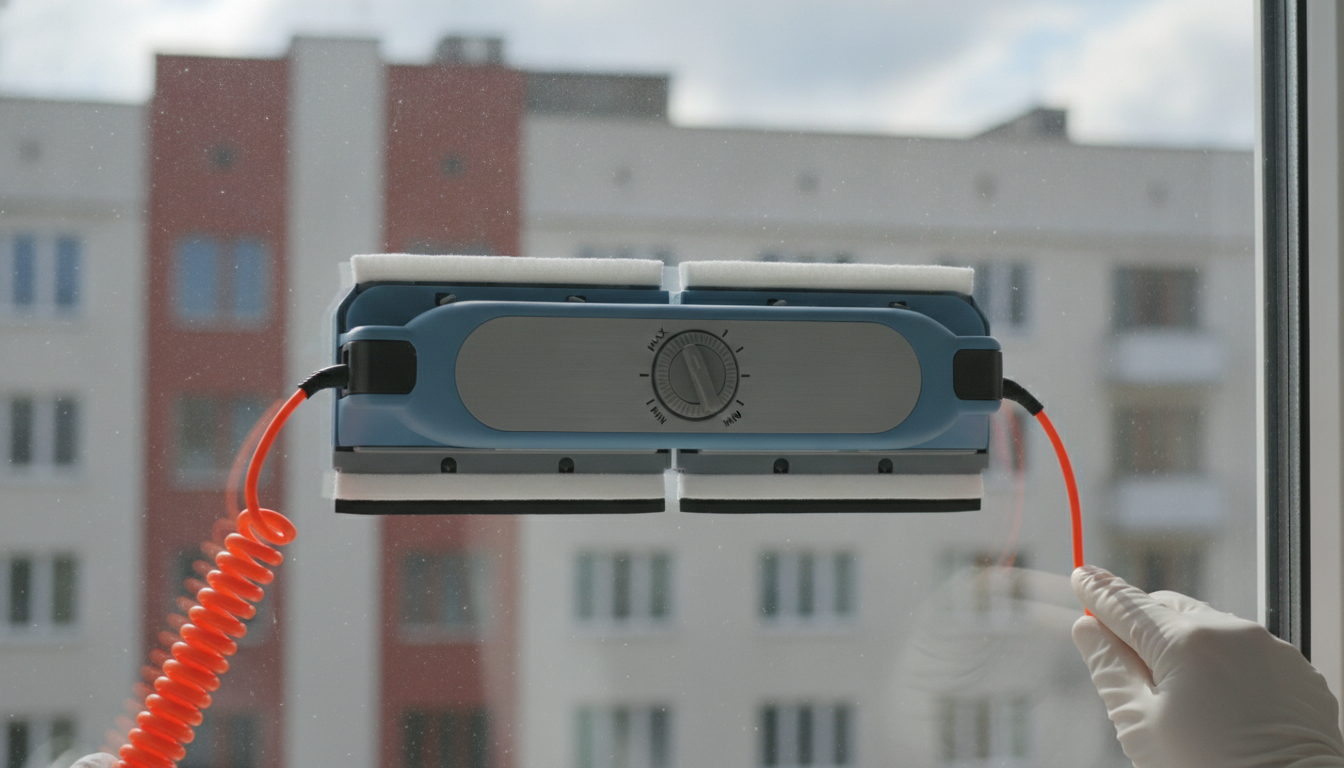
Magnetic window cleaners solve the access problem on high-rise buildings and double-glazed units where exterior reach is impossible. Two units, one inside, one outside, grip the glass through magnetic attraction, allowing the interior operator to control both surfaces simultaneously.
Why Glass Thickness Matters
Magnetic force must match glass thickness precisely. A unit rated for thin single-pane glass applies excessive pressure to 6mm glass, risking cracks. The same unit loses grip through 30mm insulated double glazing, causing the outer unit to fall. Buyers report that thickness ratings like 5-12mm do not fit newer, thicker double glazing installed in energy-efficient construction.
Glass thickness range: 3-45mm across four adjustable SKUs (3-30mm, 5-35mm, 8-40mm, 10-45mm). Adjustable force: 6-stage magnetic strength within each SKU prevents cracking and grip loss.
Adjustable Magnetic Force
Fixed-strength magnets cannot adapt to glass variance within a building. A facility with both single-pane offices and double-glazed conference rooms requires two separate units under a fixed-strength model. Adjustable-force designs use a dial or lever to increase or decrease magnetic pull, allowing one unit to handle multiple glass types. The 6-stage adjustment system addresses the buyer complaint that magnets lose power over time or arrive underpowered from the factory.
NdFeB vs Ferrite Magnets
Neodymium iron boron (NdFeB) magnets deliver stronger pull per unit weight than ferrite magnets, making them suitable for thick insulated glazing. Ferrite magnets cost less and resist corrosion better but require larger housings to achieve equivalent force. Our magnetic window cleaner product range uses NdFeB for most SKUs, with ferrite reserved for the 3-8mm entry model where weight and cost matter more than maximum pull.
Safety Cord and Drop Prevention
A tethered safety cord connects the inner and outer units, catching the external unit if magnetic grip fails. Buyers report that the outer unit instantly fell when moved vertically on thick glass, saved only by the safety strap. Cord length should exceed the diagonal dimension of the largest window to prevent the cord from pulling taut mid-cleaning. Distributors should verify that safety cords are included and rated for the unit weight, as some budget imports ship without them.
In practice: A home user in Germany with 36mm insulated glass needed an adjustable magnetic window cleaner; 36mm sits inside the 10-45mm SKU with room to spare, allowing 6-stage force adjustment to fine-tune grip without cracking the panes.
Extension Poles and High-Reach Access
Extension poles transform handheld tools into high-reach systems. Pole selection depends on maximum working height, material weight, and locking-mechanism reliability.
Telescoping vs Fixed-Length Poles
Telescoping poles collapse for transport and storage, making them practical for mobile crews. Fixed-length poles offer greater rigidity at full extension, reducing wobble on tall buildings. Contractors working multi-story facades often carry both types: telescoping poles for jobs under 30 feet and fixed poles for taller structures where stability outweighs portability.
Locking Mechanisms
Twist-lock mechanisms wear over time, loosening during use and causing the pole to collapse mid-job. Lever-lock and flip-lock designs maintain clamping force longer and allow single-handed adjustment. Buyers should test locking mechanisms under load before committing to bulk orders, as failure rates vary widely between manufacturers.
Thread Standards and Accessory Compatibility
European poles typically use ACME threads, while North American models use a mix of ACME and proprietary threads. Incompatibility between poles and squeegee heads forces buyers to stock matching systems from a single supplier, reducing flexibility. Distributors serving international markets should confirm thread standards and stock adapter bushings where possible.
Scrapers and Detailing Tools
Scrapers remove paint overspray, adhesive residue, and mineral deposits that squeegees cannot lift. Blade angle, material, and edge sharpness determine effectiveness and scratch risk.
Blade Angle and Holder Design
Scrapers with fixed 45-degree blade angles apply consistent pressure, reducing the chance of gouging glass. Adjustable-angle holders allow operators to vary attack angle for different soil types but require more skill to avoid scratches. Single-edge razor blades fit most holders and cost less than proprietary blades, lowering consumable expense.
Detailing Cloths and Finishing
Microfiber cloths with split-fiber construction trap particles rather than spreading them, reducing hazing on final wipe-down. Cloth weight between 300 and 400 grams per square meter balances absorbency and durability. Contractors report that lighter cloths wear out quickly under daily use, while heavier cloths take longer to dry between jobs.
Holsters and Tool Organization
Belt-mounted holsters keep squeegees, scrapers, and cloths accessible without requiring the operator to return to the ground or a tool cart. Holster design affects productivity on large jobs; poorly designed holsters drop tools or interfere with ladder climbing. Distributors targeting professional crews should evaluate holster ergonomics alongside primary cleaning tools.
Procurement Considerations for Distributors
Distributors and wholesalers sourcing professional window cleaning tools face decisions around MOQ, compliance, spare-parts availability, and supplier reliability.
MOQ and Inventory Risk
Stock models from factory-direct manufacturers often carry MOQ from 2 units, allowing distributors to test market demand without committing to container loads. Private-label programs typically require MOQ of 500 units, suitable for established distributors with predictable sales channels. New-mold OEM projects carry higher MOQ, quoted per project based on tooling cost and production complexity.
Certification and Market Access
Buyers should confirm which directives apply to their specific cleaning equipment model when selling in the EU. Fonoran holds CE certification (WUX202105142249ENC) for its magnetic window cleaner range. North American buyers should verify that magnetic cleaners meet state-specific safety labeling requirements, as some jurisdictions require warnings about pinch hazards and drop risk. Our CE-certified magnetic window cleaner line ships with third-party test reports, simplifying customs clearance and retailer onboarding.
Spare-Parts Availability
Magnetic cleaners with replaceable cleaning pads, safety cords, and adjustment dials extend product life and reduce warranty claims. Distributors should confirm that spare parts are stocked separately and priced to support profitable after-sales service. Products with proprietary parts that require factory orders introduce lead-time risk and customer frustration.
Supplier Verification
Factory audits, third-party certifications, and trade-assurance programs reduce the risk of receiving substandard goods or dealing with unresponsive suppliers. Verified suppliers on platforms like Alibaba undergo annual inspections covering production capacity, quality systems, and export compliance. Buyers should request CE certificates, test reports, and production-line photos before placing initial orders.
Lead Time and Payment Terms
Stock models ship faster than custom or private-label orders. Lead time, payment structure, and container-load quantities are confirmed at quotation, as they vary by order size, customization level, and shipping destination. Buyers should clarify these terms in writing before issuing purchase orders.
Key Takeaways
- Squeegees with replaceable rubber blades and ergonomic handles reduce consumable cost and operator fatigue on high-volume commercial jobs.
- Water-fed pole systems eliminate ladder work and detergent residue but require ongoing resin and filter replacement, adding to total cost of ownership.
- Magnetic window cleaners rated for 3-45mm glass thickness with 6-stage adjustable force prevent cracking on thin single-pane glass and maintain grip through thick insulated double glazing.
- Buyers should confirm which directives apply to their specific cleaning equipment model when selling in the EU.
- Factory-direct sourcing offers MOQ from 2 units for stock models and 500 units for private-label programs, reducing inventory risk for new distributors.
- Extension poles with lever-lock or flip-lock mechanisms maintain clamping force longer than twist-lock designs, reducing mid-job pole collapse.
Frequently Asked Questions
Can one magnetic window cleaner handle both single-pane and double-glazed windows?
Yes, if the unit has adjustable magnetic force. Fixed-strength magnets apply too much pressure to thin single-pane glass, risking cracks, or lose grip through thick double glazing, causing the outer unit to fall. Adjustable-force models with 6-stage settings allow operators to dial down strength for 3-8mm single-pane glass and increase it for 30-45mm insulated units, covering both glazing types with one tool and reducing inventory cost for distributors.
How often do water-fed pole resin filters need replacement?
Replacement frequency depends on source water hardness and daily usage volume. In areas with total dissolved solids (TDS) below 150 ppm, DI resin lasts several months of daily use. Hard-water regions with TDS above 300 ppm exhaust resin within weeks. Operators monitor TDS with handheld meters and replace resin when output water exceeds 10 ppm, as higher TDS leaves spots when water evaporates. Buyers in hard-water markets should calculate annual resin cost when evaluating water-fed systems against traditional squeegee methods.
What is the minimum order quantity for private-label magnetic window cleaners?
Private-label programs typically require MOQ of 500 units, allowing custom packaging, brand logos, and color schemes without new-mold tooling. Stock models ship with MOQ from 2 units, suitable for distributors testing market demand or serving niche buyers. New-mold OEM projects that change housing shape or add features carry higher MOQ, quoted per project based on tooling cost and production complexity. Lead time and payment terms are confirmed at quotation.
Selecting the right professional window cleaning tools starts with matching cleaning method to window access, glass type, and soil level. Distributors and facility buyers sourcing magnetic window cleaners should verify glass thickness compatibility, adjustable magnetic force, and safety-cord inclusion before committing to inventory. Request a product quote and specification sheet to compare our 3-45mm adjustable-force range against your market requirements, or review our full catalog to evaluate squeegees, extension poles, and detailing tools for your wholesale program.
Written by the Fonoran Export Team.