Microfiber Duster for Blinds: B2B Sourcing Guide 2026
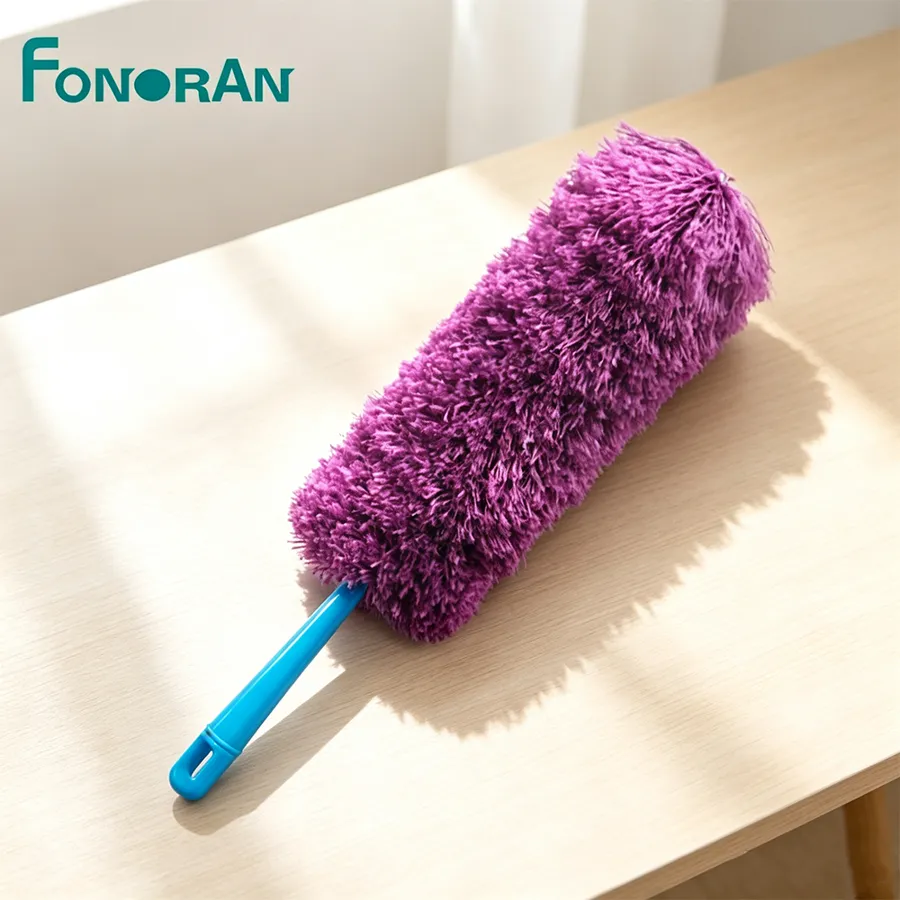
A microfiber duster for blinds is a cleaning tool with fine synthetic fibers that trap dust electrostatically, designed to clean slats without scratching or redistributing particles. For B2B buyers, washable microfiber heads with bendable or pivoting frames are preferred because they handle narrow slats and reduce per-use cost. MOQ typically starts at 500 units for private label, and buyers should confirm which EU directives apply to their specific model.
📋 Table of Contents
Executive Summary
- Electrostatic capture: Microfiber splits trap dust particles rather than pushing them around, addressing the most common complaint facility managers raise about traditional feather or synthetic dusters.
- Washable heads: Reusable microfiber heads reduce per-clean cost and meet sustainability criteria for facility-management contracts in North America and the EU.
- Bendable frames: Pivoting or flexible heads reach both sides of narrow slats without tilting the blind twice, cutting labor time for commercial window-cleaning contractors.
- MOQ and compliance: Private label requires a minimum of 500 units; confirm which EU directives apply to the specific model, and retail packaging must meet US consumer-product labeling rules.
Why Microfiber Works for Blind Cleaning
A microfiber duster for blinds captures dust electrostatically rather than relying on adhesive or friction. Each fiber is split into wedge-shaped filaments that create surface area and static charge, trapping particles as small as 0.3 microns. Blind slats are horizontal surfaces that collect fine dust, pollen, and cooking grease, and a duster that merely moves particles from one slat to the next creates visible streaks and requires repeated passes.
Fiber Density and Electrostatic Performance
Higher-density microfiber generates stronger static charge and holds more dust before the head needs washing. Lower-density synthetic dusters lose charge quickly and release particles when the head is lifted, which is why buyers report that some blind tools work poorly unless the blind is tilted both directions and cleaned carefully on both sides. Facility managers sourcing for multi-building contracts should specify minimum fiber density in the RFQ to avoid tools that fail after a few uses.
Material Composition
Most microfiber dusters for blinds use a polyester-polyamide blend, typically 80/20 or 70/30. Polyester provides durability and holds the split structure through repeated washing; polyamide (nylon) adds softness and static generation. Some cheaper tools use 100% polyester, which scratches wood or faux-wood blinds and loses electrostatic performance faster. Importers should request fiber-composition certificates from the factory, especially when private-labeling for retail chains that enforce scratch-free claims.
Washable vs Disposable Heads
Washable heads dominate B2B procurement. Reusable microfiber heads withstand repeated machine washing before fiber breakdown, while disposable heads are discarded after one or two uses. Over repeated cleanings, washable heads cost less per use than disposable alternatives and reduce single-use waste.
Washing and Replacement Cycles
Microfiber heads should be machine-washed in cold or warm water without fabric softener, which coats fibers and kills static charge. Most commercial laundries can process microfiber duster heads alongside mop pads and cleaning cloths. Replacement cycles depend on use frequency: a facility-management crew cleaning 200 windows per week replaces heads every six months, while a hardware distributor reselling to homeowners can market wash durability as a key selling point. Importers should confirm that the factory provides care labels in the destination language and that stitching around the head perimeter holds through repeated washing.
Disposable Head Use Cases
Disposable heads make sense only in high-contamination environments where cross-contamination risk outweighs cost, such as healthcare facilities cleaning patient-room blinds between occupants. For general commercial or residential blind cleaning, disposable heads add cost without performance benefit, and buyers increasingly avoid them to meet waste-reduction targets.
Frame Design: Bendable and Extendable Options
Frame design determines whether a microfiber duster for blinds can clean both sides of a slat in one pass. Rigid straight handles force the user to tilt the blind open, clean one side, then tilt closed and clean the other, doubling labor time. Bendable or pivoting heads reach around slats and clean both surfaces without repositioning the blind.
Bendable Wire Frames
Bendable wire frames use a flexible steel or aluminum core wrapped in foam or plastic. The user bends the head to match the slat angle, then slides it along the blind. Bendable designs work well for Venetian blinds with 1-inch or 2-inch slats, but may collapse under pressure on narrow half-inch mini-blinds. Distributors should test samples on the narrowest slat width their market uses before committing to a container order.
Extendable Handles
Extendable handles (telescoping poles) let users reach high blinds or ceiling-mounted roller shades without a ladder. Most extend from 30 inches to 60 inches, though some industrial models reach 100 inches for warehouse skylights. The locking mechanism matters: twist-lock collars hold better than push-button locks under repeated extension cycles, and importers should specify corrosion-resistant materials if the tool will be used in humid climates or near saltwater.
Multi-Surface Compatibility
Many microfiber dusters for blinds are marketed as multi-surface tools that also clean ceiling fans, baseboards, and window frames. Broadening the retail appeal introduces a trade-off: a head optimized for flat fan blades may not pivot enough for narrow blind slats. Importers targeting facility-management buyers should prioritize blind-specific performance over multi-surface claims, while those targeting hardware retail can emphasize versatility to justify higher shelf prices.
Procurement Criteria for Distributors
B2B buyers evaluate microfiber dusters on five criteria: fiber quality, frame durability, packaging for retail or contract supply, MOQ, and compliance documentation. Each criterion affects landed cost and shelf life differently.
Fiber Quality and Testing
Request a fiber-composition certificate and a wash-cycle test report. Ask the factory for wash-cycle test data before placing a bulk order. Without this documentation, importers risk receiving tools that shed fibers onto blinds or lose static charge after ten uses, which triggers returns and damages brand reputation. Some cheap blind-duster designs are promoted for many surfaces, but users still need to check whether the material and care directions are actually safe for their blinds.
Frame and Handle Durability
Frames should withstand repeated bending without cracking or losing shape; test samples before ordering. Extendable handles should lock firmly at every extension increment and not slip under the weight of a wet microfiber head. Importers should request samples and test them in realistic conditions: if the target market includes facility-management crews cleaning 50 windows per day, the tool must survive daily use for six months. Factories that skip durability testing often use thin-wall tubing or low-grade plastic joints that fail within weeks.
Packaging: Retail vs Bulk
Retail packaging requires a hang tag or clamshell with product claims, care instructions, and compliance marks in the destination language. US retailers expect UPC barcodes and country-of-origin labels; EU retailers require CE marking on the package and a declaration of conformity. Bulk packaging for facility-management contracts uses plain cartons with SKU labels and no color printing, cutting per-unit cost by 15-20%. Importers should specify packaging type at the quotation stage, because switching from bulk to retail packaging mid-production adds lead time and cost.
MOQ and Private Label
Stock models from Fonoran’s cleaning tool range start at 2 units for sample orders, while private label with custom packaging and branding requires a minimum of 500 units. New-mold OEM projects (custom handle shapes or proprietary head designs) are quoted per project. Importers launching a new brand should start with stock models under their own label to test market demand before committing to custom tooling.
Lead Time and Payment Terms
Production lead time and delivery schedules are confirmed at quotation to accommodate custom packaging and quality inspection requirements. Payment terms and container-load quantities are confirmed at quotation, and importers should clarify Incoterms (FOB, CIF, or EXW) to avoid surprise costs at the destination port. Factories shipping from Ningbo port offer competitive freight rates to North America and Europe, but importers using their own freight forwarder should request EXW pricing to control logistics.
Compliance: CE, RoHS, REACH
Non-electric cleaning tools generally fall outside CE directive scope; requirements depend on the specific product. It certifies that the product meets Low Voltage Directive (if battery-powered) and General Product Safety Directive requirements. RoHS restricts lead, mercury, cadmium, and four other hazardous substances to below 0.1% by weight in electrical components, and it applies to any duster with LED lights or battery-powered static generators. REACH registration is required for chemical substances imported into the EU above one tonne per year, but it does not apply to finished microfiber dusters unless the importer also sells replacement heads as a separate consumable.
Documentation for Customs Clearance
Importers need a declaration of conformity, third-party test reports (if CE certified), and a Bill of Materials listing all components and their countries of origin. US Customs requires country-of-origin marking on the product or package, and failure to comply triggers shipment holds and fines. Importers should request compliance documentation from the factory before placing a bulk order, because retroactive certification adds 4-6 weeks and often requires product redesign if a component fails testing.
Retail Labeling Requirements
US consumer-product labeling rules (enforced by the FTC) require care instructions, fiber content, and country of origin on the package or a sewn-in label. EU retailers require the same information plus a CE mark and importer contact details. Factories that supply generic packaging without destination-specific labels force the importer to apply stickers or repackage, which adds cost and delays shelf-ready delivery. Importers should specify labeling requirements in the purchase order and request pre-production samples to verify compliance before the full production run.
Key Takeaways
- Microfiber dusters trap dust electrostatically using split fibers, preventing the redistribution problem that buyers report with traditional dusters on tight blind slats.
- Washable microfiber heads withstand repeated machine washing and cost less per clean than disposable alternatives for facility-management contracts.
- Bendable or pivoting frames clean both sides of narrow slats in one pass, cutting labor time for commercial window-cleaning contractors compared to rigid straight handles.
- MOQ for private-label microfiber dusters starts at 500 units, with off-the-shelf designs available from 2 units for sampling; new-mold OEM projects are quoted per design.
- Confirm which EU directives apply to the specific model, and US retail packaging must include care instructions, fiber content, and country-of-origin labels to meet FTC rules.
- Higher fiber density generates stronger static charge and holds more dust, so distributors should request samples to avoid low-performance tools.
Frequently Asked Questions
Can microfiber dusters scratch wooden blinds?
High-quality microfiber dusters with polyester-polyamide blends do not scratch wood or faux-wood blinds when used dry, because the split fibers are softer than the finish. Lower-quality 100% polyester dusters or dusters used with cleaning solution can leave micro-scratches if the fiber edges are not properly split during manufacturing. Importers should request scratch-test reports from the factory, especially when private-labeling for retail chains that enforce scratch-free claims on packaging.
How often should commercial blinds be dusted?
Commercial blinds in office buildings should be dusted every two weeks to prevent dust buildup that requires wet cleaning. High-traffic areas like lobbies or ground-floor windows facing streets need weekly dusting because airborne particulates settle faster. Facility-management contracts typically specify dusting frequency based on building use and local air quality, and using a microfiber duster for blinds reduces the time per window compared to vacuum attachments or damp cloths.
What is the difference between a microfiber duster and a feather duster for blinds?
Microfiber dusters trap dust electrostatically using split synthetic fibers, while feather dusters rely on natural feather barbs that hook particles loosely. Feather dusters release dust when lifted or shaken, which is why buyers report that dusters can just move dust around instead of actually removing it, especially on blinds with tight slats. Microfiber dusters hold particles until washed, making them better for commercial blind cleaning where dust must be removed rather than redistributed. Feather dusters are cheaper but require more frequent replacement and do not meet washable-tool requirements in many facility-management contracts.
Fonoran manufactures washable microfiber cleaning tools at our 6,500 m² Taizhou facility, with CE certification for our cleaning tool lines. MOQ from 2 units for stock models, 500 units for private label. Request a product quote and compliance documentation to start your order.
Written by the Fonoran Export Team.