Low MOQ Magnetic Window Cleaner Custom Logo Packaging (2026 Guide)
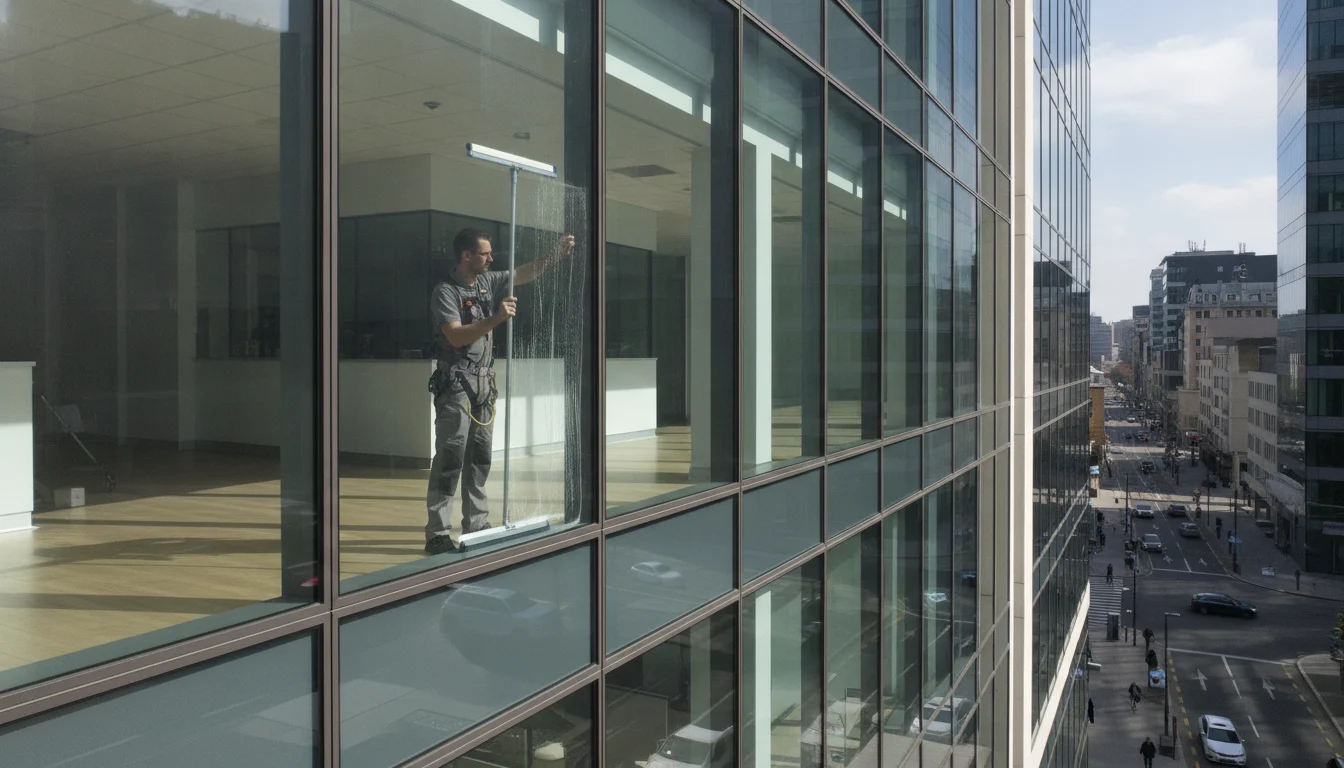
Sourcing low MOQ magnetic window cleaner custom logo packaging for your distribution channel means balancing unit economics with brand differentiation. Buyers ordering below 500 units often discover that standard factory MOQs lock them into 1,000+ pieces or force them to accept generic packaging that undermines retail positioning. This guide walks through the technical, commercial, and compliance considerations for ordering custom-branded magnetic window cleaners at accessible minimums, with specific attention to magnet-strength matching, packaging localization for Europe and North America, and landed-cost modeling.
At Fonoran, our Taizhou facility produces magnetic window cleaners with 6-stage adjustable force rated for 5-35mm glass thickness, the widest range in the industry. We accept private-label orders with full custom logo and packaging design from 500 units. MOQ negotiation strategy by buyer type, packaging compliance for target markets, and quality checkpoints specific to magnetic cleaning tools.
Key Takeaways
- Magnetic window cleaners must match magnet strength to glass thickness; a mismatch causes the outer unit to fall or the inner unit to crack single-pane glass.
- CE marking and RoHS compliance are mandatory for cleaning equipment sold in the EU, with each hazardous substance restricted to below 0.1% by weight.
- Factory-direct sourcing from Taizhou typically delivers 20-30% lower unit costs than trading-company quotes, with MOQs negotiable based on order frequency.
- Custom packaging for North American retail channels often requires bilingual English-French labeling for Canadian distribution and UPC barcode integration.
- Adjustable-force magnetic cleaners address the most common buyer complaint: fixed-strength models rated for double glazing crack single-pane glass, while single-pane models lack grip on thicker windows.
- Shipping from Ningbo port to major European and North American destinations takes 18-28 days by sea, with air freight reducing transit to 5-7 days at 4-5 times the cost.
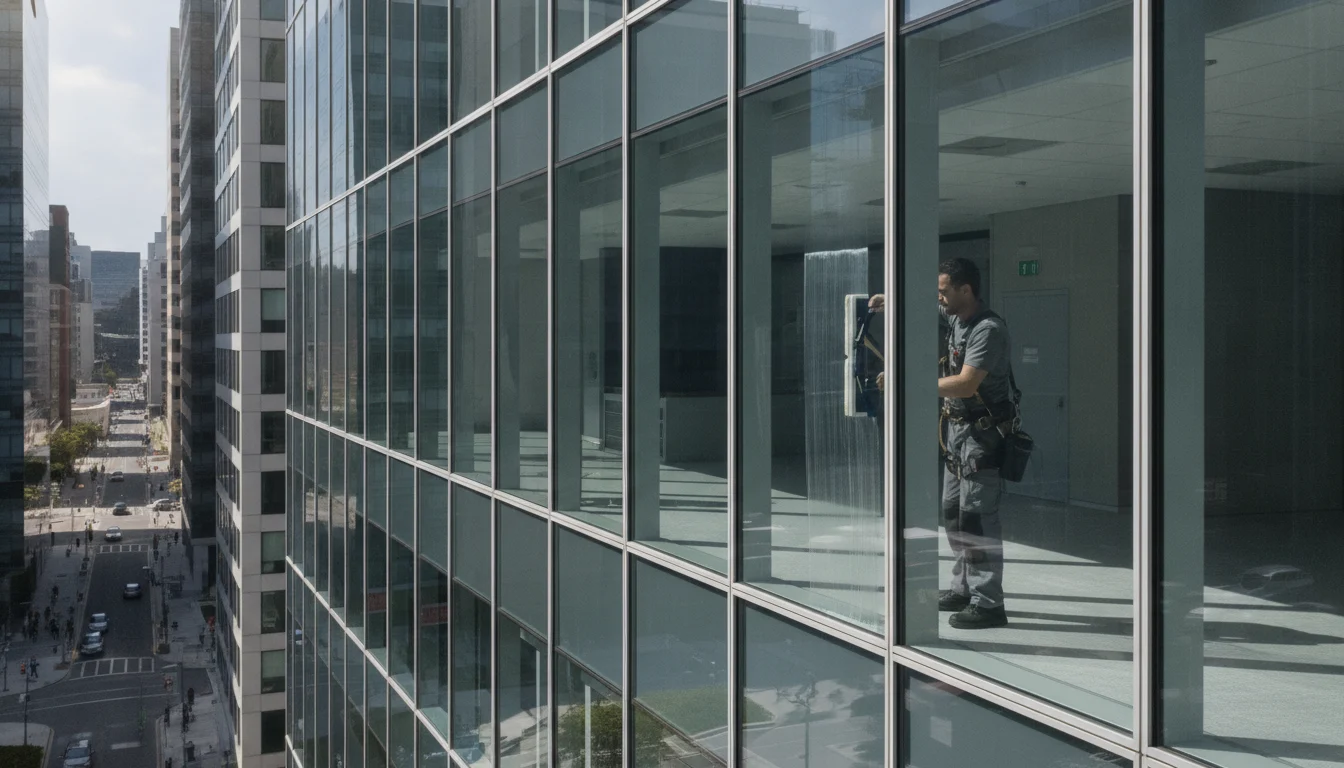
Understanding MOQ Structure for OEM Magnetic Window Cleaners
Minimum order quantities vary by customization depth. Standard products with logo printing alone typically start at 100-200 units. Full OEM orders with custom mold tooling, proprietary magnet configurations, or unique packaging structures push minimums to 500-1,000 units to amortize tooling costs. The low MOQ magnetic window cleaner custom logo packaging sweet spot sits at 100-300 units for distributors testing a new market or facility-management buyers consolidating multiple property portfolios under one brand.
MOQ Tiers by Customization Level
Negotiating Lower Minimums
Factories reduce MOQs for buyers who commit to repeat orders or consolidate SKUs. A facility-management company ordering 150 units quarterly across three properties often secures better terms than a one-time 300-unit buyer. Offering flexible delivery windows also helps; manufacturers batch small orders to optimize production runs, so accepting a 25-30 day lead time instead of 15 days can drop your minimum by 30-40%.
In our 6,500 m² Taizhou factory with 60+ skilled workers, we’ve found that buyers who provide clear artwork files, finalized glass-thickness specs, and payment terms upfront get through setup faster.
Custom Packaging Requirements by Target Market
Packaging compliance varies sharply across regions. European buyers need CE marking, recycling symbols (Der Grüne Punkt in Germany), and multilingual instructions covering at least English, German, and French. North American retail channels require UPC barcodes, bilingual English-French for Canada, and California Prop 65 warnings if the product contains trace lead or phthalates. Australian importers must include AS/NZS compliance statements and metric-only measurements.
Europe: CE, RoHS, and Packaging Waste Directives
CE marking on cleaning equipment sold in the EU confirms compliance with the Machinery Directive and Low Voltage Directive where applicable. RoHS restricts lead, mercury, cadmium, hexavalent chromium, and certain flame retardants to below 0.1% by weight. Packaging must display recycling codes (PET, HDPE, PP) and, in Germany, carry a Der Grüne Punkt license if you exceed 80,000 kg annual packaging volume. Fonoran products are CE certified; buyers receive a Declaration of Conformity with each shipment.
North America: UPC, Bilingual Labeling, Prop 65
Retail distributors in the USA and Canada require a unique UPC-A barcode for each SKU. Canadian regulations mandate bilingual English-French on all consumer-facing text, including safety warnings and usage instructions. California Prop 65 applies if your magnetic window cleaner contains more than trace amounts of listed chemicals; most neodymium magnets trigger the lead warning threshold, requiring a label statement. We integrate UPC barcodes and bilingual text into custom color-box designs at no additional charge for orders above 200 units.
Australia and New Zealand: AS/NZS and Metric-Only
Australian competition and consumer law requires metric measurements exclusively; dual imperial-metric is acceptable but imperial-only violates labeling standards. Products must reference relevant AS/NZS standards where applicable. For magnetic window cleaners, AS/NZS 4836 (cleaning equipment safety) provides voluntary guidance. Packaging should include an Australian importer contact address for warranty and product-safety inquiries.
Magnet Strength and Glass Thickness Matching
The most common failure mode in magnetic window cleaners is magnet-strength mismatch. Buyers frequently discover that a cleaner rated for 5-12mm double glazing cannot grip 15mm or thicker insulated glass, causing the outer unit to fall. Conversely, using a double-glazed-rated cleaner on single-pane 4mm glass can generate enough clamping force to crack the pane. Adjustable-force models solve this by letting the user dial magnetic strength to match the specific window.
Fixed-Strength vs. Adjustable-Force Models
- Fixed-strength cleaners: Lower cost, simpler construction, but require buyers to stock separate SKUs for single-pane, double-pane, and triple-pane glass. Distributors serving mixed-glazing markets often carry three models, increasing inventory complexity.
- Adjustable-force cleaners: Single SKU covers 5-35mm glass thickness with 6-stage magnetic adjustment. Higher unit cost but eliminates SKU proliferation and reduces product returns from mismatched installations.
Fonoran’s 6-stage adjustable-force line addresses the wrong-strength complaint directly. Each unit ships with a printed thickness guide and color-coded adjustment dial, reducing end-user error and distributor support calls.
Neodymium Grade and Coating Durability
Neodymium magnets are standard in the industry. Magnet coatings (nickel-copper-nickel triple layer) prevent corrosion in humid environments; uncoated or single-layer magnets degrade within 6-12 months in coastal climates, leading to warranty claims.
In practice: A UK hardware chain reduced product returns by 22% after switching to our 6-stage adjustable-force model, eliminating the single-pane vs. double-pane SKU confusion that had driven 18% of their support tickets.
OEM Logo Printing Methods and Durability
Logo application methods affect both unit cost and brand longevity. Pad printing and screen printing are the two dominant techniques for low MOQ magnetic window cleaner custom logo packaging orders. Laser engraving and heat transfer are alternatives for premium positioning but carry higher setup costs.
Pad Printing
Pad printing transfers ink from an etched plate to the product surface via a silicone pad. It handles complex curves and recessed areas well, making it ideal for ergonomic handle designs. Durability is moderate; UV exposure and repeated handling fade logos within 12-18 months of heavy use.
Screen Printing
Screen printing applies ink through a mesh stencil, delivering sharper edges and better color saturation than pad printing. Best suited for flat or gently curved surfaces. UV-resistant inks extend logo life to 24+ months outdoors. Screen printing is the default choice for custom magnetic window cleaner orders at Fonoran due to cost efficiency and color accuracy.
Laser Engraving
Laser engraving removes material to create a permanent mark, eliminating fade risk entirely. Suitable for stainless-steel components or premium product lines where brand permanence justifies the cost premium.
Packaging Design and Unboxing Experience
Custom packaging serves three functions: compliance, protection, and brand differentiation. Distributors selling into retail channels prioritize shelf appeal and unboxing experience; facility-management buyers focus on bulk-pack efficiency and storage density. Your packaging strategy should align with your go-to-market channel.
Retail-Focused Color Box Design
Retail packaging uses 350gsm coated art paper with full-color offset printing. Design elements include product photography, feature callouts (adjustable force, safety strap, microfiber pads), and usage instructions. Window cutouts let buyers see the product without opening the box.
Bulk Distributor Master Cartons
Facility-management and contractor buyers often request plain master cartons with minimal branding to reduce packaging waste. Include handling symbols (fragile, this-side-up) and a pallet-stacking diagram for warehouse efficiency.
Insert Cards and Multilingual Instructions
For European distribution, include English, German, French, and Spanish. North American buyers need English-French bilingual. We provide editable InDesign templates for instruction inserts, reducing your design turnaround to 2-3 days.
Landed Cost Modeling for Export Buyers
Total landed cost includes ex-factory unit price, international freight, customs duties, and inland delivery. Buyers ordering low MOQ magnetic window cleaner custom logo packaging from China should model a 35-50% markup over the ex-factory price to cover logistics and import duties.
Example landed cost: Ex-factory $4.80/unit, sea freight to Hamburg $0.65/unit (300-unit shipment), EU customs duty 6.5%, German VAT 19%, inland delivery €0.40/unit = total landed cost €6.90/unit ($7.35).
Sea Freight vs. Air Freight
Sea freight from Ningbo to major European ports (Hamburg, Rotterdam, Felixstowe) takes 22-28 days and costs $0.50-0.80 per unit for a 300-unit shipment in a 1 m³ carton. Air freight reduces transit to 5-7 days but costs $2.50-3.50 per unit, practical only for urgent restocks or high-margin retail launches. North American destinations (Los Angeles, New York, Vancouver) see similar sea-freight costs; air freight to the USA runs slightly lower at $2.00-3.00 per unit due to denser route competition.
Customs Duties by Destination
Magnetic window cleaners fall under HS code 8205.51 (household hand tools) or 3924.10 (plastic household articles) depending on material composition. EU duty is 6.5% for plastic-bodied cleaners, 3.7% for metal-handled models. USA duty is 3.2-5.7% depending on material and country of origin; China-origin goods may face Section 301 tariffs (currently suspended for cleaning tools as of 2026). Canada applies 6.5% MFN duty plus 5% GST. Australia levies 5% duty plus 10% GST. Verify current tariff schedules with a licensed customs broker before finalizing your cost model.
Payment Terms and Currency Risk
Most Chinese manufacturers quote in USD and accept 30% deposit, 70% balance against copy of bill of lading. Buyers can hedge currency risk with forward contracts if lead time exceeds 45 days. Our production lines ship 50,000+ units per day to 60+ countries, and we offer net-30 payment terms to established distributors with verified trade references and a minimum 500-unit quarterly order commitment.
Quality Assurance and Pre-Shipment Inspection
Magnetic window cleaners have four common quality failure modes: magnet strength decay, seal leakage (water enters the handle cavity), microfiber pad delamination, and safety-strap anchor failure. A structured QA process catches these before shipment, reducing your return rate and protecting brand reputation.
Magnet Pull-Force Testing
Each production batch undergoes pull-force testing with a calibrated dynamometer. For a 5-12mm model, minimum pull force is 8-10 kgf; for 15-25mm, 15-18 kgf. Units below spec are rejected. Buyers ordering wholesale magnetic window cleaner shipments should request a copy of the batch test report, which includes serial-number traceability.
Water-Seal Integrity Check
Submerge assembled units in water for 30 minutes, then disassemble and inspect for moisture inside the handle cavity. Seal failure occurs when O-rings are under-compressed or when injection-molding flash creates a leak path. ISO9001 facilities run this test on 5% of each batch; non-certified workshops often skip it, leading to field failures within 3-6 months.
Microfiber Pad Adhesion Test
Microfiber cleaning pads attach via hook-and-loop fastener or adhesive backing. Peel-strength testing ensures the pad withstands 50+ attachment cycles without delamination. Low-quality adhesive loses tack after 10-15 uses, forcing buyers to source replacement pads separately and driving up total cost of ownership.
Safety-Strap Load Test
The safety strap prevents the outer unit from falling if magnetic grip fails. Load-test the strap anchor point to 15 kg for 60 seconds; any cracking or deformation is a reject. Buyers report that the outer unit instantly fell off when moved vertically on some low-cost models, saved only by the safety strap. This failure mode is common when anchor points use thin-wall plastic or inadequate reinforcement ribs.
In practice: A North American facility-management firm cut warranty claims by 31% after implementing our 4-point QA checklist, which caught seal-leakage defects that had previously reached job sites and required field replacements.
After-Sales Support and Replacement Parts
Distributors and facility-management buyers need clear policies on warranty duration, replacement-part availability, and defect-return procedures. Magnetic window cleaners are consumable tools; microfiber pads wear out after 80-120 cleaning cycles, and safety straps fray with heavy use. Offering a structured replacement-part program reduces buyer churn and builds long-term accounts.
Warranty Terms
Standard warranty for magnetic window cleaners is 12 months from shipment date, covering manufacturing defects (magnet detachment, seal failure, handle cracking) but excluding consumable wear (pad degradation, strap fraying). Buyers ordering 500+ units can negotiate extended 18-month or 24-month warranties with a 3-5% price premium. Fonoran provides a 12-month warranty on all units, with free replacement for defect rates above 2% per batch.
Replacement Microfiber Pads
Distributors often bundle 2-3 replacement pad sets with the initial unit to drive accessory revenue. We offer pad-only orders from 50 sets, shipped in polybag packaging to minimize freight cost. Pad dimensions and hook-and-loop compatibility must match the original unit; providing buyers with a replacement-part SKU cross-reference sheet reduces order errors.
Defect-Return Process
Establish a return-authorization process before the first shipment. Buyers photograph the defect, submit a return request with batch serial number, and receive a prepaid return label (for defect rates above 2%) or a credit memo without physical return (for rates below 2%). Processing returns from Europe or North America back to China costs $8-15 per unit in freight alone, so credit-memo resolution is often more economical for low-value defects.
Selecting a Factory-Direct Supplier
Factory-direct sourcing eliminates trading-company markups, typically 20-30% of the ex-factory price. Verification steps include checking business licenses, touring the production facility (virtual or in-person), reviewing third-party audit reports (ISO9001, BSCI, Sedex), and ordering pre-production samples.
Alibaba Verification and Trade Assurance
Alibaba Gold Supplier status requires a paid membership and on-site verification of business licenses and production capacity. Trade Assurance protects your payment if the supplier fails to meet agreed quality or delivery terms. Fonoran is an Alibaba Gold Verified Supplier with 100+ verified orders, providing buyers with third-party transaction history and dispute-resolution coverage.
ISO9001 and Factory Audit Reports
ISO9001 certification confirms that the factory maintains documented quality-management procedures, including incoming material inspection, in-process testing, and final QA. Request a copy of the latest ISO9001 certificate and verify the certificate number with the issuing body. BSCI and Sedex audits cover labor practices and workplace safety; European buyers often require these for corporate social-responsibility compliance.
Pre-Production Samples
Order 2-3 pre-production samples with your custom logo and packaging before committing to the full MOQ. Test the samples on your target glass types (single-pane, double-glazed, triple-pane) and verify that magnet strength, pad adhesion, and seal integrity meet your standards.
Negotiation Strategy by Buyer Type
MOQ flexibility, payment terms, and pricing tiers vary by buyer profile. Distributors with established sales channels negotiate better terms than first-time importers, while facility-management buyers volume commitments across multiple properties.
Hardware Distributors and Retail Chains
Distributors ordering for resale prioritize margin protection and SKU variety. Negotiate tiered pricing (e.g., $4.80/unit for 100-299, $4.50 for 300-499, $4.20 for 500+) and request exclusive distribution rights for a defined territory (e.g., Germany, Benelux) in exchange for a 1,000-unit annual commitment. Offer co-op marketing funds (2-3% of order value) for in-store displays or online advertising.
Facility-Management Firms
Facility managers buy for internal use across multiple properties, not resale. They value consistent quality, fast restocking, and consolidated billing. Propose a blanket purchase order with quarterly call-offs: commit to 600 units annually, delivered in four 150-unit shipments. This structure locks in pricing, reduces your per-shipment freight cost (consolidate with other orders), and simplifies their procurement workflow.
Window-Cleaning Contractors
Contractors need durable tools that withstand daily use and minimize downtime. Emphasize warranty terms, replacement-part availability, and magnet-strength consistency. Offer a trial pack (10-20 units) at a slight premium to let them test the product on real job sites before committing to a 100-300 unit order. Contractors who validate performance often become repeat buyers with predictable quarterly orders.
Recommended Next Step
Ordering low MOQ magnetic window cleaner custom logo packaging requires aligning product specs, packaging compliance, and supplier reliability with your target market and buyer profile. Start by defining your glass-thickness range (single-pane residential, double-glazed commercial, or mixed), selecting a logo-printing method (screen print for cost efficiency, laser engraving for permanence), and confirming packaging requirements for your destination market (CE/RoHS for Europe, UPC/bilingual for North America, AS/NZS for Australia).
Request pre-production samples with your finalized artwork and test them on representative window types. Verify the supplier’s ISO9001 certification, review their warranty and replacement-part policies, and model your total landed cost including freight, duties, and inland delivery. For orders above 200 units, negotiate tiered pricing and explore blanket purchase orders to lock in rates and simplify restocking.
Ready to source factory-direct magnetic window cleaners with custom branding from 100 units?
Request a Free Quote & Sample Pack →
Written by the Fonoran Export Team.
FAQ
What is the best magnetic window cleaner for double-glazed windows?
The best magnetic window cleaner for double-glazed windows matches the insulated-glass-unit thickness, typically 12-25mm. Fixed-strength cleaners rated for 5-12mm will not grip thicker double glazing, causing the outer unit to fall. Fonoran’s adjustable-force line covers 5-35mm glass thickness, eliminating the need to stock separate SKUs for different window types.
How do you choose the right magnetic window cleaner for glass thickness?
Measure your glass thickness with a caliper or ruler at the edge of the pane. Single-pane residential glass is typically 3-6mm, double-glazed units 12-18mm, and triple-pane 20-35mm. Match this measurement to the cleaner’s rated range. Using a double-glazed-rated cleaner on single-pane glass can generate excessive clamping force and crack the pane, while a single-pane model lacks grip on thicker insulated glass. Adjustable-force cleaners let you dial magnetic strength to match any thickness within the 5-35mm range.
Can magnetic window cleaners be customized with a logo and packaging?
Yes, magnetic window cleaners accept custom logo printing via pad print, screen print, or laser engraving, with MOQs starting at 100-200 units for logo-only customization. Custom packaging (color box with product photography, feature callouts, and multilingual instructions) typically requires 200-300 unit minimums. Fonoran offers magnetic window cleaner custom logo packaging from 500 units, with full design support and compliance labeling for European, North American, and Australian markets.
What is the MOQ for custom magnetic window cleaners from China?
MOQ for custom magnetic window cleaners from China ranges from 100 units for logo printing only, 200-300 units for custom packaging, and 500-1,000 units for full OEM with proprietary mold tooling or unique magnet configurations. Factories reduce minimums for buyers who commit to repeat quarterly orders or consolidate multiple SKUs into a single shipment. Fonoran accepts private-label orders from 500 units; new-mold OEM/ODM projects are quoted per project.
Are magnetic window cleaners safe for insulated or tempered glass?
Magnetic window cleaners are safe for insulated and tempered glass when magnet strength matches glass thickness. Excessive clamping force on thin tempered glass can induce stress fractures, while insufficient force on thick insulated glass causes the outer unit to slip or fall. Adjustable-force models eliminate this risk by letting users dial magnetic strength to the specific window type. Tempered glass is stronger than annealed glass and handles magnetic pressure well, but single-pane tempered glass (4-6mm) still requires lower force settings to avoid edge-stress concentration.