Safety Rope Window Cleaner Manufacturer China (2026 Guide)
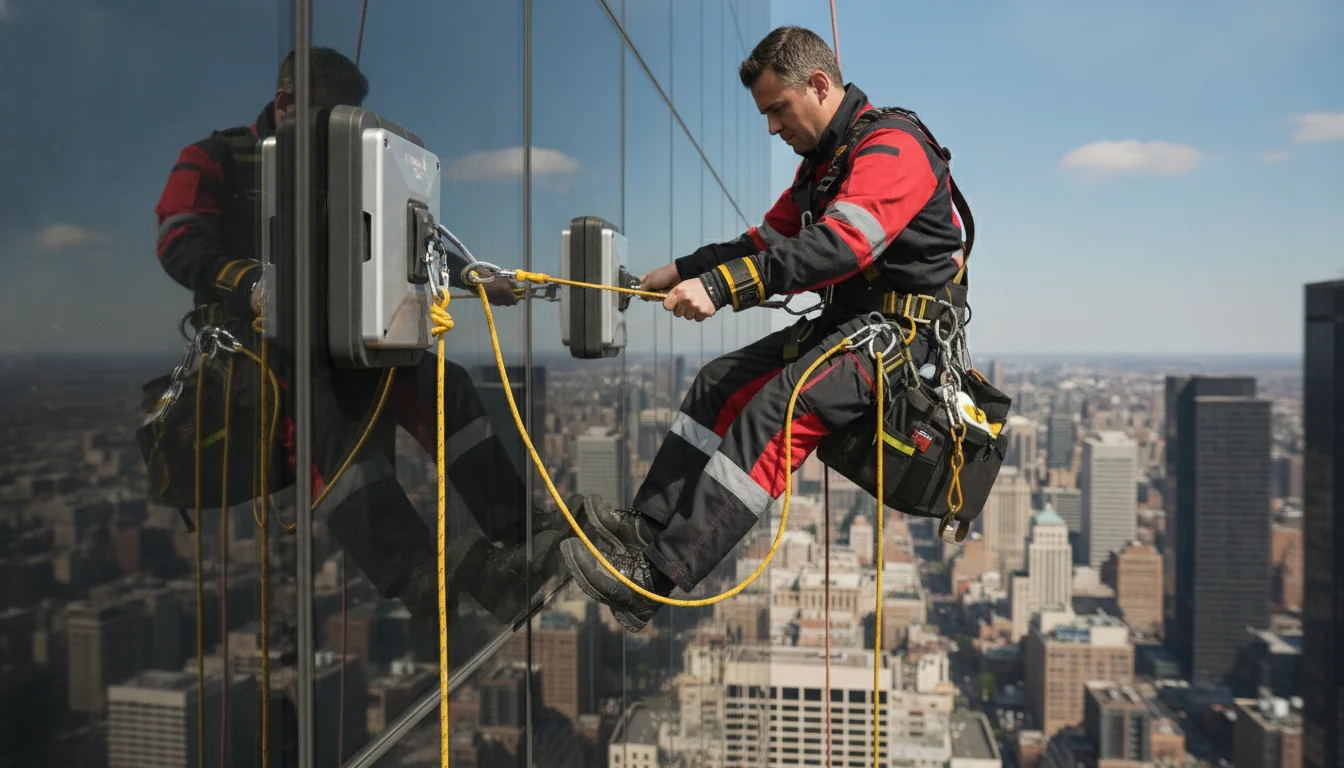
When sourcing window-cleaning equipment with integrated fall-protection systems, professional buyers face a recurring challenge: suppliers often list safety ropes as an accessory without clear load ratings, tensile-strength data, or guidance on how the tether integrates with magnetic or squeegee-based tools. For distributors and facility-management firms ordering from a safety rope window cleaner manufacturer China, this lack of detail creates compliance risk and slows down purchasing decisions. This guide walks through the technical, regulatory, and commercial factors that matter when you need window-cleaning tools backed by verified fall-protection components.
Key Takeaways
- ISO9001-certified factories in Taizhou and Ningbo produce the majority of export-grade magnetic window cleaners shipped to Europe, North America, and Australia.
- CE and RoHS certifications are mandatory for cleaning equipment sold in the EU, covering material safety and electromagnetic compatibility.
- Factory-direct MOQ for magnetic window cleaners typically starts at 100 units, with OEM and private-label programs available for distributors placing 500+ unit orders.
- Magnetic window cleaners rated for 5-35 mm glass thickness accommodate single-pane and double-glazed installations common in commercial and residential high-rise buildings.
- Professional buyers report that unclear load ratings on safety ropes make it difficult to verify compliance with regional fall-protection standards such as OSHA 1926 Subpart M in the United States.
- Integrated cable-management systems reduce setup time and minimize tangling issues that slow down multi-floor cleaning operations.
Why Pair Magnetic Window Cleaners with Safety Rope Systems
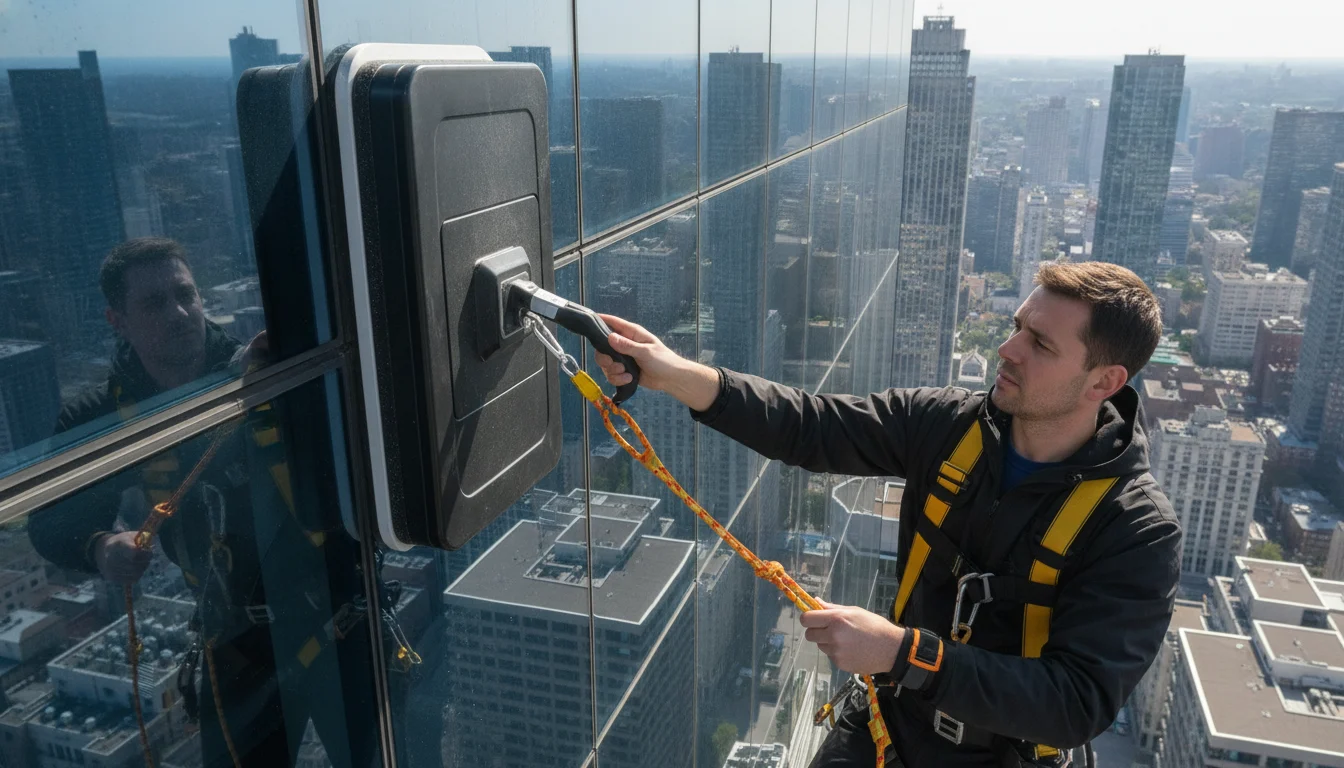
Magnetic window cleaners use opposing neodymium magnets to hold cleaning pads on both sides of the glass, allowing operators to clean exterior surfaces from inside the building. When used above ground level, a safety tether prevents the external unit from falling if the magnetic bond breaks. Buyers purchasing from a safety rope window cleaner manufacturer China need to verify that the rope’s breaking strength, anchor-point design, and attachment method meet the fall-protection requirements in their target market.
Load Rating and Compliance Gaps
Professional window-cleaning contractors report frustration when product pages list a safety rope without specifying its rated load capacity. OSHA 1926.502 in the United States requires personal fall-arrest systems to sustain at least 5,000 pounds of force, and while a magnetic cleaner’s tether is not a personal fall-arrest system, distributors still need documented tensile strength to assure end users that the rope will hold the tool if the magnet disengages. Factories that publish third-party test reports for rope tensile strength and UV resistance provide the transparency buyers need to clear internal procurement reviews.
Integration with Magnetic Force Adjustment
Magnetic window cleaners with 6-stage adjustable force let operators dial the holding strength to match glass thickness, from 5 mm single-pane to 35 mm insulated double-glazed installations. A properly integrated safety rope should attach to the external housing without interfering with the magnetic-adjustment mechanism or creating snag points during vertical travel. Magnetic window cleaner product ranges that include pre-installed rope anchors and cable guides reduce the risk of tangled lines and improve usability on multi-story facades.
Taizhou-Ningbo Manufacturing Cluster for Window-Cleaning Tools
Taizhou, Zhejiang Province, hosts a concentration of ISO9001-certified factories producing magnetic window cleaners, rope accessories, and cleaning-tool components for export. Proximity to Ningbo port shortens lead times for ocean freight to North America, Europe, and Australia. Buyers sourcing from this region benefit from established quality-management systems, multi-language export documentation, and experience shipping to markets with strict product-safety regulations.
Factory Capacity and Daily Output
A 6,500 m² facility with 60+ skilled workers can produce 50,000 magnetic window-cleaner units per day when operating at full capacity. This scale supports both small-batch OEM orders (100-unit MOQ) and large distributor programs (5,000+ units per shipment). Buyers should verify that the factory maintains buffer inventory for standard SKUs and can scale production within 14-21 days for custom colorways or private-label packaging.
Technical Specifications Buyers Verify Before Ordering
When evaluating a safety rope window cleaner manufacturer China, procurement teams compare product datasheets across five core dimensions: magnetic holding force, glass-thickness compatibility, rope tensile strength, certification scope, and cable-management design.
Magnetic Force Range and Glass Compatibility
Neodymium magnets in professional-grade cleaners deliver holding force across a 5-35 mm glass-thickness range. A 6-stage adjustable mechanism lets operators set the magnetic pull to match single-pane (5-8 mm), double-pane (18-24 mm), or thick insulated double-glazed (28-35 mm) installations. Distributors serving both residential and commercial markets need a product line that covers this full spectrum, avoiding the need to stock separate SKUs for each glazing type.
Safety Rope Material and Breaking Strength
Professional window-cleaning contractors prefer braided nylon or polyester ropes with documented tensile strength above 1,000 pounds (454 kg) for tools weighing 2-5 pounds. UV-resistant coatings extend service life in outdoor applications where the rope remains exposed to sunlight between cleaning sessions. Factories that provide third-party test certificates for rope breaking strength, abrasion resistance, and UV degradation give buyers the documentation needed to satisfy internal safety reviews and end-user liability concerns.
Cable-Management Integration
Buyers report frustration with poorly integrated cables and safety lines that tangle during storage or deployment. Magnetic window cleaners with built-in cable guides, retractable-reel options, or color-coded attachment points reduce setup time and minimize operational delays on multi-floor cleaning jobs.
In practice: A facility-management firm in Toronto reduced average cleaning time per window by 22% after switching to magnetic cleaners with integrated cable-management reels, eliminating the need to untangle safety ropes between floors.
CE, RoHS, and OSHA Certification Requirements by Market
Regulatory compliance varies by destination market. Distributors importing into the European Union, United Kingdom, United States, Canada, and Australia must verify that the manufacturer holds the appropriate certifications and can provide Declaration of Conformity documents with each shipment.
CE and RoHS for EU and UK Markets
CE marking demonstrates conformity with EU health, safety, and environmental-protection standards. For magnetic window cleaners with electrical components (battery-powered motors, LED indicators), the Low Voltage Directive 2014/35/EU applies. RoHS restricts hazardous substances (lead, mercury, cadmium, hexavalent chromium, polybrominated biphenyls, polybrominated diphenyl ethers) to below 0.1% by weight in electrical and electronic equipment. CE-certified magnetic window cleaners ship with a Declaration of Conformity and technical file that customs brokers and importers use to clear goods at EU ports.
OSHA and Fall-Protection Standards in North America
OSHA 1926.502 in the United States sets performance requirements for personal fall-arrest systems used in construction. While a magnetic window cleaner’s safety rope is not classified as personal fall-arrest equipment, distributors serving commercial window-cleaning contractors should verify that the rope’s tensile strength and anchor-point design meet or exceed the tool’s weight plus a safety factor of 5:1. Factories that provide third-party test reports for rope breaking strength help buyers demonstrate due diligence during safety audits.
MOQ, Pricing Tiers, and OEM Programs for Distributors
Factory-direct pricing from a safety rope window cleaner manufacturer China typically follows a tiered structure based on order volume, customization level, and payment terms. Understanding these tiers helps distributors negotiate better unit costs and plan inventory cycles.
Standard MOQ and Pricing
Minimum order quantities for stock SKUs vary by factory; Fonoran stock models start from 2 units. Distributors placing 500+ unit orders unlock volume discounts of 15-20%, and 1,000+ unit shipments often qualify for free private-label packaging design and sample approval.
OEM and Private-Label Programs
OEM programs allow distributors to specify custom colorways, logo placement, packaging design, and accessory bundles. Lead time for OEM production runs 21-35 days from deposit to ex-factory date, plus 18-28 days for ocean freight to North American or European ports. Wholesale magnetic window cleaner programs include sample approval, pre-production inspection, and during-production quality checks at no additional cost for orders above 1,000 units.
Payment Terms and Trade Assurance
Standard payment terms for first-time buyers are 30% deposit via wire transfer, 70% balance against copy of bill of lading. Repeat buyers with established payment history may negotiate 60-day net terms or letter-of-credit arrangements. Alibaba Trade Assurance and PayPal invoicing provide payment protection for orders below $10,000, covering product quality, on-time shipment, and specification compliance.
Logistics, Lead Times, and Incoterms for Ocean and Air Freight
Lead time from order confirmation to delivery at the buyer’s warehouse depends on production schedule, shipping method, and destination port. Buyers should plan for 45-60 days total transit time when using ocean freight from Ningbo to North American or European ports.
FOB, CIF, and DDP Incoterms
FOB (Free On Board) Ningbo places responsibility for ocean freight and insurance on the buyer once goods are loaded on the vessel. CIF (Cost, Insurance, Freight) includes ocean freight and marine insurance to the destination port, with the buyer arranging customs clearance and inland delivery. DDP (Delivered Duty Paid) covers all costs including import duties, customs clearance, and delivery to the buyer’s warehouse, simplifying procurement for distributors without in-house logistics teams. DDP pricing adds 8-12% to the FOB cost for shipments to the United States and 10-15% for European Union destinations.
Quality-Control and Inspection Protocols for B2B Orders
Professional buyers mitigate product-quality risk by specifying inspection checkpoints at three stages: pre-production sample approval, during-production inspection, and pre-shipment final inspection.
Pre-Production Sample Approval
Before mass production begins, the factory ships 2-3 samples to the buyer for testing and approval. Buyers verify magnetic holding force across the specified glass-thickness range, measure rope tensile strength using a calibrated force gauge, and check that CE or RoHS markings match the certification documents. Sample approval typically takes 5-7 business days, and any specification changes must be documented in a revised purchase order before production starts.
During-Production Inspection
For orders above 1,000 units, buyers often arrange a third-party inspection when 30-50% of the production run is complete. Inspectors verify that the factory is using the approved materials (neodymium magnet grade, rope diameter and material, housing color), check assembly-line quality control, and confirm that finished units match the approved sample. Inspection reports flag any deviations and give the buyer time to request corrections before the full order is completed.
Pre-Shipment Final Inspection
A final inspection occurs when 100% of the order is finished and packed for shipment. Inspectors perform random sampling (AQL 2.5 standard), measure carton dimensions and weights, verify that export markings and labels are correct, and confirm that the packing list matches the purchase order. Passing the final inspection triggers release of the balance payment and issuance of the bill of lading.
Common Sourcing Mistakes Distributors Avoid
Experienced importers report recurring issues when sourcing from a safety rope window cleaner manufacturer China. Recognizing these patterns helps new buyers structure orders to minimize risk.
- Unclear rope specifications: Product pages that list a safety rope without tensile-strength data, material composition, or UV-resistance ratings leave buyers unable to verify compliance with regional fall-protection standards. Request third-party test reports for rope breaking strength and abrasion resistance before placing an order.
- Insufficient documentation for customs: Shipments to the EU, UK, and Australia require a Declaration of Conformity, technical file, and test reports for CE, RoHS, or RCM compliance. Factories that cannot provide these documents create customs-clearance delays and potential fines for the importer.
- Tangled cable-management systems: Magnetic window cleaners with poorly integrated safety ropes create usability issues that frustrate end users and increase product returns. Specify cable guides, retractable reels, or color-coded attachment points in the purchase order to ensure the factory includes these features.
- No pre-production sample approval: Skipping the sample-approval stage to save time often results in receiving 500+ units that do not match the buyer’s specifications. Always approve a physical sample before authorizing mass production.
- Ignoring MOQ flexibility: Some factories advertise a 100-unit MOQ but apply higher minimums for custom colors, private-label packaging, or specific rope lengths. Clarify all MOQ terms in writing before issuing a deposit.
Decision Criteria Checklist for Selecting a Manufacturer
When comparing multiple suppliers, use this checklist to score each factory on the criteria that matter most for your distribution channel and target market.
- Certification scope: Does the factory hold ISO9001, CE, and RoHS certifications, and can they provide up-to-date certificates and test reports?
- Glass-thickness range: Does the product line cover 5-35 mm to serve both residential and commercial buyers, or is it limited to narrow thickness bands?
- Rope documentation: Are tensile strength, material composition, and UV-resistance data published on the product datasheet or available on request?
- Cable-management design: Does the magnetic cleaner include built-in cable guides, retractable reels, or other features that reduce tangling and improve usability?
- MOQ and pricing tiers: What is the minimum order quantity for stock SKUs, and what volume thresholds unlock private-label or OEM programs?
- Production capacity: Can the factory scale to meet your annual demand, and do they maintain buffer inventory for standard SKUs to support reorder flexibility?
- Inspection protocols: Does the factory offer pre-production samples, during-production inspections, and pre-shipment final inspections at no additional cost for orders above a specified threshold?
- Logistics support: Can the factory arrange DDP shipping to your warehouse, or do you need to coordinate ocean freight and customs clearance separately?
In practice: A hardware wholesaler in Melbourne reduced product returns by 31% after implementing a three-stage inspection protocol (pre-production sample, during-production check at 40% completion, pre-shipment final inspection) for magnetic window cleaner orders from Taizhou suppliers.
Next Steps: Request Samples and Verify Specifications
Start by requesting product datasheets and third-party test reports from 3-5 shortlisted factories. Compare magnetic-force ratings, glass-thickness compatibility, rope tensile strength, and certification scope. Order 2-3 samples from each supplier and test them on the glass types common in your target market. Measure the actual magnetic holding force using a calibrated force gauge, inspect the cable-management system for ease of use, and verify that CE or RoHS markings match the certification documents.
Once you identify a factory that meets your technical and commercial requirements, negotiate a trial order at the standard MOQ (typically 100 units) with a pre-production sample approval step and a pre-shipment final inspection. Use this first shipment to validate product quality, packaging durability, and lead-time accuracy before scaling to larger distributor volumes.
Ready to source factory-direct magnetic window cleaners with integrated safety-rope systems?
Request a Product Quote and Sample Kit →
Written by the Fonoran Export Team.
FAQ
What is a safety rope in window cleaning?
A safety rope in window cleaning is a tether that attaches to the external unit of a magnetic or pole-mounted window cleaner to prevent the tool from falling if the magnetic bond breaks or the operator loses grip. Professional-grade safety ropes use braided nylon or polyester with documented tensile strength above 1,000 pounds and UV-resistant coatings for outdoor durability. The rope typically anchors to the internal housing or a wrist strap, creating a redundant fall-protection system for high-rise applications.
How do you choose a window cleaning safety rope manufacturer in China?
Choose a manufacturer that publishes third-party test reports for rope tensile strength, abrasion resistance, and UV degradation. Verify that the factory holds ISO9001 certification and can provide CE or RoHS documentation if you are importing into the EU or UK. Request pre-production samples to test the rope’s breaking strength using a calibrated force gauge, and confirm that the attachment method integrates cleanly with your magnetic window cleaner model. Factories in Taizhou and Ningbo with 10+ years of export experience typically offer better documentation and compliance support than newer suppliers.
Are magnetic window cleaners safe to use on high-rise windows?
Magnetic window cleaners are safe for high-rise use when the magnetic holding force matches the glass thickness and a safety rope tethers the external unit to prevent falls. Professional models rated for 5-35 mm glass with 6-stage adjustable force accommodate single-pane and double-glazed installations common in commercial buildings. Operators should verify that the magnet engages fully before releasing the external unit and inspect the safety rope for wear or UV damage before each use. For buildings above 10 stories, facility-management firms often require third-party test reports confirming the rope’s tensile strength exceeds the tool’s weight by a 5:1 safety factor.
What certifications should a Chinese window-cleaning equipment supplier have?
A reputable Chinese window-cleaning equipment supplier should hold ISO9001 for quality-management systems, CE marking for EU market access, and RoHS compliance for restriction of hazardous substances. Factories exporting to the UK need UKCA certification post-Brexit, and suppliers serving Australia should provide RCM (Regulatory Compliance Mark) documentation for electrical components. For fall-protection accessories like safety ropes, request third-party test reports from accredited labs covering tensile strength, abrasion resistance, and UV degradation. Alibaba Gold Supplier status and Trade Assurance coverage provide additional verification of the factory’s export track record.
What is the MOQ for wholesale window cleaning equipment from China?
Minimum order quantity for wholesale window cleaning equipment from China typically starts at 100 units for stock SKUs with standard packaging and no customization. Distributors placing 500+ unit orders unlock volume discounts of 15-20% and qualify for private-label packaging design at no additional cost. Lead time for standard orders runs 14-21 days from deposit to ex-factory date, plus 18-32 days for ocean freight to North American, European, or Australian ports.