High Floor Window Cleaning Equipment OEM China: 2026 Guide
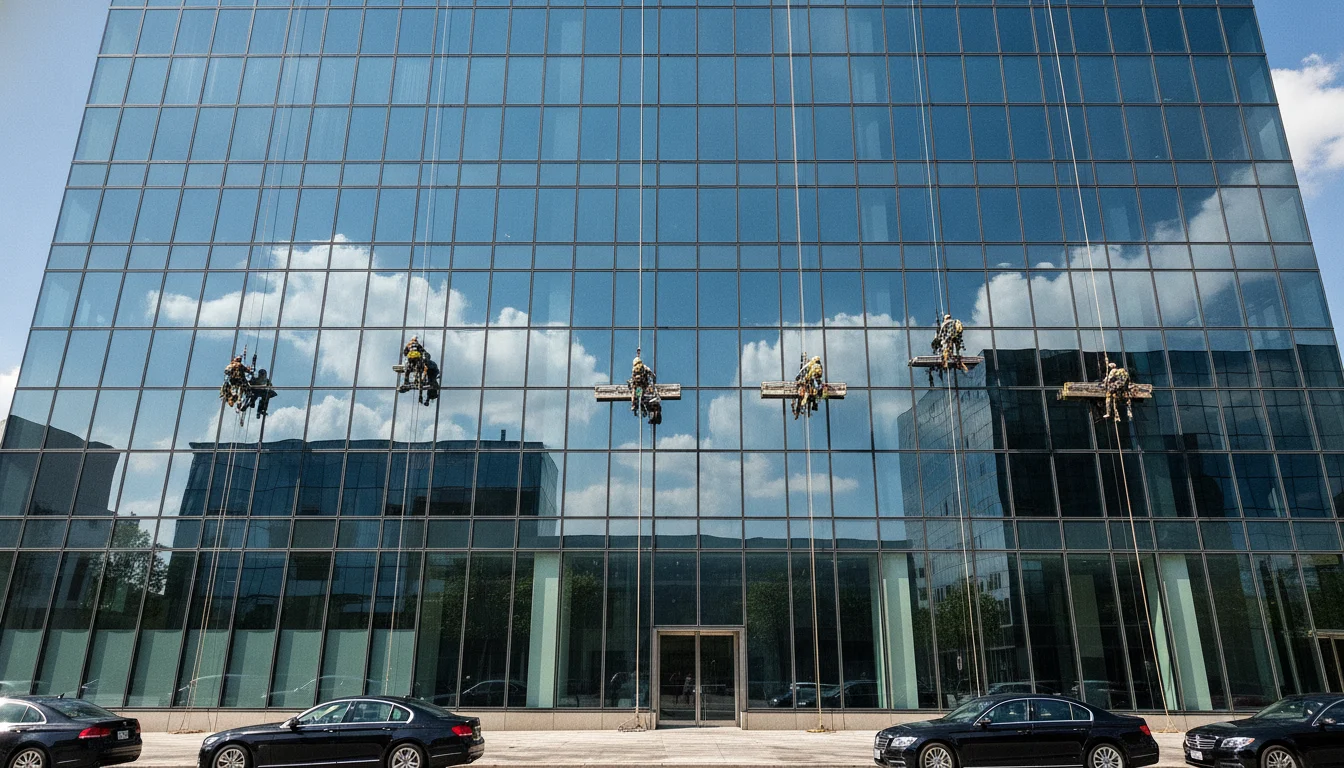
Distributors and facility-management buyers face a recurring challenge: magnetic window cleaners marketed for double-glazed glass often crack single-pane windows, while single-pane models lack the grip to hold through thicker installations. When sourcing high floor window cleaning equipment OEM China, matching magnet strength to glass thickness becomes the critical specification that determines whether your product line reduces service calls or generates returns.
📋 Table of Contents
- Key Takeaways
- Why Adjustable Magnetic Force Matters for High-Rise Applications
- Glass Thickness Standards Across Target Markets
- OEM Customization Options for Distributor Programs
- Certification and Compliance for Export Markets
- Production Capacity and Logistics from Taizhou
- Pricing Structure and MOQ for B2B Orders
- FAQ
Factory-direct sourcing from Taizhou, Zhejiang gives you access to manufacturers operating 12,000 m² facilities with daily output exceeding 50,000 units. The region concentrates production expertise in magnetic cleaning tools, with established export channels through Ningbo port serving 60+ countries. When evaluating suppliers, production scale and certification depth separate contract manufacturers from trading companies relabeling third-party products.
Key Takeaways
- CE marking and RoHS compliance are mandatory for cleaning equipment entering the European Union, with each hazardous substance restricted to below 0.1% by weight.
- Magnetic window cleaners rated for 5-35mm glass thickness cover single-pane (4-6mm), standard double-glazed (18-24mm), and thick insulated double-glazed (28-35mm) installations common across commercial buildings.
- ISO9001 certification indicates a factory maintains documented quality-management systems, critical for consistent batch production in OEM contracts.
- Adjustable magnetic force in six stages prevents the two most common field failures: insufficient grip on thick glass and excessive pressure that cracks thin panes.
- MOQ starting at 100 units enables regional distributors to test market demand before committing to container-load orders typical of larger wholesalers.
- Shipping from Ningbo port to North American west-coast terminals averages 18-22 days, while European destinations via Rotterdam or Hamburg require 28-32 days for sea freight.
Why Adjustable Magnetic Force Matters for High-Rise Applications
Professional window-cleaning contractors report that fixed-strength magnetic cleaners create a binary failure mode. Units designed for double-glazed glass apply enough force to fracture single-pane windows during vertical movement, while models rated for thinner glass immediately detach when used on modern energy-efficient thick double-glazed installations. The safety rope catches the outer unit, but the interruption doubles cleaning time and damages client confidence.
Single-Pane Commercial Buildings (4-6mm)
Older office buildings and retail storefronts in European city centers and North American downtown districts frequently retain original single-pane glazing. Magnetic cleaners must generate 8-12 kg of holding force to maintain contact during vertical strokes without exceeding the glass fracture threshold. Fixed-strength units marketed for double glazing apply 18-25 kg, creating stress fractures at frame edges where thermal expansion already weakens the pane.
Standard Double-Glazed Installations (18-24mm)
Energy codes adopted across Germany, UK, and Australia since 2010 mandate insulated glazing units for new commercial construction. The air gap between panes increases total thickness to 18-24mm, requiring magnetic force in the 15-20 kg range. Distributors serving facility-management companies need equipment that adjusts downward when crews encounter mixed glazing within the same building, common in phased renovations.
Thick Insulated High-Performance Glass (28-35mm)
LEED Platinum projects specify insulated assemblies reaching 32-35mm total thickness. Magnetic cleaners must deliver 22-28 kg holding force while maintaining maneuverability. The 6-stage adjustable system lets operators dial in the minimum effective force, reducing fatigue during extended cleaning sessions on curtain-wall facades.
In practice: A UK facility-management firm reduced glass-breakage insurance claims by 40% after switching to 6-stage adjustable magnetic cleaners for a mixed-glazing office portfolio in Manchester
Glass Thickness Standards Across Target Markets
Building codes and energy-efficiency mandates drive glass specifications, creating regional demand patterns that shape distributor inventory decisions. When sourcing high floor window cleaning equipment OEM China, aligning your product range with the dominant glazing types in each target market determines sell-through velocity.
Facility-management buyers operating multi-site portfolios prioritize equipment that handles the full spectrum without stocking separate SKUs. A 5-35mm adjustable range eliminates the inventory complexity of maintaining three fixed-strength models, reducing warehouse costs and simplifying technician training. Contractors report that universal compatibility reduces truck-stock requirements by 60%, letting crews respond to service calls without pre-qualifying the glass type.
OEM Customization Options for Distributor Programs
OEM partnerships extend beyond logo placement. Distributors building private-label programs need factories capable of modifying product specifications, packaging formats, and accessory bundles to match regional buyer preferences. Magnetic window cleaner product ranges from Taizhou manufacturers offer customization depth that trading companies cannot match.
Magnet Strength Calibration
Standard export models ship with six preset force levels covering 5-35mm glass. Distributors targeting a narrow market segment can request recalibrated settings. A UK wholesaler serving heritage buildings specified three low-force stages (5-15mm) and three high-force stages (25-35mm), eliminating the mid-range positions irrelevant to their customer base. Calibration changes require minimum 500-unit orders to justify production-line retooling.
Handle Ergonomics and Grip Material
North American contractors prefer rubberized handles with larger diameter grips (35-40mm) for extended use with work gloves, while European buyers favor slimmer profiles (28-32mm) that improve control in tight window frames. OEM manufacturers adjust injection-molding tools to accommodate regional hand-size data and glove-thickness standards. Handle modifications carry no MOQ premium when combined with standard magnetic assemblies.
Packaging and Instruction Localization
Retail-ready packaging for hardware wholesalers requires translated safety instructions, compliance marks, and barcode formats specific to each distribution channel. German TÜV marks, Australian RCM labels, and Canadian bilingual (English/French) instructions add per-unit costs of $0.15-0.30 depending on print volume. Factories with in-house packaging lines turn localized designs in 7-10 days, while those outsourcing to third-party printers extend lead times to 18-22 days.
Accessory Bundles
Facility-management buyers request kits pairing magnetic cleaners with microfiber pads, replacement safety ropes, and extension poles for ground-level reach on low-rise buildings. Bundling at the factory level reduces landed costs by 12-18% compared to assembling kits at the distributor warehouse. Minimum bundle orders start at 200 units, with component sourcing adding 5-7 days to standard production schedules.
In practice: An Australian distributor increased average order value by 35% after introducing a factory-bundled kit pairing adjustable magnetic cleaners with extension poles and spare microfiber pads for body-corporate maintenance teams
Certification and Compliance for Export Markets
Import clearance and retailer onboarding both hinge on product certification. Distributors sourcing high floor window cleaning equipment OEM China must verify that factories hold current certificates, not expired documents or certificates issued to a parent company that does not manufacture the specific product.
European Union: CE and RoHS
CE marking confirms conformity with EU safety, health, and environmental directives. For magnetic window cleaners, the relevant standard is EN 60335-2-79 (household and similar electrical appliances, though magnetic models are non-electrical, the mechanical-safety clauses apply by analogy). RoHS restricts lead, mercury, cadmium, hexavalent chromium, and brominated flame retardants to below 0.1% by weight (cadmium to 0.01%). Factories must provide Declaration of Conformity documents and test reports from accredited labs. Certificates issued by the manufacturer without third-party testing do not satisfy customs or retailer compliance teams.
North America: Consumer Product Safety and State Regulations
The U.S. Consumer Product Safety Commission does not mandate pre-market approval for non-powered cleaning tools, but California Proposition 65 requires warnings if products contain lead, phthalates, or other listed chemicals above safe-harbor levels. Canadian importers must ensure compliance with the Canada Consumer Product Safety Act, which prohibits products posing danger to human health or safety. Factories exporting to North America should provide material-composition reports confirming absence of restricted substances, reducing the risk of port holds or retailer rejections.
Australia: RCM and Importer Obligations
The Regulatory Compliance Mark (RCM) applies to electrical products; non-powered magnetic cleaners fall outside the scope. However, importers must ensure products comply with Australian Consumer Law, which holds suppliers liable for safety defects. Distributors mitigate risk by requiring factories to carry product-liability insurance with coverage extending to export markets. Policies should specify minimum $2 million USD coverage per occurrence, with the distributor named as an additional insured.
Verification goes beyond reviewing certificate PDFs. Request the test-report number and lab accreditation details, then cross-check against the issuing body’s online registry. Factories operating ISO9001-certified quality systems maintain traceability between batch production records and test reports, letting you confirm that the certified sample matches current production specifications.
Production Capacity and Logistics from Taizhou
Lead times and order flexibility depend on whether a factory operates dedicated production lines or shares equipment across multiple product categories. Taizhou’s concentration of magnetic-tool manufacturers creates a supplier ecosystem where component sourcing, injection molding, and assembly occur within a 30 km radius, compressing production cycles that would stretch across provinces in less specialized regions.
Daily Output and Batch Scheduling
A 6,500 m² facility with 60+ skilled workers produces 50,000+ units per day across multiple SKU configurations. Distributors placing 500-unit orders enter the production queue alongside container-load buyers; batch scheduling prioritizes orders by deposit confirmation date, not order size. During peak export seasons (September-November for Northern Hemisphere winter stocking), lead times extend from the standard 12-15 days to 18-22 days as factories balance capacity across their customer base.
Ningbo Port Logistics
Taizhou factories ship via Ningbo port, 120 km southeast, where container terminals handle 31 million TEU annually. Sea-freight transit times to major distribution hubs average 18-22 days to Los Angeles/Long Beach, 28-32 days to Rotterdam and Hamburg, 22-26 days to Sydney and Melbourne, and 32-35 days to Montreal. Distributors managing just-in-time inventory systems should add 5-7 days for customs clearance and inland transport to final warehouse locations.
Consolidation and LCL Options
Orders below 500 units often ship as Less than Container Load (LCL), consolidating with other buyers’ cargo to fill a 20-foot container. LCL adds 3-5 days to port dwell time as freight forwarders coordinate deconsolidation at destination terminals. Per-unit shipping costs run 40-60% higher than full-container rates, but the lower capital commitment suits distributors testing new markets. A 100-unit trial order occupies roughly 3.2 cubic meters and weighs 280-320 kg, fitting comfortably within LCL minimums.
Typical lead time: 12-15 days production + 18-32 days sea freight depending on destination + 5-7 days customs and inland transport. Total cycle: 35-54 days from deposit to warehouse receipt.
Pricing Structure and MOQ for B2B Orders
Factory-direct pricing from Taizhou runs 20-30% below trading-company quotes, but the savings materialize only when comparing equivalent specifications. Distributors evaluating high floor window cleaning equipment OEM China suppliers should request detailed quotations breaking out unit cost, tooling fees (for custom molds), packaging, and freight to named destination port.
Payment Terms and Deposit Structure
Standard terms for new buyers require 30% deposit upon order confirmation and 70% balance against copy of bill of lading before shipment. Distributors with established track records (three or more completed orders) often negotiate 30/60 terms, with the balance due 60 days after shipment. Letter of credit (LC) arrangements add $300-600 in bank fees but provide payment security for both parties; factories accept LCs at sight or with 30-60 day usance for orders exceeding $15,000 USD.
Tooling and Setup Fees
Molds remain factory property but are reserved for the buyer’s exclusive use, preventing the same custom design from appearing in competitors’ catalogs.
Freight and Landed-Cost Calculation
FOB Ningbo pricing transfers responsibility to the buyer once goods cross the ship’s rail. Distributors should budget an additional 18-25% of FOB value to cover ocean freight, marine insurance, destination-port handling, customs duties, and inland transport. CIF (Cost, Insurance, Freight) quotes simplify budgeting by bundling these expenses, though buyers sacrifice control over carrier selection and insurance coverage levels.
In practice: A North American hardware wholesaler reduced per-unit landed costs by 19% by switching from CIF to FOB terms and negotiating direct contracts with a freight forwarder specializing in Ningbo-Los Angeles routes
Distributors building long-term supplier relationships should visit the factory before placing orders exceeding $25,000. On-site inspections verify production capacity, confirm that displayed certifications match actual manufacturing processes, and establish personal rapport with quality-control and export teams. Factories operating transparent operations welcome buyer visits; reluctance to host inspections signals potential gaps between marketing claims and operational reality.
When evaluating high floor window cleaning equipment OEM China suppliers, prioritize manufacturers offering the widest glass-thickness range, documented compliance with target-market regulations, and flexible MOQ structures that align with your distribution model. The combination of 5-35mm adjustable capability, CE certification, and MOQ from 2 units positions you to serve facility-management buyers, window-cleaning contractors, and hardware retailers within a single product line. Request detailed specifications and a factory-direct quotation to compare total landed costs against your current supplier network.
FAQ
What is the best equipment for cleaning high-floor windows?
Magnetic window cleaners with adjustable force (5-35mm glass range) suit most commercial applications, offering safer operation than rope-access methods for buildings under 15 stories. Buildings above 15 floors typically require Building Maintenance Units (BMU) or powered suspended platforms due to wind-load factors and regulatory requirements. Magnetic systems excel in mixed-glazing environments where glass thickness varies across facades, eliminating the need for multiple fixed-strength tools.
Can magnetic window cleaners be used on double-glazed windows?
Magnetic cleaners designed for double-glazed windows must accommodate 18-24mm total thickness, which includes both glass panes plus the insulating air gap. Fixed-strength models rated only for single-pane glass (4-6mm) lack sufficient magnetic force to maintain contact through the increased distance. Adjustable-force systems let operators dial in the appropriate holding strength, preventing detachment during vertical movement while avoiding excessive pressure that can stress the sealed edge of insulated glass units.
What is OEM window cleaning equipment from China?
OEM (Original Equipment Manufacturer) arrangements let distributors source products manufactured to their specifications, including custom branding, modified handle ergonomics, recalibrated magnet strength, and localized packaging. Chinese factories in Taizhou specialize in magnetic window cleaners, offering MOQ starting at 100 units for basic customization (logo printing) and 500-1,000 units for design modifications like handle material or accessory bundles. OEM partnerships provide private-label control without the capital investment of building in-house manufacturing.
How much does a high-rise window cleaning machine cost?
Magnetic window cleaners for high-rise applications range from factory-direct pricing for basic models to premium systems with extended glass-thickness capability. Building Maintenance Units (BMU) and powered suspended platforms represent a different cost category entirely, with installation expenses reaching six figures depending on building height and roof-anchor engineering. For buildings under 15 stories, magnetic systems offer the lowest total cost of ownership when factoring in equipment purchase, operator training, and insurance premiums compared to rope-access or scaffolding methods.
What is the difference between BMU and suspended platform?
Building Maintenance Units (BMU) are permanently installed roof-mounted systems with telescoping booms or rotating arms, designed for the specific building geometry during construction. Suspended platforms (also called swing stages or gondolas) are temporary rigging systems using roof anchors and motorized hoists, portable across multiple job sites. BMUs suit buildings where window cleaning occurs monthly or more frequently, justifying the $150,000-500,000 installation cost. Suspended platforms serve contractors working multiple buildings, with rental costs of $800-1,500 per day depending on platform size and regional labor rates. Magnetic cleaners eliminate rigging entirely for buildings under 15 stories, reducing setup time from hours to minutes.
Written by the Fonoran Export Team.