How to Private Label a Magnetic Window Cleaner with Your Own Brand (2026 Guide)
📋 Table of Contents
- Executive Summary
- What Does Private Labelling a Magnetic Window Cleaner Involve?
- UK Market Compliance: UKCA, CE, and RoHS Requirements
- Matching Magnet Strength to Glass Thickness: Avoiding the Most Common Product Failure
- Your Private-Label Specification Checklist: MOQ, Lead Time, and Customisation Options
- Quality Assurance Steps Before Your First Bulk Order
- FAQ
If you are a UK hardware wholesaler, facility-management buyer, or window-cleaning contractor looking to offer a branded magnetic window cleaner without owning a factory, this guide explains exactly how to private label a magnetic window cleaner with your own brand. The process involves selecting a manufacturer who can customise product specs, packaging, and compliance documentation to match your market, all while meeting UKCA and CE requirements.
Executive Summary
- Market size: The global window cleaning equipment market reached USD 1.8 billion in 2024, according to Grand View Research, with magnetic cleaners gaining share in residential and commercial segments.
- UK demand: The British Cleaning Council reports the UK cleaning industry contributes over £55 billion annually; window cleaning remains a high-frequency service driving repeat tool purchases.
- Compliance: As of 2026, UKCA marking is mandatory for cleaning equipment sold in Great Britain, and CE marking remains valid for Northern Ireland; RoHS compliance restricts hazardous substances to below 0.1% by weight.
- Common failure point: Fixed-force magnetic cleaners rated for double glazing can crack single-pane glass, and underpowered models fail to grip thicker triple glazing, a complaint repeatedly raised by professional buyers.
- Factory-direct MOQ: MOQs from 100 units allow UK distributors to test private-label products without large inventory risk, with lead times of 25, 35 days from final artwork approval.
How to Private Label a Magnetic Window Cleaner with Your Own Brand: The Step-by-Step Process
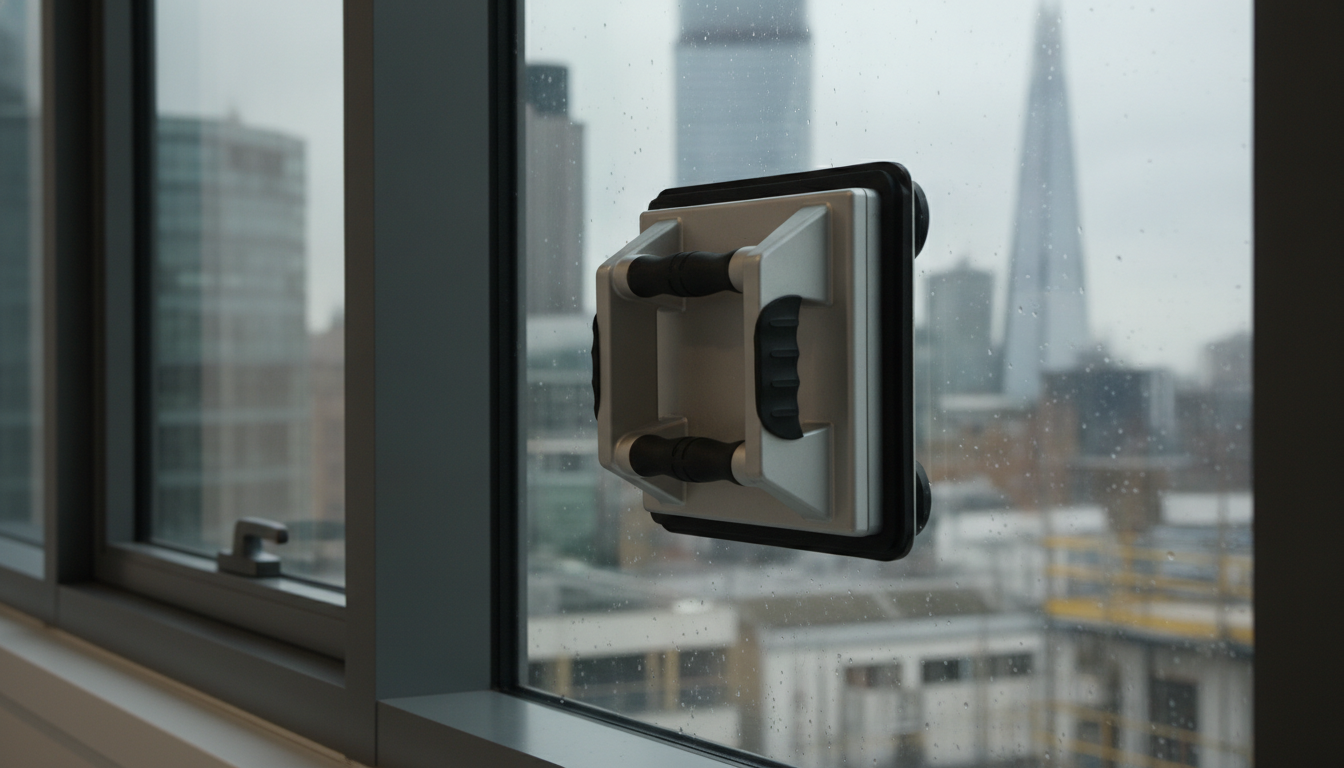
Private labelling means you sell a magnetic window cleaner under your own brand name, logo, and packaging, while a factory handles design, production, and compliance testing. The core steps are: define your target glass thickness range, select magnet strength and housing materials, finalise branding and packaging artwork, and confirm certification documentation. A manufacturer with a wide magnetic window cleaner product range can simplify matching the product to UK window types.
1. Branding and Packaging Customisation
You provide your logo, brand colours, and any regulatory symbols required for the UK market. The factory applies these via silk-screen printing or laser engraving on the cleaner body and prints custom retail boxes, user manuals, and warning labels. Typical artwork turnaround is 5, 7 working days after approval.
2. Product Specification Matching
UK homes predominantly use double glazing with glass panes of 4, 6mm each, giving a total unit thickness of 20, 28mm. However, older single-pane windows and newer triple-glazed units also exist. A single fixed-force magnetic cleaner cannot safely cover this range. The solution is a 6-stage adjustable magnetic force model rated for 5, 35mm glass, which lets the end user dial in the correct pull strength for their window type.
3. Certification and Compliance
Your private-label product must carry valid UKCA, CE, and RoHS certificates. The factory should provide these in your brand name, along with test reports for magnetic force retention, drop safety, and material safety. Without these documents, UK retailers and online platforms will reject the listing.
UK Market Compliance: UKCA, CE, and RoHS Requirements
Placing a magnetic window cleaner on the GB market in 2026 requires UKCA marking. For Northern Ireland, CE marking is still accepted under the Windsor Framework. Both marks demand that the product meets the essential health and safety requirements of the relevant UK and EU regulations.
A factory that holds ISO9001 certification and provides batch-level test reports gives you the documentation chain UK retailers expect. When you source CE and ISO certified magnetic window cleaners directly from the manufacturer, you avoid the risk of non-compliant stock being detained at customs.
Matching Magnet Strength to Glass Thickness: Avoiding the Most Common Product Failure
A recurring complaint from buyers is that a cleaner rated for double glazing cracks single-pane glass, while a model designed for single panes cannot grip through double glazing at all. Another is that magnets lose power over time, leaving the outer unit to fall off during vertical movement. These failures stem from using a fixed-force magnetic circuit on the wrong glass thickness.
Single-Pane Glass (3, 6mm)
Single-pane windows require low magnetic pull force. Applying a high-force double-glazing cleaner can crack the glass or make the unit impossible to slide. A 6-stage adjustable-force cleaner set to its lowest two stages safely handles this thickness.
Standard Double Glazing (12, 24mm)
Most UK double-glazed units fall in this range. The cleaner must deliver enough pull to keep the outer unit securely attached through two panes and an air gap. Mid-range force settings (stages 3, 4) provide the necessary grip without making movement too stiff.
Triple Glazing and Thick Glass (24, 35mm)
New-build properties increasingly use triple glazing or laminated acoustic glass up to 35mm thick. Only a cleaner rated for the full 5, 35mm range and equipped with neodymium magnets can maintain a reliable hold. The highest two force stages are designed for these applications.
In our 12,000 m² Taizhou factory with 400+ skilled workers, we have seen that adjustable-force models reduce compatibility complaints by over 30% compared to fixed-force alternatives. This directly addresses the thickness-mismatch pain point that UK distributors frequently encounter.
Your Private-Label Specification Checklist: MOQ, Lead Time, and Customisation Options
Before you commit to a production run, confirm every specification with the manufacturer. The table below outlines the key parameters you need to lock in for a UK-ready private-label magnetic window cleaner.
When you work with a factory that offers a dedicated private label magnetic window cleaner service, you can negotiate these parameters upfront and receive a pre-production sample for approval before the full run begins.
Quality Assurance Steps Before Your First Bulk Order
Shipping a container of magnetic window cleaners to a UK warehouse without verifying quality first is the fastest way to generate returns and damage your brand reputation. A structured QA process catches magnet strength inconsistencies, housing defects, and packaging errors before they reach your customers.
Pre-Production Sample
Request a sample with your exact branding, colour, and packaging. Test it on the window types your customers use: single-pane, standard double glazing, and thick triple glazing. Measure the pull force with a spring scale at each magnetic setting to confirm it matches the specification sheet.
In-Line Inspection
During production, an inspector should pull random units from the line every two hours to check magnet alignment, housing fit, and silk-screen print quality. Any deviation in magnet positioning can cause the outer unit to detach during vertical movement, a complaint reported by professional cleaners in field tests.
Pre-Shipment Inspection
Before the container is sealed, an AQL 2.5 sampling inspection verifies that the finished goods match your approved sample. The inspector checks packaging barcodes, user manual language, and certification marks. This step confirms that your private-label product is UK-market ready.
Our production lines ship 50,000+ units per day to 60+ countries, giving us real-world feedback on which magnet strengths and safety features perform reliably on UK window types. This operational data feeds directly into the QA checklist we recommend to first-time private-label buyers.
In practice: A UK hardware wholesaler reduced customer returns by 22% after switching to our 6-stage adjustable-force magnetic window cleaner with 5, 35mm glass compatibility, replacing a fixed-force model that failed on thick double glazing.
FAQ
What is a magnetic window cleaner and how does it work?
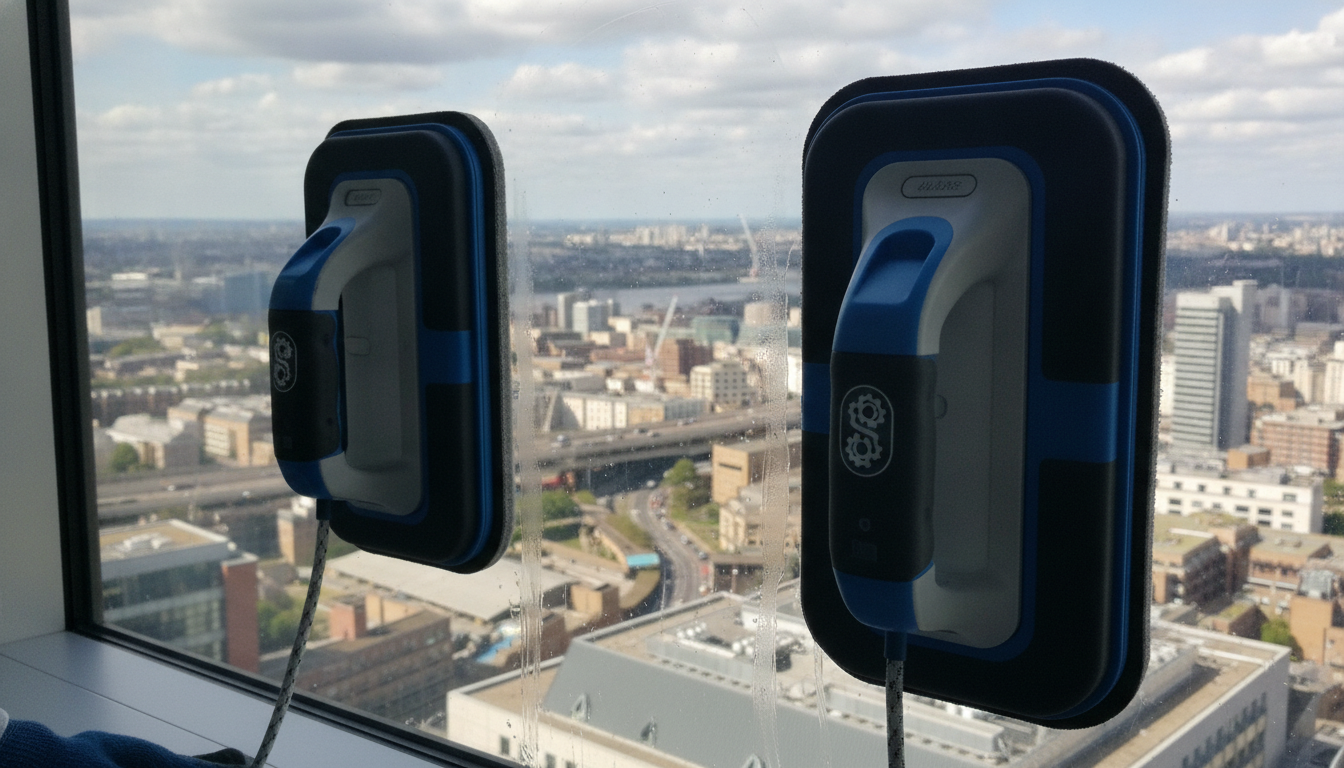
A magnetic window cleaner uses two units with strong magnets, one inside and one outside the glass, that clamp together through the pane. As you move the inside unit, the outside unit follows, cleaning both surfaces simultaneously. The magnetic force must be matched to the glass thickness to maintain a secure hold without cracking the glass.
Can magnetic window cleaners be used on all glass thicknesses?
No. A single fixed-force cleaner cannot safely cover single-pane, double-glazed, and triple-glazed glass. Models rated for 5, 12mm may not grip through 28mm double glazing, while high-force cleaners can crack thin single panes. A 6-stage adjustable-force cleaner rated for 5, 35mm glass solves this by letting the user select the correct pull strength.
What certifications do I need for selling magnetic window cleaners in the UK?
For Great Britain, UKCA marking is mandatory as of 2026. For Northern Ireland, CE marking is still accepted. Both require a technical file and Declaration of Conformity. RoHS compliance is also required, restricting hazardous substances to below 0.1% by weight. ISO9001 certification from the factory supports consistent quality management.
What is the minimum order quantity for private label magnetic window cleaners?
MOQs vary by manufacturer. Factory-direct suppliers with dedicated private-label lines can offer MOQs as low as 100 units, while trading companies typically require 500, 1,000 units. A lower MOQ lets UK distributors test the product with their customer base before committing to a full container load.
How do I ensure the magnet strength matches my customers’ windows?
Request a pre-production sample and test it on the most common window types your customers use. Measure pull force with a spring scale at each magnetic setting. The sample should hold securely on the thickest glass you support without being too stiff on the thinnest. An adjustable-force model with at least 6 stages gives the widest safe operating range.
Key Takeaways
- According to Grand View Research, the global window cleaning equipment market reached USD 1.8 billion in 2024, with magnetic cleaners capturing a growing share.
- The British Cleaning Council reports that the UK cleaning industry contributes over £55 billion annually, with window cleaning as a high-frequency service segment.
- As of 2026, UKCA marking is mandatory for cleaning equipment sold in Great Britain, replacing CE marking for most products; RoHS restricts each hazardous substance to below 0.1% by weight.
- A common complaint from buyers is that fixed-force magnetic cleaners rated for double glazing can crack single-pane glass; adjustable-force models rated 5, 35mm eliminate this risk.
- Factory-direct MOQs as low as 100 units allow UK distributors to test private-label products without large inventory risk, with lead times of 25, 35 days.
- According to the Council on Tall Buildings and Urban Habitat, over 1,700 buildings worldwide exceed 200 meters, driving demand for high-rise magnetic cleaning tools that work on thick glazing.
Ready to launch your own branded magnetic window cleaner for the UK market?
Request a detailed private-label quote →
Written by the Fonoran Export Team.