How to Choose Magnet Strength for Glass Thickness Window Cleaner

To choose the right magnet strength for glass thickness in a window cleaner, first measure the total glass assembly thickness including all panes, air gaps, and coatings, then match it to a cleaner whose rated range sits comfortably above that number, and finally test the grip by wetting both surfaces and adjusting the magnetic force one notch at a time until the outer unit glides smoothly without slipping or jerking.
📋 Table of Contents
Executive Summary
- Glass measurement: Total assembly thickness includes all panes, air cavities, low-E coatings, and spacer bars; single glazing typically sits between 3mm and 8mm, standard double glazing between 18mm and 24mm, and insulated double glazing between 24mm and 32mm.
- SKU matching: Select a cleaner whose maximum rated thickness exceeds your measured value by at least 5mm to ensure stable magnetic coupling across temperature changes and wind pressure.
- Adjustable force: Six-stage adjustable magnetic systems allow one unit to cover multiple window types without swapping hardware, reducing inventory complexity for distributors and facility managers.
- Material choice: NdFeB magnets deliver stronger holding force per gram than ferrite, making them suitable for thick insulated glazing, while ferrite remains cost-effective for thin single-pane applications.
- Testing protocol: Wet both glass surfaces before the first pass, start at mid-range magnetic force, and adjust one notch at a time based on whether the outer unit slips or drags.
Measure Total Glass Assembly Thickness
Accurate thickness measurement is the foundation of how to choose magnet strength for glass thickness window cleaner. Many buyers measure only the visible glass pane and discover the cleaner falls off because they ignored the air gap and inner pane in a double-glazed unit.
Single Glazing
Single-pane windows consist of one sheet of glass, typically 3mm to 8mm thick. Measure from the outer surface to the inner surface with a digital caliper or ruler. Heritage buildings, older residential properties, and some temporary structures use single glazing. The total assembly thickness equals the glass pane thickness because there is no cavity or second pane.
Double Glazing and Insulated Glass Units
Double-glazed windows sandwich an air or gas-filled cavity between two panes. Standard double glazing measures roughly 18mm to 24mm in total assembly thickness: a 4mm outer pane, a 12mm to 16mm cavity, and a 4mm inner pane. Insulated double glazing, common in colder climates, can reach 24mm to 32mm when the cavity widens or pane thickness increases. Measure from the outermost surface of the exterior pane to the innermost surface of the interior pane. Low-E coatings and spacer bars add negligible thickness but affect magnetic permeability, so always measure the complete assembly rather than summing nominal pane specifications.
Coatings, Spacers, and Frame Obstructions
Low-emissivity coatings, reflective films, and metallic tints can interfere with magnetic coupling even when the nominal glass thickness falls within the cleaner’s rated range. Spacer bars, which separate the two panes at the edges, create a non-magnetic barrier if the cleaner drifts toward the frame. Measure the thickest accessible section of the glazing assembly, away from edge obstructions, to ensure the cleaner will function across the entire cleanable area.
In practice: A home user in Germany with 36mm insulated glass needed an adjustable magnetic window cleaner; 36mm sits inside the 10-45mm SKU range with room to spare, so the buyer requested a quote for the FN-Ultra model to handle the thick assembly without risking detachment.
Match Thickness to Cleaner SKU Range
Once you have the measured thickness, select a cleaner whose rated range brackets that number comfortably. Operating at the extreme edge of a cleaner’s specification increases the risk of detachment and reduces cleaning efficiency.
Why Headroom Matters
A cleaner rated for 3-30mm will technically grip 30mm glass, but magnetic force weakens as you approach the upper limit. Temperature swings cause the glass to expand and contract, and wind pressure on high-rise facades pushes the outer unit away from the inner magnet. Selecting a cleaner whose maximum rated thickness exceeds your measured value by at least 5mm provides a safety margin that prevents detachment during real-world use.
Adjustable vs Fixed-Force Models
Fixed-force cleaners are tuned for a narrow thickness band and cost less, but they require buyers to stock multiple SKUs if they service buildings with varied glazing. Adjustable-force models, such as those with six-stage magnetic control, allow one unit to cover a wide range. Distributors and facility-management firms prefer adjustable models because they reduce inventory complexity and eliminate the need to match a specific cleaner to each window type during a service call.
Test Grip and Adjust Magnetic Force
Even when the thickness measurement and SKU range align, real-world performance depends on surface condition, cleaning-cloth friction, and the user’s technique. Testing the cleaner on a small section of glass before committing to a full building contract prevents costly mistakes.
Initial Setup and Wetting
Wet both the inner and outer glass surfaces with clean water or a mild detergent solution before attaching the cleaner. Dry glass increases friction and can cause the outer unit to stick or jerk rather than glide smoothly. Place the inner unit on the inside surface, bring the outer unit close to the corresponding spot on the outside, and let the magnets snap together. The connection should feel firm but not so strong that separating the halves requires excessive force.
Movement Test
Slide the inner unit slowly across the glass in a straight line. The outer unit should follow without lag, slip, or detachment. Jerky movement signals excessive magnetic force, which increases friction between the cleaning pad and the glass. Slipping or falling indicates insufficient force. Adjust the magnetic strength one notch at a time, repeating the movement test after each change, until the outer unit tracks smoothly and maintains contact throughout the stroke.
Wind and Angle Considerations
High-rise windows and facades exposed to wind require stronger magnetic coupling than sheltered ground-floor glass of the same thickness. Vertical surfaces demand more force than angled or horizontal ones because gravity pulls the outer unit away from the magnet. When sourcing cleaners for window-cleaning contractors who service tall buildings, specify the maximum wind exposure and facade angle so the supplier can recommend the appropriate force setting or SKU upgrade.
Common Buyer Complaints and How to Avoid Them
Buyers frequently report that magnetic window cleaners fail to meet expectations even when the stated thickness range appears compatible. Understanding these pain points helps procurement teams specify the right product and set realistic service expectations.
Outer Unit Detachment on Double Glazing
The outer half can fall off even when the magnet is described as strong, creating a risk of losing the unit and making the tool unreliable on double glazing. This complaint arises when buyers select a cleaner whose maximum rated thickness barely covers the measured assembly, leaving no margin for wind, temperature changes, or coating interference. Choosing a cleaner with 5mm to 10mm of headroom above the measured thickness reduces detachment incidents. Safety cords, which tether the outer unit to the window frame or the user’s wrist, provide a backup when magnetic coupling fails.
Excessive Magnetic Force and Control Difficulty
Some buyers say the magnets are excessively strong or difficult to control, while others report magnets falling out and the plastic casing coming apart. Over-strong magnets make the cleaner hard to move, tire the operator, and can crack thin glass. Under-strength magnets cause detachment. Adjustable-force models solve both problems by letting the user dial in the correct setting for each window type. Buyers should also verify that the magnet is securely bonded or mechanically fastened inside the housing, not simply glued, to prevent the magnet from dislodging during repeated use.
Insufficient Cleaning Performance and Grip Loss When Dry
A buyer using approximately 20mm double-glazed windows reports insufficient cleaning performance because the cloth area is too small; another says the magnet loses grip when the glass dries. Small cleaning pads require more passes to cover the same area, increasing labor time. Magnetic grip weakens on dry glass because the air gap between the pad and the surface grows. Buyers should confirm the cleaning-pad dimensions before ordering and instruct operators to keep the glass wet throughout the cleaning cycle. Microfiber pads retain moisture longer than cotton and reduce the frequency of re-wetting.
Difficulty of Use and Risk of Scratches
Customers describe the cleaner as difficult to use without practice and report streaks, scratches, or the unit falling within seconds. Scratches occur when dust or grit becomes trapped under the cleaning pad. Operators should rinse the pad frequently and inspect it for embedded particles. Streaks result from insufficient rinsing or dirty water. Providing clear operating instructions and a brief training session reduces the learning curve and prevents damage to the glass or the cleaner.
Material and Design Factors That Affect Magnet Strength
The choice of magnet material, housing design, and adjustment mechanism all influence how well a cleaner maintains grip across different glass thicknesses. Understanding these factors helps buyers evaluate competing products and make informed sourcing decisions.
NdFeB vs Ferrite Magnets
Neodymium-iron-boron magnets deliver stronger holding force per gram than ferrite, making them suitable for thick insulated glazing and high-rise applications. Most adjustable magnetic window cleaners use NdFeB magnets to cover the widest possible thickness range in a compact housing. Ferrite magnets are heavier, weaker, and less expensive, so they appear in budget models designed for thin single-pane glass. Buyers sourcing cleaners for commercial window-cleaning contractors should specify NdFeB to ensure the tool can handle varied glazing types without carrying multiple units.
Adjustable-Force Mechanisms
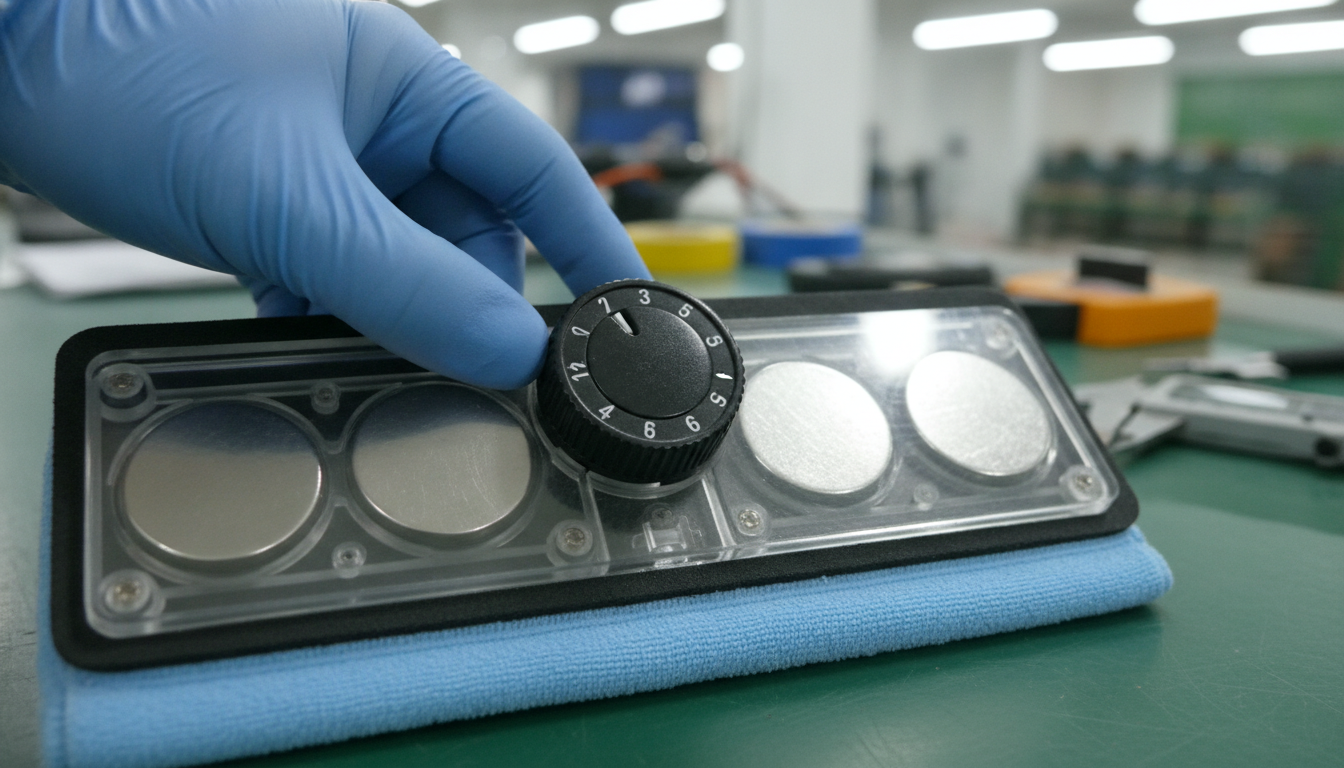
Six-stage adjustable magnetic force allows the user to increase or decrease the magnetic coupling by rotating a dial or sliding a lever that changes the distance between the magnet and the glass. This mechanical adjustment provides finer control than swapping fixed-force units and eliminates the need to stock separate SKUs for each thickness band. Buyers should test the adjustment mechanism for smooth operation and verify that the force setting remains locked during use, because an accidentally shifted setting can cause the outer unit to detach mid-stroke.
Housing Weight and Balance
Heavier outer units require stronger magnets to prevent detachment, but excessive weight tires the operator and increases the risk of glass breakage if the unit falls. Well-designed cleaners balance magnet strength, housing weight, and cleaning-pad size to deliver stable grip without unnecessary bulk. Buyers should compare the total weight of competing models and request sample units for field testing before committing to large orders.
Procurement Guidance for B2B Buyers
Distributors, hardware wholesalers, and facility-management firms sourcing magnetic window cleaners for resale or internal use face additional considerations beyond thickness matching and magnet strength. Commercial procurement requires attention to MOQ, lead time, certification, private labeling, and after-sales support.
Minimum Order Quantity and Stock Models
Factory-direct suppliers typically set MOQ from 2 units for stock models, allowing buyers to test the product with minimal financial commitment. Private-label orders require higher MOQ, commonly 500 units, to justify custom packaging and branding. Buyers planning to launch a house brand should request sample units of the stock model first, validate performance in their target market, and then proceed to private-label production once demand is confirmed.
Certification and Compliance
Magnetic window cleaners sold in the European Union must carry CE marking to demonstrate compliance with relevant safety and electromagnetic-compatibility directives. Buyers should request a copy of the third-party test report and verify that the certificate covers the specific model and thickness range being ordered. Some markets also require product-liability insurance or import documentation; confirm these requirements with your customs broker before placing the order.
Lead Time, Payment Terms, and Shipping
Lead time, payment terms, container load quantities, and shipping arrangements vary by supplier and order size. These details are confirmed at quotation. Buyers should clarify whether the quoted price is FOB, EXW, or delivered, and whether the supplier can consolidate multiple SKUs into a single shipment to reduce freight costs. Factories located in Taizhou, Zhejiang, typically ship from Ningbo port, one of China’s largest container terminals, offering frequent sailings to Europe, North America, and Australia.
Private Label and OEM Customization
Private-label services allow distributors to sell magnetic window cleaners under their own brand without investing in tooling or production facilities. Suppliers offer custom packaging, logo printing, and color matching from 500 units. OEM projects, which involve modifying the product design or developing a new model, require higher MOQ and longer lead times; these are quoted per project. Buyers should provide detailed specifications, including desired thickness range, magnet type, housing material, and any regulatory requirements, to receive an accurate OEM quotation.
Our magnetic window cleaner product range covers 3-45mm glass thickness across four adjustable SKUs, the widest range in the industry, with six-stage adjustable magnetic force for single and double-pane glass. Our 6,500m² Taizhou factory employs over 60 skilled workers and ships from Ningbo port to distributors and wholesalers in more than 60 countries. We hold CE certification and serve as an Alibaba Gold Verified Supplier. MOQ starts from 2 units for stock models and 500 units for private-label orders; OEM and ODM projects are quoted individually.
Key Takeaways
- Measure the complete glass assembly thickness, including all panes, air gaps, coatings, and spacer bars, rather than summing nominal pane specifications, to ensure accurate SKU selection.
- Select a cleaner whose maximum rated thickness exceeds your measured value by at least 5mm to provide headroom for temperature changes, wind pressure, and coating interference.
- Adjustable-force models with six-stage magnetic control allow one unit to cover multiple window types, reducing inventory complexity for distributors and facility-management firms.
- NdFeB magnets deliver stronger holding force per gram than ferrite, making them suitable for thick insulated glazing and high-rise applications where wind and gravity increase detachment risk.
- Wet both glass surfaces before the first pass, start at mid-range magnetic force, and adjust one notch at a time based on whether the outer unit slips or drags, to find the optimal setting.
- Buyers sourcing for commercial resale should confirm MOQ, lead time, certification, private-label options, and shipping terms at quotation, and request sample units for field testing before committing to large orders.
Frequently Asked Questions
Can one magnetic window cleaner work on both single-pane and double-pane glass?
Yes, adjustable-force magnetic window cleaners with a wide thickness range, such as 3-30mm or 5-35mm SKUs, can handle both single-pane glass and standard double glazing. The user rotates the adjustment dial to increase magnetic force for thicker double-pane assemblies and decrease it for thin single-pane windows. Fixed-force cleaners, by contrast, are optimized for a narrow thickness band and may not provide stable grip across both glazing types.
Why does my magnetic window cleaner fall off even though the glass thickness is within the rated range?
Detachment occurs when the measured thickness sits at the upper limit of the cleaner’s rated range, leaving no margin for wind, temperature expansion, or coating interference. Low-emissivity coatings and reflective films reduce magnetic permeability, weakening the coupling even when the nominal glass thickness appears compatible. Operating the cleaner on dry glass also increases friction and can cause the outer unit to stick and then suddenly release. To prevent detachment, choose a cleaner with at least 5mm of headroom above your measured thickness, keep both glass surfaces wet, and increase the magnetic force setting if the outer unit shows any sign of lag or slip.
What is the difference between NdFeB and ferrite magnets in window cleaners?
Neodymium-iron-boron magnets generate stronger magnetic fields per unit weight than ferrite, allowing manufacturers to build compact cleaners that grip thick insulated glazing without excessive bulk. Ferrite magnets are heavier, weaker, and less expensive, so they appear in budget models designed for thin single-pane glass. Buyers sourcing cleaners for commercial window-cleaning contractors or facility-management firms should specify NdFeB to ensure the tool can handle varied glazing types, high-rise wind exposure, and angled facades without requiring multiple units or frequent force adjustments.
Ready to source magnetic window cleaners that match your glass specifications?
Request a Product Quote →
Written by the Fonoran Export Team.