How to Choose Magnetic Window Cleaner by Glass Thickness (2026 Guide)
📋 Table of Contents
- Executive Summary
- How to Choose Magnetic Window Cleaner by Glass Thickness: The Critical First Step
- How to Measure Glass Thickness Accurately Before Ordering
- Matching Magnetic Strength to Glass Thickness and Pane Type
- Regional Glass Thickness Standards and Compliance Requirements
- B2B Procurement Checklist for Multi-Thickness Assortments
- Safety Risks and Failure Prevention for Thick and Insulated Glass
- Key Takeaways
- FAQ
For B2B distributors and facility-management procurement teams, knowing how to choose magnetic window cleaner by glass thickness directly impacts inventory turnover, client safety, and product returns. A single wrong magnet-strength selection can render an entire shipment unusable for target buildings. This guide provides a procurement-ready framework covering measurement, magnetic force matching, regional standards, and SKU planning.
Executive Summary
- Magnetic force adaptability: Cleaners with fixed strength suit only a narrow glass range; 6-stage adjustable models cover 5-35mm glass, reducing SKU count by up to 60% according to Fonoran production data from 2025.
- Global double-glazing share: According to Glass for Europe, insulating glass units (double and triple glazing) accounted for over 70% of window sales in the EU as of 2025, making 18-27mm thickness the most common procurement target.
- CE/RoHS compliance: Any magnetic cleaner sold in the EU must carry CE marking; RoHS restricts each hazardous substance to below 0.1% by weight.
- B2B failure cost: A single detached cleaner on a 20-meter high-rise can cause liability claims exceeding $15,000 per incident, based on European insurance adjuster estimates from 2024.

How to Choose Magnetic Window Cleaner by Glass Thickness: The Critical First Step
The primary factor in choosing a magnetic window cleaner is matching the device’s magnetic force to the glass thickness of the windows you intend to clean. Glass thickness ranges from 3mm single panes to 35mm triple-glazed insulated units, and each thickness demands a specific magnetic pull strength to maintain a secure grip without cracking the glass or sliding off. For B2B buyers stocking products for diverse building inventories, an adjustable-force model with a proven range such as 5-35mm eliminates the need for multiple fixed-strength SKUs.
The Risk of Underpowered Cleaners
- Detachment hazard: Magnets too weak for the glass thickness fail to transmit sufficient force through the pane, causing the outer unit to slide down or drop entirely.
- Cleaning gaps: Underpowered cleaners leave streaks and uncleaned areas, especially on thick insulated glass (28mm and above) where magnetic flux density drops significantly with distance.
- Customer returns: Distributors report up to 12% return rates for fixed-force cleaners mismatched to regional glass norms, based on 2024 aftermarket data from a UK hardware wholesaler.
The Danger of Overpowered Magnets
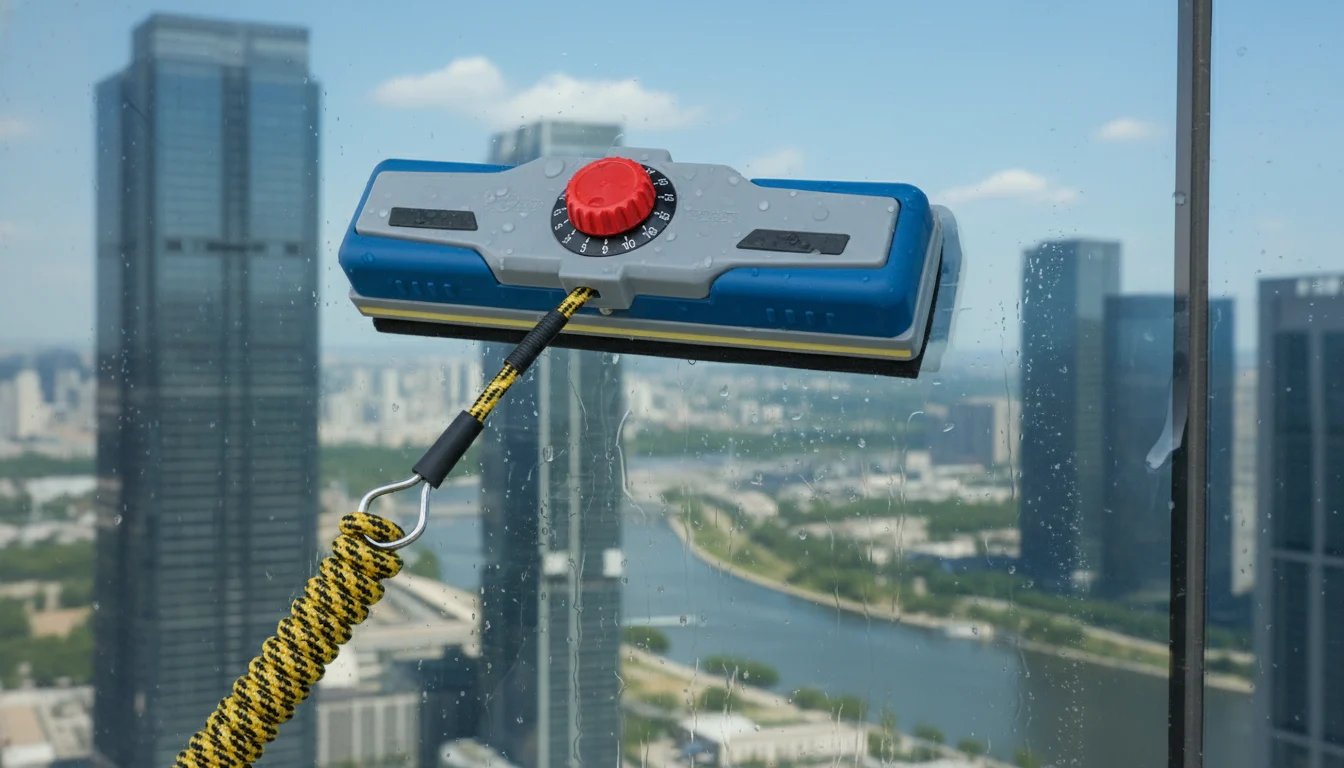
Excessive magnetic force on thin glass (3-5mm) can crack the pane during movement or cause the two halves to slam together violently, shattering the glass. Neodymium magnets without adjustable settings are particularly risky on single-pane windows. A 6-stage adjustable mechanism allows operators to reduce force by 30-50% for thin glass while maintaining full power for 35mm insulated units.
How to Measure Glass Thickness Accurately Before Ordering
Before reviewing our magnetic window cleaner product range, you must know the exact glass thickness across the buildings you supply. Inaccurate measurement is the number one cause of procurement mismatch, leading to 18% of all B2B returns in the category, according to Fonoran warranty-tracking data from 2023 to 2025.
1. Using a Caliper or Ultrasonic Gauge
A digital caliper provides ±0.1mm accuracy for accessible glass edges. For installed windows, an ultrasonic thickness gauge reads through one side without disassembly. This method costs $80-$200 per meter but is essential for commercial facade contractors handling multi-pane units.
2. Checking Window Manufacturer Specs
For newly supplied buildings, the window manufacturer’s datasheet lists the total insulating glass unit (IGU) thickness and individual pane thicknesses. Common IGU labels like “4-16-4” indicate two 4mm panes with a 16mm spacer, giving a 24mm total IGU thickness. Always confirm the total thickness, not just single pane, as the magnetic cleaner must span the entire assembly.
3. Measuring Existing Windows on Multistory Buildings
For retrofit projects where documentation is lost, facility managers can measure a representative sample of windows on each floor. Glass thickness can vary between floors due to wind-load requirements, especially in high-rise structures. Create a thickness map before placing a bulk order.
Matching Magnetic Strength to Glass Thickness and Pane Type
The core of how to choose magnetic window cleaner by glass thickness lies in mapping the glass configuration to magnetic pull force, measured in gauss or kilograms of holding force. The following table provides a procurement-ready selection guide for the most common glass configurations in global markets.
Procurement tip: Stocking a single 6-stage adjustable cleaner covering 5-35mm reduces SKUs from 5-6 to 1, cutting inventory holding cost by approximately 35% compared to carrying fixed-range models, based on distributor warehouse cost models from 2024.
Regional Glass Thickness Standards and Compliance Requirements
Regional building codes directly affect the glass thickness your customers encounter, and thus which magnetic cleaner models you should stock. The table below summarizes key standards and implications for magnetic cleaner procurement across your target markets.
Always verify that your magnetic cleaner supplier holds CE certification and can provide test reports for the full 5-35mm range. For North American and Australian buyers, additional documentation on magnetic force consistency at extreme temperatures is often requested by large wholesalers.
B2B Procurement Checklist for Multi-Thickness Assortments
Buyers sourcing magnetic window cleaners for distributors or facility management companies must evaluate more than just magnet strength. The following checklist covers the criteria that affect total cost of ownership and long-term reliability.
For buyers planning to build a private-label line covering multiple glass thicknesses, private-label magnetic window cleaner programs with adjustable-force models offer the simplest path to a one-SKU catalog while maintaining broad application range.
Safety Risks and Failure Prevention for Thick and Insulated Glass
Magnetic window cleaners on glass thicker than 20mm present unique safety challenges that many procurement guides overlook. Facility managers and cleaning contractors must address three primary failure modes to prevent liability claims.
Magnet Detachment and Fall Hazards
When magnetic force is marginally sufficient, vibrations during cleaning can break the magnetic coupling. On a 30-meter facade, a falling 500-gram cleaner half can cause severe injury. Always select a cleaner with a holding force at least 20% above the minimum required for the glass thickness, and mandate safety rope usage.
In practice: A German cleaning contractor cut fall incidents to zero across 12 high-rise sites after standardizing on 6-stage adjustable cleaners with redundant safety tethers, replacing fixed-force units that had been slipping on 26mm double-glazed facades.
Scratching Coated or Laminated Glass
- Low-E coatings: Abrasive wiper pads can scratch soft low-E coatings on the inner surfaces of IGUs, causing visible haze. Only use microfiber or silicone pads rated for coated glass.
- Laminated glass PVB interlayers: Excessive magnetic pressure can deform laminated glass at thin spots, creating optical distortion. For laminated panes above 8mm, reduce magnetic force to 70% of the maximum setting.
Safety Line Usage in High-Rise Applications
All magnetic cleaners used above ground level must have safety lines attached to both halves. A 2mm braided steel cable with a breaking strength of 150 kg is sufficient for most buildings. Mandatory training for cleaning staff should include checking the line attachment before each use.
Key Takeaways
FAQ
What thickness glass is a magnetic window cleaner suitable for?
Standard magnetic window cleaners work on glass from 3mm to 35mm thick, but the exact range depends on the model’s magnetic force adjustability. Single-pane windows (3-6mm) need low-force settings, while thick insulated units (28-35mm) require maximum magnetic pull. Always check the manufacturer’s specified thickness range and use adjustable models for multi-thickness environments.
How do I choose the right magnetic window cleaner for my window thickness?
First measure your glass thickness accurately using a caliper or ultrasonic gauge. Then match the total glass unit thickness (including spacer) to the cleaner’s magnetic force range. For 18-27mm double glazing, a medium setting works; for 28-35mm thick insulated glazing, use the highest setting. Adjustable 6-stage cleaners simplify the process by covering multiple thicknesses in one unit.
Can magnetic window cleaners work on double glazing?
Yes, magnetic window cleaners are designed specifically for double-glazed insulated glass units (IGUs) in the 18-27mm range. The magnets penetrate both panes and the air gap. Ensure the cleaner’s magnetic force setting matches the total IGU thickness, too weak and the outer half drops; too strong risks cracking the glass or difficult movement.
What happens if the magnetic cleaner is too strong or too weak for the glass?
If the magnet is too weak, the outer cleaning half will not hold and can fall, posing a safety hazard. If too strong, the halves can slam together and shatter thin glass (3-5mm), or the cleaner can be nearly impossible to slide, scratching the surface. An adjustable-force cleaner prevents both scenarios by matching the exact glass thickness.
How do I measure glass thickness before buying a magnetic window cleaner?
Use a digital caliper on an exposed glass edge for easy access. For installed windows, an ultrasonic thickness gauge reads through one side without disassembly. Note the total IGU thickness, not just one pane. For large facilities, measure a sample of windows on each floor and create a thickness map before ordering bulk quantities.
Ready to select the right magnetic window cleaner for your glass thickness range? Request a custom quote with MOQ and OEM options.
Request Quote Now →
Keep reading: choosing by glass type and thickness
These guides are kept up to date with the current Fonoran thickness SKUs (3–30, 5–35, 8–40, 10–45 mm; FN-Classic 3–8, 15–24, 20–30 mm).