Window Squeegee Rubber: Replacement Guide for Professionals
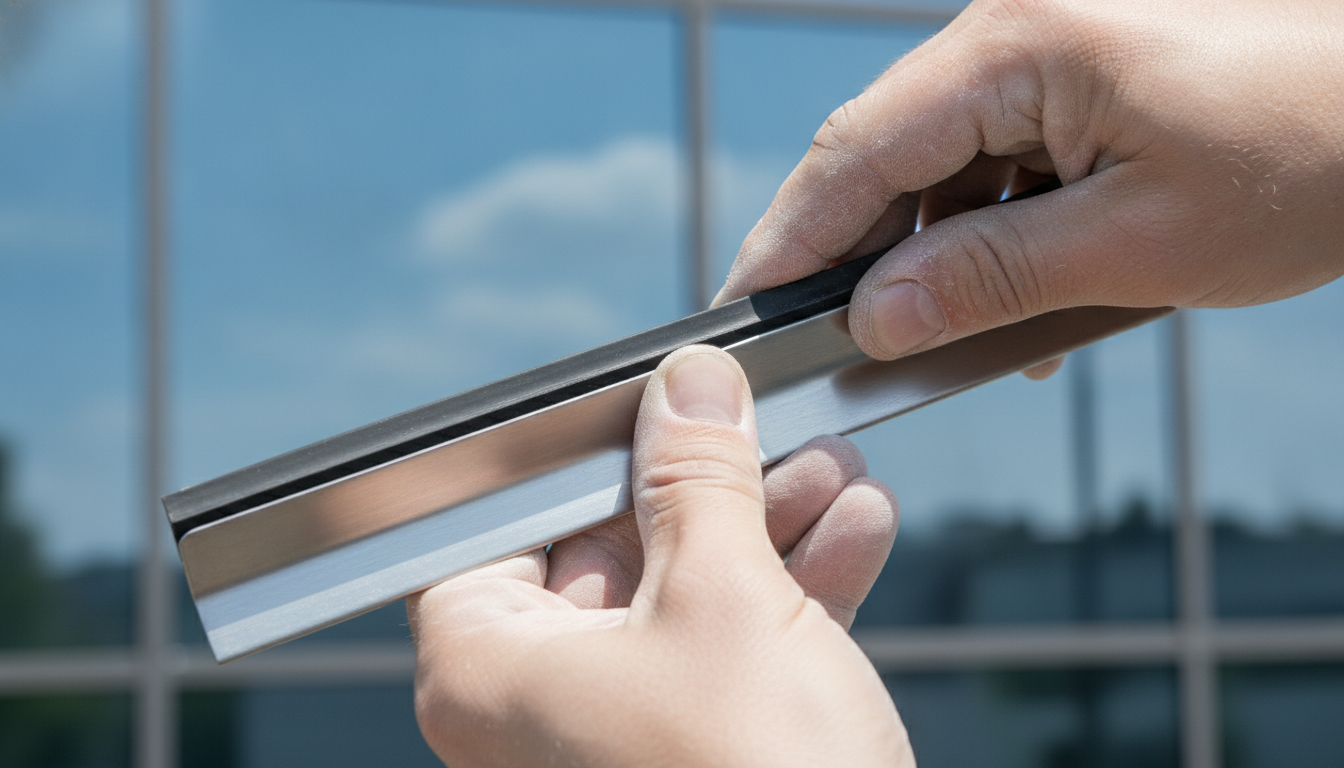
Window squeegee rubber is the replaceable blade edge that contacts glass during cleaning, typically made from natural rubber, soft synthetic rubber, or silicone. Professional-grade rubbers deliver streak-free results when matched to channel width, maintained for edge sharpness, and replaced at the first sign of nicking, hardening, or corner rounding, typically every 3-6 months in high-use commercial environments.
📋 Table of Contents
Key Takeaways
- Natural rubber delivers the cleanest wipe: Professional window cleaners prefer natural rubber for its flexibility and edge retention, though it degrades faster in direct sunlight and extreme temperatures compared to silicone alternatives.
- Replacement timing is performance-driven: Nicked edges, hardened corners, and visible streaking signal immediate replacement, regardless of calendar age, because a worn blade cannot be restored by technique adjustments alone.
- Channel fit is non-negotiable: Window squeegee rubber must match the channel width and profile exactly; forcing an oversized blade into a narrow channel causes buckling, while undersized rubber slips and leaves gaps.
- Replaceable blades cut lifecycle costs: Tools with field-replaceable rubber reduce waste and lower per-clean costs for contractors, as only the worn edge is discarded rather than the entire handle assembly.
- Bulk orders require spec clarity: Distributors sourcing window squeegee rubber in volume need blade length, channel profile, durometer rating, and packaging format confirmed before placement to avoid compatibility issues across customer bases.
Rubber Types and Performance Characteristics
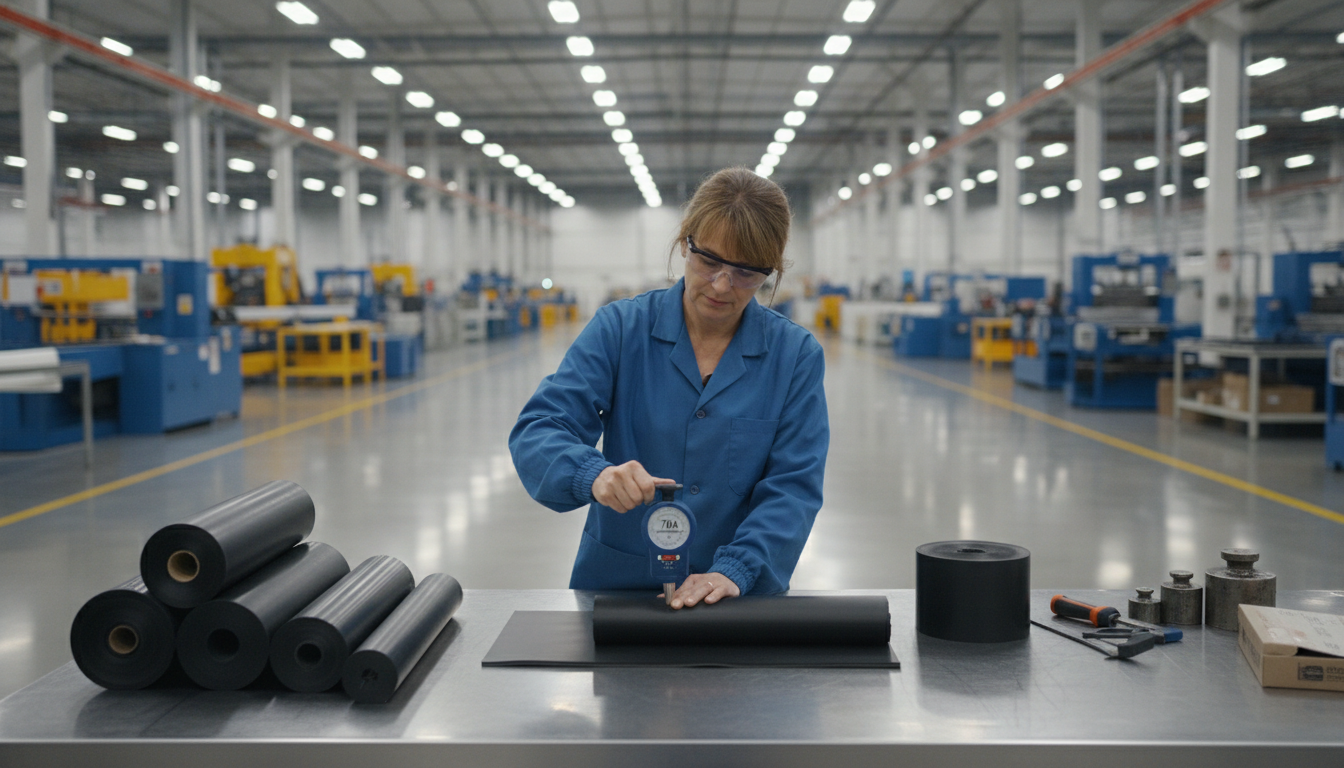
Window squeegee rubber falls into three material families, each delivering distinct trade-offs between edge sharpness, durability, and environmental tolerance. Professional contractors select rubber type based on jobsite conditions, glass surface texture, and replacement-cycle economics.
Natural Rubber
Natural rubber remains the benchmark for streak-free glass cleaning. Its molecular structure allows the blade edge to conform to microscopic glass irregularities, maintaining continuous contact across the entire wipe path. Facility-management teams report that natural rubber outperforms synthetics on lightly textured or coated glass, where harder compounds skip and leave visible lines. The material degrades under UV exposure and temperature extremes above 40°C, making it less suitable for exterior high-rise work in tropical climates but ideal for interior applications and temperate-zone commercial buildings.
Soft Synthetic Rubber
Soft synthetic compounds, typically EPDM or neoprene blends, extend service life in harsh environments. These rubbers resist ozone, weathering, and chemical exposure better than natural rubber, making them the preferred choice for contractors cleaning factory windows, food-processing facilities, and coastal properties where salt spray accelerates degradation. The trade-off is slightly reduced edge sharpness: soft synthetics compress less uniformly under pressure, occasionally leaving faint streaks on pristine glass that natural rubber would clear in a single pass.
Silicone Rubber
Silicone window squeegee rubber tolerates temperature extremes from -40°C to +200°C and maintains flexibility across that range. Distributors serving industrial clients specify silicone for cleanroom windows, autoclave observation ports, and other specialty applications where thermal cycling would harden natural rubber within weeks. Silicone’s lower coefficient of friction reduces drag during the wipe, which some contractors find beneficial on large-format glass, though the same property can cause the blade to skip if downward pressure is inconsistent.
Material durometer: Professional-grade window squeegee rubber typically measures 60-70 Shore A for natural rubber, 55-65 Shore A for soft synthetics, and 50-60 Shore A for silicone, balancing edge firmness against glass conformability.
Soft synthetic rubber compounds resist UV-induced hardening better than natural rubber on south-facing windows exposed to prolonged direct summer sun, reducing the frequency of blade replacement without streak formation.
When to Replace Squeegee Rubber
Worn window squeegee rubber leaves visible evidence before complete failure. Professional contractors inspect blade edges weekly during high-use periods, replacing rubber at the first sign of performance degradation rather than waiting for catastrophic streaking.
Nicks and Cuts
A single nick in the blade edge creates a skip line across the entire glass surface. Contractors working near window frames, metal mullions, or gritty facades encounter nicks more frequently than interior cleaners. Once nicked, the rubber cannot be repaired; the damaged section will catch and drag, leaving a visible streak with every pass. Replacement is immediate.
Edge Rounding
Repeated contact with glass gradually rounds the sharp 90-degree blade edge into a curved profile. Rounded edges lose the crisp contact line that sweeps water cleanly, instead pushing a thin film ahead of the blade that dries into visible streaks. Contractors notice edge rounding as increased wipe resistance and the need for multiple passes to clear a panel. This wear pattern typically appears after 40-60 hours of active use on abrasive surfaces or 80-120 hours on smooth interior glass.
Hardening and Loss of Flexibility
UV exposure, ozone, and temperature cycling cause rubber compounds to cross-link and harden over time. Hardened window squeegee rubber cannot conform to minor glass irregularities, leaving gaps that trap water and create streak patterns. The blade feels stiff when flexed by hand and may develop visible surface cracks. Hardening occurs faster in outdoor applications and hot climates; contractors in Phoenix and Dubai report replacement intervals 40% shorter than those in Seattle or Manchester for identical rubber grades.
Visible Streaking Despite Correct Technique
When a skilled operator using proper angle, pressure, and overlapping strokes still produces streaks, the rubber has reached end-of-life. Technique adjustments, steeper angle, lighter pressure, slower speed, may temporarily mask worn-rubber symptoms but cannot restore performance. Distributors advise contractors to replace rather than compensate, as the labor cost of multiple passes exceeds the cost of new rubber within a single job.
Channel Width and Profile Compatibility
Window squeegee rubber must match the tool’s channel dimensions exactly. Mismatched rubber either buckles inside an oversized channel or refuses to seat fully in an undersized one, both conditions producing streaks regardless of operator skill.
Measuring Channel Width
Channel width is measured at the opening, not the base. Standard professional channels measure 6mm, 7mm, or 8mm wide, with 6mm dominating the North American market and 7mm prevalent in Europe. Contractors replacing rubber should measure the existing channel with calipers rather than relying on handle markings, as some manufacturers label the blade length (e.g. ’12-inch’) without specifying channel width. A 0.5mm mismatch is enough to cause installation difficulty and performance loss.
Profile Types
Channel profiles fall into two families: straight-sided and tapered. Straight channels accept rubber with parallel edges, while tapered channels require rubber with a matching wedge angle, typically 3-5 degrees. Forcing straight rubber into a tapered channel leaves the blade loose at the base, allowing it to twist during the wipe and leave edge streaks. Distributors stocking replacement rubber must specify both width and profile to ensure compatibility across diverse contractor tool inventories.
Blade Length and Trimming
Replacement window squeegee rubber is sold in continuous rolls or pre-cut lengths from 10cm to 60cm. Contractors trim rubber to match their handle length using a sharp utility knife and a straight edge, cutting perpendicular to the blade to avoid angled ends that create gaps. Pre-cut lengths simplify field replacement but cost 15-25% more per linear meter than bulk rolls. Facility-management buyers with in-house cleaning teams often purchase 30-meter rolls and cut to length as needed, reducing per-blade cost while maintaining inventory of a single SKU across multiple handle sizes.
Bulk Procurement for Distributors
Hardware wholesalers and cleaning-supply distributors sourcing window squeegee rubber in volume need specification clarity before order placement. Incomplete specs lead to compatibility complaints and returns, eroding margin on a low-unit-value product line.
Specification Checklist
Distributors should confirm six parameters with their supplier before committing to bulk orders:
- Material type: natural rubber, soft synthetic (EPDM/neoprene), or silicone, with durometer rating specified
- Channel width: 6mm, 7mm, or 8mm, measured at opening
- Profile: straight or tapered, with taper angle if applicable
- Blade thickness: typically 1.5mm to 2.5mm, affecting stiffness and wipe feel
- Length format: bulk roll (15m, 30m, 50m) or pre-cut (specify lengths)
- Packaging: inner poly bag, outer carton, carton quantity, and whether retail-ready
Suppliers who cannot provide all six parameters in writing before quotation often lack factory-direct relationships and are reselling stock they have not physically inspected, increasing the risk of specification drift between order and delivery.
MOQ and Lead Time Considerations
Bulk window squeegee rubber typically carries minimum order quantities of 500 to 1,000 linear meters for stock compounds and colors. Custom durometer blends, non-standard widths, or private-label packaging raise MOQs to 2,000-5,000 meters. Lead times for stock items and custom formulations requiring mold changes or compound mixing. Distributors entering new markets should order mixed SKU pallets, combining popular widths and materials, to test regional preferences before committing to single-SKU container loads.
Quality Verification
Professional distributors request pre-production samples for three tests before releasing payment on bulk orders. First, measure channel fit with calipers to confirm width tolerance within ±0.2mm. Second, install a 30cm length in a representative squeegee handle and wipe a clean glass panel; the blade should glide smoothly without chatter or skip lines. Third, flex the rubber 90 degrees and release; it should return to straight within two seconds without visible creasing. Rubber that fails any test indicates either incorrect compound or degraded stock, both grounds for order rejection.
Lifecycle Cost Analysis for Facility Management
Facility-management buyers evaluate window squeegee rubber on cost per cleaning hour rather than purchase price per meter. A premium rubber that lasts twice as long and requires half the replacement labor delivers lower total cost despite a 30% higher unit price.
Direct Material Cost
Natural rubber in bulk rolls costs less per meter than silicone or branded soft synthetics. Distributors report wholesale pricing ranging from low-cost natural rubber to premium silicone grades, with soft synthetics in the middle. Facility teams cleaning 10,000 square meters of glass monthly consume approximately 15-25 linear meters of window squeegee rubber per month, depending on replacement discipline and jobsite abrasiveness. Annual material cost for a mid-size facility ranges from modest to significant, making rubber selection a meaningful line item in cleaning budgets.
Replacement Labor
Changing window squeegee rubber takes a trained cleaner 2-4 minutes per tool, including removal of the worn blade, trimming new rubber to length, and seating it in the channel. Facilities with 20-tool inventories replacing rubber monthly spend 40-80 minutes per month on blade changes, roughly one labor-hour. Extending replacement intervals from 4 weeks to 8 weeks by specifying more durable rubber compounds cuts this labor cost in half, a saving that often exceeds the incremental material cost of the premium rubber.
Performance-Driven Replacement
Facilities that replace rubber on a fixed calendar schedule, regardless of visible wear, waste material and labor. Conversely, facilities that delay replacement until contractors complain about streaking incur rework costs that dwarf rubber savings. The optimal policy is performance-driven replacement: inspect blade edges weekly, replace at the first sign of nicking or rounding, and track replacement intervals by jobsite. High-abrasion sites (construction zones, industrial areas with airborne grit) may require replacement every 3-4 weeks, while low-abrasion interior glass can run 10-12 weeks on the same rubber grade.
Frequently Asked Questions
Can you use the same window squeegee rubber on all handle brands?
No, window squeegee rubber compatibility depends on channel width and profile, not handle brand. A 6mm straight-channel rubber will not fit properly in a 7mm tapered channel, even if both handles are from reputable manufacturers. Always measure your existing channel width with calipers and confirm the profile type before ordering replacement rubber. Some manufacturers use proprietary channel designs that require brand-specific rubber, though the majority of professional squeegees use industry-standard 6mm or 7mm straight channels that accept generic replacement blades from any supplier matching those specifications.
How do you prevent window squeegee rubber from hardening prematurely?
Store unused window squeegee rubber in a cool, dark, dry location away from direct sunlight, ozone sources (electric motors, welding equipment), and temperature extremes. UV exposure and heat accelerate the cross-linking reactions that harden rubber compounds, reducing service life by 40-60% compared to properly stored stock. For tools in active use, rinse the blade with clean water after each job to remove alkaline cleaning solution residues that can degrade natural rubber. Contractors working in hot climates or at high altitude (stronger UV) should expect shorter rubber life regardless of storage practices and budget for more frequent replacement.
Is silicone window squeegee rubber better than natural rubber?
Silicone window squeegee rubber excels in temperature extremes and chemical environments but does not outperform natural rubber for general-purpose streak-free cleaning. Natural rubber conforms better to glass surface irregularities and maintains a sharper edge longer under normal use, which is why most professional contractors prefer it for standard commercial and residential work. Silicone is the better choice for specialty applications, cleanroom windows, autoclave ports, high-temperature industrial glass, where natural rubber would degrade quickly. Facility managers should match rubber type to jobsite conditions rather than assuming one material is universally superior.
Window squeegee rubber selection, replacement timing, and bulk procurement practices directly affect cleaning productivity and lifecycle costs for contractors and facility-management teams. Matching rubber type to jobsite conditions, replacing blades at the first sign of wear, and verifying channel compatibility before bulk orders reduce streak complaints and lower total cost per cleaning hour. Distributors who specify material, width, profile, and packaging clearly before order placement avoid returns and build contractor loyalty in a competitive commodity market.
Need window cleaning tools with field-replaceable components and factory-direct pricing?
Request a Product Quote →
Written by the Fonoran Export Team.