Can I Negotiate the MOQ for Custom Logo Magnetic Window Cleaners?
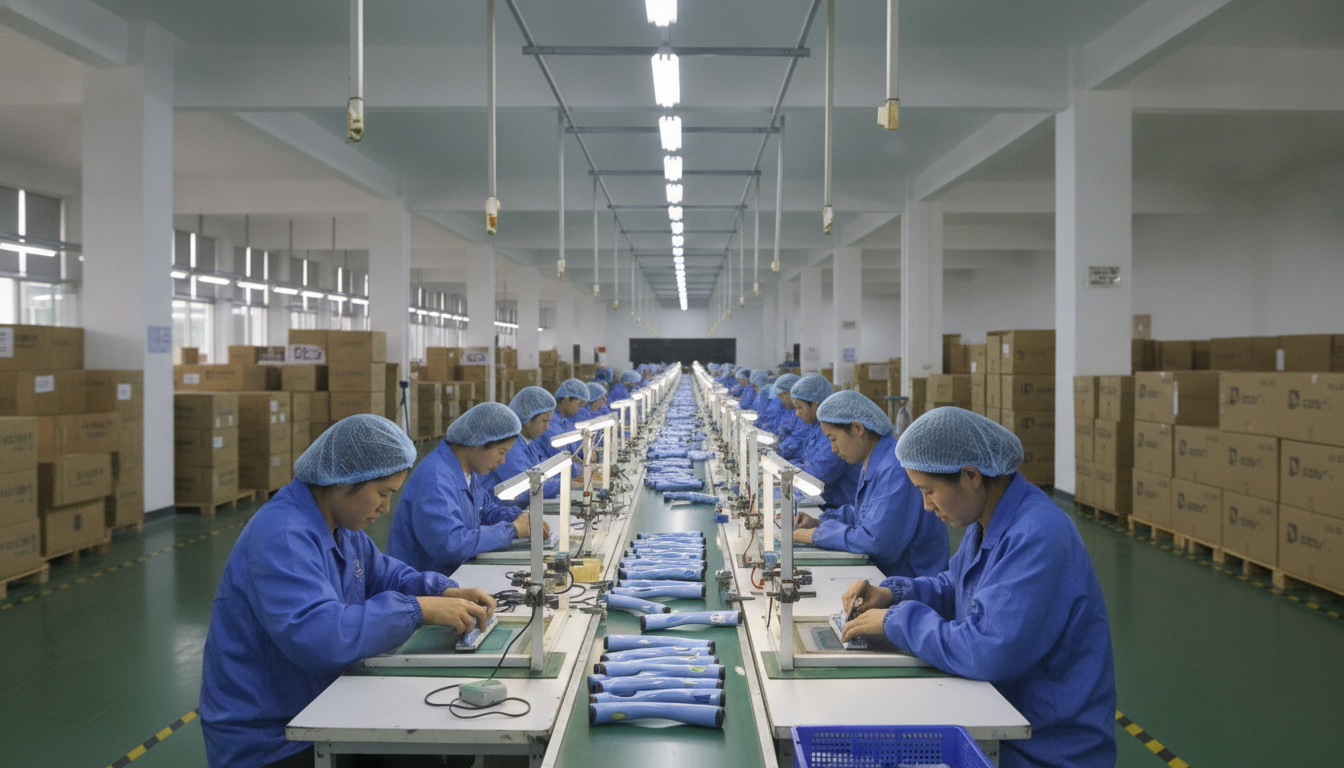
Yes, custom logo magnetic window cleaner MOQ negotiation is possible, especially when you separate logo-only customization from full product changes. Most Chinese manufacturers set a 500-unit minimum for private-label orders with custom packaging and logo printing, while stock models ship from 2 units. Your negotiation increases when you offer annual volume commitments, upfront payment, or agree to absorb setup fees on smaller pilot runs.
📋 Table of Contents
Executive Summary
- Logo-only MOQ starts lower: Custom logo printing and branded packaging typically require 500 units, while full product customization or new molds push minimums much higher.
- Setup costs drive minimums: Screen printing plates, packaging dies, and labor changeover fees make small runs uneconomical unless buyers absorb these one-time charges.
- Volume commitments unlock flexibility: Annual purchase agreements, multi-SKU orders, or upfront deposits give suppliers confidence to reduce per-order minimums.
- Price rises as MOQ falls: Negotiating a 300-unit pilot instead of 500 often adds cost per unit, because fixed setup expenses spread across fewer pieces.
- Quality control tightens at scale: Smaller batches may skip formal pre-production samples or during-production inspections that larger orders automatically trigger.
Why MOQ Matters for Custom Logo Orders
Minimum order quantities protect manufacturers from unprofitable runs. A 500-unit private-label batch spreads screen-printing setup, packaging die cutting, and quality-control labor across enough pieces to cover fixed costs. Buyers who request 100 units with a custom logo face two choices: pay a higher per-unit price to offset setup, or accept the standard MOQ and warehouse the surplus.
For magnetic window cleaner product range distributors entering new markets, MOQ directly affects cash flow and inventory risk. A European hardware wholesaler testing demand in Germany may prefer a 200-unit pilot over a 500-unit commitment, especially when the product carries four adjustable SKUs covering 3-45mm glass thickness. Negotiating that pilot MOQ becomes critical when the buyer lacks sales history to justify larger stock.
In practice: A Hong Kong trading company specified an outer carton of at most 10 pieces for its window cleaner order, showing how packaging requirements can interact with MOQ discussions during the quoting stage.
Logo Customization vs Full Product Changes
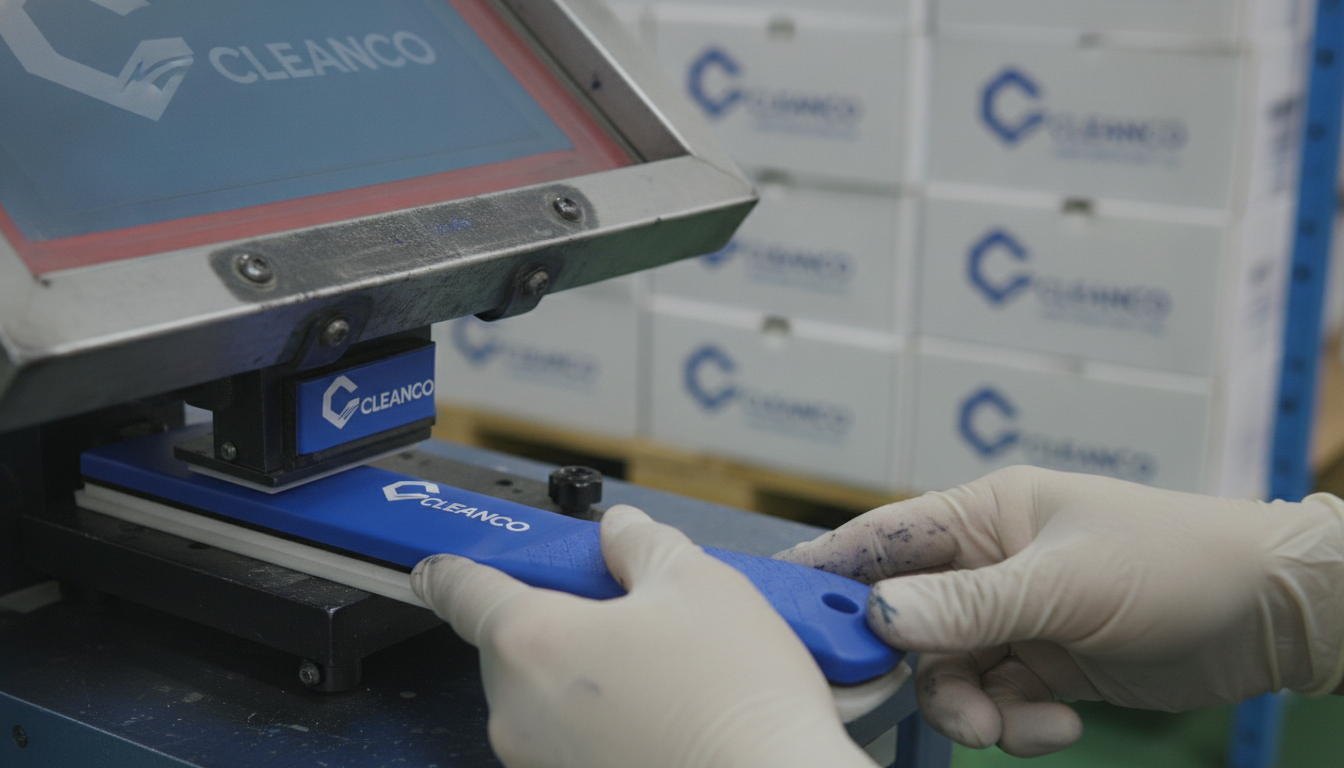
Custom logo magnetic window cleaner MOQ negotiation differs sharply depending on what you change. Adding a silk-screened logo to an existing handle and swapping generic packaging for branded boxes touches only surface elements. The factory uses the same injection molds, the same NdFeB magnets (or Ferrite for the 3-8mm SKU), and the same assembly line. Setup involves printing plates and carton dies, which cost hundreds of dollars but require no retooling.
Changing handle color, grip texture, or magnet housing shape requires new injection molds. Mold costs run into thousands of dollars, and the factory amortizes that expense across a much larger order quantity. A new mold for a unique handle design might push MOQ to several thousand units, far beyond the 500-unit threshold for logo-only work.
Market Entry and Inventory Planning
Buyers launching private-label cleaning tool lines face a classic tension: order too few and unit costs spike; order too many and unsold inventory ties up capital. Facility-management companies introducing branded window cleaners to their service crews often start with a single SKU, typically the 5-35mm adjustable model that covers most commercial double glazing, and request the lowest possible MOQ to test adoption before committing to the full 3-45mm range.
Distributors serving multiple regions may negotiate separate MOQs per destination. A North American importer might request 300 units for the Canadian market and 500 for the United States, arguing that splitting the order by warehouse location justifies flexibility. Factories evaluate these requests based on total volume: a combined 800-unit order is easier to approve at flexible minimums than two separate 200-unit inquiries.
What Drives MOQ for Logo Customization?
Three cost categories determine where a factory sets its custom logo magnetic window cleaner MOQ negotiation floor: setup expenses, raw-material purchasing minimums, and labor efficiency thresholds. Understanding each helps buyers frame proposals that address the supplier’s economic constraints rather than simply asking for a lower number.
Setup and Tooling Costs
Screen-printing plates for logo application cost between $50 and $200 depending on color count and complexity. A two-color logo on the handle requires two plates; a full-color design on packaging may need four-color process plates. Packaging dies for custom cartons add another $100 to $300. These are one-time expenses, but the factory must recover them within the first order or accept a loss.
At 500 units, a $400 combined setup cost adds $0.80 per piece. At 200 units, the same setup adds $2.00 per piece. Buyers who offer to pay setup fees separately, treating them as a non-recurring charge rather than rolling them into unit price, give the factory a path to approve smaller quantities without eroding margin.
Raw Material and Packaging Minimums
Factories source custom-printed packaging from specialized suppliers who impose their own minimums. A carton printer may require 1,000 boxes per design, forcing the window-cleaner manufacturer to order packaging for 1,000 units even if the assembly run is only 500. The factory either absorbs the surplus packaging cost or negotiates a middle ground where the buyer commits to a second batch within six months to use the remaining boxes.
Magnet suppliers sell NdFeB material in bulk lots sized for industrial production. While this rarely affects minimum order quantity directly, magnet material for small runs represents a trivial fraction of a supplier’s minimum, it does mean the factory prefers order sizes that align with efficient material handling. A 500-unit run fits neatly into standard production scheduling; a 237-unit request creates odd-lot complications.
Labor and Line Changeover
Switching a production line from one SKU to another, or from stock models to custom-logo variants, takes two to four hours. Workers swap packaging materials, adjust printing jigs, and run test pieces to verify logo alignment and color accuracy. During changeover, the line produces nothing. A factory running 50,000+ units per day across multiple SKUs minimizes these interruptions by batching similar orders.
Small custom runs disrupt this rhythm. A 200-unit logo order might occupy the line for half a day, including setup and teardown, yielding far less output than a 2,000-unit run that justifies the same changeover time. Factories offset this inefficiency by charging higher per-unit prices on small batches or by requiring buyers to schedule orders during slower production periods when line availability is less constrained.
Proven Strategies to Negotiate Lower MOQ
Successful custom logo magnetic window cleaner MOQ negotiation hinges on aligning your request with the supplier’s production economics. Factories reduce minimums when doing so protects long-term revenue, fills idle capacity, or builds relationships with buyers who demonstrate growth potential. The tactics below have worked for distributors and facility-management buyers across Europe, North America, and Australia.
Offer Annual Volume Commitments
A 300-unit pilot order looks unattractive in isolation. The same 300 units become compelling when framed as the first installment of a 1,500-unit annual agreement. Buyers who provide a rolling forecast, 300 units in Q1, 400 in Q2, 500 in Q3, 300 in Q4, give the factory visibility into total volume, making it easier to approve the smaller initial batch.
Formalize this with a letter of intent or a framework purchase agreement that specifies total annual quantity, SKU mix, and reorder cadence. The factory gains confidence that setup costs will be recovered across multiple shipments, and you gain flexibility to test the market without overcommitting inventory upfront.
Absorb Setup Fees Separately
Instead of negotiating a lower MOQ and accepting a higher unit price, propose paying setup costs as a separate line item. A factory might quote 500 units at $8.50 per piece, with setup costs embedded, or 300 units at $8.50 per piece plus a $400 one-time setup fee. The second structure makes the economics transparent and removes the factory’s need to inflate per-unit pricing to cover fixed costs.
This approach works particularly well when you plan to reorder. Once setup is paid, subsequent orders of the same logo and packaging carry no additional tooling charge, making smaller replenishment batches economically viable for both parties.
Combine SKUs in a Single Order
A 200-unit order of the 5-35mm SKU may fall below the factory’s threshold, but a combined order, 200 units of 5-35mm, 150 units of 8-40mm, and 150 units of 3-30mm, totals 500 units and justifies the setup investment. The factory runs all three SKUs with the same logo and packaging, spreading changeover time across a larger batch.
This strategy suits distributors serving diverse customer segments. A facility-management buyer might stock the 5-35mm model for office buildings with standard double glazing, the 8-40mm model for high-rise curtain walls, and the 3-30mm model for older single-pane installations. Ordering all three at once reduces per-unit cost and simplifies logistics.
Repeat-Order History
Factories treat first-time buyers and repeat customers differently. A distributor who has completed three stock-model orders totaling 2,000 units over 18 months has demonstrated reliability. When that buyer requests a 300-unit custom-logo pilot, the factory weighs the request against the established relationship and is more likely to approve flexible terms.
If you lack order history with a specific factory, reference your purchasing track record with other suppliers in the same category. Providing evidence of consistent reorder behavior, even with competitors, signals that you are a serious buyer, not a one-time experimenter.
Accept Longer Lead Times
Factories schedule small custom runs during periods of lower demand to avoid disrupting high-volume production. A buyer willing to accept a longer lead time gives the factory flexibility to slot the order into an off-peak window, with scheduling confirmed at quotation. This reduces the opportunity cost of running a small batch and makes MOQ negotiation easier.
Seasonal buyers, such as window-cleaning contractors preparing for spring demand, can use this tactic by placing custom-logo orders in late autumn, when factory schedules are lighter. The extended timeline costs nothing but planning, and the factory gains breathing room to accommodate the smaller quantity.
Provide Upfront Payment or Larger Deposits
Standard payment terms often require a deposit upon order confirmation and the balance before shipment. Offering full prepayment or a larger deposit, 50% instead of 30%, reduces the factory’s financial risk on a small custom order. The upfront cash flow helps cover setup costs and raw-material purchases, making the factory more willing to accept a lower MOQ.
This approach works best for buyers with strong cash positions or access to trade finance. It also signals commitment, which matters when the factory evaluates whether a pilot order will lead to larger future business.
Tradeoffs of Lowering MOQ
Negotiating a reduced minimum order quantity for custom logo magnetic window cleaners rarely comes without cost. Buyers must weigh the benefits of smaller inventory commitments against higher per-unit pricing, extended lead times, and potential compromises in quality-control rigor. Understanding these tradeoffs allows you to make informed decisions about which concessions are acceptable and which undermine the value of the order.
Higher Unit Costs
Fixed setup expenses do not shrink when order size drops. A factory that spreads $500 in tooling and changeover costs across 500 units adds $1.00 per piece. The same $500 spread across 250 units adds $2.00 per piece. Even when setup fees are billed separately, smaller runs often carry higher per-unit manufacturing costs because the factory cannot achieve the same labor efficiency or material yield.
Buyers must calculate the total landed cost, not just the FOB price. A 300-unit order at $9.50 per piece may cost more overall than a 500-unit order at $8.50 per piece, even after accounting for the inventory carrying cost of the extra 200 units. Run the numbers before committing to a lower MOQ.
Extended Production Lead Times
Small custom orders get scheduled around larger, more profitable runs. Delivery timing varies based on production scheduling and is confirmed at quotation. If your market entry timeline is tight, for example, launching a private-label line ahead of a trade show or seasonal peak, the delay may outweigh the benefit of reduced MOQ.
Buyers can mitigate this by planning further in advance. Placing a small custom order three months before you need the stock gives the factory ample scheduling flexibility and removes lead time as a negotiation obstacle.
Reduced Quality-Control Checkpoints
Large orders typically trigger formal quality-control protocols: pre-production samples, during-production inspections, and final random inspections before shipment. A 1,000-unit order might include a third-party inspection at the factory, while a 200-unit order may rely solely on the factory’s internal checks. Smaller batches sometimes skip pre-production samples altogether, increasing the risk that logo placement, color matching, or packaging alignment does not meet your specifications.
Buyers ordering below standard MOQ should explicitly request and budget for quality-control steps. Paying for a pre-production sample, even on a small pilot, ensures the final batch matches your brand standards. The cost is modest compared to the expense of receiving 200 units with misaligned logos or incorrect packaging.
Limited Packaging and Customization Options
Factories may restrict customization choices on small orders to keep complexity manageable. A 500-unit order might offer full-color packaging, multiple logo placements, and custom inner trays. A 200-unit order might be limited to single-color logo printing on standard packaging. These constraints reduce the factory’s setup burden but may leave your product looking less differentiated on the shelf.
Clarify customization limits during the quotation stage. If premium packaging is essential to your brand positioning, accepting the standard MOQ may be preferable to compromising on presentation.
Weaker Terms on Defects and Returns
Warranties and defect policies often scale with order size. A factory might offer a 2% defect allowance on a 1,000-unit order but tighten that to 1% on a 200-unit order, reasoning that smaller batches receive more individual attention during production. Return policies may also be less generous: large buyers can negotiate credit for defective goods, while small-order buyers may only receive replacement units.
Review the factory’s quality guarantee before finalizing a reduced-MOQ agreement. If the terms are materially weaker than what larger buyers receive, factor that risk into your decision.
Key Takeaways
- Custom logo printing on magnetic window cleaners typically requires a 500-unit minimum, while stock models ship from as few as 2 units, because logo work involves setup costs for screen plates and branded packaging dies.
- Factories set MOQ based on three factors: one-time setup and tooling expenses, raw-material purchasing minimums from packaging suppliers, and labor efficiency lost during line changeovers for small custom runs.
- Buyers improve negotiation outcomes by offering annual volume commitments, paying setup fees as separate line items, combining multiple SKUs in a single order, or accepting longer lead times during off-peak production periods.
- Reducing MOQ below factory standards usually increases per-unit cost, because fixed setup expenses spread across fewer pieces, and may also extend lead times if the factory schedules small runs around larger orders.
- Smaller custom batches sometimes skip formal pre-production samples or third-party inspections that larger orders automatically receive, raising the risk of logo misalignment, color mismatches, or packaging errors in the final shipment.
- CE certification is mandatory for magnetic window cleaners sold in the EU, and RoHS compliance restricts hazardous substances to below 0.1% by weight, requirements that apply regardless of order size or customization level.
Frequently Asked Questions
Can I order a sample with my custom logo before committing to the full MOQ?
Most factories produce pre-production samples for custom logo orders, typically charging the sample fee plus setup costs for printing plates. The sample uses the same logo artwork and packaging design planned for the bulk order, allowing you to verify color accuracy, logo placement, and overall finish before approving mass production. Sample lead time is confirmed at quotation. If the sample meets your standards, the factory proceeds with the full order; if revisions are needed, you pay only for the adjusted printing plates, not a full second sample run.
Does ordering multiple SKUs with the same logo reduce the MOQ per SKU?
Yes, combining SKUs in a single order often lowers the per-SKU minimum because the factory amortizes logo setup costs across the total order quantity. For example, a factory requiring 500 units per SKU might accept 200 units of the 5-35mm model, 200 units of the 8-40mm model, and 100 units of the 3-30mm model as a combined 500-unit order with one logo setup. This works when all SKUs use the same logo artwork and packaging design, so the factory runs one printing job and applies it across multiple product variants during the same production window.
What happens to my custom packaging dies if I reorder later?
Factories typically store custom packaging dies and screen-printing plates for 12 to 24 months after the initial order, allowing you to reorder without paying setup fees again. Storage terms should be confirmed in writing during the first order. If you reorder within the storage period using the same logo and packaging design, the factory retrieves the existing dies and plates, eliminating one-time setup charges and often reducing lead time by several days. After the storage period expires, the factory may discard the tooling, requiring you to pay setup costs again for future orders.
How does custom logo work affect CE certification for EU buyers?
Adding a custom logo to a magnetic window cleaner does not change the product’s CE certification status, because the logo is a surface cosmetic element that does not alter the product’s safety characteristics, materials, or intended use. The factory’s existing CE certificate covers the base product design, and that certification remains valid when you apply your brand name or logo. However, as the importer of record, you become responsible for ensuring the product bears the CE mark and that you can provide the Declaration of Conformity and technical documentation if EU market surveillance authorities request it.
Successful custom logo magnetic window cleaner MOQ negotiation requires understanding the factory’s cost structure, offering terms that protect their margin, and accepting tradeoffs where necessary. Buyers who frame requests around annual volume, separate setup fees, or combined SKU orders consistently achieve lower minimums than those who simply ask for a discount. Start by clarifying whether your customization needs are logo-only or involve product changes, then build your negotiation strategy around the specific cost drivers that apply.
Ready to discuss custom logo options and MOQ for your market?
Request a Custom Logo Quote →
Written by the Fonoran Export Team.