Minimum Order Quantity Private Label Magnetic Window Cleaner: 2026 MOQ Guide
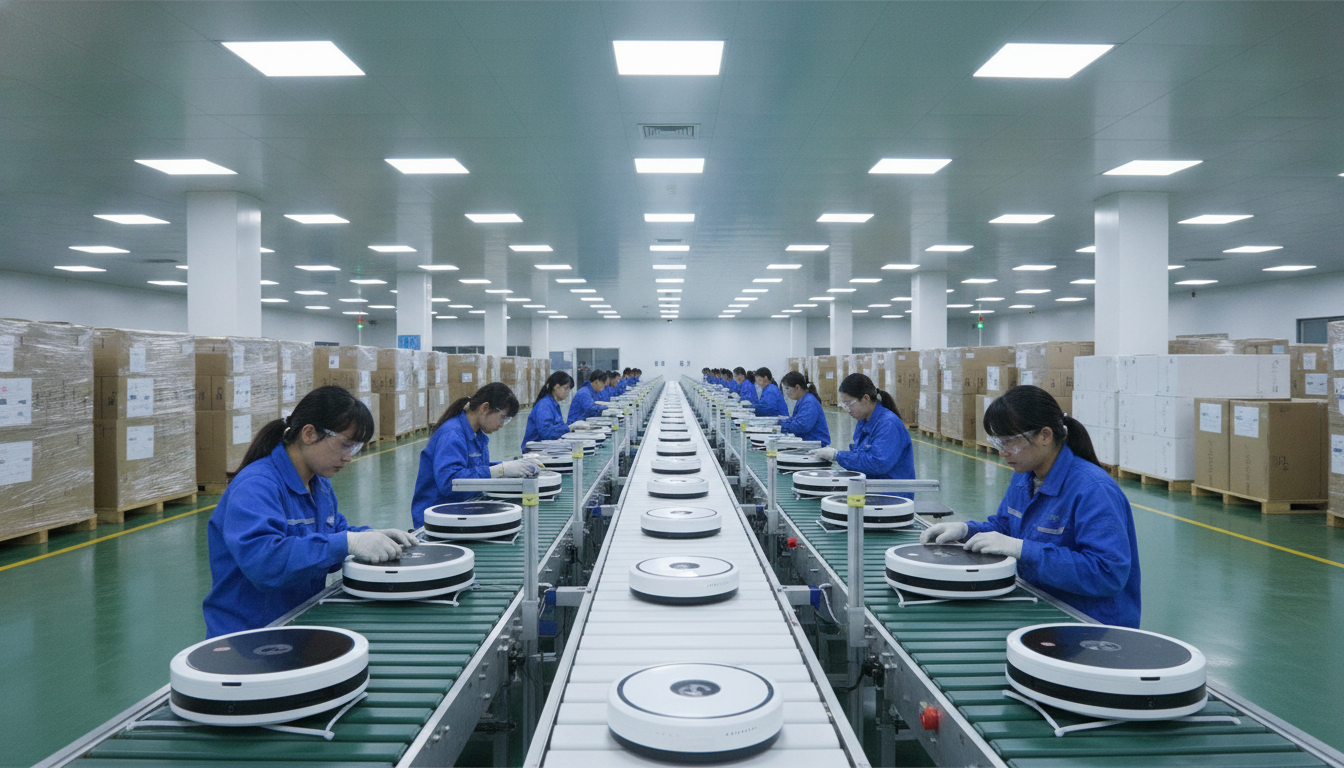
The minimum order quantity private label magnetic window cleaner typically starts at 100 units for basic branding, logo placement on existing packaging and product bodies. Custom packaging design, unique color schemes, or proprietary mold tooling push the threshold to 500-1,000 units or more, depending on the degree of customization. Most factory-direct suppliers in Taizhou and neighboring manufacturing hubs set their baseline at 100-300 units for straightforward private-label runs, balancing tooling setup costs against accessible entry points for new distributors.
📋 Table of Contents
Executive Summary
- Baseline MOQ: Factory-direct suppliers typically set the minimum order quantity private label magnetic window cleaner at 100 units for logo printing on stock packaging and product housings.
- Customization gradient: Custom packaging artwork, unique color injection molding, or proprietary accessory bundles raise the threshold to 500-1,000 units per SKU to amortize tooling and setup costs.
- Sample-first workflow: Most manufacturers offer 1-5 paid sample units before committing to a full private-label run, allowing distributors to verify fit across single-pane and double-glazed windows.
- Certification overhead: CE and RoHS documentation for EU-bound shipments typically adds no MOQ penalty when the factory already holds blanket certifications, but market-specific testing for new geographies can require batch minimums of 300-500 units.
- Reorder cadence: Distributors planning quarterly restocks find 200-300 units per order strikes a balance between landed cost per unit and warehouse turnover, particularly for adjustable-force models covering 3-45mm glass thickness.
What Drives MOQ for Private Label Orders?
MOQ floors exist to recover fixed costs. Every private-label run incurs setup expenses that do not scale with volume: screen-printing plates for logos, packaging die cuts, quality-control batch testing, and production-line changeover time. Suppliers spread these one-time costs across the order quantity; smaller runs carry higher per-unit overhead, eroding factory margins below viable thresholds.
Tooling and Setup Costs
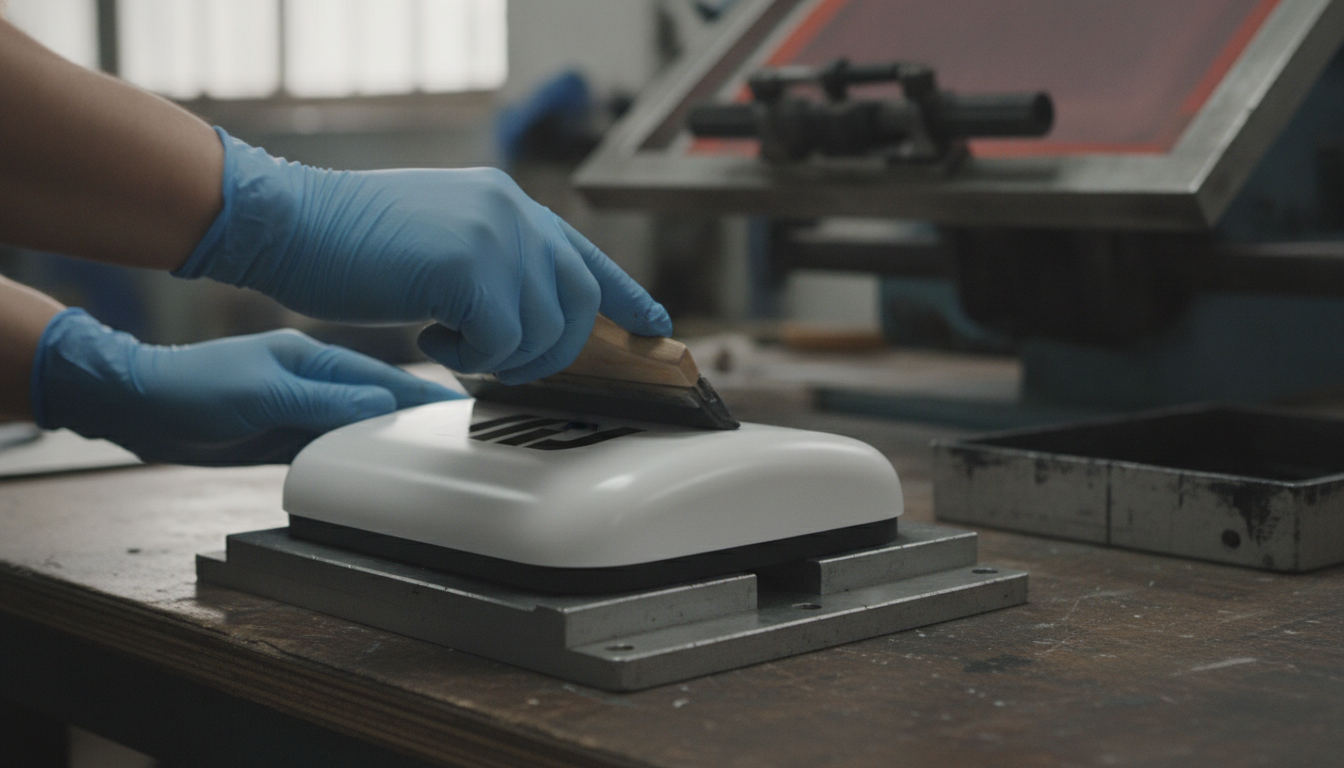
Logo screen-printing on plastic housings requires a dedicated plate. A single-color print plate costs the factory approximately $50-$80 to prepare, and a two-color design doubles that figure. When amortized over 100 units, the per-unit tooling surcharge remains under $2; spread across 50 units, it climbs above $3, often exceeding the factory’s acceptable margin band. Custom packaging artwork adds another layer: a corrugated carton with four-color offset printing demands a die-cut mold and a minimum press run, pushing the economical floor to 500 units for most box manufacturers in the Yangtze River Delta.
Material Procurement Batches
Factories purchase raw materials in bulk to secure volume pricing. Neodymium magnets, microfiber pads, ABS plastic resin, and safety-rope spools all arrive in standardized lot sizes. A magnetic window cleaner assembly line running 50,000+ units per day can absorb small private-label batches by drawing from existing inventory, but custom colors or non-standard pad densities require dedicated raw-material orders. Resin suppliers in Taizhou typically set minimum dye-lot quantities at 200-300 kilograms, enough to mold 400-600 cleaner housings depending on unit size.
Quality Control and Compliance Testing
Each private-label SKU undergoes batch inspection. ISO9001-certified facilities sample 2-5% of every production run for magnet-strength verification, housing-fit tolerance checks, and safety-rope tensile testing. Small batches below 100 units face proportionally higher inspection overhead because the sampling count cannot drop below a statistically meaningful floor. CE and RoHS certification documentation, when already in place for the base product, applies to private-label variants without additional testing, but any material substitution or design tweak triggers a re-certification cycle that most labs bill per batch rather than per unit.
MOQ by Customization Level
The minimum order quantity private label magnetic window cleaner scales with the degree of customization. Basic branding sits at the low end; proprietary mold tooling anchors the high end.
Basic Private Label
Logo placement on an existing product design represents the entry tier. The factory applies a single- or two-color silk-screen print to the outer housing, leaving all other components stock. Packaging remains neutral white-box or generic color carton with a brand sticker affixed post-production. Setup costs stay minimal because no new tooling is fabricated. Our magnetic window cleaner product range supports this workflow at 100-unit minimums, allowing new distributors to test market reception without deep inventory commitment.
Custom Packaging Design
Brand-specific carton artwork requires a packaging supplier to produce a die-cut mold and commit to a minimum press run. Four-color offset printing on corrugated board becomes cost-effective at 500 units; below that threshold, per-unit packaging expenses can exceed the product cost itself. Insert cards, multilingual instruction sheets, and custom accessory bundles (spare microfiber pads, replacement safety ropes) further raise the floor. Distributors targeting retail shelf presence in hardware chains typically budget for this tier.
Custom Color Injection Molding
Proprietary brand colors necessitate a dedicated resin dye lot. ABS plastic suppliers in Taizhou set minimum dye-lot orders at 200-300 kilograms, translating to 400-600 cleaner housings for a standard double-sided unit. The factory must also run color-match samples for client approval before committing the full batch to production, adding 7-10 days to the lead-time calendar. This tier suits established distributors with proven SKU velocity who want visual differentiation on crowded shelves.
ODM with Proprietary Mold Tooling
Unique housing geometry, ergonomic handle redesigns, or integrated accessory clips require new injection-mold fabrication. Mold tooling for a two-cavity magnetic window cleaner housing runs $3,000-$8,000 depending on complexity, and factories amortize this expense across the initial production run. A 2,000-unit minimum spreads tooling cost to $1.50-$4.00 per unit; halving the order doubles the per-unit surcharge, often pricing the project out of viability. ODM projects also extend timelines: mold design, sample-tool iteration, and first-article inspection can add 45-60 days before mass production begins.
In practice: A new home-cleaning brand in Panama approached the factory to launch a private-label magnetic window cleaner, starting with a 100-unit basic branding run to validate retail interest before committing to custom packaging.
Regional MOQ Expectations
Buyer behavior and logistics infrastructure shape MOQ norms across geographies. North American distributors often order in pallet or half-container increments; European importers balance MOQ against strict packaging-waste regulations; Australian buyers weigh MOQ against longer shipping lanes and smaller market catchments.
North America
Distributors in the United States and Canada typically anchor initial orders to standard pallet configurations. A 40-foot high-cube container holds approximately 8,000-10,000 magnetic window cleaner units depending on packaging density, but few new importers commit to full-container loads on an untested SKU. Half-container or less-than-container-load shipments raise per-unit freight costs, so buyers gravitate toward 300-500 unit first orders that fill 2-3 pallets and qualify for consolidated ocean freight. Reorder cadence then aligns with quarterly sales cycles, stepping up to 1,000-2,000 units once the SKU proves velocity.
Europe
EU packaging-waste directives and extended producer responsibility schemes push importers toward minimalist, recyclable cartons. Custom packaging MOQs in Europe often start higher, 500 units, because printers must certify inks and coatings against heavy-metal limits, adding a compliance layer to the die-cut and press-run economics. Germany, the UK, and France dominate magnetic window cleaner imports in the region, and distributors in those markets frequently request bilingual or trilingual instruction sheets, which raises per-unit printing costs but rarely affects the baseline MOQ if the factory can gang multiple languages onto a single print run.
Australia
Longer shipping lanes and smaller population density compress order sizes. Australian hardware wholesalers often test new SKUs with 100-200 unit shipments sent via less-than-container-load consolidators out of Ningbo or Shanghai. The trade-off: higher per-unit freight and longer transit windows (28-35 days ocean versus 18-22 days to the U.S. West Coast). Once a product gains traction, buyers step up to 500-1,000 unit orders to justify full-pallet rates and negotiate better landed costs. Our facility ships from Ningbo port, offering direct service to Sydney, Melbourne, and Brisbane with predictable 4-week lead times.
Middle East and Southeast Asia
Importers in the UAE, Saudi Arabia, Malaysia, and Thailand commonly place smaller, more frequent orders due to faster market-trend shifts and higher warehouse rental costs. MOQ floors of 100-200 units remain standard, with reorders every 60-90 days rather than the quarterly cadence seen in North America. Payment terms in these regions often favor letters of credit or deposit-balance structures, which suppliers factor into MOQ decisions; smaller orders under 100 units may require full prepayment to offset transaction and compliance overhead.
First-Order Sizing and Margin Planning
New distributors face a tension: order too few units and per-unit costs spike; order too many and unsold inventory ties up working capital. The right first-order size depends on sales velocity projections, storage capacity, and the landed-cost curve.
Landed Cost Per Unit
Total landed cost includes ex-factory price, international freight, customs duties, port handling, and inland trucking. For a 100-unit order, ocean freight and consolidation fees can add $8-$12 per unit; at 500 units filling multiple pallets, that figure drops to $3-$5 per unit. Customs duties vary by destination: the U.S. applies a general tariff rate around 3.3% on magnetic cleaning tools under HTS code 8205.51, while the EU levies 2.7% under CN code 8205 51 00. Australia’s duty is similarly low at 5%, but all three regions impose goods and services or value-added taxes (GST/VAT) of 10-20% on the customs value plus freight, which scales linearly with order size.
Break-Even Order Quantity
Distributors calculate break-even by dividing fixed costs (tooling, setup fees, freight consolidation minimums) by the gross margin per unit. If a private-label run incurs $400 in setup fees and the distributor targets a $10 gross margin per unit, the break-even floor is 40 units. Adding $600 in freight and customs overhead pushes break-even to 100 units. Ordering 150-200 units provides a buffer against slower-than-expected sell-through while keeping per-unit economics viable. Distributors with established sales channels often skip the 100-unit tier entirely, opening with 300-500 units to capture better freight rates and negotiate tighter ex-factory pricing.
Reorder Cadence and Safety Stock
Quarterly reorders align with most distributors’ cash-flow cycles and give enough runway to assess SKU performance. A 200-unit initial order selling 15-20 units per week depletes in 10-13 weeks, leaving time to place a reorder with a 30-45 day production and shipping window. Safety stock of 20-30 units cushions against supply-chain hiccups or unexpected demand spikes. Distributors serving facility-management contracts or window-cleaning service fleets often maintain higher safety stock, 50-100 units, because contract renewals can trigger bulk orders with short notice.
Negotiation Tactics to Lower MOQ
Suppliers set MOQ floors to protect margins, but flexibility exists when buyers demonstrate credible volume potential or accept trade-offs.
Multi-SKU Bundling
Ordering two or three SKU variants in a single purchase order can satisfy a supplier’s aggregate-volume threshold even if each individual SKU falls below the stated MOQ. A distributor ordering 80 units of a 5-35mm adjustable model, 60 units of an 8-40mm variant, and 60 units of a 3-30mm model totals 200 units, meeting a 200-unit minimum without forcing 200 units of a single SKU. This tactic works best when the SKUs share common components (housings, magnets, packaging templates) so the factory realizes setup-cost savings.
Flexible Packaging and Branding
Accepting neutral white-box packaging with a brand sticker instead of full four-color custom cartons cuts setup costs and lowers the MOQ floor. Similarly, agreeing to a stock housing color (white, blue, or gray) rather than a proprietary Pantone match eliminates dye-lot minimums. Distributors testing a new market often use this approach for the first 100-200 units, then upgrade to full custom packaging once sales velocity justifies the higher MOQ and per-unit investment.
Longer Lead Times
Factories can consolidate small private-label orders into a single production run if buyers accept extended lead times. A supplier might batch three 100-unit orders from different clients into one 300-unit run, spreading tooling and setup costs across all three. The trade-off: lead time stretches from 30 days to 45-60 days as the factory waits for enough orders to fill the batch. This arrangement suits distributors with predictable seasonal demand who can plan inventory months in advance.
Prepayment or Deposit Terms
Offering full prepayment or a larger-than-standard deposit (50% instead of 30%) reduces the supplier’s working-capital risk and can unlock a lower MOQ. Factories hesitate to run small batches partly because payment delays on low-value orders erode profitability; guaranteed cash flow offsets that concern. Buyers with strong balance sheets or access to trade finance can this tactic to secure 80-100 unit minimums where the standard floor is 150-200 units.
Certification and Compliance Impact on MOQ
Export markets impose safety, environmental, and quality standards that ripple back to MOQ calculations. CE marking, RoHS compliance, and market-specific testing requirements add fixed costs that must be amortized across the order quantity.
CE and RoHS for EU-Bound Shipments
Magnetic window cleaners sold in the European Union require CE marking under the Machinery Directive (2006/42/EC) and RoHS compliance (Directive 2011/65/EU) restricting hazardous substances in electrical and electronic equipment. Factories holding blanket certifications for their product lines can extend those certificates to private-label variants without additional testing, imposing no MOQ penalty. However, any design modification, such as a proprietary handle shape or a non-standard magnet housing, triggers a re-assessment cycle. Third-party testing labs charge per batch, typically $800-$1,500 for a full RoHS material-composition analysis and CE technical-file review, pushing the economical MOQ to 300-500 units to keep per-unit compliance costs under $3-$5.
Market-Specific Testing
Some geographies demand additional certifications. Australia and New Zealand enforce product-safety standards under the Australian Consumer Law, though magnetic window cleaners without electrical components typically face no mandatory third-party testing. The Middle East increasingly requires GCC standardization marks for consumer goods, adding a $500-$1,000 certification fee that buyers amortize over initial orders. North America has no federal cleaning-equipment certification, but large retail chains (Home Depot, Lowe’s, Canadian Tire) often mandate private testing for liability coverage, adding $600-$1,200 per SKU in lab fees.
Packaging and Labeling Compliance
EU packaging-waste regulations require recyclability symbols and material-composition labels on cartons. Multilingual safety warnings (choking hazards, magnet-strength cautions, glass-thickness guidance) must appear in the language of each destination country. Print-run minimums for compliant packaging typically start at 500 units because smaller batches cannot justify the die-cut and multi-language plate setup. Our CE and RoHS certified product line ships with EU-compliant packaging as standard, allowing distributors to meet regulatory floors without custom print runs for orders as small as 100 units.
Key Takeaways
- The minimum order quantity private label magnetic window cleaner starts at 100 units for basic logo printing on stock packaging, rising to 500-1,000 units for custom carton artwork or proprietary color molding.
- Tooling and setup costs, screen-printing plates, packaging die cuts, resin dye lots, are fixed expenses that suppliers amortize across order volume, making smaller runs proportionally more expensive per unit.
- Regional logistics shape MOQ expectations: North American buyers often anchor orders to pallet configurations, European importers balance compliance overhead against packaging minimums, and Australian distributors manage longer shipping lanes with smaller initial commitments.
- Multi-SKU bundling, flexible packaging, extended lead times, and prepayment terms are proven tactics to negotiate lower MOQs without sacrificing supplier margins or product quality.
- CE and RoHS certifications for EU-bound shipments impose no MOQ penalty when the factory holds blanket approvals, but design modifications or market-specific testing requirements can push economical minimums to 300-500 units to spread lab fees.
- First-order sizing balances landed cost per unit against inventory risk; distributors typically find 200-300 units per SKU delivers competitive freight rates and manageable cash-flow exposure for quarterly reorder cadences.
Frequently Asked Questions
Can I order fewer than 100 units for a private-label test run?
Most factory-direct suppliers offer 1-5 paid sample units before committing to a full production run, allowing you to verify magnet strength, housing fit, and packaging quality. Full private-label orders below 100 units are rare because per-unit tooling and setup costs exceed viable margins, but some manufacturers will batch small orders from multiple clients into a single production run if you accept longer lead times of 45-60 days. Alternatively, accepting neutral white-box packaging with a brand sticker instead of custom cartons can lower the floor to 80-100 units.
How does custom packaging affect the minimum order quantity private label magnetic window cleaner?
Custom four-color printed cartons require a die-cut mold and a minimum press run, typically raising the MOQ to 500 units. Packaging suppliers in the Yangtze River Delta set these floors because offset-printing setup costs, plate fabrication, color calibration, waste sheets, are fixed expenses that become economical only at higher volumes. If your first order is 100-200 units, consider neutral packaging with applied brand stickers to keep costs down, then upgrade to full custom cartons once sales velocity justifies the higher commitment and per-unit investment.
Do certification requirements raise the MOQ for export markets?
Factories holding blanket CE and RoHS certifications can extend those approvals to private-label variants without additional testing, imposing no MOQ penalty. However, any design change, proprietary handle geometry, non-standard magnet housing, custom accessory bundles, triggers a re-certification cycle. Third-party labs charge per batch, adding $800-$1,500 in fixed costs that push the economical MOQ to 300-500 units to keep per-unit compliance expenses manageable. Market-specific testing for regions like the Middle East or large North American retail chains adds similar batch fees.
What order size balances cost and inventory risk for a new distributor?
New distributors typically find 200-300 units per SKU strikes the right balance. This volume captures better ocean-freight rates (per-unit shipping drops from $8-$12 at 100 units to $3-$5 at 300 units), qualifies for modest ex-factory price breaks, and provides 10-15 weeks of inventory at a sell-through rate of 15-20 units per week. The cash-flow exposure remains manageable, and leftover stock risk stays contained if the SKU underperforms. Distributors with proven sales channels or facility-management contracts often open with 500 units to maximize landed-cost efficiency.
Ready to launch your private-label magnetic window cleaner line? Our Taizhou facility supports flexible MOQs from 2 units, with CE and RoHS compliance, and adjustable-force models covering 3-45mm glass thickness across four SKU variants. Request a detailed quotation and sample pricing to confirm lead times, packaging options, and per-unit costs for your target market.
Written by the Fonoran Export Team.