How to Distinguish Manufacturer from Trading Company Cleaning Tools
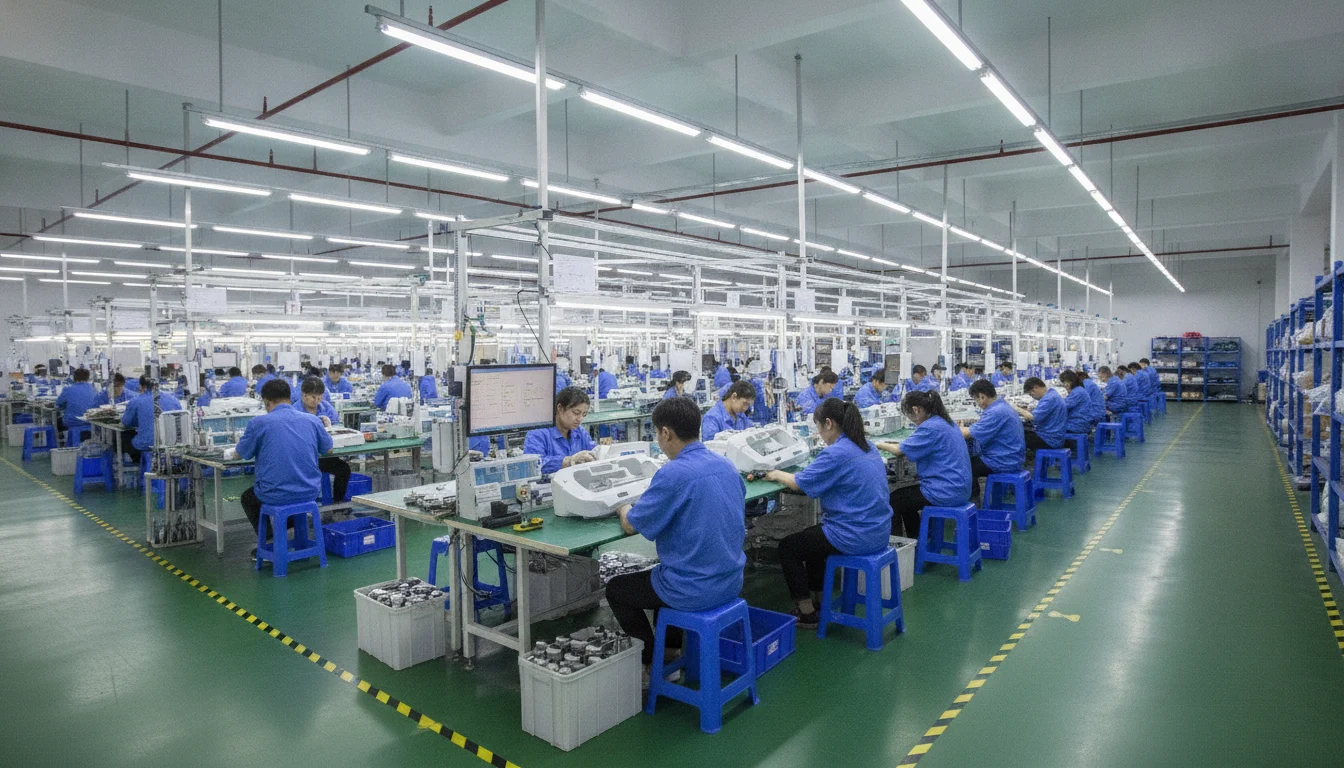
To distinguish a manufacturer from a trading company when sourcing cleaning tools, check the business license scope for manufacturing wording (生产 or 制造), request a live factory video walk-through showing production lines in operation, and verify that the bank account name, company registration name, and business license entity match exactly. Trading companies typically show commercial wording (贸易 or 商贸) on their license, cannot provide real-time factory footage, and often have mismatched entity names across documents. Manufacturers own production equipment, quote based on actual capacity, and can answer detailed process questions about mold ownership, material sourcing, and quality-control stages.
📋 Table of Contents
Executive Summary
- License scope verification: Manufacturing wording (生产, 制造) on the business license confirms production authority; commercial wording (贸易, 商贸) indicates a trading intermediary.
- Live factory video: Real manufacturers can provide same-day video walk-throughs showing active production lines, raw material storage, and quality-control stations; trading companies recycle old footage or decline the request.
- Entity name consistency: The company name on the business license, bank account, and export documents must match exactly; mismatches signal a trading company acting as an intermediary.
- Production-floor knowledge: Manufacturers answer detailed questions about mold ownership, material sourcing lead times, and process-specific quality checks; traders defer or provide vague responses.
- MOQ and capacity alignment: Manufacturers quote MOQ based on actual production runs and can explain capacity constraints; trading companies often accept any quantity without production context.
What Does the Business License Scope Reveal?
The business license scope of operations is the first hard proof of manufacturer status. Chinese business licenses list permitted activities in the 经营范围 (scope of business) section, and the wording directly indicates whether the entity is authorized to manufacture or only to trade.
Manufacturing vs Commercial Wording
A manufacturer’s license includes production-specific terms such as 生产 (production), 制造 (manufacturing), or 加工 (processing). These words confirm the company holds the legal authority to operate production equipment and employ factory workers. Trading companies, by contrast, show wording like 贸易 (trade), 商贸 (commerce), or 销售 (sales), which authorize buying and reselling but not manufacturing. When you request a business license copy, zoom in on this section and cross-check the Chinese characters against a translation tool or a local agent.
Industry Code Cross-Check
The license also displays an industry classification code. Manufacturers typically fall under codes beginning with C (manufacturing sector), while trading companies register under F (wholesale and retail) or L (business services). Ask your supplier to provide the full license scan, not a cropped version, and verify the code against China’s National Economic Industry Classification standard. A mismatch between the stated business type and the industry code is a red flag.
Registration Address Type
Manufacturers register at industrial park addresses or factory zones with district-level approval; trading companies often use office buildings or virtual registered addresses in commercial districts. Cross-reference the license address with satellite imagery on Baidu Maps or Google Maps to confirm the presence of industrial structures, loading bays, and warehousing space. A registered address in a high-rise office tower is rarely a factory.
How Do You Verify Factory Operations?
A business license confirms legal status, but factory verification proves operational capacity. Real manufacturers own production lines, raw material inventory, and quality-control equipment; trading companies source from third parties and cannot demonstrate these assets.
Live Video Walk-Through
Request a live video call showing the production floor in real time. The contact should be able to pan the camera across active assembly lines, raw material storage areas, and finished-goods warehousing. Look for date-stamped machinery displays, workers in branded uniforms, and process-specific equipment such as injection molding machines for plastic components or magnet assembly stations for magnetic window cleaner product range. Trading companies either decline the request, provide pre-recorded footage, or show a partner factory they do not own. Insist on same-day video with a verbal confirmation of your company name to prevent recycled clips.
On-Site Audit or Third-Party Inspection
For high-volume orders, arrange an on-site audit through a third-party inspection service such as SGS, Bureau Veritas, or a local sourcing agent. The auditor verifies the factory address matches the license, counts production lines, checks worker headcount against payroll records, and photographs equipment serial numbers. Trading companies resist on-site audits or redirect you to a partner facility they claim as their own. A genuine manufacturer welcomes the visit and provides access to production records, material certifications, and quality logs.
Certification and Compliance Documents
Manufacturers hold certifications in their own company name. Request copies of CE and ISO9001 certificates and verify the certificate holder name matches the business license exactly. Trading companies sometimes present certificates issued to their upstream supplier, with their own name added as a distributor or agent. Check the issuing body’s verification portal (for ISO9001, contact the certification body listed on the certificate; for CE, verify the notified body number against the EU NANDO database) to confirm the certificate is valid and issued to the entity you are negotiating with.
In practice: A German buyer sourcing adjustable magnetic window cleaners for 36mm insulated glass requested a live factory video; the supplier provided a same-day walk-through showing NdFeB magnet assembly lines and the 6-stage force adjustment mechanism in production, confirming manufacturer status before the first sample order.
Why Must Entity Names Match Across Documents?
Entity name consistency across business license, bank account, and export documentation is a hard test for manufacturer authenticity. Trading companies often operate under multiple legal entities or use intermediary accounts, creating mismatches that surface during payment and customs clearance.
Business License vs Bank Account
The bank account name must match the business license entity character-for-character. Request a copy of the bank account opening certificate (银行开户许可证) and compare the account holder name with the license. Trading companies sometimes use a parent company account, a personal account, or a different subsidiary to collect payments, which creates tax and legal risks for the buyer. A manufacturer’s bank account is registered under the same legal entity that holds the production license and export authority.
Export Documentation Consistency
The exporter name on the commercial invoice, packing list, and bill of lading must match the business license and bank account. Trading companies occasionally list a partner factory as the exporter to bypass scrutiny, but this creates liability gaps if a quality dispute arises. Verify the exporter name on the proforma invoice before paying the deposit, and flag any discrepancy immediately. A genuine manufacturer uses one legal entity across all documents and can explain the entity structure clearly.
Customs and Tax Registration
Manufacturers hold an export license (进出口权) and a customs registration code in their own name. Ask for a copy of the customs registration certificate and cross-check the entity name and registration number. Trading companies may use a third-party export agent, which adds a markup and delays communication. Direct manufacturers ship under their own customs code and can provide the registration number for your own verification with China Customs.
What Production Questions Should a Real Manufacturer Answer?
Production-floor knowledge separates manufacturers from traders. A manufacturer’s sales team works alongside engineers and production managers; a trading company’s team sources answers from upstream suppliers and cannot provide real-time technical detail.
Mold and Tooling Ownership
Ask who owns the molds for plastic components or the stamping dies for metal parts. Manufacturers own their tooling and can provide mold serial numbers, cavity counts, and maintenance schedules. Trading companies source from multiple factories and cannot confirm mold ownership. For magnetic window cleaners, ask how many mold cavities the factory uses for the outer casing and whether the molds are single-cavity or multi-cavity. A manufacturer answers immediately; a trader needs to check with the supplier.
Material Sourcing and Lead Times
Manufacturers maintain direct relationships with raw material suppliers and can name the source of key components such as NdFeB magnets, microfiber pads, or ABS plastic resin. Ask how long it takes to restock raw materials and what buffer inventory the factory holds. Trading companies cannot answer these questions without forwarding them upstream. A manufacturer explains material lead times in the context of production planning and can adjust order schedules based on material availability.
Quality Control Stages
Ask what quality checks occur at each production stage. Manufacturers describe incoming material inspection, in-process checks (such as magnet strength testing or surface finish inspection), and final product testing (such as glass adhesion tests or safety strap load testing). Trading companies provide generic quality assurance statements without process-specific detail. For wholesale magnetic window cleaner orders, ask how the factory verifies the 6-stage adjustable magnetic force matches the declared glass thickness range. A manufacturer walks through the testing protocol; a trader cannot.
How Do MOQ and Lead Time Indicate Manufacturer Status?
MOQ and lead time reflect production economics. Manufacturers set MOQ based on production-run efficiency and material-order minimums; trading companies accept any quantity because they aggregate orders across multiple buyers or source from stock.
MOQ Justification
A manufacturer explains MOQ in terms of production setup costs, material-order minimums, and line changeover time. For example, Fonoran’s MOQ starts from 100 units because that quantity justifies a dedicated production run and material procurement batch while maintaining cost efficiency for both parties. Trading companies often quote no MOQ or accept single-unit orders because they source from existing inventory or place consolidated orders with upstream factories. Ask the supplier to explain the MOQ logic. A manufacturer ties it to production economics; a trader offers flexibility without a production rationale.
Lead Time Breakdown
Manufacturers provide lead time broken into material procurement, production, quality inspection, and shipping. Specific lead times are confirmed at quotation based on order specifications. Trading companies quote a single lead time without a breakdown because they do not control the production schedule. Ask for a detailed timeline with milestones. A manufacturer provides one; a trader gives a round estimate.
Capacity Constraints and Order Prioritization
Manufacturers discuss capacity limits and production scheduling openly. If the factory is at full capacity, the sales team explains the queue and offers a later delivery slot or suggests a partial shipment. Trading companies rarely mention capacity constraints because they can switch suppliers if one is busy. Ask what the factory’s monthly production capacity is and how your order fits into the schedule. A manufacturer answers with specific numbers and scheduling context; a trader confirms availability without production detail.
Key Takeaways
- Business license scope must include manufacturing wording such as 生产 or 制造; commercial wording like 贸易 or 商贸 indicates a trading company without production authority.
- Live factory video walk-throughs showing active production lines, raw material storage, and date-stamped equipment confirm operational capacity; pre-recorded or recycled footage is a red flag.
- Entity name consistency across business license, bank account, and export documents is mandatory; mismatches create payment and liability risks.
- Manufacturers answer detailed questions about mold ownership, material sourcing lead times, and quality-control stages; trading companies defer or provide generic responses.
- MOQ and lead time tied to production economics (material minimums, line setup, capacity scheduling) indicate manufacturer status; flexible MOQ with no production rationale suggests a trading intermediary.
- On-site audits or third-party inspections verify the factory address matches the license and confirm production equipment ownership; genuine manufacturers welcome the visit.
FAQ
Is it better to buy from a manufacturer or a trading company?
Buying from a manufacturer offers lower unit costs, direct communication with production teams, and faster resolution of quality issues because you control the source. Trading companies add a markup and create an extra communication layer, but they can be useful for small-volume orders, multi-product sourcing, or buyers without the resources to manage factory relationships. For OEM and ODM projects requiring custom tooling or product development, direct manufacturer relationships are essential because you need access to engineering teams and production planning.
What documents should a genuine manufacturer provide?
A genuine manufacturer provides a business license with manufacturing scope wording, an export license (进出口权) showing customs authority, ISO9001 or other quality certifications in the company’s own name, a bank account opening certificate matching the license entity, and product certifications such as CE or RoHS issued to the manufacturer. For high-value orders, request a factory audit report from a third-party inspection service, production capacity documentation, and references from existing clients. All documents should show the same legal entity name and registration number.
How can I verify a supplier’s factory address remotely?
Use satellite imagery on Baidu Maps or Google Maps to confirm the registered address shows industrial buildings, loading docks, and warehouse structures rather than office towers or residential areas. Request a live video call with the sales contact walking through the factory floor, showing date-stamped machinery displays and workers in branded uniforms. Cross-check the address on the business license against the address on export documents and the company website. For critical orders, hire a local sourcing agent or third-party inspection service to visit the site in person and verify the facility matches the claimed capacity.
Distinguishing a manufacturer from a trading company when sourcing cleaning tools protects your margin, shortens your supply chain, and gives you direct access to production expertise. Focus on business license scope verification, live factory video confirmation, entity name matching across all documents, and the supplier’s ability to answer detailed production questions. When these checks align, you have found a factory-direct partner.
Ready to verify manufacturer credentials and secure factory-direct pricing for your next order?
Request a Factory Verification Package →
Written by the Fonoran Export Team.