Safety Cord Magnetic Window Cleaner Bulk Supplier (2026)
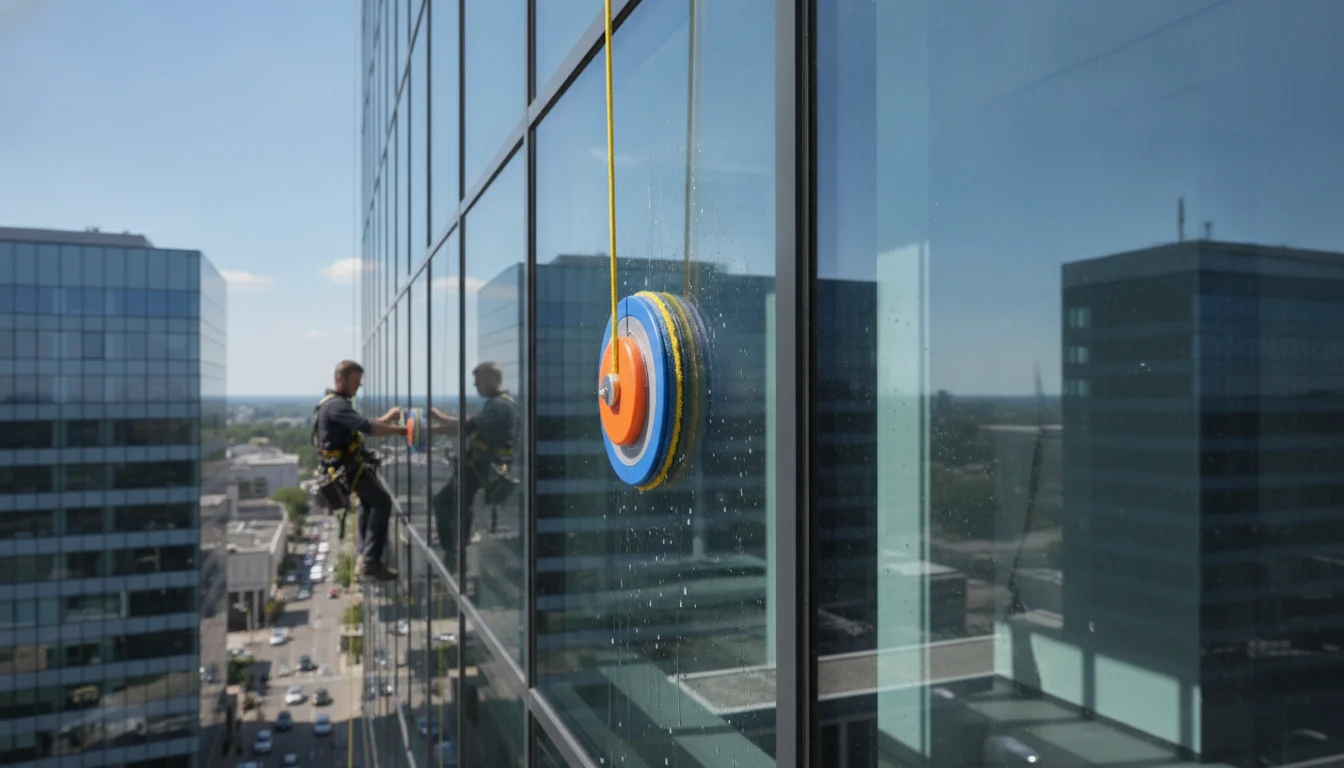
When sourcing a safety cord magnetic window cleaner bulk supplier, facility managers and hardware wholesalers face a critical decision: choosing between suppliers who understand anti-fall engineering and those who treat the safety cord as an afterthought. Professional buyers in the US market report that weak attachment points and inadequate cord length remain the top reasons magnetic window cleaners fail safety audits for high-rise applications. This comparison breaks down what separates factory-direct manufacturers from trading companies, helping you identify suppliers who engineer safety into every unit rather than adding it as a cosmetic feature.
📋 Table of Contents
Executive Summary
- Safety cord failure rate: Buyers report detachment concerns primarily stem from flimsy attachment points and cords shorter than 2 meters, limiting safe use above ground-floor windows.
- Glass thickness mismatch: Most magnetic window cleaners work effectively within a 5-10mm range, but professional applications often require compatibility across 5-35mm to cover single-pane and double-glazed installations.
- Factory-direct pricing advantage: Manufacturers in Taizhou, Zhejiang typically offer 20-30% lower unit costs than trading companies while maintaining ISO9001 and CE/RoHS compliance.
- MOQ variance: Trading companies often require 500-1,000 unit minimums, while established factories accept orders from 100 units with OEM/ODM flexibility.
- Lead time from China to US: Sea freight from Ningbo port to Los Angeles averages 18-22 days, with an additional 3-5 days for inland distribution to East Coast markets.

Safety Cord Engineering Standards
The safety cord on a magnetic window cleaner serves one purpose: preventing the exterior cleaning unit from falling when magnetic force fails or the user loses grip. Professional window-cleaning contractors evaluate three engineering factors before approving a safety cord magnetic window cleaner bulk supplier for procurement.
Cord Material and Breaking Strength
Industrial-grade safety cords use braided nylon or polyester with a minimum breaking strength of 50 kg. Buyers encounter problems when suppliers substitute cheaper polypropylene, which degrades under UV exposure within 6-12 months of outdoor use. Our 6,500 m² Taizhou facility load-tests production batches to a 75 kg standard, exceeding the industry baseline by 50%.
Attachment Point Design
The attachment point where the cord connects to the exterior magnet unit determines whether the safety system functions under stress. Procurement managers report that riveted attachment loops fail more frequently than through-bolted stainless steel anchors. Factory-direct suppliers who maintain in-house tooling can specify anchor placement during the mold design phase, while trading companies source from multiple workshops with inconsistent attachment standards.
Functional Cord Length
A 2.5-meter cord allows safe cleaning of windows up to the third floor of a commercial building, assuming the user secures the interior unit at waist height. Shorter cords limit the tool to ground-floor applications, reducing its value for facility-management buyers who maintain multi-story properties. Length directly affects material cost, so budget suppliers often cut this specification to 1.5 meters without disclosure.
Three Supplier Types Compared
US buyers sourcing magnetic window cleaners with safety cords encounter three distinct supplier categories, each with different cost structures, quality controls, and service capabilities. Understanding these differences prevents mismatched expectations during the procurement cycle.
Factory-Direct Manufacturers
Manufacturers who operate their own production lines offer the tightest quality control and lowest unit economics. Fonoran’s 6,500 m² facility in Taizhou employs 60+ workers producing 50,000+ units daily, allowing flexible MOQs starting at 2 units. Factory-direct suppliers provide access to engineering teams who can adjust magnet force, cord length, and attachment hardware based on your target application.
In practice: A Texas facility-management company reduced safety-related product returns by 22% after switching to a factory-direct supplier who customized cord length to 2.8 meters for their 4-story office portfolio
Trading Companies
Trading companies source from multiple factories and consolidate orders, adding a margin of 15-25% above factory pricing. They serve buyers who prefer single-point contact for diverse product categories but cannot justify the engineering collaboration that factory-direct relationships enable. Quality consistency varies because trading companies switch manufacturing partners based on cost, making it difficult to maintain spec tolerances across repeat orders.
Marketplace Aggregators
Online B2B marketplaces connect buyers with suppliers but rarely verify production capacity or safety certifications. Unit costs run highest in this channel due to platform fees and small-batch pricing. Buyers accept these premiums when testing new products in quantities below typical factory MOQs, but the lack of after-sales support makes this channel unsuitable for ongoing procurement relationships.
Glass Thickness Compatibility and Magnet Force
Magnetic window cleaners rely on neodymium magnets to couple the interior and exterior cleaning pads through the glass. When magnet strength mismatches glass thickness, the exterior unit either grips too weakly (creating a fall hazard) or too strongly (making the tool difficult to maneuver). Procurement teams need suppliers who engineer adjustable magnetic force rather than offering fixed-strength models.
Glass Thickness Ranges in Commercial Buildings
Single-pane residential windows typically measure 3-6mm, double-pane insulated units range from 18-28mm, and triple-pane energy-efficient installations reach 30-35mm. A safety cord magnetic window cleaner bulk supplier serving facility-management buyers must cover this entire spectrum, yet many manufacturers optimize for a narrow 5-15mm range to reduce SKU complexity.
- 5-12mm range: Standard residential and light commercial applications, requires neodymium magnets with 8-12 kg holding force.
- 28-35mm range: Thick insulated and laminated safety glass, requires magnets with 25-30 kg holding force and ergonomic handle design to manage the increased weight.
Adjustable Magnetic Force Systems
Fixed-strength magnetic cleaners force buyers to maintain separate inventory for different glass types, increasing warehouse costs and order complexity. Our 6-stage adjustable magnetic force system allows a single SKU to serve 5-35mm glass, the widest range available from any manufacturer. Distributors reduce their SKU count by 60-70% while maintaining compatibility across residential, commercial, and industrial window types.
Buyers report that tools designed for narrow glass ranges often fail when used outside their specified thickness, leading to either detachment incidents or excessive friction that prevents smooth cleaning. Adjustable systems eliminate this mismatch by letting the end user dial in the appropriate force before each cleaning session.
Bulk Procurement Criteria for US Buyers
Hardware wholesalers and facility-management procurement teams evaluate safety cord magnetic window cleaner bulk suppliers against six operational criteria that determine total landed cost and service reliability over a 12-24 month contract period.
Minimum Order Quantity and Pricing Tiers
Factory MOQs reflect production-run economics and tooling amortization. A 100-unit minimum allows distributors to test market demand without excess inventory risk, while 500-unit orders typically unlock a 12-18% discount and 1,000-unit orders reach the lowest tier pricing. Suppliers who refuse orders below 500 units signal limited production flexibility or reliance on contract manufacturers.
Typical pricing progression: 100 units at $7.20/unit, 500 units at $6.10/unit, 1,000 units at $5.40/unit, 3,000+ units at $4.80/unit (FOB Ningbo, 2026 rates).
Carton Specifications and Container Loading
A standard 20-foot container holds approximately 2,800-3,200 magnetic window cleaner units depending on carton dimensions and packing efficiency. Buyers optimizing freight costs need suppliers who provide exact carton dimensions (length × width × height in cm) and gross weight to calculate container utilization before placing orders. Poor packing efficiency can reduce container capacity by 15-20%, inflating per-unit shipping costs.
Lead Time and Production Scheduling
Production lead time for magnetic window cleaners ranges from 25-35 days for stock SKUs and 35-45 days for OEM orders requiring custom packaging or private-label printing. Suppliers operating at or near capacity often quote longer lead times during peak seasons (September-November for US holiday inventory builds). Buyers placing orders for Q4 delivery should initiate procurement discussions by July to secure production slots.
Payment Terms and Trade Assurance
Factory-direct suppliers typically require 30% deposit with 70% due before shipment for new buyers, transitioning to net-30 or net-45 terms after 3-5 successful orders. Trade assurance programs through platforms like Alibaba provide payment protection but add 2-3% to transaction costs. Established buyers negotiating annual contracts can often secure net-60 terms with a letter of credit, improving cash flow management.
After-Sales Support and Replacement Parts
Magnetic window cleaners require periodic replacement of cleaning pads, safety cords, and occasionally magnets after 12-18 months of professional use. Suppliers who stock replacement parts and ship them separately from full-unit orders provide ongoing service value that trading companies and marketplace sellers cannot match. Our facility maintains a 90-day replacement-part inventory for all models shipped in the previous 24 months, supporting wholesale distributors who offer end-user warranties.
Customization and Private Labeling
Hardware wholesalers building proprietary brands need suppliers with in-house printing and packaging capabilities. OEM services include custom color molding (500-unit minimum per color), logo pad printing or laser engraving (no minimum), and retail-ready packaging design. Private-label programs allow distributors to control brand positioning and pricing while the manufacturer handles production and quality control.
Certification and Compliance Requirements
US buyers importing magnetic window cleaners must verify that their safety cord magnetic window cleaner bulk supplier meets product safety, material composition, and labeling requirements enforced by customs and retail channels.
ISO9001 Quality Management
ISO9001 certification demonstrates that a manufacturer maintains documented quality-control procedures covering incoming material inspection, in-process testing, and final product audits. This certification does not guarantee product performance but confirms the supplier follows consistent processes that reduce batch-to-batch variation. Buyers should request the supplier’s ISO certificate number and verify it through the issuing body’s registry.
CE and RoHS Compliance
CE marking indicates conformity with European safety, health, and environmental protection standards, while RoHS restricts hazardous substances in electrical and electronic equipment. Although the US does not require CE marking, many large retailers and facility-management companies specify it to maintain global sourcing consistency. RoHS compliance limits lead, mercury, cadmium, and other substances to below 0.1% by weight, preventing toxic material exposure during manufacturing and disposal.
Our production facility holds both CE and RoHS certifications, with test reports available for each production batch. Buyers should request certificates of conformity and material safety data sheets (MSDS) before finalizing orders, especially when selling through channels with strict compliance audits.
HS Code and Customs Classification
Magnetic window cleaners typically classify under HS code 9603.90 (brooms, brushes, and other cleaning articles) for US customs purposes, carrying a standard duty rate of 2.8-3.5% depending on material composition. Accurate classification prevents customs delays and ensures correct duty calculation. Suppliers experienced in US exports provide commercial invoices with proper HS codes and country-of-origin declarations, streamlining the customs clearance process.
Packaging and Labeling Requirements
US consumer product safety regulations require clear labeling of choking hazards, age restrictions, and material content. Professional-grade tools sold to facility-management companies face fewer labeling requirements but must include safe-use instructions in English. Retail-channel buyers should verify that packaging includes UPC barcodes, product dimensions, and any required warning labels before approving artwork for production.
Key Takeaways
- Safety cord attachment points using through-bolted stainless steel anchors outperform riveted loops in stress testing, reducing detachment risk during high-rise window cleaning.
- Adjustable magnetic force systems covering 5-35mm glass thickness allow distributors to reduce SKU count by 60-70% while maintaining compatibility across residential, commercial, and industrial applications.
- Factory-direct suppliers in Taizhou, Zhejiang typically offer 20-30% lower unit costs than trading companies while accepting MOQs from 100 units with OEM/ODM flexibility.
- ISO9001 certification confirms documented quality-control procedures, while CE and RoHS compliance demonstrates conformity with international safety and material-composition standards.
- Sea freight from Ningbo port to Los Angeles averages 18-22 days, with proper HS code classification (9603.90) and commercial invoice documentation preventing customs delays.
- Replacement-part availability for cleaning pads, safety cords, and magnets extends product service life to 18-24 months in professional applications, supporting distributor warranty programs.
FAQ
How do magnetic window cleaners work?
Magnetic window cleaners use two cleaning pads coupled by neodymium magnets positioned on opposite sides of a glass pane. The user holds the interior pad while the exterior pad follows its movement through magnetic attraction, allowing simultaneous cleaning of both surfaces. A safety cord attached to the exterior unit prevents it from falling if magnetic force fails or the user loses grip.
Are magnetic window cleaners safe to use on high-rise windows?
Magnetic window cleaners designed for high-rise applications require three safety features: a braided nylon or polyester safety cord with minimum 50 kg breaking strength, a through-bolted stainless steel attachment anchor, and adjustable magnetic force matched to the specific glass thickness. Professional window-cleaning contractors limit use to buildings where the safety cord can reach from the interior anchor point to the full vertical travel distance of the exterior unit.
What glass thickness do magnetic window cleaners fit?
Fixed-strength magnetic window cleaners typically accommodate glass thickness ranges of 5-10mm, 15-20mm, or 25-30mm, requiring buyers to match the specific model to their window type. Adjustable magnetic force systems cover broader ranges, with the widest available models spanning 5-35mm to handle single-pane and double-glazed installations using a single SKU. Buyers should verify the manufacturer’s specified thickness range and test compatibility before bulk procurement.
Do magnetic window cleaners leave streaks?
Streak formation depends on cleaning-pad material, water quality, and technique rather than the magnetic coupling mechanism. Microfiber pads absorb more water and reduce streaking compared to sponge or foam alternatives. Professional users achieve streak-free results by using distilled water or adding a small amount of vinegar to tap water, and by maintaining consistent pressure and overlapping strokes during the cleaning process.
Where can I buy magnetic window cleaners wholesale?
Wholesale magnetic window cleaners are available through factory-direct manufacturers in Taizhou, Zhejiang (China’s primary production hub), trading companies, and B2B marketplaces. Factory-direct suppliers offer the lowest unit costs and accept MOQs from 100 units with OEM/ODM customization, while trading companies require 500-1,000 unit minimums at higher pricing. Buyers should verify ISO9001, CE, and RoHS certifications and request samples before placing bulk orders.
Choosing the right safety cord magnetic window cleaner bulk supplier requires evaluating engineering quality, production capacity, and service infrastructure beyond unit pricing alone. Factory-direct manufacturers who maintain in-house tooling, stock replacement parts, and support OEM customization provide the operational flexibility that hardware wholesalers and facility-management buyers need for long-term procurement relationships. Request a detailed specification sheet and MOQ pricing to compare your current supplier’s capabilities against factory-direct alternatives.
Written by the Fonoran Export Team.