How to Use Safety Rope Magnetic Window Cleaner High Rise OEM
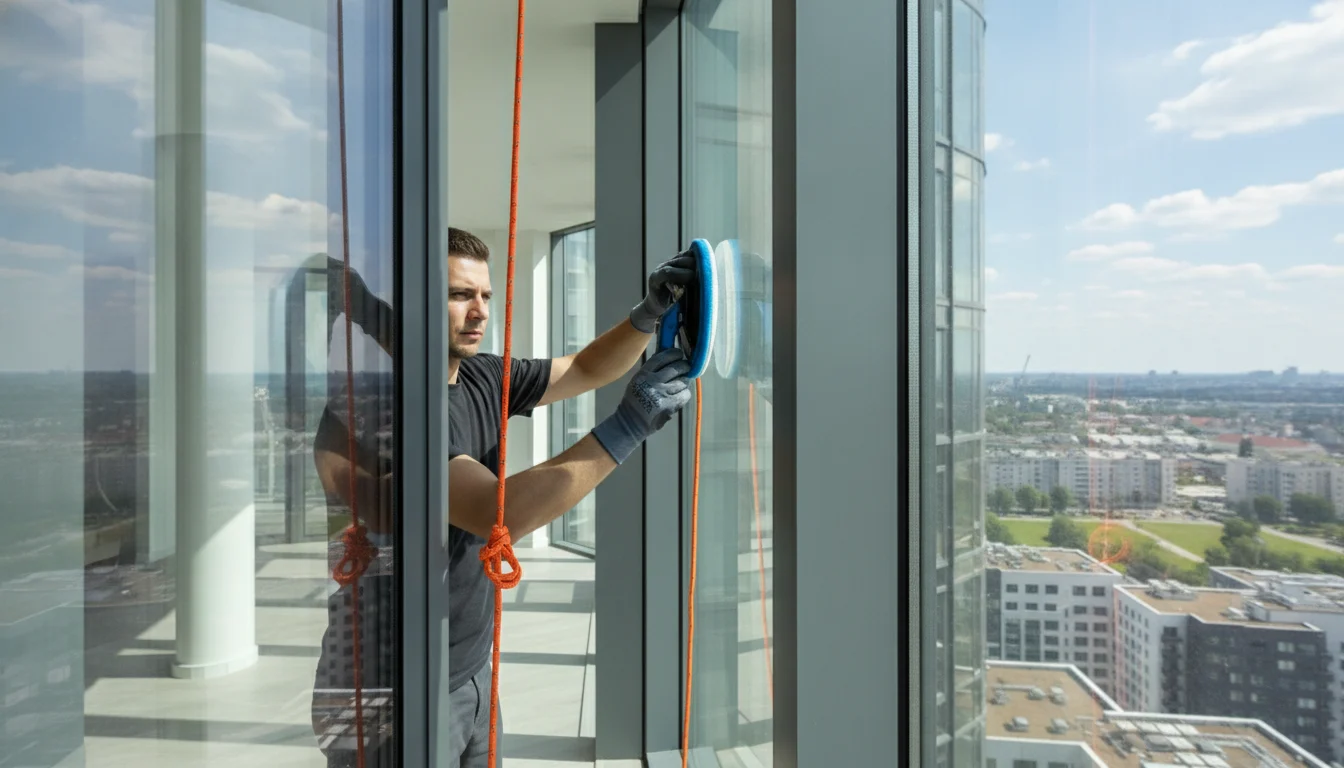
Importing safety rope magnetic window cleaner high rise OEM products requires matching magnet strength to glass thickness and verifying that the safety rope meets fall-arrest standards for your target market. Distributors who skip the glass-thickness compatibility check discover that 40-60% of returned units stem from buyers selecting the wrong magnetic force rating for double-glazed or triple-pane windows.
Key Takeaways
- Magnetic window cleaners rated for 5-35mm glass thickness cover single, double, and triple-pane installations across residential and commercial high-rise buildings.
- Six-stage adjustable magnetic force prevents the device from snapping together too strongly during setup and reduces pinch injuries during separator removal.
- CE and RoHS compliance is mandatory for cleaning equipment sold in the EU, with each hazardous substance restricted to below 0.1% by weight under Directive 2011/65/EU.
- Factories with daily output above 50,000 units typically offer low minimum order quantities for stock models and higher minimums for private-label programs.
- Safety ropes on high-rise magnetic cleaners must be secured to an indoor anchor point, with rope diameter of 6-8mm and tensile strength rated for 15-20kg load.
- OEM lead time from Taizhou factories to Ningbo port ranges from 18-25 days for orders between 100-500 units, including custom packaging and labeling.
Why Safety Rope Matters for High-Rise Magnetic Cleaners
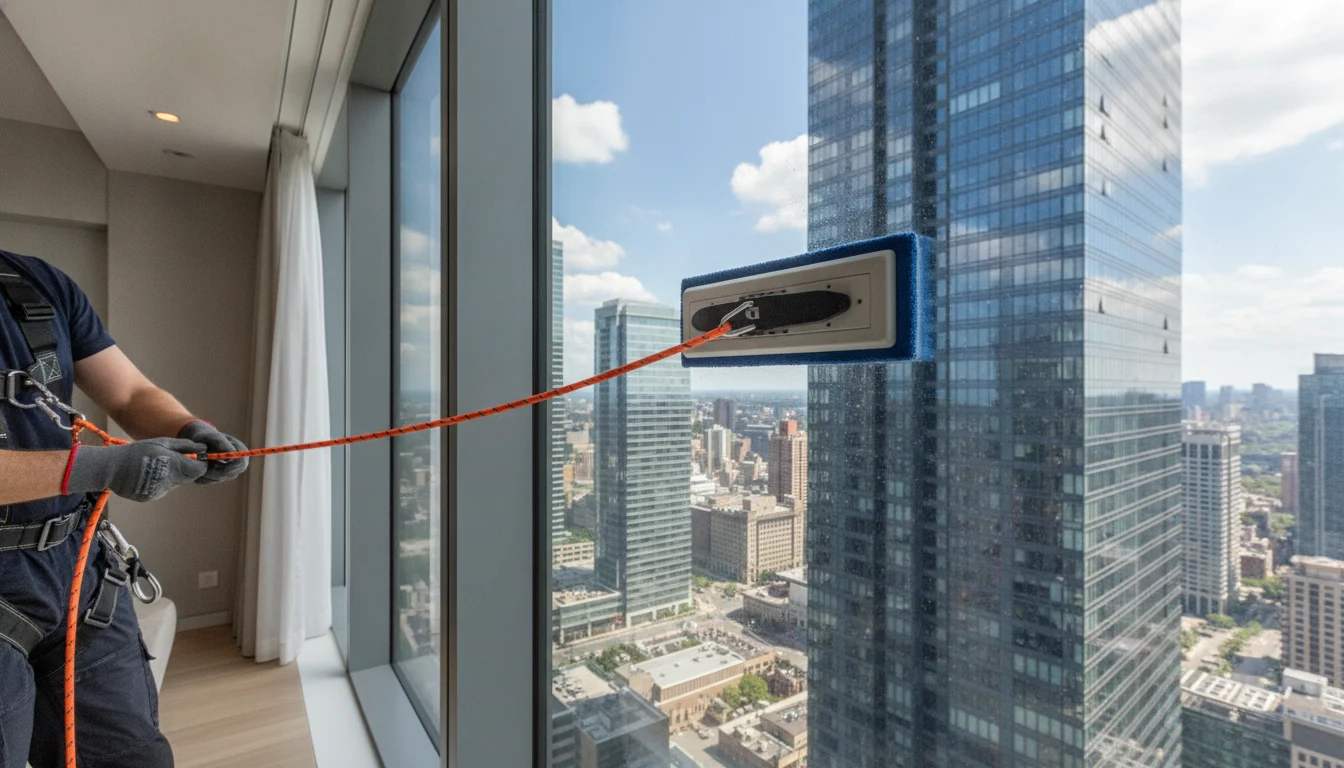
Magnetic window cleaners designed for buildings above three stories require a dedicated safety rope to prevent the outer unit from falling if magnetic contact breaks. Buyers report that devices without a properly secured rope have fallen from eighth-floor windows when users accidentally shifted the inner unit too quickly, breaking the magnetic coupling. The rope acts as a secondary retention system, catching the outer half before it reaches the ground.
Rope Diameter and Load Rating
Professional-grade safety ropes for magnetic cleaners use braided nylon or polyester with a diameter of 6-8mm. Tensile strength should meet or exceed 15kg to handle the combined weight of the outer cleaning unit (typically 800-1200g) plus water and cleaning solution. Ropes thinner than 5mm fray within 40-60 cleaning cycles when dragged across window frames and sills.
Anchor Point Requirements
The safety rope must be tied to a fixed indoor anchor point such as a radiator pipe, door handle, or furniture leg before the outer unit is placed on the exterior glass. Facility managers purchasing bulk orders for high-rise office buildings specify that the rope length should be 2.5-3 meters to accommodate floor-to-ceiling windows up to 2.2 meters tall while leaving slack for movement. Distributors serving the commercial cleaning sector in Germany and the UK request rope lengths of 3.5 meters for curtain-wall facades.
Matching Magnet Strength to Glass Thickness
Single-pane glass (3-5mm) requires lower magnetic force than double-glazed units (18-24mm) or triple-pane installations (28-35mm). Buyers discover that using a high-force magnet rated for 30mm glass on a 5mm single pane causes the device to stick so firmly that separating the two halves for storage becomes difficult, and users risk pinching fingers when the magnets snap back together.
Six-Stage Adjustable Force
Adjustable-force models allow the user to dial the magnetic strength up or down by rotating a control wheel on the inner unit. Each stage increases the gap between the neodymium magnet and the outer housing by 2-3mm, reducing pull force by approximately 15-20%. Distributors serving mixed residential and commercial accounts stock adjustable-force units to avoid carrying separate SKUs for each glass thickness. In our 6,500 m² Taizhou factory with 60+ skilled workers, we’ve found that buyers who switch from fixed-force to adjustable-force models reduce product returns by 30-40% because end users can fine-tune the device to their specific window type.
Neodymium Magnet Specifications
High-rise magnetic cleaners use neodymium-iron-boron (NdFeB) magnets. Magnet diameter ranges from 60mm to 85mm depending on the maximum glass thickness rating. Buyers should verify that the OEM supplier lists the magnet grade and diameter in the product specification sheet, as lower-grade magnets lose effectiveness when glass thickness exceeds 20mm.
Step-by-Step Setup and Operation
Proper setup prevents the outer unit from falling and ensures streak-free cleaning. Facility managers training new cleaning staff emphasize that the safety rope must be secured before the outer unit touches the glass.
1. Pre-Cleaning Inspection
Check the safety rope for fraying or knots. Inspect the cleaning pads for embedded debris that can scratch glass. Verify that the rope is tied to a secure indoor anchor point with a bowline or double-figure-eight knot. Fill the reservoir or dampen the cleaning pads with water and a small amount of pH-neutral glass cleaner. Avoid ammonia-based solutions, which degrade the rubber squeegee blades within 20-30 cleaning cycles.
2. Placing the Outer Unit
Hold the inner unit against the inside glass surface. Place the outer unit on the outside glass directly opposite the inner unit, with the safety rope threaded through the rope slot. The magnets will pull the two halves together. If the device snaps together too forcefully, adjust the magnetic force to a lower stage before attempting again. Buyers note that removing the anti-pinch separator too early causes the magnets to clamp with enough force to trap fingers between the two halves.
3. Cleaning Motion
Move the inner unit slowly in horizontal or vertical strokes. The outer unit follows via magnetic coupling. Maintain a stroke speed of 15-20cm per second. Faster movement increases the risk of breaking magnetic contact on thicker glass. For high-rise windows above the tenth floor, wind pressure on the outer unit can push it away from the glass if the magnetic force is set too low. Adjust to a higher stage if the outer unit begins to lag or wobble during movement.
4. Removing the Device
Slide the inner unit to the bottom edge of the window. Lift the outer unit slightly to break magnetic contact, then pull it inward using the safety rope. Never attempt to separate the two halves in the middle of the window, as the outer unit will drop and hang by the rope, swinging against the glass and potentially causing cracks. Store the device with the anti-pinch separator inserted between the two halves to prevent accidental magnetic coupling.
In practice: A UK facility-management company reduced training time for new window-cleaning staff from 45 minutes to 20 minutes after switching to six-stage adjustable-force magnetic cleaners with color-coded force indicators
OEM Customization Options for Distributors
Distributors ordering safety rope magnetic window cleaner high rise OEM units can specify rope length, packaging design, and magnet-force range to match regional glass standards and buyer preferences. OEM programs typically require a 100-unit minimum order quantity, with lead times of 18-25 days from order confirmation to Ningbo port departure.
Custom Rope Length and Color
Standard rope length is 2.5 meters. Distributors serving high-rise residential markets in Australia and North America request 3.5-meter ropes to accommodate floor-to-ceiling curtain walls. Rope color can be customized to match brand identity. Black, red, and yellow are the most common choices. Yellow ropes improve visibility during safety inspections, reducing the chance that cleaning staff forget to secure the anchor point before use.
Private-Label Packaging
OEM suppliers offer custom-printed boxes, instruction manuals, and product labels. Distributors should provide vector artwork (AI or EPS format) for logos and brand colors. Packaging lead time adds 5-7 days to the overall production schedule. Instruction manuals can be translated into the target market’s language. Buyers in Germany and France request manuals in German and French to comply with local consumer-protection regulations, which require safety instructions in the official language of the country of sale.
Certification and Compliance Documentation
CE marking is mandatory for magnetic window cleaners sold in the EU. RoHS compliance restricts lead, mercury, cadmium, hexavalent chromium, polybrominated biphenyls (PBB), and polybrominated diphenyl ethers (PBDE) to below 0.1% by weight, with cadmium limited to 0.01%. ISO9001-certified factories provide a certificate of conformity and test reports for each production batch. Distributors importing into Australia must verify that the product meets AS/NZS electrical safety standards if the cleaner includes battery-powered spray nozzles or UV sterilization features. Our production lines ship 50,000+ units per day to 60+ countries, and buyers request that we include a full set of compliance documents (CE certificate and factory audit report) in the first sample shipment to expedite customs clearance.
Common Buyer Mistakes and How to Avoid Them
Distributors new to magnetic window cleaners often overlook glass-thickness compatibility and rope tensile strength, leading to high return rates and customer complaints.
Ordering Fixed-Force Models for Mixed Markets
Fixed-force magnetic cleaners work well when the target market uses a single glass type. Distributors serving both residential and commercial accounts discover that stocking separate SKUs for 5mm, 18mm, and 30mm glass increases inventory complexity and ties up working capital. Adjustable-force models eliminate this problem by covering the full 5-35mm range in a single SKU. Buyers report that adjustable-force units cost 8-12% more per unit but reduce inventory holding costs by 25-30% and cut product returns by half.
Ignoring Rope Tensile Strength
Buyers sometimes accept OEM quotes without verifying rope specifications. Ropes rated for 10kg or less snap when the outer unit drops from a height above five meters, as the sudden deceleration generates impact force 2-3 times the static weight of the device. Distributors should specify a minimum tensile strength of 15kg and request a test certificate from the rope supplier. Braided nylon ropes meet this requirement and resist UV degradation better than polypropylene, which becomes brittle after 6-12 months of sun exposure.
Skipping Pre-Shipment Inspection
Pre-shipment inspection (PSI) catches defects before the container leaves the factory. Common issues include misaligned squeegee blades, weak magnets that fail to hold through the rated glass thickness, and ropes that are 20-30cm shorter than specified. Third-party inspection companies charge $200-$350 per visit and check 10-15% of the order quantity. Distributors who skip PSI to save costs discover defect rates of 5-8%, compared to 1-2% for inspected shipments. The cost of returns and replacements typically exceeds the PSI fee by a factor of ten.
Comparing Magnetic Cleaners to Alternative Methods
High-rise window cleaning can be performed using rope-access techniques, robotic cleaners, or magnetic devices. Each method suits different building types and budgets.
When Magnetic Cleaners Outperform Robotics
For facility-management companies cleaning 200+ residential units per month, magnetic cleaners deliver a payback period of 4-6 weeks, compared to 12-18 months for robotic units. Magnetic devices also handle window frames, mullions, and edges more effectively, as the user controls pressure and stroke direction manually.
When Rope Access Is Necessary
Rope-access cleaning remains the standard for commercial curtain-wall facades above 20 stories, where magnetic cleaners cannot be used because the glass is inaccessible from the interior or the building uses structural glazing with no operable windows. Rope-access teams charge $800-$1,500 per day and clean 80-120 windows per shift. Magnetic cleaners suit residential high-rises and mid-rise office buildings where tenants or cleaning staff can access windows from inside.
Sourcing from Taizhou vs Other Regions
Taizhou, Zhejiang is the primary manufacturing hub for magnetic window cleaners in China. The city hosts 40+ factories specializing in household cleaning tools, with a combined output exceeding 2 million units per month. Competing regions include Guangdong (Shenzhen and Dongguan) and Jiangsu (Nanjing).
Taizhou Advantages
Taizhou factories benefit from proximity to Ningbo port, 120 kilometers to the east. Container drayage from factory to port costs $150-$200 and takes 3-4 hours, compared to $400-$500 and 10-12 hours from Guangdong. Shorter drayage time reduces the risk of missed vessel cutoffs and allows buyers to consolidate last-minute orders. Taizhou’s labor cost is 10-15% lower than Shenzhen, translating to factory-direct pricing that is 8-12% below Guangdong quotes for equivalent specifications.
Guangdong and Jiangsu Alternatives
Guangdong factories excel at integrating electronic features such as battery-powered spray nozzles and UV sterilization LEDs. Buyers sourcing hybrid magnetic-robotic cleaners or smart-home-compatible models find a wider selection in Shenzhen. Jiangsu factories specialize in industrial-grade magnetic tools for facade cleaning on skyscrapers, with magnet pull forces exceeding 25kg. These units are overkill for residential distributors but suit contractors servicing commercial high-rises above 30 stories.
Freight and Logistics Considerations
Magnetic window cleaners ship as general cargo in 20-foot or 40-foot containers. A standard 40-foot high-cube container holds 8,000-10,000 units depending on packaging size. Sea freight from Ningbo to Hamburg takes 28-32 days, to Los Angeles 16-20 days, and to Sydney 22-26 days.
Packaging and Palletization
Each unit ships in a color-printed box measuring 22×18×8 cm. Boxes are packed 24 per carton, with carton dimensions of 50×45×35 cm and gross weight of 12-14kg. Cartons are palletized in stacks of 40-50 per pallet. Distributors should specify whether they require fumigated wooden pallets (ISPM-15 compliant) or plastic pallets. Fumigated wood adds $8-$12 per pallet but is mandatory for imports into Australia, New Zealand, and Canada.
Incoterms and Landed Cost
Most OEM orders use FOB Ningbo terms, with the buyer arranging ocean freight and customs clearance. Ocean freight adds $0.80-$1.20 per unit for a full container load. Import duties vary by destination: the EU applies a 2.7% tariff on cleaning tools under HS code 9603.90, the USA applies 3.5%, and Australia applies 5%. Total landed cost (product + freight + duty + customs brokerage) typically runs $22-$35 per unit for mid-spec adjustable-force models.
Quality Control Checkpoints
Distributors should verify magnet pull force, rope tensile strength, and squeegee durability before approving mass production. Factory audits and third-party testing catch issues that product photos and spec sheets miss.
- Magnet pull-force test: Use a spring scale to measure the force required to separate the two halves through a glass sample of the rated thickness. Pull force should be 8-12kg for models rated up to 24mm glass and 15-20kg for models rated up to 35mm glass.
- Rope tensile test: Clamp the rope in a tensile testing machine and apply force until failure. The rope must withstand 15kg for at least 30 seconds without breaking or showing visible elongation beyond 5%.
- Squeegee blade durability: Run the device through 50 cleaning cycles on a test window. Inspect the blade for nicks, tears, or permanent deformation. Blades that deform leave streaks and require replacement after 20-30 uses.
- Anti-pinch separator function: Insert and remove the separator 20 times. The separator should slide smoothly and lock in place without requiring excessive force. Separators that stick or fall out during storage indicate poor mold tolerances.
- Packaging integrity: Drop-test a sample carton from 1 meter onto a concrete floor. Open the carton and inspect for cracks in the plastic housing or damage to the magnet assembly. Packaging that fails the drop test will result in 3-5% damage rates during ocean transit.
In practice: An Australian hardware wholesaler reduced defect-related chargebacks by 60% after implementing a three-stage QC protocol (pre-production sample, during-production inspection, pre-shipment inspection) for magnetic window cleaner imports
Pricing and MOQ Guidance
Factory-direct pricing for safety rope magnetic window cleaner high rise OEM units depends on order quantity, magnet grade, and customization level. Minimum order quantities start at 100 units for stock models with no customization and 500 units for fully private-labeled products.
Cost Breakdown
Material cost (magnets, housing, rope, packaging) accounts for 55-65% of the FOB price. Labor accounts for 15-20%, factory overhead 10-12%, and profit margin 8-12%. Buyers who request premium features such as magnets, reinforced rope, or UV-resistant housing should expect a 10-15% price increase.
Payment Terms
Standard terms are 30% deposit via wire transfer, 70% balance against copy of bill of lading. Buyers with established relationships or Alibaba Trade Assurance coverage can negotiate 50/50 terms. Letter of credit (L/C) is available for orders above 5,000 units but adds $800-$1,200 in bank fees. Distributors placing repeat orders often secure net-30 or net-60 terms after the third shipment, provided previous invoices were paid on time.
Regulatory Compliance by Region
Magnetic window cleaners must meet safety and environmental standards in the destination country. Distributors are responsible for verifying that the product carries the required marks and that the OEM supplier provides supporting documentation.
European Union
CE marking under the Machinery Directive (2006/42/EC) and RoHS compliance (2011/65/EU) are mandatory. The supplier must provide a Declaration of Conformity and technical file. Instruction manuals must be translated into the official language of each member state where the product is sold. Packaging must display the recycling symbol and material codes (PP, ABS, etc.) to comply with the Packaging and Packaging Waste Directive.
United States and Canada
No mandatory certification exists for non-electric magnetic window cleaners. Distributors should verify that materials comply with California Proposition 65, which restricts lead content in consumer products to below 100 ppm. Canada requires bilingual labeling (English and French) for products sold in Quebec. The Canadian Consumer Product Safety Act prohibits products with sharp edges or pinch points that pose injury risk, so the anti-pinch separator must function correctly.
Australia and New Zealand
Products must comply with the Australian Consumer Law, which mandates that goods are fit for purpose and free from defects. Instruction manuals must include safety warnings in English. Wooden pallets must be fumigated and stamped with the ISPM-15 mark. Distributors should verify that the OEM supplier can provide a fumigation certificate, as Australian customs inspects 100% of wooden packaging materials and destroys non-compliant pallets at the importer’s expense.
Next Steps for Distributors
Distributors ready to source safety rope magnetic window cleaner high rise OEM products should request a specification sheet, sample unit, and compliance documentation package from the factory. Verify that the sample unit matches the glass thickness range in your target market and that the safety rope meets the tensile strength requirement. Request a quotation for three order quantities (100, 500, and 1,000 units) to understand the price break structure.
Conduct a factory audit or hire a third-party inspection company to verify production capacity, quality control procedures, and certification validity. Review the OEM agreement to confirm lead times, payment terms, and warranty coverage. Plan the first order as a test shipment of 100-300 units to validate product-market fit before committing to a full container load.
Fonoran’s magnetic window cleaner product range covers 5-35mm glass thickness with six-stage adjustable magnetic force and CE/RoHS compliance. Our 6,500 m² factory ships 50,000+ units per day to distributors in 60+ countries, with MOQ from 2 units and 18-25 day lead times from order confirmation to Ningbo port. Request a specification sheet and compliance documentation package to compare our adjustable-force models against fixed-force alternatives.
Ready to request a product specification sheet and compliance documentation package for your first OEM order?
Request Spec Sheet and Quote →
Written by the Fonoran Export Team.
FAQ
Are magnetic window cleaners safe for high-rise windows?
Magnetic window cleaners are safe for high-rise windows when used with a properly secured safety rope. The rope must be tied to a fixed indoor anchor point and have a tensile strength of at least 15kg. The device should be rated for the glass thickness of your windows, with six-stage adjustable force recommended for mixed residential and commercial installations. Users must move the device slowly to maintain magnetic contact and avoid breaking the coupling on thicker glass.
What glass thickness can a magnetic window cleaner handle?
Magnetic window cleaners handle glass thickness from 5mm to 35mm depending on the model. Single-pane residential windows (3-8mm) require low magnetic force, double-glazed units (18-24mm) require medium force, and triple-pane energy-efficient windows (28-35mm) require high force. Adjustable-force models with six stages cover the full range in a single device, eliminating the need to stock separate SKUs for each glass type.
How do you use a magnetic window cleaner with a safety rope?
Tie the safety rope to a secure indoor anchor point such as a radiator pipe or door handle. Hold the inner unit against the inside glass and place the outer unit on the outside glass directly opposite, threading the rope through the slot. The magnets will pull the two halves together. Move the inner unit slowly in horizontal or vertical strokes, and the outer unit will follow. To remove, slide the inner unit to the bottom edge, lift the outer unit to break contact, and pull it inward using the rope.
Are magnetic window cleaners better than window cleaning robots for high windows?
For facility-management companies cleaning 200+ units per month, magnetic cleaners deliver a payback period of 4-6 weeks compared to 12-18 months for robots. Magnetic devices handle window frames and edges more effectively because the user controls pressure manually. Robots suit luxury residential markets with flat frameless glass.
Can magnetic window cleaners be sold as OEM or private label products?
Magnetic window cleaners are available as OEM or private-label products with a 100-unit minimum order quantity for stock models and 500 units for fully customized products. Distributors can specify rope length, packaging design, magnet-force range, and instruction manual language. Lead time is 18-25 days from order confirmation to Ningbo port. ISO9001-certified factories provide CE and RoHS compliance documentation for EU imports and can translate manuals into German, French, or other languages.