Taizhou vs Ningbo Magnetic Window Cleaner Manufacturer Comparison

When evaluating a Taizhou vs Ningbo magnetic window cleaner manufacturer comparison, the core difference is production specialization versus port proximity. Taizhou hosts concentrated magnetic-cleaner factories with lower MOQs (from 2 units for stock models) and deeper product ranges, while Ningbo suppliers often bundle window cleaners within broader hardware catalogs and prioritize container-volume orders. Both cities ship through Ningbo port, so freight cost is identical; your decision hinges on whether you need flexible small-batch orders with specialized SKU depth or prefer a one-stop hardware supplier with higher minimums.
📋 Table of Contents
Executive Summary
- Manufacturing concentration: Taizhou hosts a higher density of dedicated magnetic window cleaner factories, while Ningbo suppliers typically integrate window cleaners into multi-category hardware lines.
- MOQ and order size: Taizhou manufacturers quote from 2 units for stock models and 500 units for private label; Ningbo suppliers more commonly require container-volume commitments.
- Freight parity: Both cities ship through Ningbo port, so ocean freight and customs documentation costs are identical; inland transport from Taizhou adds minimal expense.
- Adjustable-force availability: Taizhou factories produce a wider selection of 6-stage adjustable magnetic cleaners covering 3-45mm glass, addressing single-pane, double-pane, and thick insulated glazing in one SKU range.
- Compliance and certification: CE certification is standard in both cities; buyers should request third-party test reports and verify the certificate issuer before placing orders.
Production Specialization: Depth vs Breadth
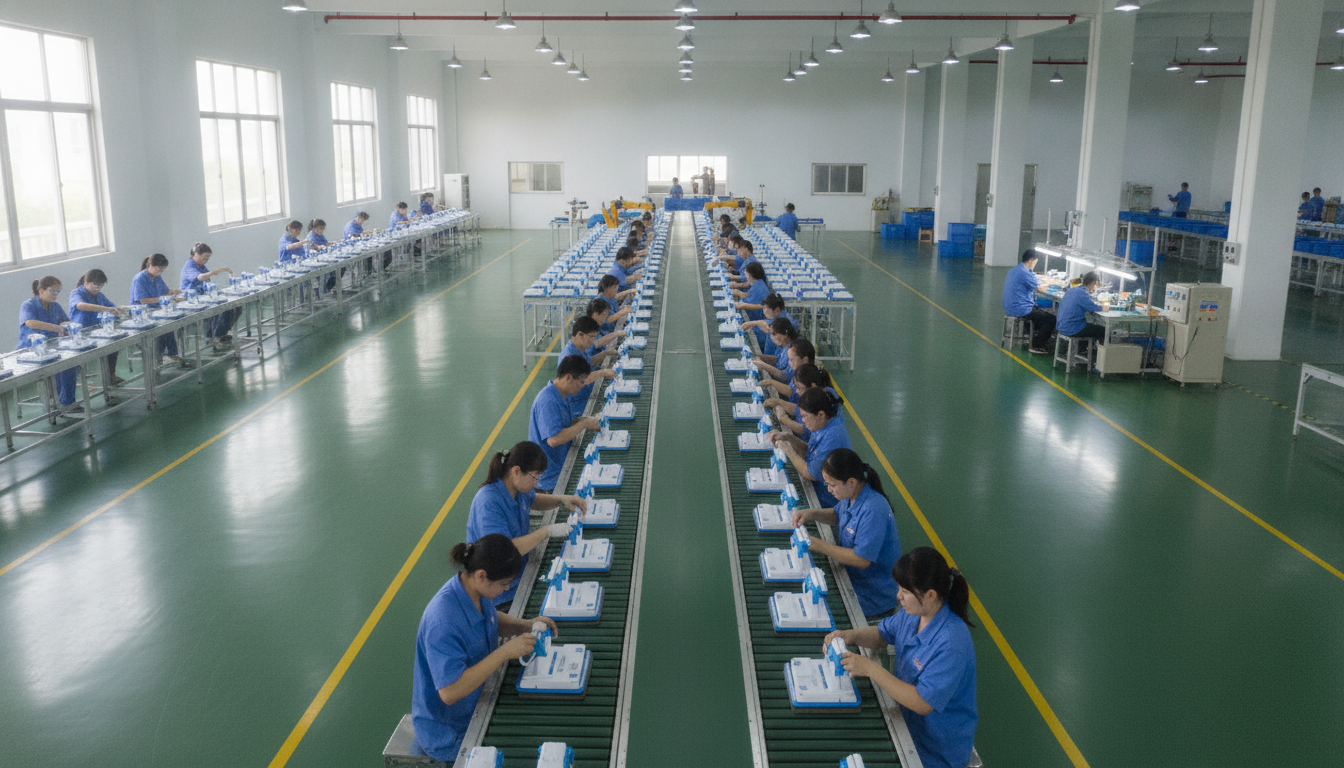
Taizhou manufacturers concentrate on household cleaning tools, with magnetic window cleaners often representing half or more of factory output. This specialization translates into wider SKU ranges, in-house mold libraries for custom shapes, and production teams trained exclusively on magnetic-force calibration and microfiber-pad assembly. A typical Taizhou factory operates four to six magnetic-cleaner assembly lines within a 6,500 m² facility, producing 50,000+ units per day across multiple glass-thickness variants.
Ningbo suppliers operate broader catalogs that span hardware, kitchenware, and seasonal goods. Magnetic window cleaners sit alongside mops, brushes, and storage organizers, sharing factory floor space and procurement resources. This breadth offers one-stop sourcing convenience but limits the depth of any single product line. Adjustable-force models and niche glass-thickness SKUs receive less R&D investment, and production runs favor high-volume standard models that fit container economics.
Implications for Distributor Buyers
If your market demands a full range of glass-thickness options, single-pane residential, double-glazed commercial, and thick insulated facades, a Taizhou specialist delivers four adjustable SKUs (3-30mm, 5-35mm, 8-40mm, 10-45mm) under one supplier relationship. If you prefer bundling window cleaners with complementary SKUs in a single container, a Ningbo multi-category supplier simplifies logistics but may require you to accept fixed-force models or higher per-SKU minimums.
In practice: A Dutch online seller shortlisted the adjustable magnetic range as a high-margin cleaning line for bol.com, valuing the ability to cover residential and light-commercial glazing with three SKUs instead of stocking separate fixed-force models for each thickness bracket.
MOQ Structure and Order Flexibility
Minimum order quantities reflect each city’s production model. Taizhou factories quote from 2 units for in-stock models, enabling distributors to test market fit with negligible capital risk, and set private-label MOQs at 500 units, a threshold accessible to regional wholesalers entering new geographies. New-mold OEM projects are quoted individually, but the mold library accumulated over specialized production runs often eliminates tooling costs for standard shapes.
Ningbo suppliers typically anchor MOQs at 100 to 500 units per SKU, with pricing structured to favor full container loads. Mixed-SKU containers are accepted, but per-unit costs drop materially when a single model fills the order. This structure suits established distributors with predictable reorder cycles but creates friction for buyers testing adjacent markets or launching private-label lines in phases.
Cost Structure Comparison
Payment terms, lead times, and container quantities are confirmed at quotation for both cities. Buyers should request a detailed cost breakdown that separates unit price, packaging, inland freight to port, and any tooling or setup fees, then compare total landed cost rather than FOB price alone.
Port Logistics and Freight Cost
Both Taizhou and Ningbo manufacturers ship through Ningbo port, one of China’s largest container terminals with direct sailings to Europe, North America, and Australia. Ocean freight rates, customs documentation, and port handling fees are identical regardless of whether your supplier’s factory sits in Taizhou or Ningbo city proper. The only variable is inland transport: Taizhou factories are approximately 60 kilometers from the port, adding a short truck haul that suppliers typically absorb into their FOB or CIF quotation.
Ningbo-based suppliers enjoy slightly shorter inland legs, but the cost difference is negligible on a per-container basis, often under 1% of total landed cost. The real logistics advantage of Ningbo suppliers lies in consolidation: if you source multiple product categories from the same city, a single freight forwarder can coordinate pickup, consolidate shipments, and manage a unified customs declaration, reducing administrative overhead.
Customs and Compliance Documentation
Regardless of manufacturing city, buyers importing into the EU, UK, USA, Canada, or Australia must verify that the supplier provides a commercial invoice, packing list, certificate of origin, and any market-specific compliance documents (CE declaration of conformity for the EU, for example). Taizhou and Ningbo factories both maintain relationships with third-party testing labs in Shenzhen and Hangzhou; the quality of compliance documentation depends on individual factory practices, not city location.
Request the actual test report and certificate before your first order. Verify that the certificate number matches the report, that the product description covers your SKU, and that the issuing body is accredited. Generic or expired certificates are a common pain point buyers raise when screening new suppliers, and this risk is equally present in both cities.
Quality Control and Compliance Verification
Quality control rigor varies by factory, not by city. Taizhou’s specialization allows dedicated QC teams focused solely on magnetic-cleaner defects, magnet detachment, microfiber-pad adhesion failure, and handle-joint cracking, while Ningbo multi-category suppliers rotate QC staff across product lines, which can dilute expertise. However, large Ningbo hardware exporters often hold ISO 9001 certification and operate formal defect-tracking systems that smaller Taizhou workshops lack.
On-Site Inspection and Third-Party Audits
Buyers placing container orders should conduct a pre-shipment inspection through SGS, Bureau Veritas, or a local agent. Inspect a random sample from the finished batch, checking magnet pull strength across the claimed glass-thickness range, microfiber-pad stitching quality, and packaging integrity. Taizhou factories typically welcome on-site visits during production, while Ningbo suppliers may require advance scheduling due to shared factory space.
For private-label orders, request a pre-production sample that includes your branding, packaging, and any custom color or handle design. Approve this sample in writing before mass production begins. Buyers report that magnet strength can weaken if the factory substitutes a lower-grade neodymium alloy or reduces magnet thickness to cut costs; the pre-production sample is your control point to lock specifications.
Common Defect Patterns and Mitigation
- Magnet detachment: The outer unit falls when magnets pull apart on thick or coated glass. Verify that the supplier tests every SKU at its maximum rated thickness under wet conditions, simulating real cleaning scenarios.
- Streaking and smearing: Microfiber pads leave streaks when glass dries faster than the cleaner moves, or when pad density is too low. Request pad GSM (grams per square meter) specifications and ask for a sample to test on your local glass types.
- Handle ergonomics: Buyers find some models require excessive force to move across the glass. Test the sample yourself on a vertical window; if it demands constant pressure, your end users will complain.
- Cold-weather grip loss: Reviewers report that magnetic cleaners may not work reliably on cold glass, as low temperatures can weaken magnetic force. Ask whether the supplier has tested performance below 5°C, and request data if your market includes cold climates.
Product Range and Glass-Thickness Coverage
Glass thickness is the primary specification buyers must match to end-user needs. Residential single-pane windows typically measure 3-8mm, while double-glazed insulated units range from 15mm to 30mm, and commercial facades can exceed 40mm when laminated or triple-glazed. A magnetic window cleaner product range that covers 3-45mm in four adjustable SKUs eliminates the need to stock separate fixed-force models for each glazing type.
Taizhou manufacturers produce adjustable-force models with 6-stage magnetic dials, allowing a single unit to fit both thin single glazing and thick double glazing by rotating the adjustment knob. This versatility reduces SKU count for distributors and simplifies product selection for end users. Ningbo suppliers more commonly offer fixed-force models optimized for a narrow thickness range, requiring buyers to stock multiple SKUs to cover the same market.
Magnet Material and Force Calibration
NdFeB (neodymium-iron-boron) magnets deliver higher pull force per unit volume than ferrite, making them the standard choice for adjustable and thick-glass models. Entry-level fixed-force cleaners for thin single glazing may use ferrite magnets to reduce cost. When comparing suppliers, confirm the magnet material for each SKU and ask whether the factory calibrates magnetic force with a gauss meter during production.
Buyers should avoid suppliers who cannot specify magnet material or who provide vague assurances of ‘strong magnets’. Request a sample and test it on your thickest target glass thickness before committing to a bulk order. If the outer unit slides down the glass or detaches during cleaning, the magnetic force is insufficient, and no amount of price negotiation will fix the product.
Compatibility with Coated and Low-E Glass
Low-emissivity (low-E) coatings and reflective films are standard on modern insulated glass units, and some buyers report that magnetic cleaners perform inconsistently on these surfaces. The coating itself does not block magnetic force, but the additional glass layers and air gaps in insulated units increase the effective thickness the magnet must bridge. Verify that the supplier’s thickness rating accounts for insulated glass unit (IGU) construction, not just the combined glass thickness.
Coated glass can also affect microfiber-pad performance. Some coatings are softer and more scratch-prone than uncoated glass, so the pad material and cleaning solution must be compatible. Ask the supplier whether the product has been tested on low-E glass and request any available guidance on compatible cleaning solutions.
Key Takeaways
- Taizhou manufacturers specialize in magnetic window cleaners with wider SKU ranges and lower MOQs, while Ningbo suppliers integrate window cleaners into broader hardware catalogs with higher minimums.
- Both cities ship through Ningbo port, so ocean freight costs are identical; the short inland haul from Taizhou adds negligible expense to total landed cost.
- Adjustable-force models with 6-stage magnetic dials cover 3-45mm glass thickness in four SKUs, reducing inventory complexity for distributors serving mixed residential and commercial markets.
- Quality control rigor depends on individual factory practices, not city location; buyers should conduct pre-shipment inspections and request third-party test reports regardless of supplier origin.
- Magnet detachment, streaking, and cold-weather grip loss are common pain points buyers raise when screening suppliers; pre-production samples and on-glass testing mitigate these risks before bulk orders.
- CE certification is standard in both cities, but buyers must verify the certificate issuer, test-report match, and product-description coverage to ensure compliance with EU, UK, US, Canadian, and Australian regulations.
Frequently Asked Questions
Can I mix Taizhou and Ningbo suppliers in the same container?
Yes, you can consolidate shipments from multiple suppliers through a freight forwarder who will arrange pickup from each factory, transport goods to Ningbo port, and combine them into a single container. This approach adds consolidation fees and requires coordinating production timelines so all orders are ready simultaneously, but it allows you to source specialized SKUs from Taizhou while filling remaining container space with complementary products from Ningbo. Confirm that your forwarder has experience managing multi-supplier pickups and that each factory provides compatible packing and labeling to simplify customs clearance at destination.
Do Taizhou factories offer the same payment terms as Ningbo suppliers?
Payment terms are negotiated individually and vary by factory size, order value, and buyer relationship rather than by city. Both Taizhou and Ningbo manufacturers commonly quote deposit-and-balance structures for new buyers, with final payment due before shipment or against document presentation. Established buyers with verified trade history may negotiate open-account terms or deferred payment, but these arrangements depend on credit assessment and order volume. Always request written confirmation of payment milestones, accepted currencies, and any bank fees before issuing a purchase order, and verify that the beneficiary bank account matches the legal entity on the supplier’s business license.
Which city offers faster lead times for rush orders?
Lead time depends on whether the supplier holds stock, not on city location. Taizhou factories with dedicated magnetic-cleaner production lines often maintain inventory of popular SKUs and can ship stock orders within days, while custom or private-label orders require the same production cycle as Ningbo suppliers, typically quoted at time of order. Rush orders incur expedited-production fees and may require air freight from Shanghai or Hangzhou airports to meet tight deadlines. If your business model depends on short lead times, prioritize suppliers who publish real-time stock levels and confirm their capacity to absorb urgent orders without disrupting scheduled production for other buyers.
Ready to compare Taizhou and Ningbo suppliers for your magnetic window cleaner order? Our export team provides detailed quotations, sample coordination, and compliance documentation for distributors, wholesalers, and facility-management buyers in Europe, North America, and Australia. Contact our team with your glass-thickness requirements, target MOQ, and destination market to receive a tailored supplier comparison and product recommendation.
Written by the Fonoran Export Team.