What MOQ to Expect When Ordering Private Label Magnetic Window Cleaners from China
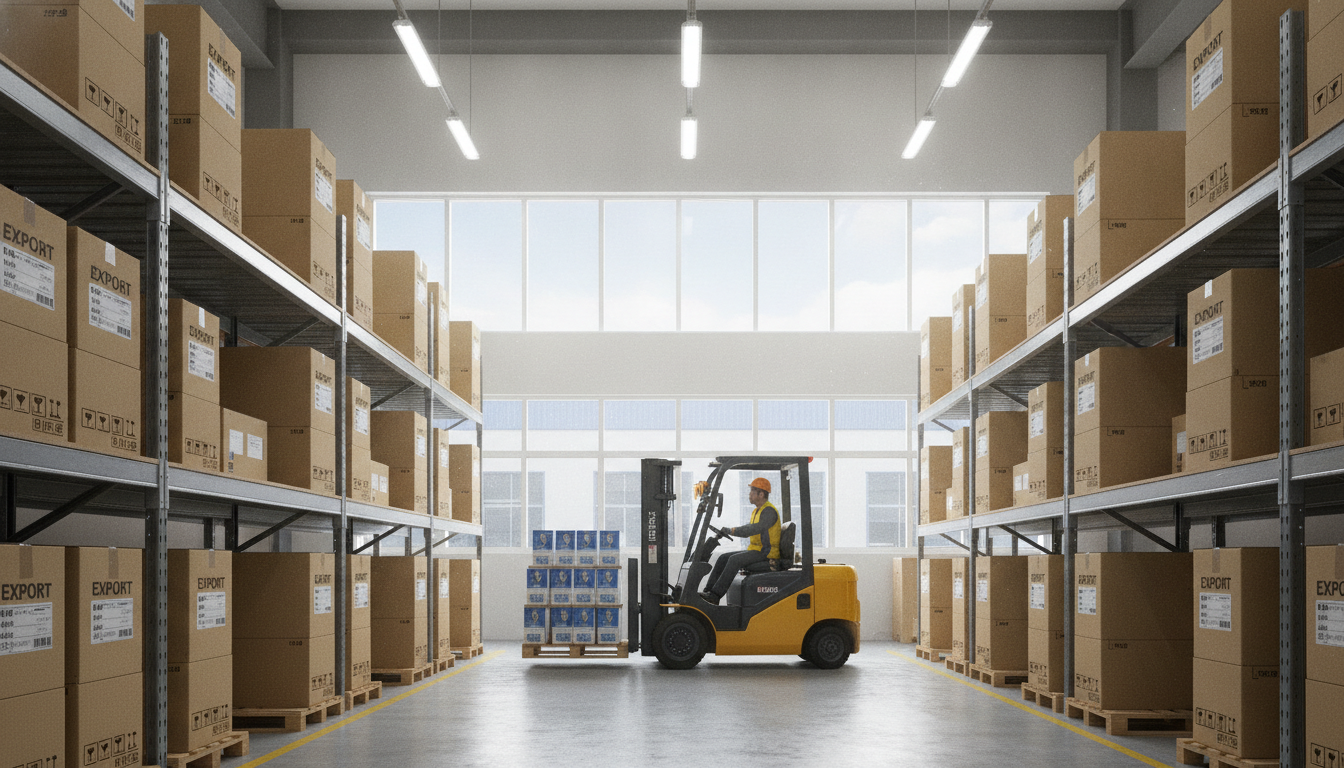
When ordering private label magnetic window cleaners from China, you should expect a minimum order quantity of 500 units for custom branding runs that include your logo, retail packaging, and localized manuals. Stock models without branding can start from as low as 2 units, but any form of logo application, custom carton design, or branded outer packaging will trigger the private-label threshold. The 500-unit baseline applies per SKU, meaning a distributor splitting an order across two glass-thickness models may negotiate 250 units per variant with some factories.
📋 Table of Contents
- Executive Summary
- Stock vs Private-Label MOQ: What’s the Difference?
- MOQ by Branding Method: Sticker, Print, Engraving, and Custom Housing
- SKU and Glass-Thickness Splitting Rules
- New-Mold OEM Projects: When MOQ Climbs Higher
- Landed-Cost Economics: Freight, Duties, and Compliance
- Practical Negotiation Framework for Pilot and Repeat Orders
- Key Takeaways
- Frequently Asked Questions
Executive Summary
- Stock-model MOQ: Chinese factories typically offer unbranded magnetic window cleaners from 2 units, allowing distributors to test samples or fulfill small retail orders without custom tooling.
- Private-label baseline: Custom branding that includes logo application, retail cartons, and localized instruction manuals starts at 500 units per SKU across most Taizhou and Ningbo suppliers.
- SKU splitting: Buyers ordering multiple glass-thickness models can sometimes negotiate sub-minimums of 250 units per variant, provided the total order meets or exceeds the factory’s 500-unit threshold.
- Branding method impact: Adhesive logo stickers and pad printing add minimal setup cost and hold the 500-unit MOQ, while laser engraving and fully custom injection-molded housings require higher project-specific quantities and tooling deposits.
- New-mold OEM: Functional redesigns, proprietary magnet-force mechanisms, or unique housing shapes push MOQ into the four-figure range and require upfront tooling budgets that are amortized across the production run.
Stock vs Private-Label MOQ: What’s the Difference?
The distinction between stock and private-label MOQ determines whether a buyer can test the market with a handful of units or must commit to a full production run. Stock models are finished goods sitting in the factory warehouse, ready to ship with generic or no branding. Private-label runs involve custom branding elements that require setup, artwork approval, and dedicated production time.
Stock-Model Orders
Factories in Taizhou ship stock magnetic window cleaners from 2 units upward, making it practical for facility-management buyers to trial a single unit on-site or for online retailers to photograph and list a product before committing to inventory. These units carry either no logo or a factory default mark, and packaging is plain white or brown carton with multilingual generic instructions. Lead time is typically 3 to 5 working days after payment, and the buyer pays the ex-works unit price plus courier freight. Our magnetic window cleaner product range includes stock SKUs covering 3-30mm, 5-35mm, 8-40mm, and 10-45mm glass thickness, the widest adjustable range in the industry.
Private-Label Production Runs
Private-label orders start at 500 units because the factory must halt standard production, load custom artwork into pad-printing plates or screen-printing frames, print retail cartons with the buyer’s brand identity, and insert localized manuals. Setup costs for artwork, printing plates, and carton dies are amortized across the batch, so smaller quantities push the per-unit cost above viable wholesale margins. The 500-unit threshold is consistent across Taizhou, Ningbo, and Yiwu suppliers, though some workshops quote 1,000 units for complex multi-color logo work or when the buyer requests blister packaging instead of standard cartons.
In practice: A new home-cleaning brand in Panama approached the factory to launch a private-label magnetic window cleaner, confirming that the 500-unit MOQ aligned with their initial market-entry budget and allowed them to stock two retail channels without overcommitting inventory.
MOQ by Branding Method: Sticker, Print, Engraving, and Custom Housing
The branding method you choose directly affects setup complexity and minimum order quantity. Adhesive logo stickers and pad printing are the lowest-barrier options, while laser engraving and custom injection-molded housings require higher volumes to justify tooling investment.
Adhesive Logo Sticker
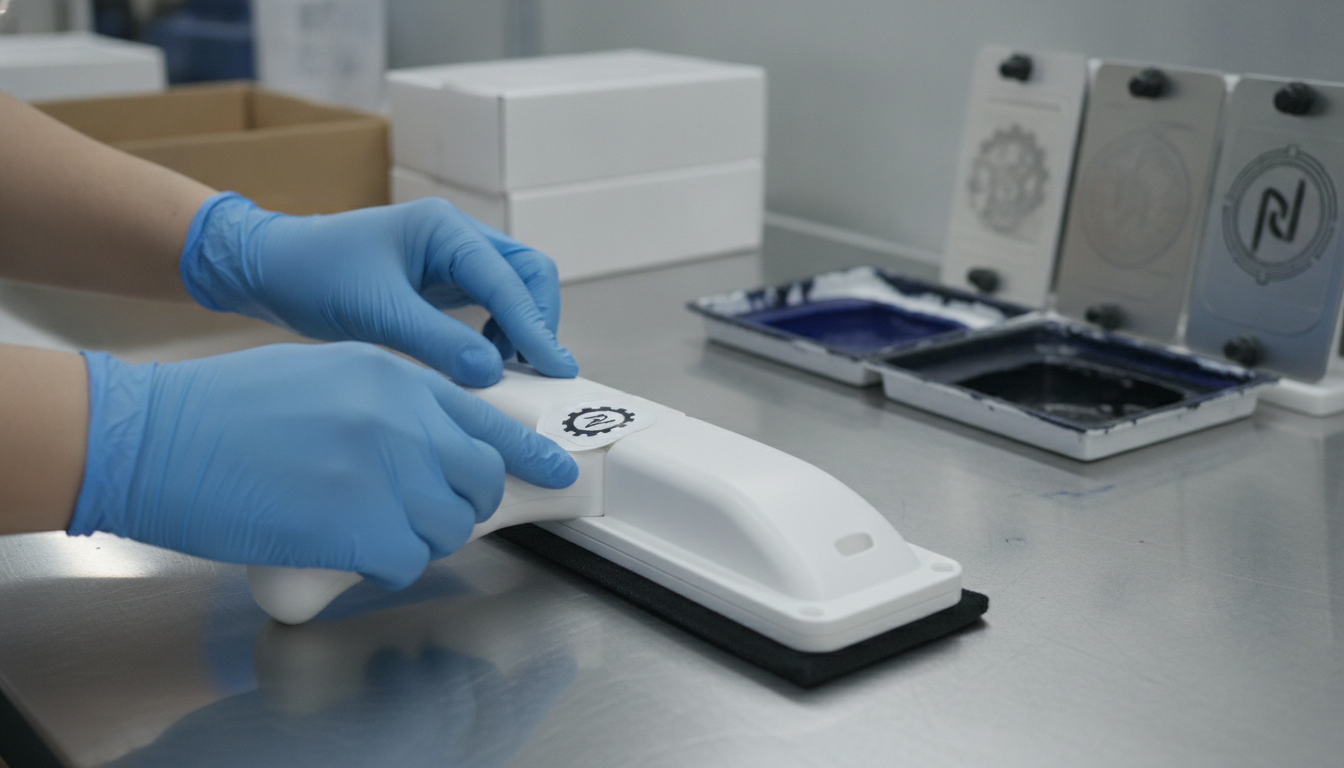
Adhesive vinyl or polyester stickers printed with the buyer’s logo are applied by hand during final assembly. Setup cost is minimal because the factory orders pre-cut stickers from a local print shop, and application adds only seconds per unit. MOQ holds at 500 units, and the per-unit cost increment is typically the lowest of all branding methods. Stickers work well for distributors testing a new market or private-label brands operating on tight budgets, but durability is limited: outdoor UV exposure and repeated cleaning can cause edge lift and fading within 12 to 18 months.
Pad Printing and Screen Printing
Pad printing transfers ink from an etched silicone plate onto the plastic housing, producing a permanent mark that resists UV and cleaning solvents. Screen printing applies ink through a mesh stencil and is used for larger logo areas or multi-color designs. Both methods require the factory to create a printing plate or screen, which costs between 300 and 800 yuan depending on logo complexity and color count. MOQ remains 500 units for single-color pad printing; two-color or gradient designs may push the threshold to 800 units because each color requires a separate plate and curing pass. The printed logo is embedded into the plastic surface and will not peel, making it the preferred choice for distributors selling into commercial cleaning contractors who demand long service life.
Laser Engraving
Laser engraving uses a focused CO₂ or fiber laser to ablate the top layer of plastic, creating a permanent mark without ink or adhesive. Setup cost is negligible because the machine reads vector artwork directly, but the process is slower than pad printing, adding 8 to 12 seconds per unit. Factories quote laser engraving at 500 to 800 units depending on logo size and the number of engraving points per batch. The engraved mark is monochrome (the underlying plastic color shows through) and highly durable, surviving years of outdoor use and chemical cleaning. Laser engraving suits premium private-label lines and facility-management buyers who prioritize brand permanence over color flexibility.
Custom Injection-Molded Housing
Buyers requesting a proprietary housing shape, embossed logo, or unique handle design must invest in a new injection mold. Mold fabrication costs range from 15,000 to 60,000 yuan for a single-cavity aluminum mold and 80,000 to 200,000 yuan for multi-cavity hardened-steel tooling, depending on part complexity and cavity count. MOQ for custom-mold projects starts at 3,000 to 5,000 units because the tooling cost must be amortized and the factory needs to recoup setup time. Lead time extends to 45 to 60 days: 20 to 25 days for mold fabrication, 5 days for trial shots and design validation, and 15 to 20 days for production. Custom housing is viable only for established brands with confirmed distribution channels and multi-year sales forecasts.
SKU and Glass-Thickness Splitting Rules
Distributors serving markets with diverse glazing types often want to stock multiple glass-thickness SKUs under a single purchase order. Whether a factory allows SKU splitting, and at what sub-minimum, depends on production-line efficiency and the degree of shared components across models.
Can You Split 500 Units Across Multiple SKUs?
Most Taizhou factories permit SKU splitting when the total order meets or exceeds 500 units, provided each variant uses the same housing mold and differs only in magnet strength or adjustable-range calibration. A common split is 250 units per SKU for a two-model order: for example, 250 units of the 5-35mm adjustable SKU and 250 units of the 8-40mm SKU. The factory runs both variants in the same production batch, swapping only the magnet assembly and range-limiter components between runs. Setup time increases slightly because the line must pause for calibration checks, but the amortized cost per unit remains close to the single-SKU baseline.
Three-Way and Four-Way Splits
Splitting an order three or four ways pushes per-SKU quantities below 200 units, which many factories decline because the setup overhead (calibration, quality checks, carton changes) erodes margin. A distributor ordering 150 units each of four SKUs will typically face a higher per-unit price or a request to increase the total order to 800 or 1,000 units. Some workshops accept three-way splits at 170 units per SKU when the buyer commits to repeat orders, treating the first batch as a market-validation run with the understanding that future orders will consolidate into fewer, higher-volume SKUs based on sales data.
Color and Packaging Variants
Housing color changes require separate injection-molding runs if the factory uses batch-dyed resin rather than pre-colored granules. A buyer requesting 250 units in blue and 250 units in gray may find that the factory treats this as two separate SKUs with individual 500-unit minimums unless both colors share the same mold and the factory can source pre-colored resin economically. Packaging variants, such as 300 units in retail blister packs and 200 units in plain brown cartons, are easier to accommodate because the product itself is identical and only the final packing step differs.
New-Mold OEM Projects: When MOQ Climbs Higher
New-mold OEM projects involve functional redesigns or proprietary features that require dedicated tooling. MOQ for these projects is quoted per design and reflects the cost of mold fabrication, trial production, and the factory’s need to recoup engineering time.
Functional Redesigns
A buyer requesting a proprietary magnetic-force adjustment mechanism, a unique handle geometry for ergonomic differentiation, or an integrated squeegee-blade tensioning system must invest in custom injection molds for every affected component. A single-cavity aluminum mold for a handle or housing half costs 15,000 to 30,000 yuan and supports production runs up to 50,000 shots before wear becomes visible. Multi-cavity steel molds cost 80,000 to 150,000 yuan but reduce per-unit cycle time and extend tool life beyond 500,000 shots, making them viable for buyers with multi-year supply agreements. MOQ for aluminum-tooled projects starts at 3,000 units; steel-tooled projects require 5,000 to 10,000 units to justify the upfront investment.
Tooling Deposits and Amortization
Factories typically charge the tooling cost upfront or split it into a deposit at order confirmation and a balance upon first-article approval. The per-unit product price is then calculated with tooling fully amortized, meaning the buyer does not pay a separate tooling fee on repeat orders as long as the mold remains in the factory’s custody and the buyer places at least one production run per year. Buyers who abandon a mold or fail to place a repeat order within 18 months may forfeit the tooling or face a storage and maintenance fee when they return.
Trial Shots and Design Validation
Once the mold is fabricated, the factory produces 20 to 50 trial shots to verify dimensional accuracy, gate placement, and ejector-pin marks. The buyer receives photos and measurements for approval before full production begins. Design changes discovered during trial shots, such as insufficient draft angles or visible sink marks, require mold rework that can add 5 to 10 days and 3,000 to 8,000 yuan in machining costs. Experienced buyers request a mold-flow analysis and draft-angle review before tooling begins, reducing the risk of costly rework and production delays.
Landed-Cost Economics: Freight, Duties, and Compliance
Understanding landed cost is critical when evaluating what MOQ to expect for private label magnetic window cleaners, because freight, import duties, VAT, and compliance testing can add 30 to 60 percent to the ex-works unit price. A 500-unit order may look viable at the factory gate but become uneconomical once all border and logistics costs are included.
Freight Costs by Destination
Taizhou factories ship from Ningbo port, and freight rates vary by destination, container type, and carrier. A 20-foot container holds approximately 8,000 to 10,000 magnetic window cleaners depending on packaging density, and ocean freight to Europe ranges from 1,200 to 2,500 USD, to North America 1,800 to 3,200 USD, and to Australia 1,500 to 2,800 USD as of mid-2026. Air freight is viable only for urgent sample shipments or pilot orders under 100 units, with rates of 6 to 12 USD per kilogram from Ningbo to major European and North American airports. Buyers ordering 500 units typically use LCL (less than container load) consolidation, paying 80 to 150 USD per cubic meter depending on route and season, which adds 0.40 to 0.80 USD per unit for compact magnetic cleaner cartons.
Import Duties and VAT
Magnetic window cleaners fall under HS code 3924.10 (tableware and kitchenware of plastics) or 8205.51 (household hand tools) depending on customs classification, and duty rates vary by destination. The European Union applies a standard duty of 6.5 percent on plastics household articles under the EU Common Customs Tariff, plus VAT at the importing country’s rate: 19 percent in Germany, 20 percent in the UK (post-Brexit, with separate UKCA marking), and 21 percent in the Netherlands. The United States applies duty rates of 3.4 to 6.5 percent under HTSUS 3924.10, with Section 301 tariffs on Chinese-origin goods adding 7.5 to 25 percent depending on the product’s exclusion status and the administration’s current trade policy. Australia applies 5 percent duty plus 10 percent GST on the sum of CIF value and duty.
Compliance and Testing Costs
Distributors importing into the EU must ensure the product carries CE marking and is accompanied by a Declaration of Conformity covering the General Product Safety Regulation and, if applicable, the Restriction of Hazardous Substances Directive. Third-party CE testing for a magnetic window cleaner costs 1,500 to 3,500 USD for mechanical safety, material composition, and labeling compliance, and the certificate is valid for the product design as long as no functional changes are made. UK importers need UKCA marking post-Brexit, requiring separate testing unless the product qualifies for mutual recognition. North American buyers should confirm whether the plastic housing meets California Proposition 65 limits for lead and phthalates, and Australian importers must verify compliance with the Australian Consumer Law’s mandatory safety standards for household goods. Our CE-certified magnetic window cleaner line ships with third-party test reports, reducing the compliance burden for European and UK distributors.
Practical Negotiation Framework for Pilot and Repeat Orders
Negotiating MOQ and commercial terms requires understanding the factory’s cost structure and your own sales velocity. Distributors and facility-management buyers can secure better terms by demonstrating repeat-order potential and offering flexibility on lead time.
Pilot-Order Strategies
Buyers testing a new market or product line can propose a pilot order of 500 units with a commitment to reorder 1,000 to 2,000 units within six months if the initial batch meets sales targets. The factory may accept a slightly higher per-unit price on the pilot run in exchange for the reorder commitment, treating the first batch as a market-validation exercise. Alternatively, the buyer can request a sample pack of 5 to 10 units at stock pricing before committing to the 500-unit private-label run, allowing internal testing and customer feedback before branding and packaging are finalized.
Volume Discounts and Tiered Pricing
Factories offer tiered pricing based on order size, with breakpoints typically at 500, 1,000, 3,000, and 5,000 units. A buyer ordering 500 units might pay a baseline per-unit price, while an order of 1,000 units could reduce the price by 8 to 12 percent and an order of 3,000 units by 15 to 20 percent. The discount reflects reduced setup overhead per unit and the factory’s ability to schedule longer, more efficient production runs. Buyers with predictable quarterly demand can negotiate an annual supply agreement with volume commitments, locking in a lower per-unit price and priority production slots during peak seasons.
Payment Terms and Lead Time Flexibility
Standard payment terms for private-label orders are confirmed at quotation, and buyers should clarify deposit requirements, balance payment timing, and accepted methods before placing an order. Offering flexibility on lead time can improve negotiating leverage: a buyer willing to accept 25 to 30 days instead of 15 to 20 days allows the factory to batch multiple orders and reduce setup waste, which may translate into a small price concession or waived artwork fees. Buyers should also confirm whether the factory charges for pre-production samples, artwork revisions, or packaging mockups, as these costs can add 200 to 500 USD to the first order but are typically waived on repeat runs.
Repeat-Order Incentives
Factories prioritize repeat customers because the artwork, printing plates, and packaging specifications are already on file, reducing setup time and error risk. A buyer placing a second order of 500 units within 12 months of the first can often negotiate a 5 to 8 percent price reduction or request minor packaging updates at no additional charge. Establishing a consistent ordering cadence, such as quarterly 1,000-unit batches, strengthens the buyer’s position and may unlock access to the factory’s new-product development pipeline, allowing early access to improved models or exclusive SKU variants.
Key Takeaways
- Private-label magnetic window cleaners from China start at 500 units per SKU, covering logo application, custom retail cartons, and localized manuals; stock models without branding ship from 2 units.
- Buyers can negotiate SKU splits of 250 units per variant when the total order meets the 500-unit threshold and the models share the same housing mold.
- Branding method affects setup cost and MOQ: adhesive stickers and pad printing hold the 500-unit baseline, while laser engraving may require 500 to 800 units and custom injection molds push MOQ to 3,000 units or higher.
- Landed cost includes ocean freight, import duties, VAT or GST, and compliance testing, which together can add 30 to 60 percent to the ex-works unit price depending on destination and regulatory requirements.
- Pilot orders of 500 units with a reorder commitment, volume discounts at 1,000 and 3,000-unit breakpoints, and lead-time flexibility are practical negotiation levers for distributors and facility-management buyers.
- New-mold OEM projects require upfront tooling deposits of 15,000 to 200,000 yuan and MOQ of 3,000 to 10,000 units, with trial shots and design validation adding 5 to 10 days to the production schedule.
Frequently Asked Questions
Can I order fewer than 500 units if I only need one glass-thickness SKU?
Stock models without custom branding ship from 2 units, allowing buyers to test a single SKU before committing to a private-label run. Once you add logo application, custom cartons, or localized manuals, the factory’s setup costs require a 500-unit minimum to remain economically viable. Some workshops accept 300 to 400 units for simple adhesive-sticker branding if the buyer commits to a repeat order, but this is not standard and must be negotiated case by case.
What happens if my first 500-unit order does not sell and I cannot reorder?
The factory retains your artwork and printing plates for 12 to 18 months, so you can place a smaller reorder without paying setup fees again if you return within that window. After 18 months, the factory may discard or archive the files, requiring you to pay setup costs again on a future order. To mitigate inventory risk, buyers can request a phased delivery: 250 units shipped immediately and 250 units held at the factory warehouse for release within 90 days, spreading cash flow and storage burden while still meeting the 500-unit MOQ.
Do I need separate MOQ for each color if I want the same model in blue and gray?
Color changes depend on whether the factory uses batch-dyed resin or pre-colored granules. If the housing is injection-molded with batch-dyed resin, the factory treats each color as a separate production run and may require 500 units per color. If the factory sources pre-colored granules and can switch colors with a short purge cycle, you may be able to split 500 units across two colors at 250 units each. Clarify the resin sourcing method and color-change procedure with the factory before finalizing your order breakdown.
Understanding what MOQ to expect for private label magnetic window cleaners from China helps distributors and facility-management buyers plan inventory, budget for setup costs, and negotiate terms that match their sales velocity. The 500-unit baseline for custom branding, the option to split SKUs at 250 units per variant, and the higher thresholds for laser engraving and new-mold OEM projects provide a clear framework for sourcing decisions. Landed-cost economics, including freight, duties, VAT, and compliance testing, must be factored into per-unit pricing to ensure the final retail or contract price remains competitive. Buyers can improve terms by demonstrating repeat-order potential, offering lead-time flexibility, and consolidating multiple SKUs into a single purchase order.
Ready to confirm MOQ, lead time, and pricing for your private-label magnetic window cleaner project?
Request a Detailed Quote →
Written by the Fonoran Export Team.