How to Vet a Magnetic Window Cleaner Manufacturer Before Placing a Bulk Order
📋 Table of Contents
- Executive Summary
- Understanding Regulatory Requirements for Your Target Market
- Evaluating Manufacturer Certifications and Quality Systems
- Assessing Product Range and Technical Specifications
- Analyzing MOQ, Lead Time, and Pricing Structures
- Verifying Supply Chain Reliability and After-Sales Support
- Identifying Red Flags and Risk Mitigation
- Key Takeaways
- FAQ
A single container of magnetic window cleaners that can’t hold on 28mm triple-pane glass can wipe out your margin on a $50,000 order. That’s why knowing how to vet a magnetic window cleaner manufacturer before placing a bulk order is critical for distributors, wholesalers, and facility-management buyers sourcing from China.
Executive Summary
Before committing to a 500+ unit order, verify these key supplier metrics:
- Market Size: Global window cleaning tools market valued at $2.1 billion in 2024, growing to $2.3 billion by 2026 (Grand View Research).
- Segment Growth: Magnetic cleaning tools growing at 6.2% CAGR, with factory-direct orders representing 40% of B2B transactions (Mordor Intelligence).
- Regulatory Mandate: CE marking (EU Regulation 765/2008) requires compliance with Machinery Directive 2006/42/EC and RoHS 2011/65/EU for all cleaning tools sold in Europe.
- Duty Cost: Magnetic window cleaners (HS 8505.19) attract 2.8% US import duty from China in 2026, while EU imports enjoy 0% under preference rules.
- High-Rise Demand: Global high-rise building stock reached 1.1 million units in 2025 (Statista), driving bulk orders for triple-pane capable cleaners.
Understanding Regulatory Requirements for Your Target Market
Magnetic window cleaners fall under specific HS codes and compliance rules that vary by region. Failing to request the right certifications can strand a container at customs or trigger fines under REACH or Prop 65. Use the table below to cross-check what your supplier must provide before shipment.
Requesting Certificates and Test Reports
- CE Certificate of Conformity: Must show the 4-digit Notified Body number, not just a generic mark.
- RoHS lab report: Request a dated test from SGS, Intertek, or TÜV showing lead, mercury, and phthalate levels below 0.1% each.
- REACH compliance statement: Confirm no substances of very high concern (SVHCs) above 0.1% by weight.
Evaluating Manufacturer Certifications and Quality Systems
Certifications are the foundation of a supplier’s quality promise, but not all certificates carry equal weight. ISO 9001 documents the management system, while third-party lab reports prove product compliance. Below is how to tier potential suppliers.
ISO 9001: What It Actually Delivers
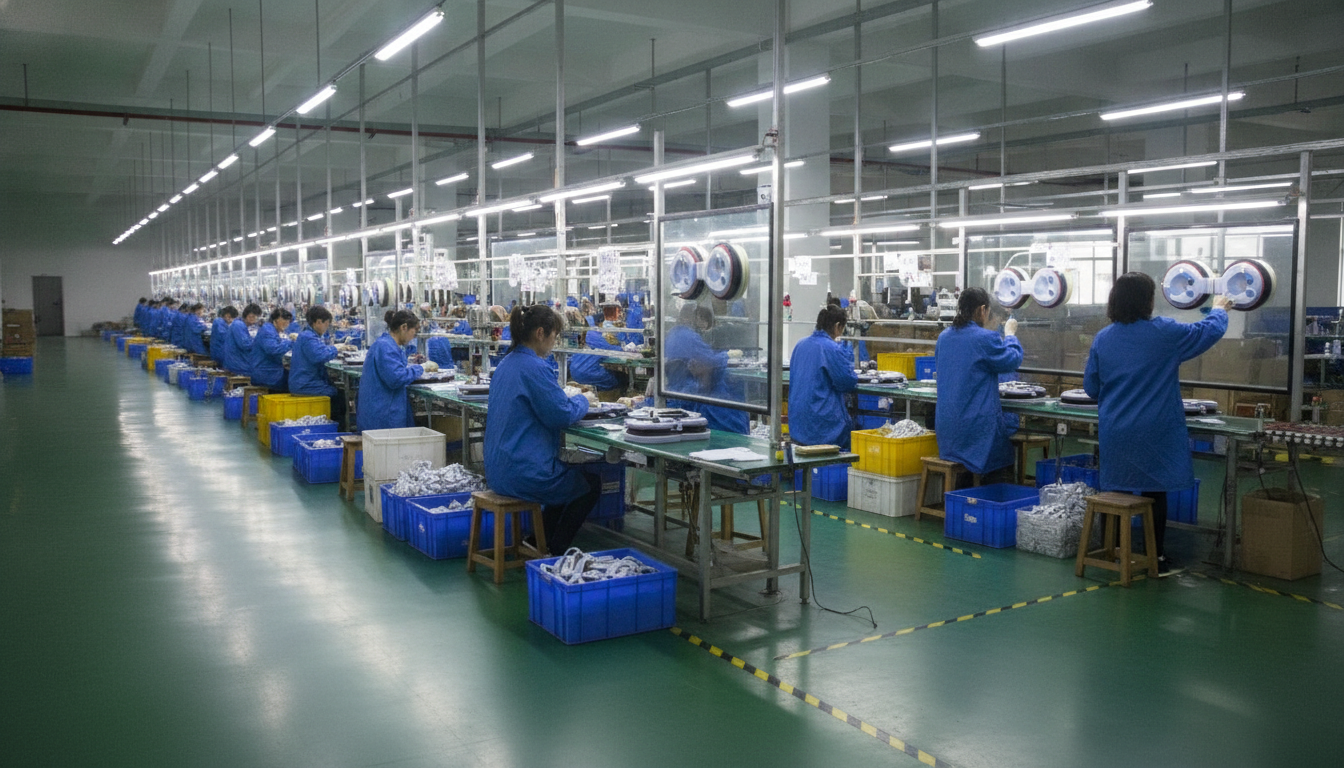
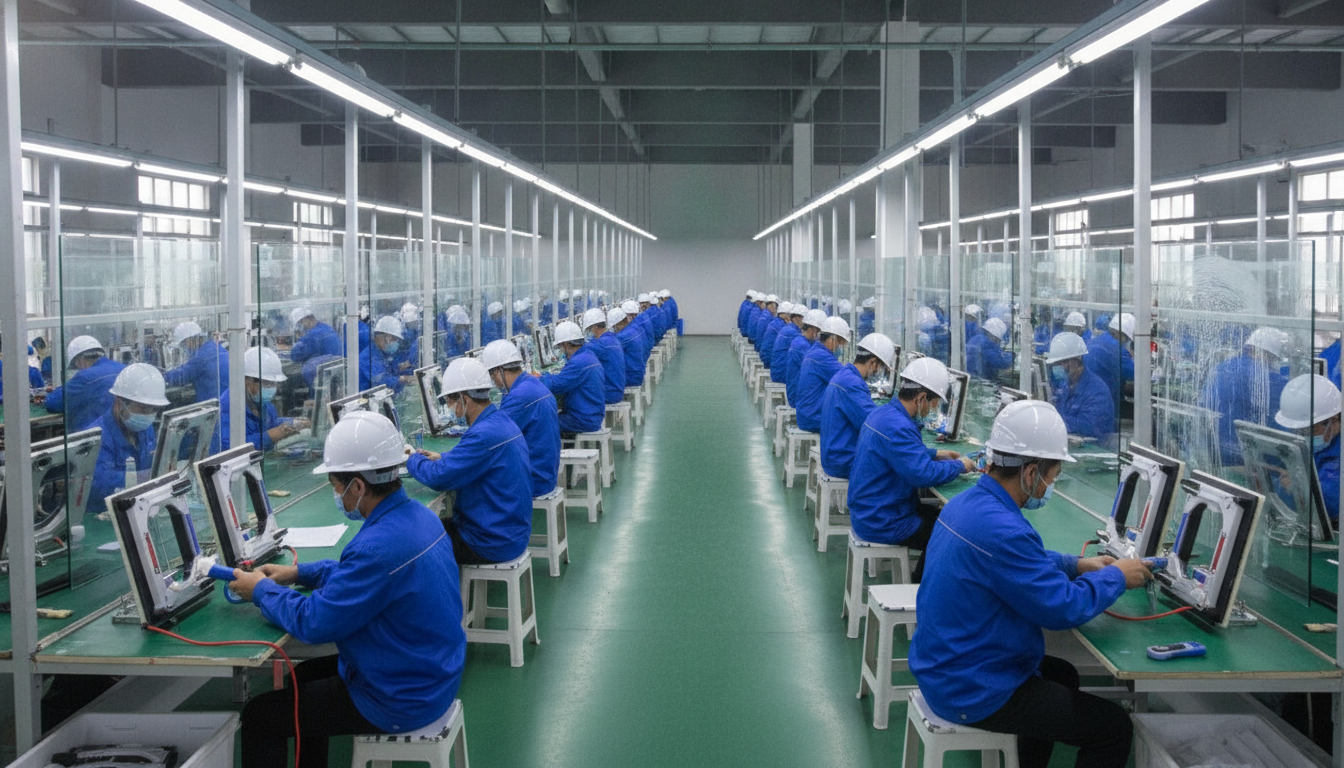
An active ISO 9001 certificate means the manufacturer has documented processes for incoming raw material inspection, in-line testing, and final QC. In our 12,000 m² factory with 400+ workers, that translates to 5 checkpoint stations per assembly line. Ask for a recent audit summary showing non-conformance closure rate above 95%.
Third-Party Testing: Intertek, SGS, TÜV
- Intertek/SGS: Request a magnet pull-force test report covering N48-N52 grades.
- TÜV Rheinland: Ask for an annual factory surveillance report, not just a one-time certificate.
- Verification: Cross-check the report number on the lab’s public database.
Assessing Product Range and Technical Specifications
Magnet strength, glass thickness coverage, and housing material directly determine whether your end customers will return the product or reorder. Compare specifications across three market tiers.
Testing Magnet Strength on Live Glass Samples
Do not rely on spec sheets alone. Request a video of the manufacturer’s magnetic cleaner holding onto a 30mm glass panel for a continuous 24-hour period with a caliper showing thickness. In our Taizhou factory, we routinely perform 72-hour continuous magnetic retention tests on every new mold, logging pull-force variance under 3% across batches.
Typical cost: $0.20-$0.50 per unit for third-party pre-shipment inspection. Time to ship: 20-30 days sea freight from Ningbo to US West Coast.
Analyzing MOQ, Lead Time, and Pricing Structures
Factory-direct pricing typically runs 20-30% below trading company quotes because you eliminate the intermediary markup. However, verify MOQ flexibility and lead time consistency before committing.
Negotiating Flexible MOQs
- Trial order: Request 100-200 units with OEM logo to test market acceptance and magnet consistency.
- Split shipment: Agree on 30% deposit with balance against copy of documents, shipping in two equal lots to manage cash flow.
- Price lock: Secure a 90-day price validity to buffer against rare-earth magnet cost fluctuations.
In practice: A US window-cleaning contractor started with a 150-unit trial of our 6-stage adjustable cleaner, validated zero breakage on 32mm glass across 14 commercial towers, and placed a repeat order of 2,000 units within 3 months, reducing per-unit cost by 27%.
Verifying Supply Chain Reliability and After-Sales Support
Logistics delays and unresponsive after-sales service erode distributor margins quickly. Check the factory’s shipping track record and spare parts policy before you place a bulk order.
Warranty and After-Sales Service Benchmark
- Standard warranty: 12 months against manufacturing defects, with clear exclusions for wear parts.
- Replacement part availability: Within 48 hours via DHL for critical components like magnetic rollers.
- Responsiveness: Guaranteed reply to email claims within 24 hours, with resolution within 7 business days.
Identifying Red Flags and Risk Mitigation
Suppliers who refuse transparency on any front should be removed from your shortlist immediately. The table below maps common red flags to specific mitigation actions.
Communication Red Flags
- Delayed responses: Over 48 hours to answer technical questions indicates they may be a shell company.
- Vague answers: Refusal to share exact magnet grade or N52 specification means they likely use lower-grade material.
- Pressure tactics: “Offer expires in 24 hours” while refusing to send samples suggests a scam.
Payment Security and Trade Assurance
Always route initial orders through Alibaba Trade Assurance or a confirmed L/C. Review the supplier’s on-time delivery rate, which should sit above 90% for Gold Suppliers. Our production lines ship 50,000+ units daily to 60+ countries, which provides the volume consistency to back contractual delivery clauses.
Key Takeaways
- According to Grand View Research, the global window cleaning tools market is projected to reach $2.3 billion by 2026, with magnetic tools growing at 6.2% CAGR (Mordor Intelligence).
- CE marking under EU Regulation 765/2008 is mandatory for magnetic window cleaners sold in Europe, and RoHS 2011/65/EU limits each hazardous substance to below 0.1% by weight.
- US import duty on magnetic window cleaners (HS 8505.19) from China stands at 2.8% in 2026, while EU imports can achieve 0% under preferential trade agreements.
- Factory-direct MOQs of 100 units cut per-unit cost by 20-30% versus trading companies, with lead times of 20-30 days from Ningbo port to major destinations.
- N52-grade neodymium magnets and 6-stage adjustable force are the technical benchmarks for reliable operation on triple-pane glass up to 35mm.
- Statista reports 1.1 million high-rise buildings globally in 2025, making bulk orders of professional-grade magnetic cleaners a growing necessity for facility-management buyers.
FAQ
What certifications should a magnetic window cleaner manufacturer have for Europe?
At minimum, CE marking under the Machinery Directive 2006/42/EC, RoHS compliance (substances below 0.1%), and REACH registration. Look for a CE certificate with a 4-digit Notified Body number, a generic CE mark without a number is insufficient. Third-party lab reports from SGS, Intertek, or TÜV add credibility.
How to verify a Chinese manufacturer’s quality before bulk ordering?
Request a live video factory tour showing production lines and QC stations. Ask for the ISO 9001 audit report, recent RoHS/REACH test reports with lab reference numbers, and a 72-hour magnet retention video on actual 30mm glass. Use Alibaba Trade Assurance or order third-party inspection via SGS before shipment.
What is the typical MOQ for magnetic window cleaners from China?
Factory-direct MOQs range from 100 to 500 units for standard models. Trading companies often require 500-1,000 units. Custom OEM orders with private labeling usually start at 500 units. Trial orders of 100 units are common for testing market fit, and many factories allow mixed models within the same MOQ.
How long does shipping take from China to Germany for glass cleaning equipment?
Sea freight from Ningbo port to Hamburg typically takes 28-32 days for FCL shipments. Air freight consolidated shipments reach major German hubs in 5-8 days. Plan for additional customs clearance time of 1-3 business days, assuming all CE and RoHS documentation is complete.
What are the red flags when vetting a magnetic window cleaner supplier?
Refusal to provide a live video tour, CE certificates without Notified Body numbers, claims of N52 magnets without supporting lab reports, irregular communication patterns, and demand for 100% upfront payment to a personal account are immediate red flags. Always cross-check factory address with satellite imagery and request a sample tested by an independent lab.
Now you know how to vet a magnetic window cleaner manufacturer before placing a bulk order. Put that knowledge to work: request a free product quote and our factory audit checklist.
Request Your Bulk Quote →